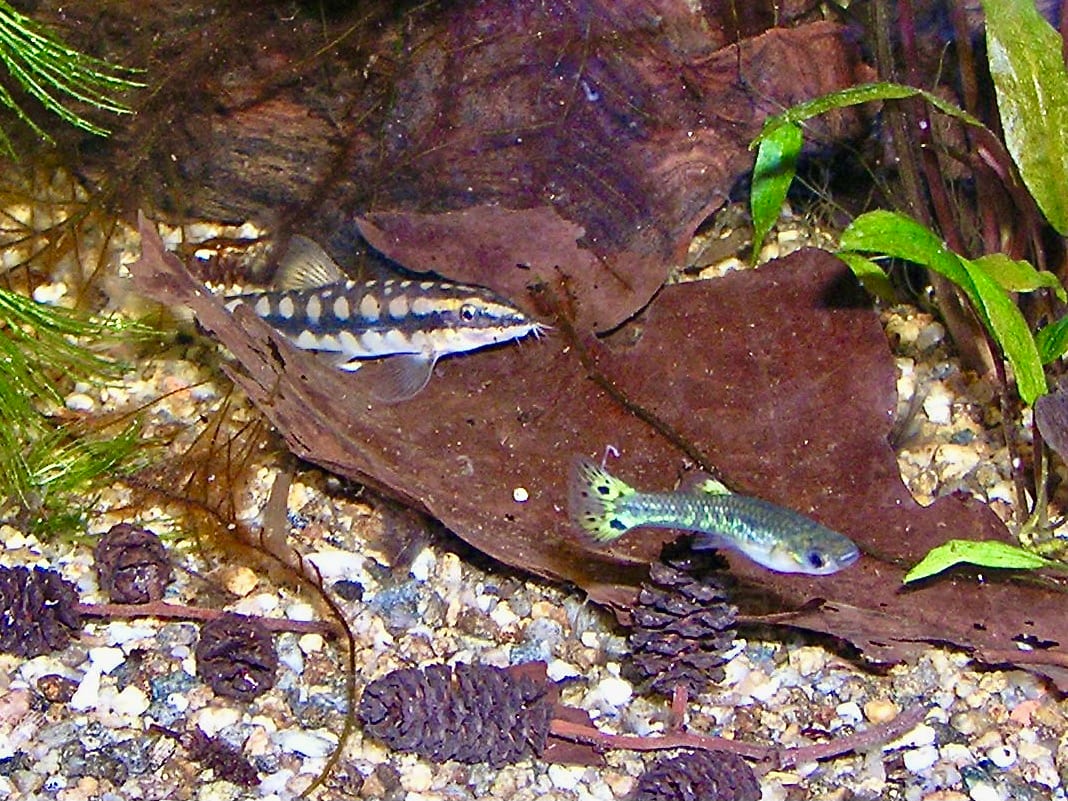
 © NasserHalaweh / CC BY-SA 4.0
Dwarf Chain Loach
The Dwarf Chain Loach is a small loach that stays around 5.5 to 6 cm even as an adult. Its name comes from the black stripe along its back and the mesh-like pattern on its sides, which together resemble a chain. Unlike many loaches that are nocturnal, this species stays active and visible during the day. Kept alone it tends to stay hidden, but in a small group it shows its natural behavior, swimming in a loose school just above the substrate. It's also considered one of the few loaches well suited to planted aquariums. Overall, it suits keepers who already have some aquarium experience.
View Dwarf Chain Loach encyclopedia →0% commission on your first sales!Register by September 30, 2026 and your first 2 sales are commission-free!
Breeder Wanted!
List on BreederDirect and sell directly to customers nationwide!
Our 6 Transparency Commitments
All Tropical Fish listings include water quality, temperament, and tank size information from verified Breeder.
- Origin Disclosed
- Real Photos
- Water Quality Disclosed
- Recommended Tank Size
- Temperament Disclosed
- Breed Line Disclosed
Browse all 301 breeds
Water Type
Care Level
Verified breeders wanted for Tropical Fish
Breeders are signing up now ahead of launch. Subscribe to be notified when new listings go live.
Getting alerts is free with a member account. When new listings match your saved search, we'll notify you by email and in-app.
Browse other categories
Verified breeders (preview)
Are you raising tropical fish?
Register as a breeder and connect with buyers directly.
Apply as a breederDwarf Chain Loach key facts
- Care level
- Intermediate
- Lifespan
- 8-12 years
- Size
- 5.5-6cm
- Temperature
- 20〜30℃
- Diet
- Sinking dried foods, frozen bloodworm, Daphnia, Artemia
- Tank
- Seriously Fish suggests an 80 x 30cm base of about 72 litres. Provide cover with stones and driftwood over sand or fine gravel. Its small size and habit of swimming above the substrate suit a planted tank.
- Water Temperature & Quality
- Seriously Fish gives 20-30C, pH 5.5-7.5 and 1-12dGH. FishBase records 26-28C in the wild. It needs a mature tank with stable water.
- Tank Mates
- Reports conflict. Some keepers find it peaceful, while others record damage to the eyes and fins of sedentary or long-finned fish. Avoid small tanks and keep it in as large a group as possible.
- Diet & Feeding
- Chiefly carnivorous but it also eats plant matter. Combine sinking dried foods with frozen bloodworm, Daphnia and Artemia. Soft-leaved plants may be nibbled.
- Breeding & Spawning
- In the wild it appears to be a seasonal, migratory spawner, and successful breeding in private aquaria is very rare. Trade stock is mostly hormone-induced.
- Health & Notes
- It does not settle in a small group, and it is unsuited to a newly set-up tank. IUCN status is Endangered, so choose captive-produced fish. The trade name clown botia does not mean the clown loach (Chromobotia macracanthus); this is a different fish that stops at 5.5-6cm. It is also labelled under its former genera Botia and Yasuhikotakia.
About Dwarf Chain Loach
The Dwarf Chain Loach is a small loach reaching about 5.5–6 cm, named for the chain-like pattern on its back and sides. It stays active by day, swims in loose groups, and suits planted tanks kept by intermediate hobbyists.
7 things to know before welcoming a Dwarf Chain Loach
1Keep Them in Groups
Dwarf Chain Loaches are strongly social and tend to hide when kept alone, rarely showing their natural liveliness. Keeping several together lets you enjoy their schooling behavior.
2Active During the Day
Unlike many loaches that are nocturnal, this species stays active during daylight hours. You can often watch it swimming in a layer just above the substrate.
3Plant-Tank Friendly
Among loaches, this species is considered one of the few well suited to planted aquariums, as it's less likely to disturb the layout. That makes it a good fit for aquascapes built around live plants.
4Sensitive to Medications
Loaches, including this species, are generally known to react strongly to certain medications. Always check that a treatment is safe for loaches before dosing the tank.
5Provide Hiding Spots
Driftwood and rockwork give them a place to retreat and feel secure. Offering plenty of hiding spots is especially helpful while they settle into a new tank.
6Choose Tankmates Carefully
They're generally peaceful and mix well with similarly sized fish. However, very small fish or shrimp may be seen as food, so plan tankmates accordingly.
7Best Suited to Intermediate Keepers
This species is generally recommended for keepers who already have some aquarium experience. A stable, well-maintained tank makes it easier to care for over time.
Frequently asked questions about Dwarf Chain Loach
- Q.How big does it grow?
- A.As an adult it reaches about 5.5–6 cm, staying quite small. This compact size makes it manageable even in relatively modest tanks.
- Q.How many should be kept together?
- A.Since they have a strong schooling instinct, keeping several together is recommended rather than housing just one. A small group lets you see their natural schooling behavior.
- Q.Can it be kept with other fish?
- A.It's generally peaceful and mixes well with similarly sized fish. However, very small fish or shrimp can end up being preyed on, so choose tankmates with care.
- Q.Is it suitable for beginners?
- A.This species is generally considered suited to intermediate keepers who are already comfortable with basic tank management. Some prior experience helps in maintaining stable water conditions.
- Q.Are there any legal restrictions?
- A.The Dwarf Chain Loach is not listed under CITES.
Useful tools for Dwarf Chain Loach care
Learn more about Dwarf Chain Loach in the encyclopedia
View Dwarf Chain Loach encyclopedia entry →
Care difficulty, lifespan, size and diet — all basics covered.
More in this category
Can't find the one you're looking for?
Post your wishes for free and breeders with matching animals will contact you with introductions.