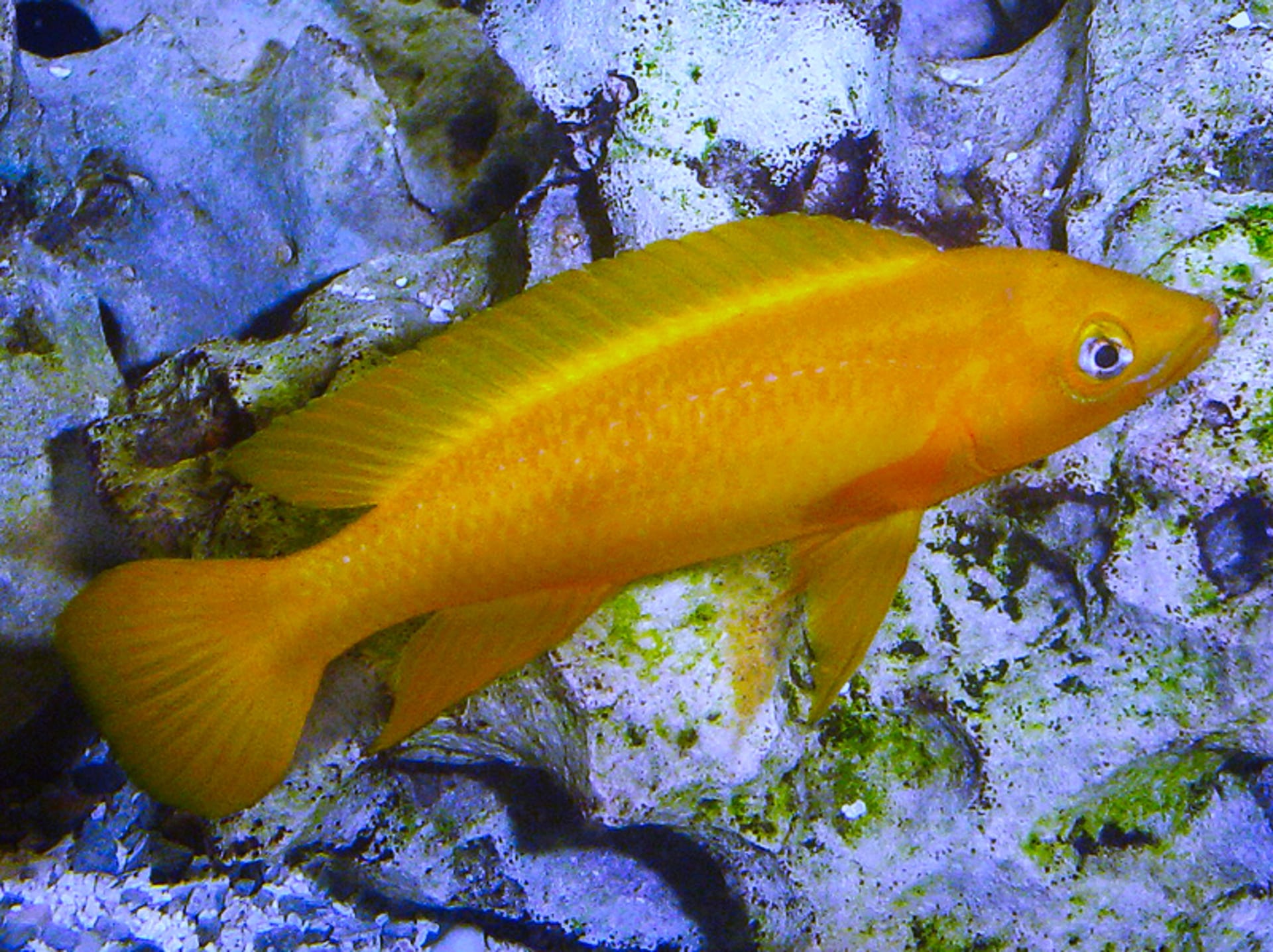
 © HblairH / CC BY-SA 4.0
Lemon Cichlid
Neolamprologus leleupi, commonly known as the Lemon Cichlid, is a small cichlid native to Lake Tanganyika in Africa. Its vivid yellow-to-orange body gives the species its common name and makes it a standout in any tank. In the wild, it shelters among rocky crevices and caves, staking out a favorite hideout as its territory. It is a substrate-spawning cichlid that pairs up and cooperatively guards its eggs and fry, so keepers can witness real parenting behavior. Reaching only about 10 cm as an adult, a single pair can be comfortably housed even in a relatively modest aquarium. It is generally considered suitable for intermediate keepers, since territorial behavior and water quality need some attention.
View Lemon Cichlid encyclopedia →0% commission on your first sales!Register by September 30, 2026 and your first 2 sales are commission-free!
Breeder Wanted!
List on BreederDirect and sell directly to customers nationwide!
Our 6 Transparency Commitments
All Tropical Fish listings include water quality, temperament, and tank size information from verified Breeder.
- Origin Disclosed
- Real Photos
- Water Quality Disclosed
- Recommended Tank Size
- Temperament Disclosed
- Breed Line Disclosed
Browse all 301 breeds
Water Type
Care Level
Verified breeders wanted for Tropical Fish
Breeders are signing up now ahead of launch. Subscribe to be notified when new listings go live.
Getting alerts is free with a member account. When new listings match your saved search, we'll notify you by email and in-app.
Browse other categories
Verified breeders (preview)
Are you raising tropical fish?
Register as a breeder and connect with buyers directly.
Apply as a breederLemon Cichlid key facts
- Care level
- Intermediate
- Lifespan
- 5-8 years
- Size
- About 10cm
- Temperature
- 23〜27℃
- Diet
- Mainly frozen and live foods, plus prepared foods and a little vegetable matter
- Tank
- From about 75 x 30 x 30cm (70 litres). Always build cave-like spaces from rock for spawning and shelter.
- Water Temperature & Quality
- 23-27C, pH 7.5-9.0, 8-25 dGH. Keep high-pH hard water stable.
- Tank Mates
- It can be combined with small to medium Tanganyikan species that use a different level. It is very aggressive toward conspecifics, so keep one pair only.
- Diet & Feeding
- Base the diet on frozen and live foods with dried foods as a supplement, adding a little vegetable matter such as spirulina.
- Breeding & Spawning
- A substrate spawner laying up to about 150 eggs on the wall or roof of a cave. Hatching takes three to four days and the fry swim after eight to ten days, taking brine shrimp nauplii.
- Health & Notes
- Colour shifts with diet and water quality. Because pairing is slow, keepers often raise several young fish and let a pair form naturally.
About Lemon Cichlid
Discover the Lemon Cichlid (Neolamprologus leleupi), a small Lake Tanganyika cichlid with vivid yellow-orange coloring, rock-dwelling habits, and devoted pair parenting, a good pick for intermediate aquarists.
7 things to know before welcoming a Lemon Cichlid
1Rockwork Hideouts
Lemon Cichlids naturally shelter in rocky crevices and caves. Stack rocks in the tank to create cave-like hiding spots so they can settle in comfortably. Make sure any rockwork is stable and won't collapse.
2Strongly Territorial
They fiercely defend a favorite rocky hideout as their territory and can be aggressive toward similarly shaped or same-species fish. Choose tankmates carefully, or consider keeping them alone, to avoid conflict.
3Pairs Raise Young Together
As substrate spawners, a bonded pair will lay eggs in a rocky crevice and cooperatively guard the eggs and fry. If you're hoping to breed them, watch for compatible pairing before committing to a breeding setup.
4Choose Tankmates Carefully
Because of their territorial nature, timid or very small fish are best avoided as tankmates. Other Lake Tanganyika cichlids of similar size and temperament tend to make for a calmer, more stable tank.
5Color Deepens With Age
Juveniles often show paler coloring, but the yellow-to-orange hue becomes richer and more vivid as the fish matures. The exact depth of color can vary by individual and environment, which is part of the fun.
6Stays Compact
Adults reach only about 10 cm, keeping them a manageable size. A single pair can be comfortably housed in a relatively modest tank, letting you enjoy a rockwork-focused aquascape.
7Best for Intermediate Keepers
This species is generally considered suitable for intermediate aquarists, since managing territory and water quality takes some experience. Keepers who have kept other cichlids will likely find it manageable.
Frequently asked questions about Lemon Cichlid
- Q.Can it be kept with other tropical fish?
- A.Because it's quite territorial, timid or very small fish aren't ideal tankmates. Choosing other Lake Tanganyika cichlids of similar size and temperament tends to make for a calmer community tank.
- Q.How can I tell males from females?
- A.There's no obvious external difference between sexes, and juveniles are especially hard to distinguish. Once a pair forms, differences in size and behavior often make it easier to tell them apart.
- Q.Is this fish suitable for beginners?
- A.It's generally rated for intermediate keepers, so prior experience with other cichlids is helpful. With attention to territory and water quality, an experienced beginner can still take it on.
- Q.Do I need to keep a pair to breed them?
- A.Keeping a pair is the standard approach for breeding, though a single fish can be kept on its own. Once paired, they'll spawn in a rocky crevice and cooperatively guard the eggs and fry.
- Q.What should I feed them?
- A.A base diet of flake or pellet food combined with frozen or freeze-dried brine shrimp works well. As an omnivore, this species readily accepts a wide variety of foods.
Useful tools for Lemon Cichlid care
Learn more about Lemon Cichlid in the encyclopedia
View Lemon Cichlid encyclopedia entry →
Care difficulty, lifespan, size and diet — all basics covered.
More in this category
Can't find the one you're looking for?
Post your wishes for free and breeders with matching animals will contact you with introductions.