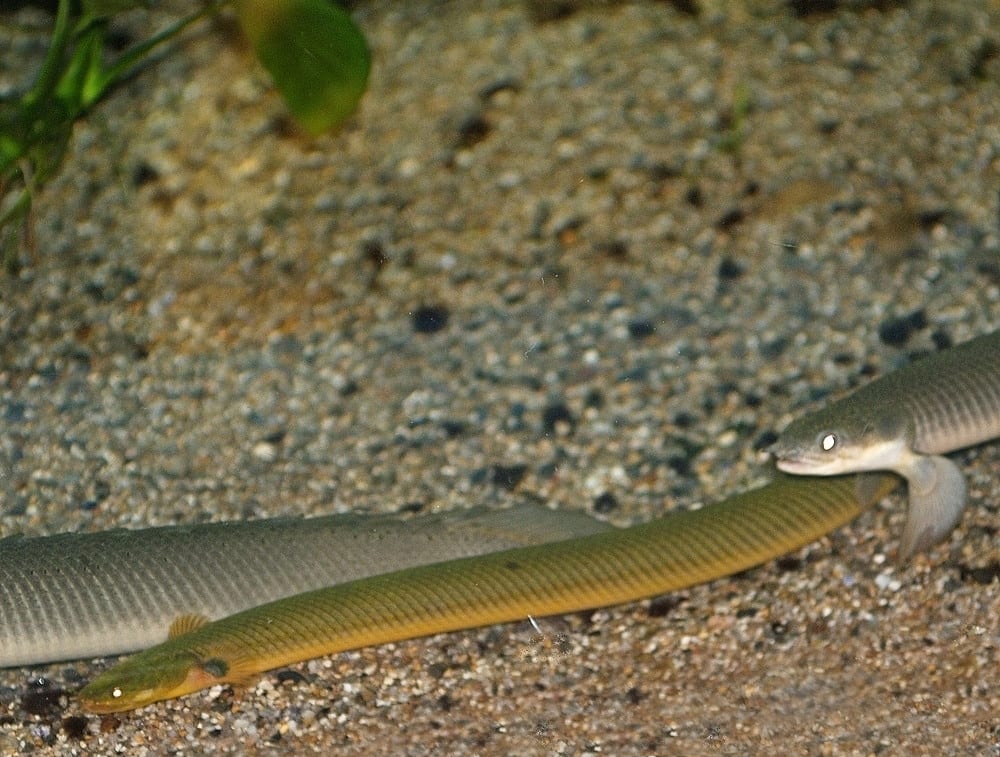
 © Daiju Azuma / CC BY-SA 2.5
Ropefish
The Ropefish is a striking tropical fish with a slender, rope-like body traced with a distinctive net-like pattern. Native to brackish estuaries in West Africa, it lacks pelvic fins and moves with a fluid, eel-like undulation that gives it real character. Calm and mostly nocturnal, it tends to stay hidden during the day and becomes active in search of food after dark. It's a hardy fish that tolerates changing conditions well, making it suitable for intermediate keepers, but it's also a notorious escape artist — a tightly sealed lid is essential for keeping one safely. Since it can grow up to 37cm, plan your tank size with its adult length in mind.
View Ropefish encyclopedia →0% commission on your first sales!Register by September 30, 2026 and your first 2 sales are commission-free!
Breeder Wanted!
List on BreederDirect and sell directly to customers nationwide!
Our 6 Transparency Commitments
All Tropical Fish listings include water quality, temperament, and tank size information from verified Breeder.
- Origin Disclosed
- Real Photos
- Water Quality Disclosed
- Recommended Tank Size
- Temperament Disclosed
- Breed Line Disclosed
Browse all 301 breeds
Water Type
Care Level
Verified breeders wanted for Tropical Fish
Breeders are signing up now ahead of launch. Subscribe to be notified when new listings go live.
Getting alerts is free with a member account. When new listings match your saved search, we'll notify you by email and in-app.
Browse other categories
Verified breeders (preview)
Are you raising tropical fish?
Register as a breeder and connect with buyers directly.
Apply as a breederRopefish key facts
- Care level
- Intermediate
- Lifespan
- 10-15 years
- Size
- Up to 37cm SL
- Temperature
- 23〜30℃
- Diet
- Meaty live and frozen foods such as prawns, earthworms, mussel and bloodworm
- Tank
- Seriously Fish suggests a 150 x 60cm base of about 540 litres. Use a soft substrate with driftwood caves and dense planting. It escapes exceptionally readily, so seal every gap, including around filter pipework.
- Water Temperature & Quality
- Seriously Fish gives 23-30C, pH 6.0-7.5 and 5-20 dGH, while FishBase records pH 6.0-8.0, 5-19 dH and 22-28C. It occurs in brackish water but is kept in fresh water without difficulty.
- Tank Mates
- It eats anything small enough but is not territorial and can be kept in groups. Synodontis, larger characins, severums and angelfish suit it. Very boisterous species will outcompete it at feeding time.
- Diet & Feeding
- Carnivorous and often refuses dried food. Offer prawns, earthworms, mussel and bloodworm, live or frozen. It moves slowly, so feeding after lights-out with food that reaches the bottom works best.
- Breeding & Spawning
- Breeding has not been recorded in aquaria. Males have 12-14 dorsal fin rays against 9-12 in females, and the male's anal fin thickens in breeding condition.
- Health & Notes
- It breathes air and will drown if it cannot surface. Escapes are the commonest cause of loss, so check the lid and every gap routinely. The IUCN rates it Near Threatened because of habitat loss; it is not listed by CITES.
About Ropefish
The Ropefish is a hardy West African tropical fish with a net-patterned, eel-like body. Suited to intermediate keepers, it grows up to 37cm and is a skilled escape artist.
7 things to know before welcoming a Ropefish
1A Sealed Lid Is Essential
Their slender body lets them squeeze through even small gaps, so a tightly sealed tank lid is a must. It's also worth blocking off any openings around filter tubing or cords.
2Grows Up to 37cm
Adults can reach up to 37cm in length, so it's best to plan for a tank sized for full growth from the start. Given its elongated shape, tank length matters more than depth.
3Nocturnal and Shy by Day
It typically hides among driftwood or decorations during the day and becomes more active at night. Providing driftwood or tube-like hiding spots helps it feel secure.
4Prefers Slightly Brackish Water
In the wild, it lives in brackish estuaries in West Africa. While it can be kept in freshwater, avoiding sudden water quality changes and maintaining stable conditions supports its health.
5Hardy but Needs Some Experience
It's a hardy fish that adapts well to changing conditions, but its unusual body shape and habits call for some prior experience, which is why it's considered suitable for intermediate keepers. First-time fishkeepers should build up basic experience before taking one on.
6Care with Tank Mates
It's generally docile and rarely aggressive toward other fish, but it may eat tank mates small enough to fit in its mouth. Choose tank mates with size compatibility in mind.
7Responds Well to Live-Like Food
As a nocturnal feeder, it relies on smell and vibration to locate food. Some individuals take time to adjust to prepared foods, so using frozen foods during the transition period can help.
Frequently asked questions about Ropefish
- Q.Can beginners keep a Ropefish?
- A.It's a hardy fish that tolerates environmental changes well, but managing its escape risk and nocturnal habits requires some know-how, so it's considered suitable for intermediate keepers. Building basic fishkeeping experience first is recommended.
- Q.Why is it prone to escaping?
- A.Its slender, rope-like body lets it wriggle through even the smallest gaps in a tank setup. A tank with a fully sealable lid is essential to prevent this.
- Q.How large does it grow?
- A.Adults can grow up to about 37cm in length. Given its elongated body shape, it's best to prepare a sufficiently long tank in advance for its full-grown size.
- Q.Can it be kept with other fish?
- A.It's generally calm and not very aggressive, but it may eat smaller fish that fit in its mouth. Choosing tank mates of a similar size is the safer approach.
- Q.Is it subject to CITES trade restrictions?
- A.The Ropefish is not listed under CITES and falls outside that international trade regulation framework.
Useful tools for Ropefish care
Learn more about Ropefish in the encyclopedia
View Ropefish encyclopedia entry →
Care difficulty, lifespan, size and diet — all basics covered.
More in this category
Can't find the one you're looking for?
Post your wishes for free and breeders with matching animals will contact you with introductions.