Source: Wikimedia Commons
Ropefish
IntermediateErpetoichthys calabaricus
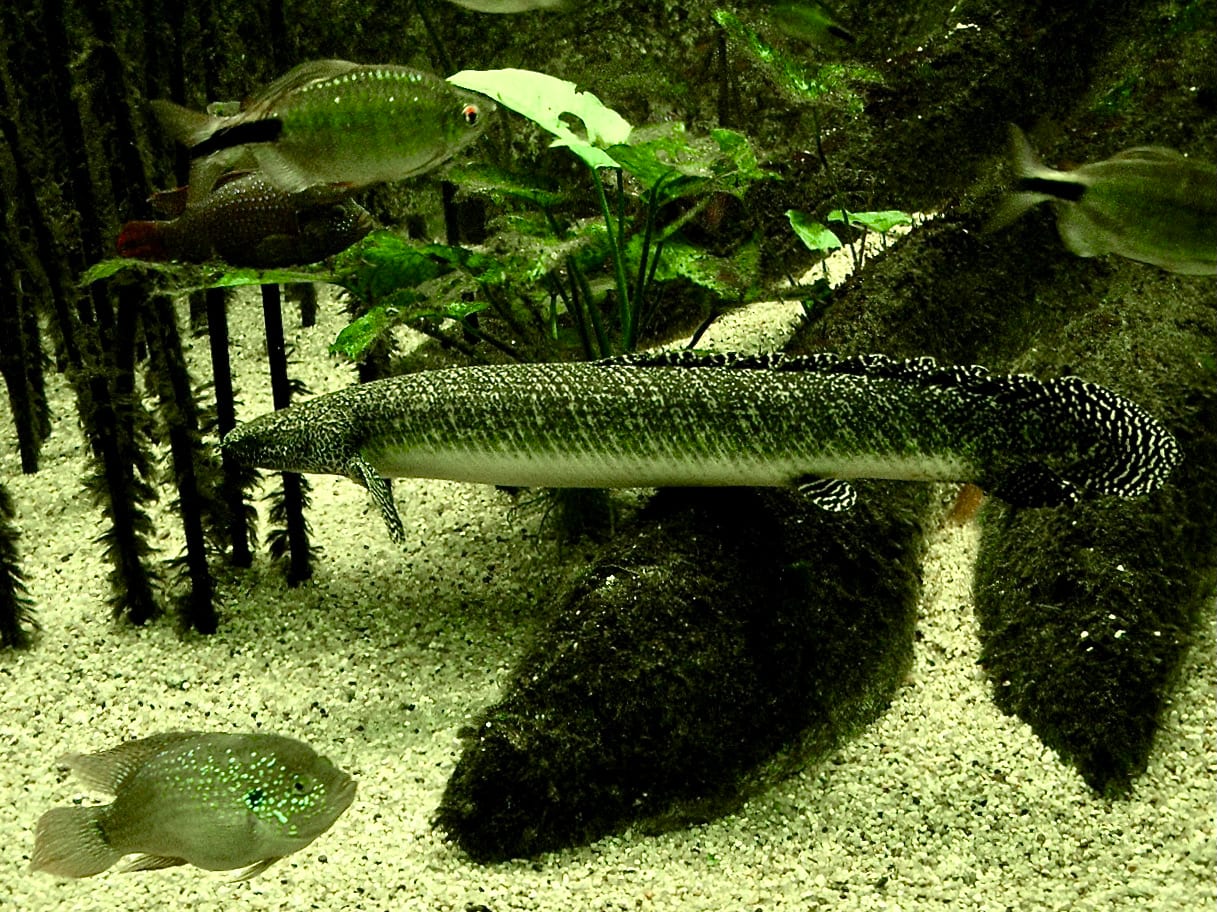
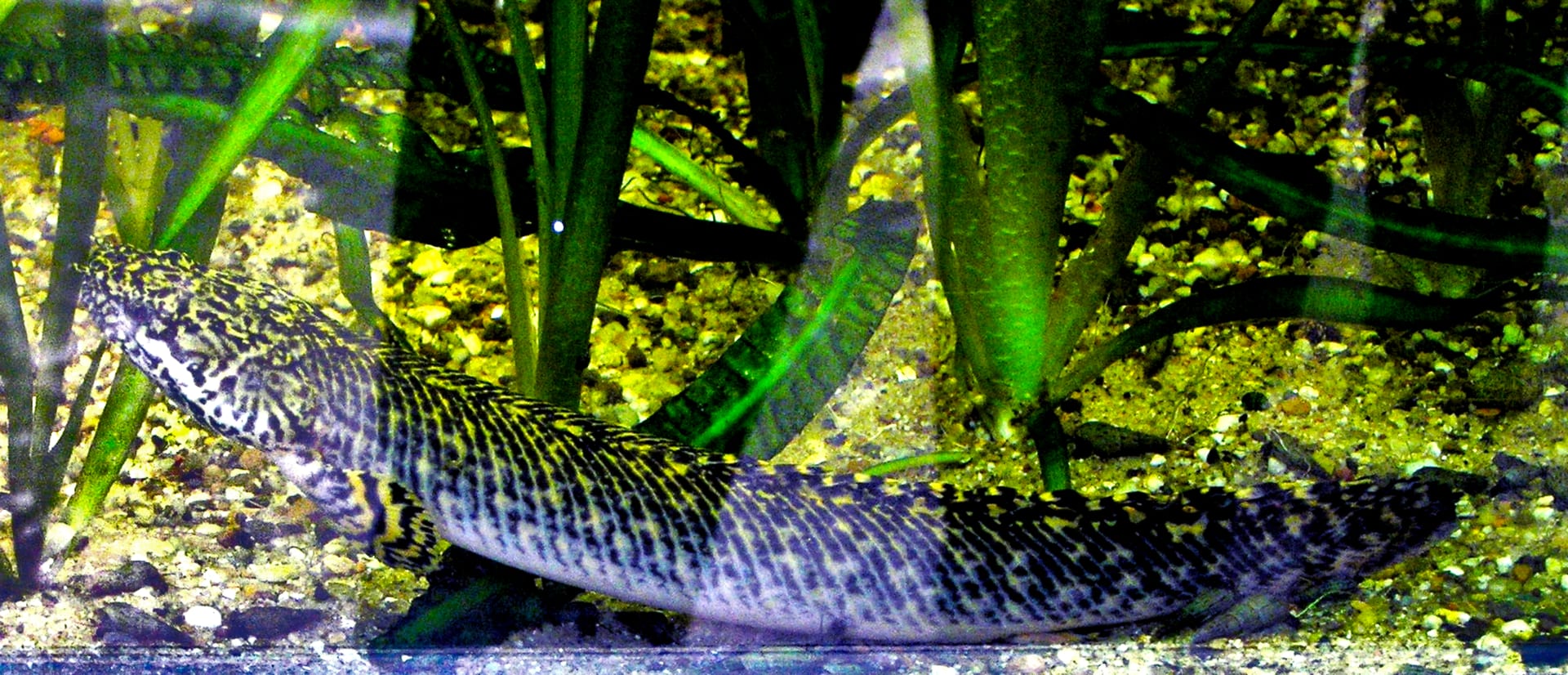
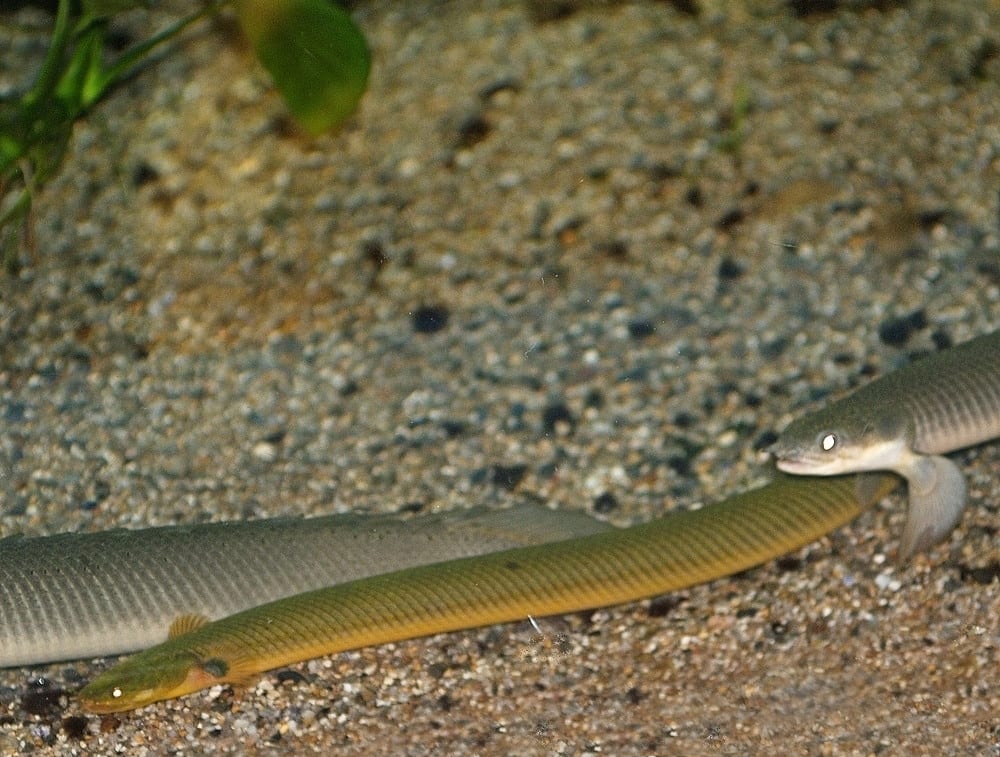
A polypterid with a long, rope-like body covered in a net-like pattern, from the estuaries of West Africa. It has no pelvic fins. Hardy but a notorious escape artist, it must have a tightly sealed lid.
Difficulty
Intermediate
Temperature
23〜30℃
Lifespan
10-15 years
Size
Up to 37cm SL
Diet
Meaty live and frozen foods such as prawns, earthworms, mussel and bloodworm
About
The ropefish, Erpetoichthys calabaricus, lives in estuaries from the Oueme in Benin to the Sanaga in Cameroon and is the only species in its genus. FishBase records a maximum of 37cm SL, 110-113 vertebrae, pH 6.0-8.0, 5-19 dH and 22-28C. It lacks pelvic fins and its dorsal fin is reduced to a row of separate spines. Seriously Fish gives 23-30C, pH 6.0-7.5, 5-20 dGH and a 150 x 60cm base of about 540 litres, and recommends a densely planted tank with a soft substrate. It is barely territorial and can be kept in small groups. Nocturnal and weak-sighted, it feeds by smell, and since the swim bladder acts as a lung it must reach the surface. It escapes exceptionally readily, so every gap in the cover must be closed. The IUCN rates it Near Threatened and it is not listed by CITES.
Source: Wikipedia (CC BY-SA 4.0)
Lifespan of the Ropefish
The Ropefish lives 10-15 years.
Size of the Ropefish
The Ropefish grows to Up to 37cm SL.
Temperature & humidity for the Ropefish
The ideal temperature for the Ropefish is 23〜30℃.
Basic Info
Origin
West Africa (estuaries from the Oueme in Benin to the Sanaga in Cameroon)
Lifespan
10-15 years
Size
Care Specifications
- pH
- 6–7.5
- Hardness (GH)
- 5–20 dGH
- Water Temp.
- 23–30℃
- Min. Tank
- 540 L
PeacefulGroupBreeding: Very hard
Sources: FishBase / Seriously Fish
References & Sources
Edited & verified by: BreederDirect editorial team
The taxonomic, regulatory, and husbandry data on this page are compiled and verified against the authoritative primary sources below.
Taxonomy & Authority
Accepted name: Erpetoichthys calabaricus Smith, 1865
Synonyms: Calamoichthys calabaricus
Authority databases: FishBase
Nomenclature follows global taxonomic authority databases.
Regulations & Conservation Status
Not CITES-listedIUCN NT · Near Threatened
Sources: CITES Appendices (species not listed) / IUCN Red List
Regulations may change. Always verify the latest information with the relevant authorities.
Ropefish Listings
Loading latest listingsFind listings for this species