Source: Wikimedia Commons
Lapradei Bichir
AdvancedPolypterus bichir
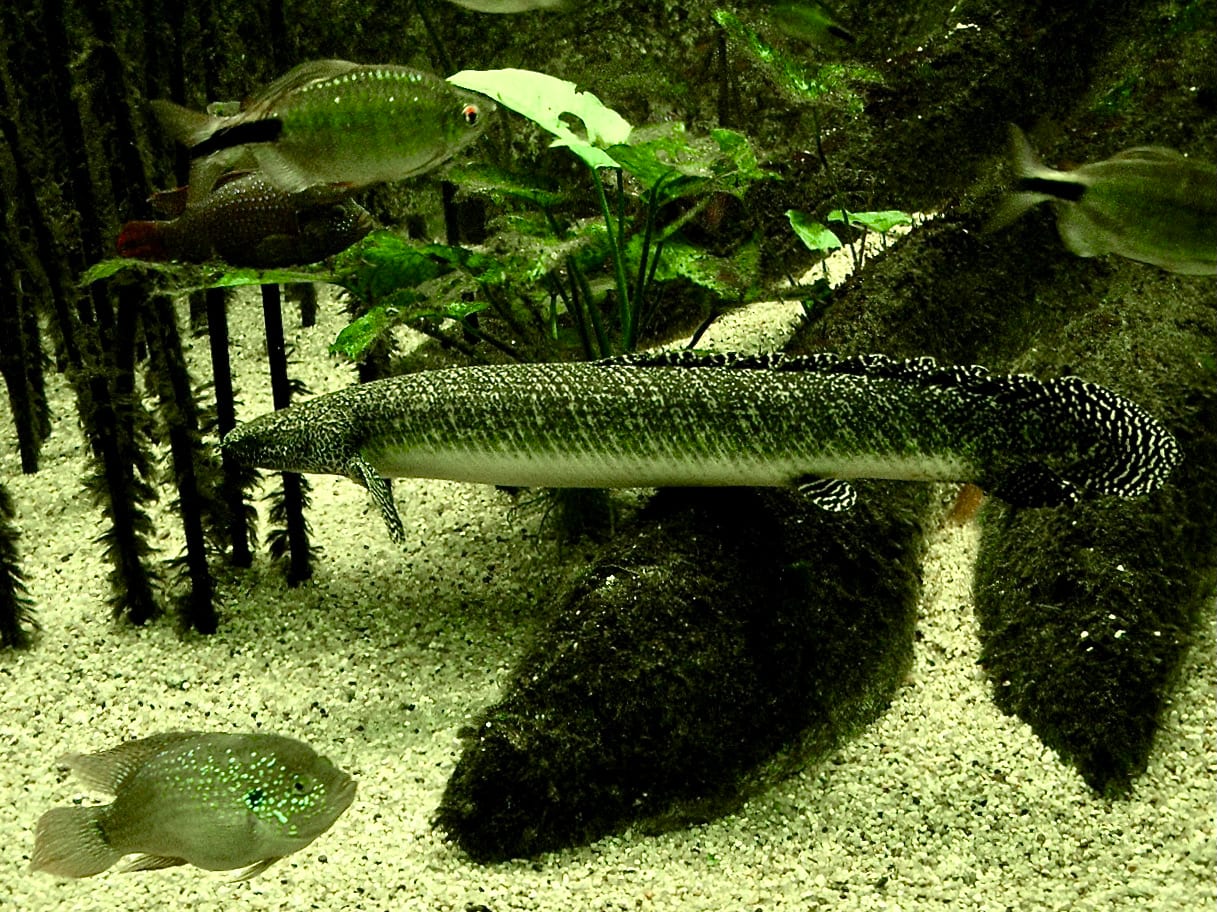
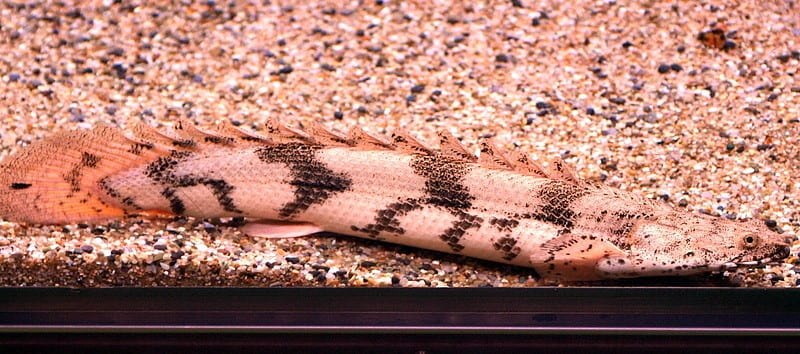
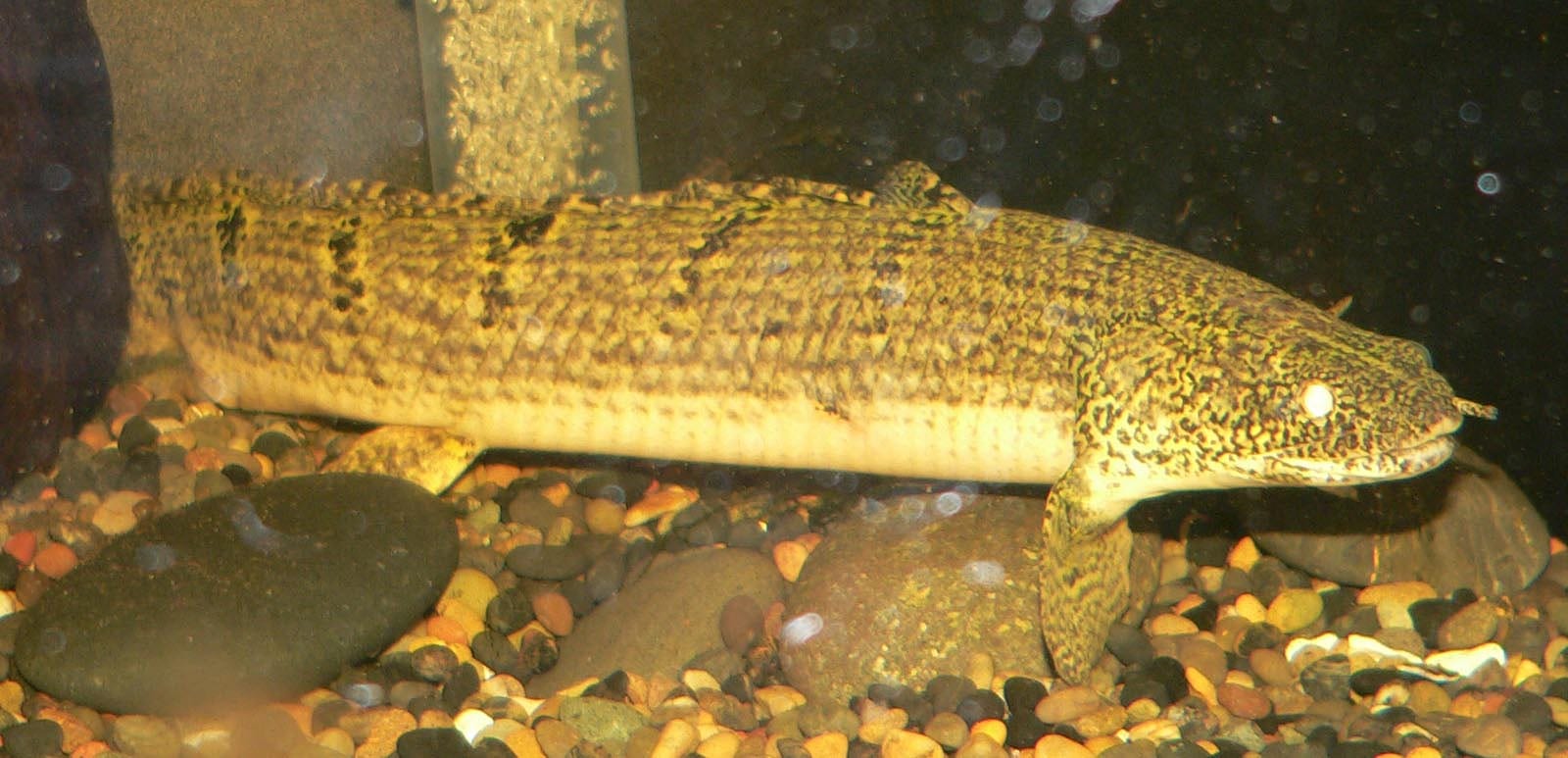
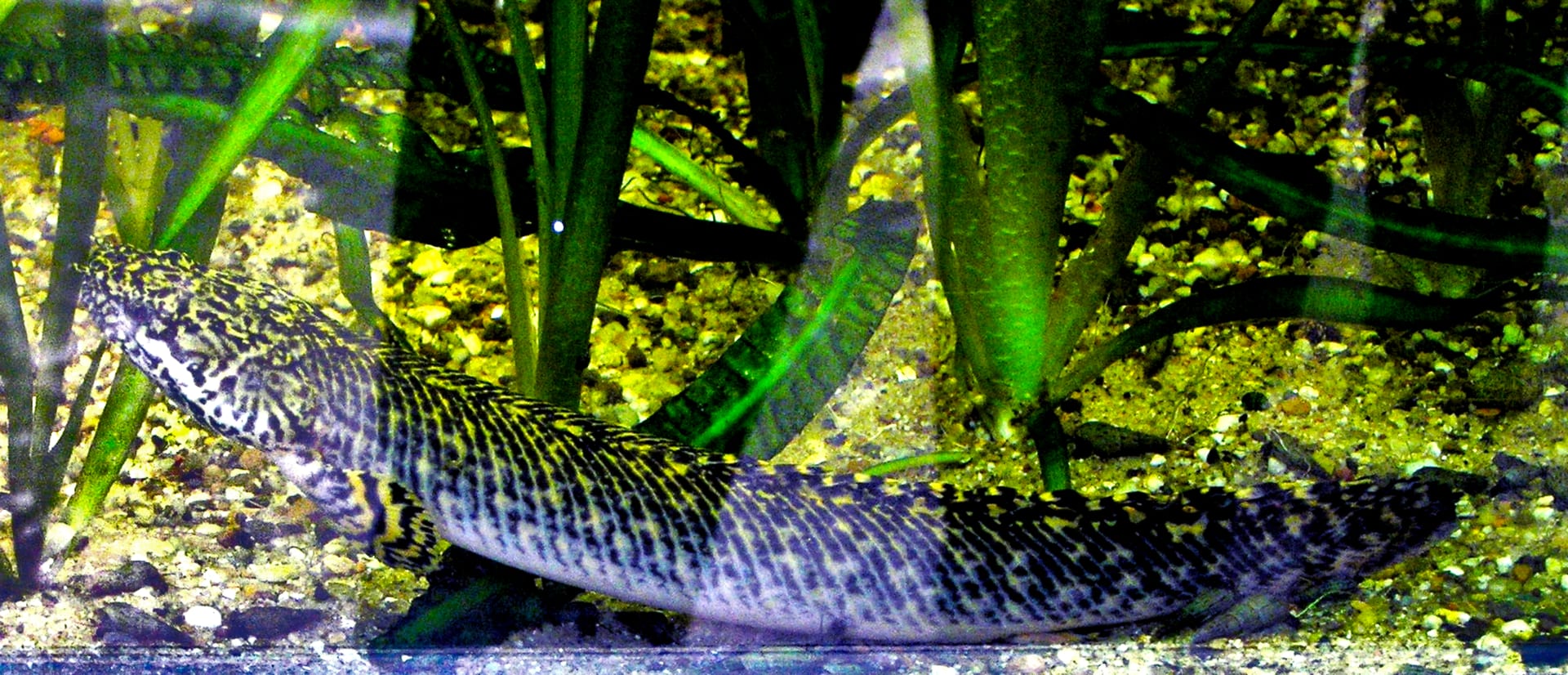
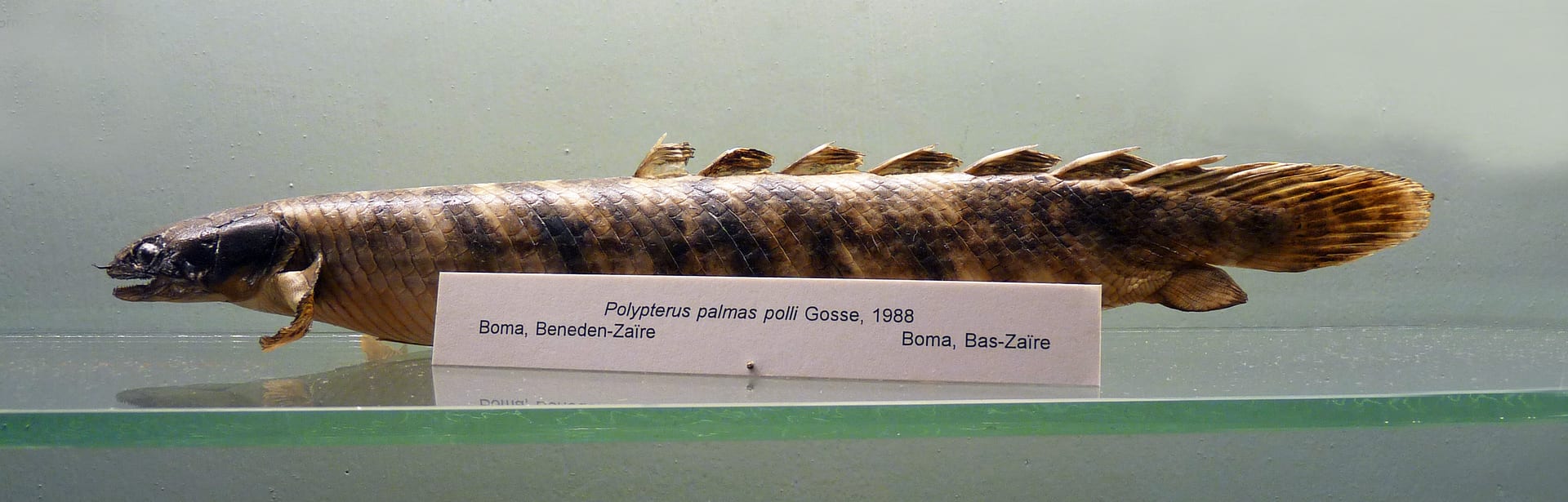
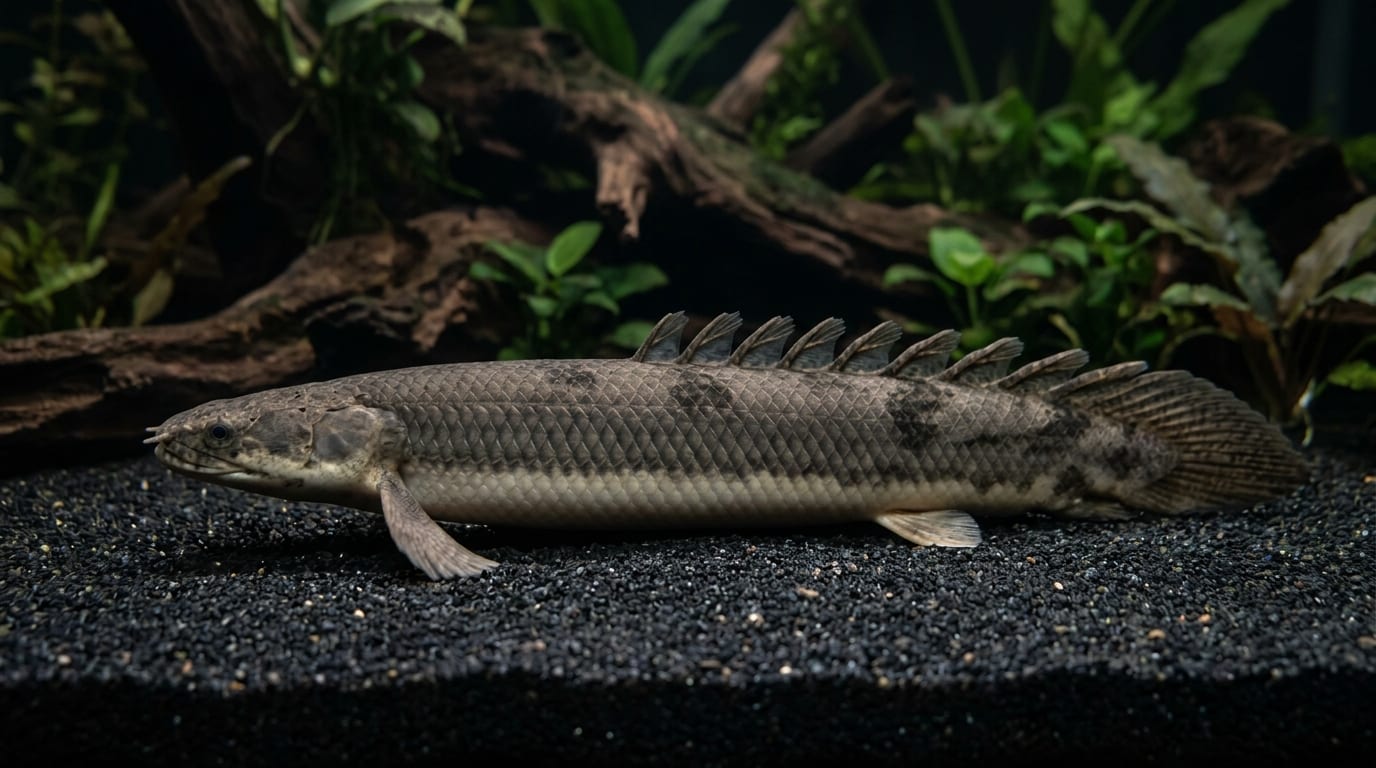
A large bichir marked with fine black spots and bars over a yellowish-brown body. FishBase records a maximum of 74cm TL and 2.7kg. With 13-18 dorsal finlets, the highest count in the genus, and a thick body, it is an imposing fish.
Difficulty
Advanced
Temperature
22〜28℃
Lifespan
10-20 years
Size
Up to 74cm TL
Diet
Meaty live and frozen foods such as prawns, earthworms, mussel and lancefish
About
Lapradei bichir is a trade name for Polypterus bichir from the Chad and Nile basins and West African rivers. It was once separated as the subspecies P. bichir lapradei, which FishBase now treats as a synonym of P. bichir. FishBase records a maximum of 74cm TL, 2.7kg and 13-18 dorsal finlets, the high finlet count being the key character in the genus. For P. bichir bichir, Seriously Fish gives 22-28C, pH 6.0-8.0, 5-25 dGH and a 180 x 60cm base of about 648 litres. It lives in shallow lake margins, rivers and marshes, and in the aquarium does best over sand with driftwood and smooth rocks for cover. Nocturnal and reliant on smell, it eats any fish that fits in its mouth. There is no record of captive breeding. The IUCN rates it Least Concern and it is not listed by CITES.
Source: Wikipedia (CC BY-SA 4.0)
Lifespan of the Lapradei Bichir
The Lapradei Bichir lives 10-20 years.
Size of the Lapradei Bichir
The Lapradei Bichir grows to Up to 74cm TL.
Temperature & humidity for the Lapradei Bichir
The ideal temperature for the Lapradei Bichir is 22〜28℃.
Basic Info
Origin
Africa (Chad and Nile basins and West African rivers)
Lifespan
10-20 years
Size
Care Specifications
- pH
- 6–8
- Hardness (GH)
- 5–25 dGH
- Water Temp.
- 22–28℃
- Min. Tank
- 648 L
Semi-aggressiveSolitaryBreeding: Very hard
Sources: FishBase / Seriously Fish
References & Sources
Edited & verified by: BreederDirect editorial team
The taxonomic, regulatory, and husbandry data on this page are compiled and verified against the authoritative primary sources below.
Taxonomy & Authority
Accepted name: Polypterus bichir Lacepède, 1803
Synonyms: Polypterus bichir lapradei, Polypterus lapradei
Authority databases: FishBase
Nomenclature follows global taxonomic authority databases.
Regulations & Conservation Status
Not CITES-listedIUCN LC · Least Concern
Sources: CITES Appendices (species not listed) / IUCN Red List
Regulations may change. Always verify the latest information with the relevant authorities.
Lapradei Bichir Listings
Loading latest listingsFind listings for this species