Source: Wikimedia Commons
Marbled Bichir
IntermediatePolypterus palmas
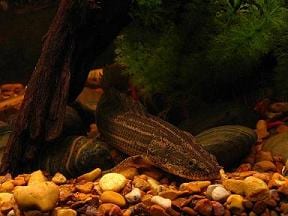
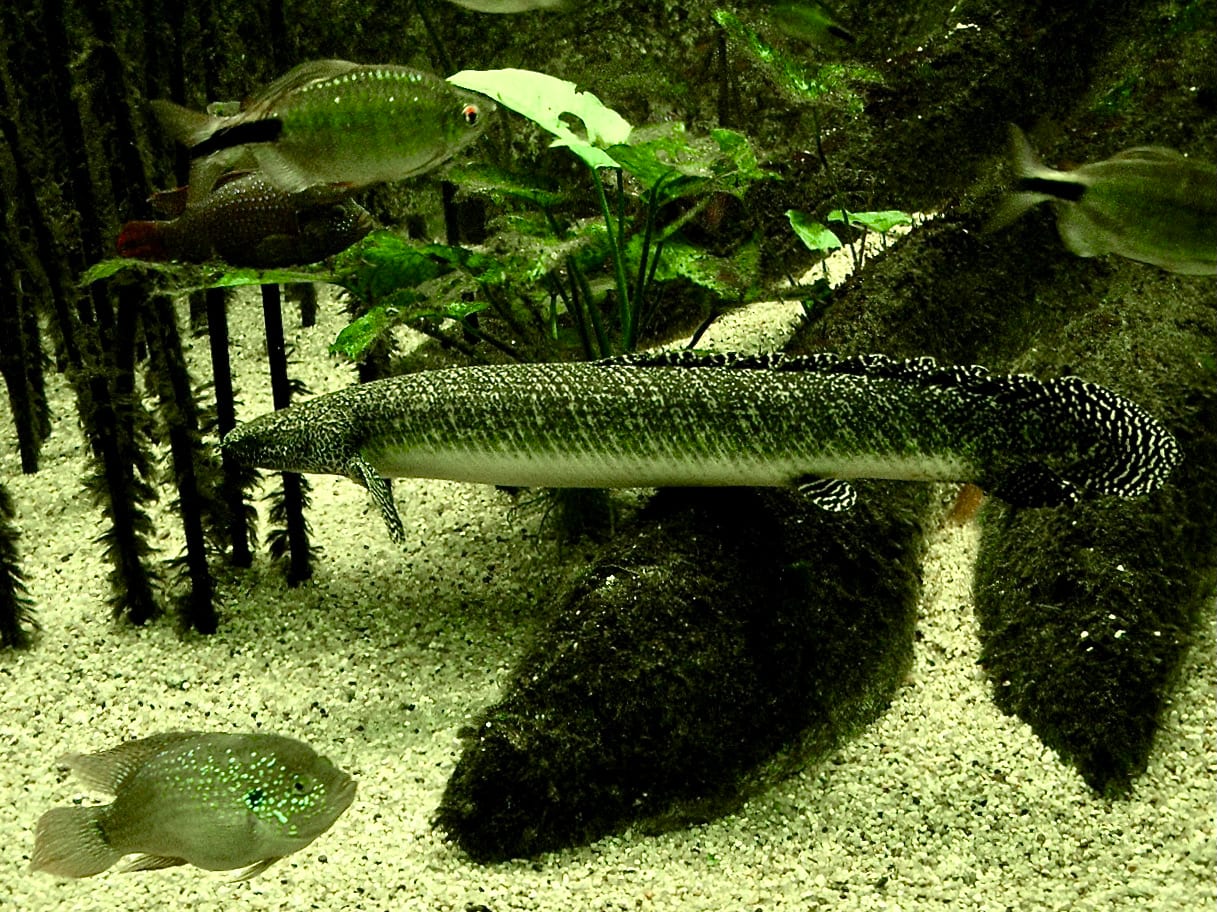
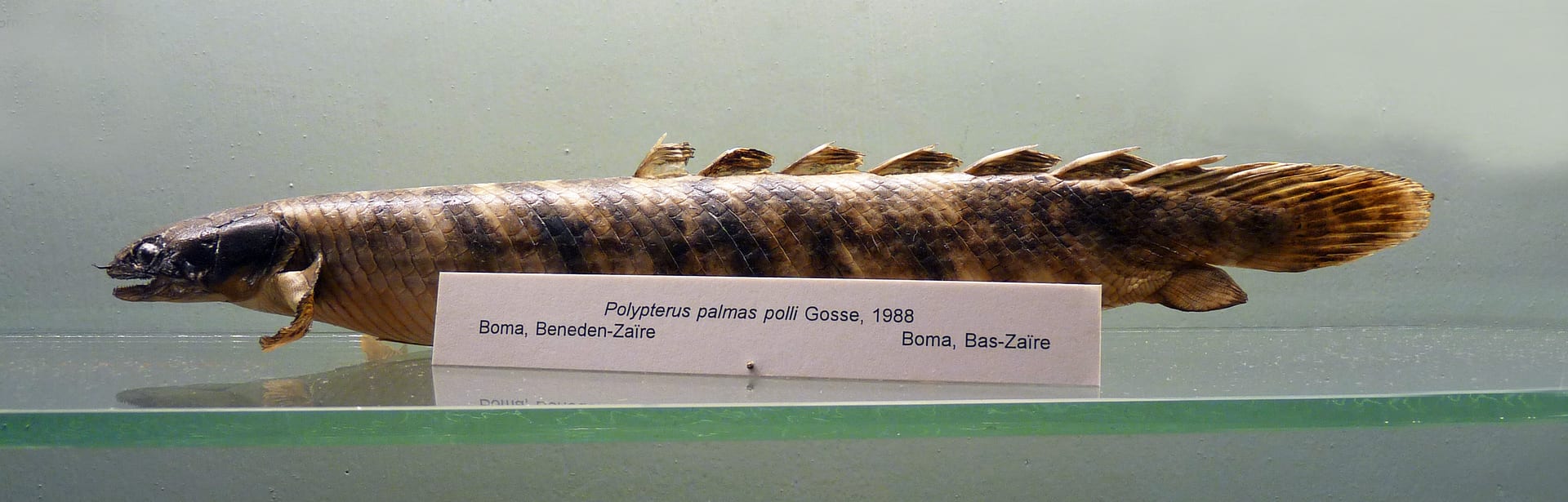
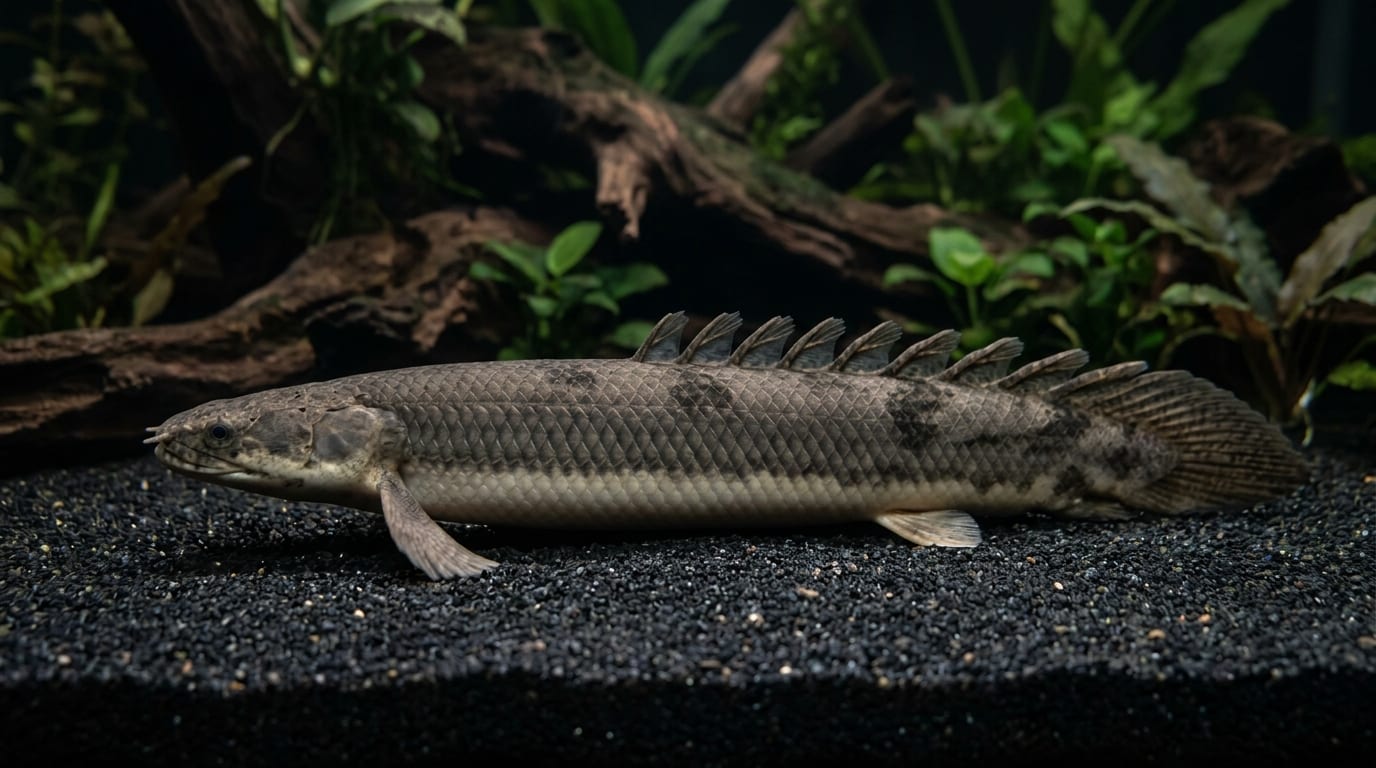
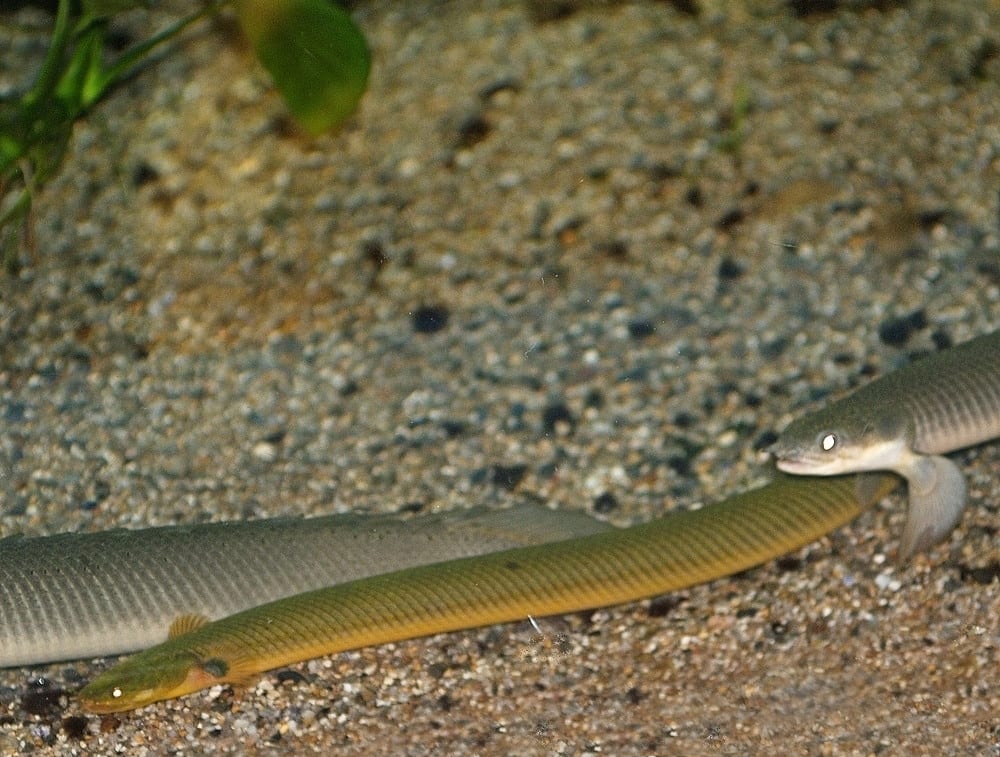
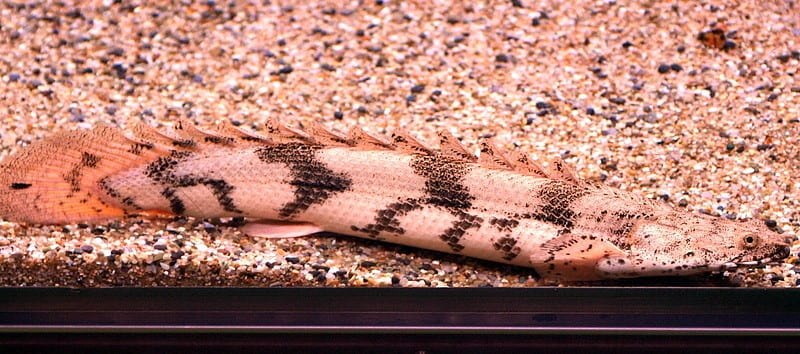
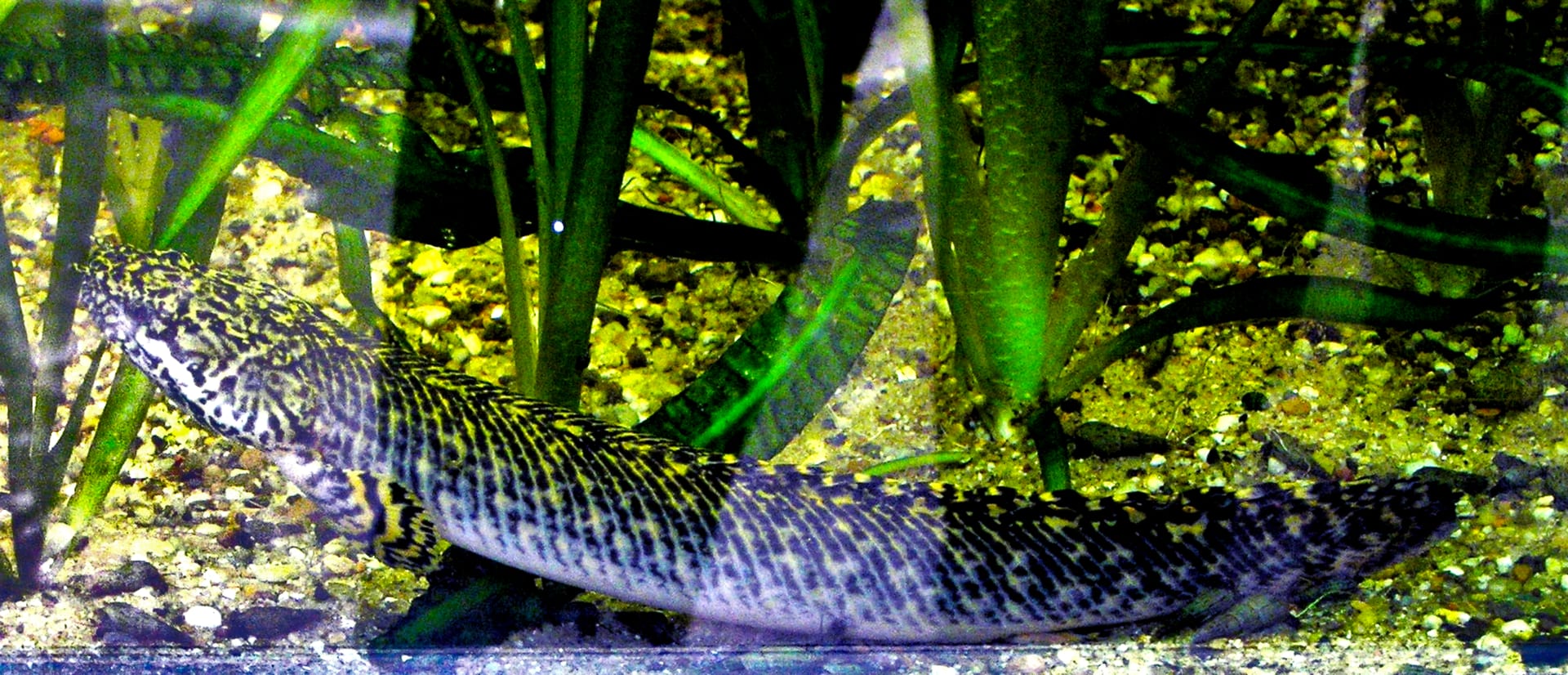
A medium-sized bichir with irregular mottling over a dark brown body. Its upper jaw is longer than the lower and FishBase records a maximum of 35cm SL. Hardy and widely traded, it is one of the easier bichirs to start with.
Difficulty
Intermediate
Temperature
25〜28℃
Lifespan
10-15 years
Size
Up to 35cm SL
Diet
Meaty live and frozen foods such as prawns, earthworms, mussel and lancefish
About
Polypterus palmas is a medium-sized polypterid from the Gulf of Guinea coastal rivers between Guinea-Bissau and Liberia and the upper Cavally in Cote d'Ivoire. FishBase records a maximum of 35.3cm SL and 7-10 dorsal finlets, and diagnoses it by an upper jaw longer than the lower and a pectoral fin that does not reach the first dorsal ray. Wild records give pH up to 7.0, hardness to 10 dH and 26-28C. Seriously Fish suggests 25-28C, pH 6.0-7.0, 5-15 dGH and a 120 x 45cm base of about 205 litres. It stays small for the genus, so a standard large aquarium will house it for life. Nocturnal and guided by smell, it eats any fish that fits in its mouth. The swim bladder works as a lung, so surface access is needed, and it is an escape artist, so a lid is essential. The IUCN rates it Least Concern.
Source: Wikipedia (CC BY-SA 4.0)
Lifespan of the Marbled Bichir
The Marbled Bichir lives 10-15 years.
Size of the Marbled Bichir
The Marbled Bichir grows to Up to 35cm SL.
Temperature & humidity for the Marbled Bichir
The ideal temperature for the Marbled Bichir is 25〜28℃.
Basic Info
Origin
West Africa (Gulf of Guinea coastal rivers from Guinea-Bissau to Liberia and the upper Cavally)
Lifespan
10-15 years
Care Specifications
- pH
- 6–7
- Hardness (GH)
- 5–15 dGH
- Water Temp.
- 25–28℃
- Min. Tank
- 205 L
Semi-aggressiveSolitaryBreeding: Very hard
Sources: FishBase / Seriously Fish
References & Sources
Edited & verified by: BreederDirect editorial team
The taxonomic, regulatory, and husbandry data on this page are compiled and verified against the authoritative primary sources below.
Taxonomy & Authority
Accepted name: Polypterus palmas Ayres, 1850
Synonyms: Polypterus retropinnis lowei
Authority databases: FishBase
Nomenclature follows global taxonomic authority databases.
Regulations & Conservation Status
Not CITES-listedIUCN LC · Least Concern
Sources: CITES Appendices (species not listed) / IUCN Red List
Regulations may change. Always verify the latest information with the relevant authorities.
Marbled Bichir Listings
Loading latest listingsFind listings for this species