Source: Wikimedia Commons
Saddled Bichir
AdvancedPolypterus endlicherii
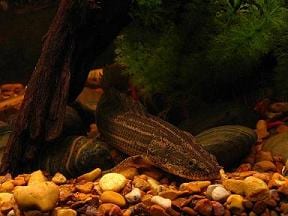
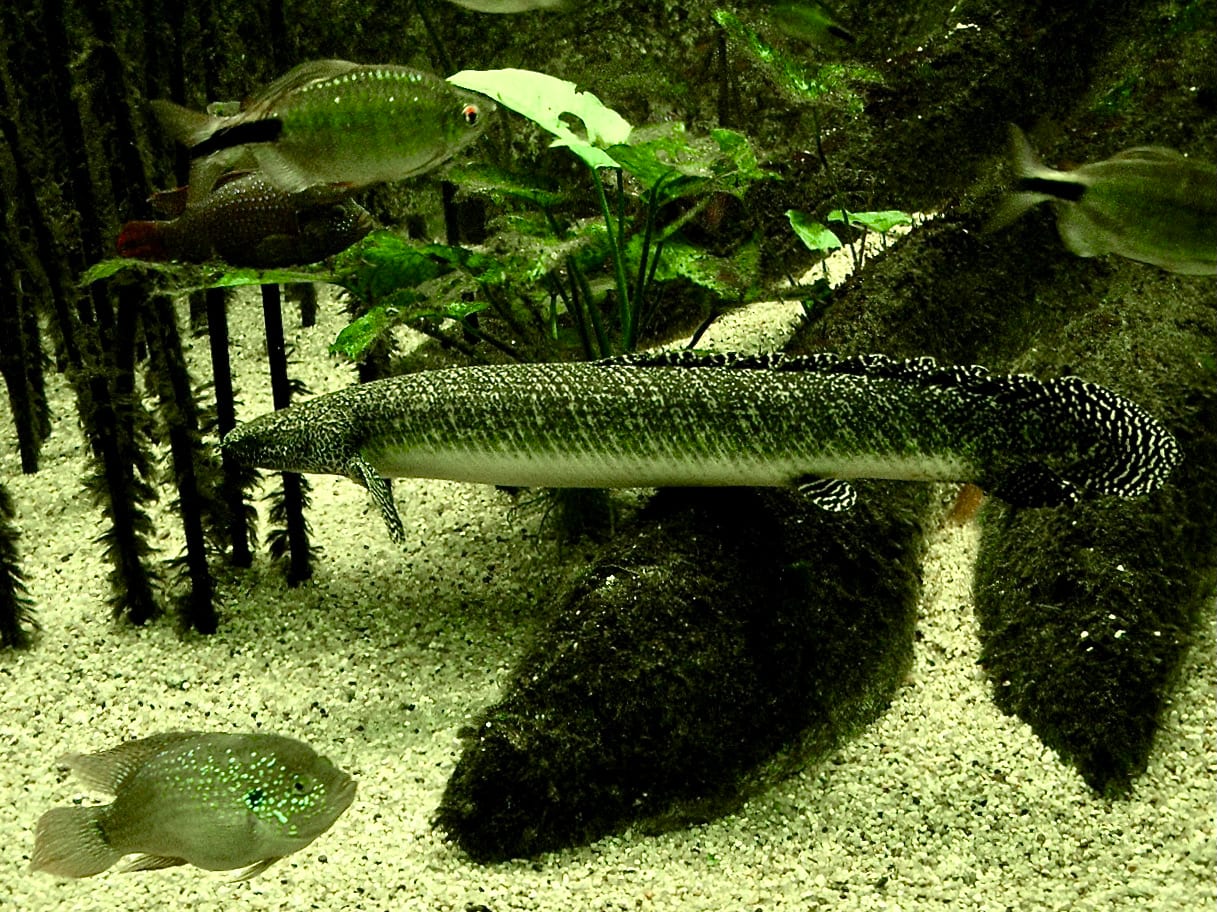
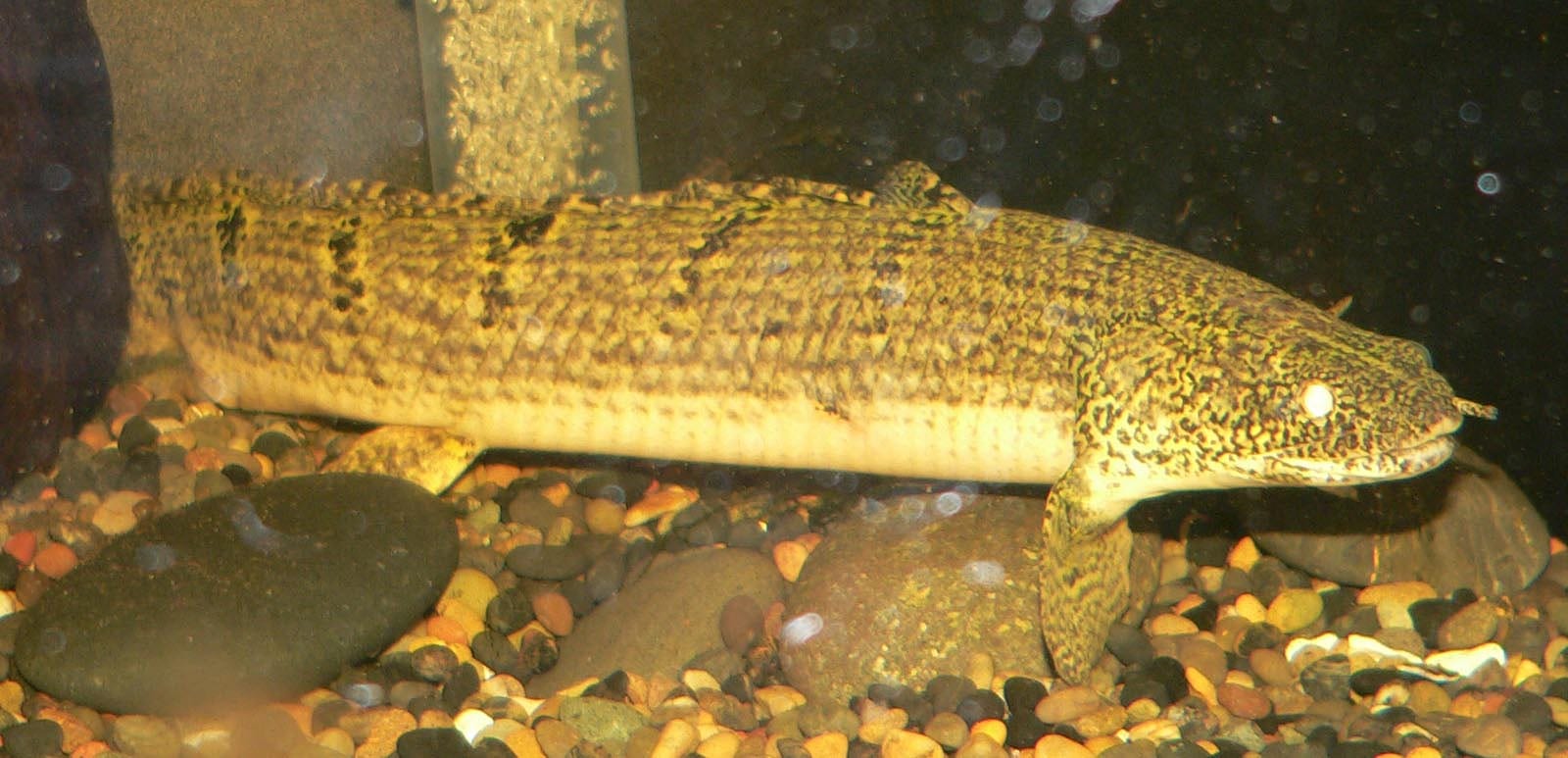
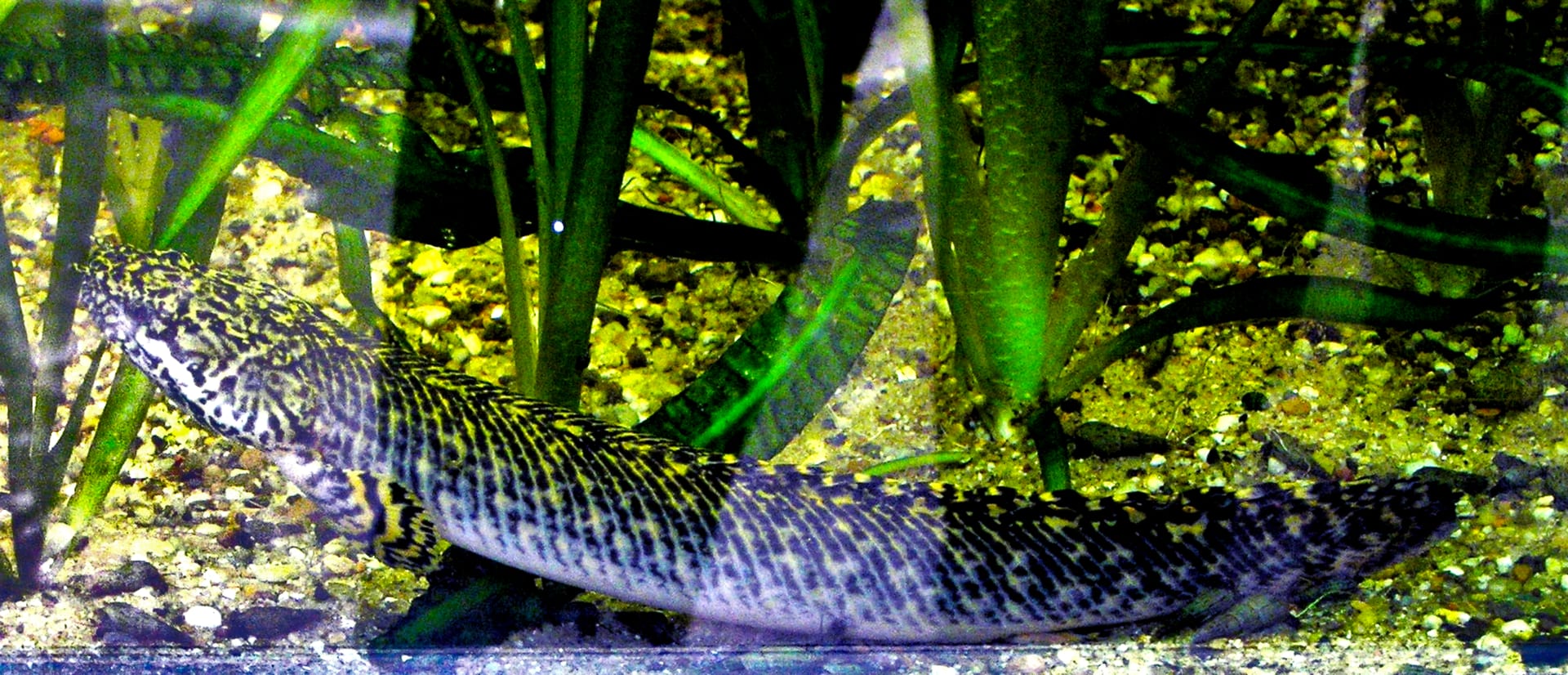
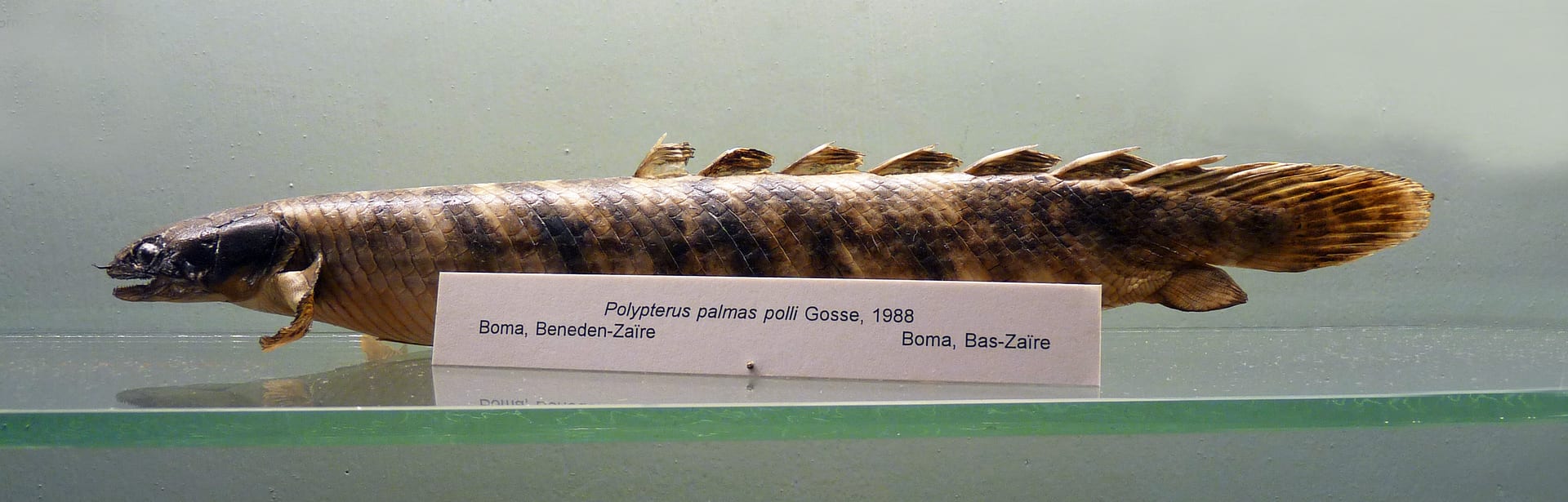
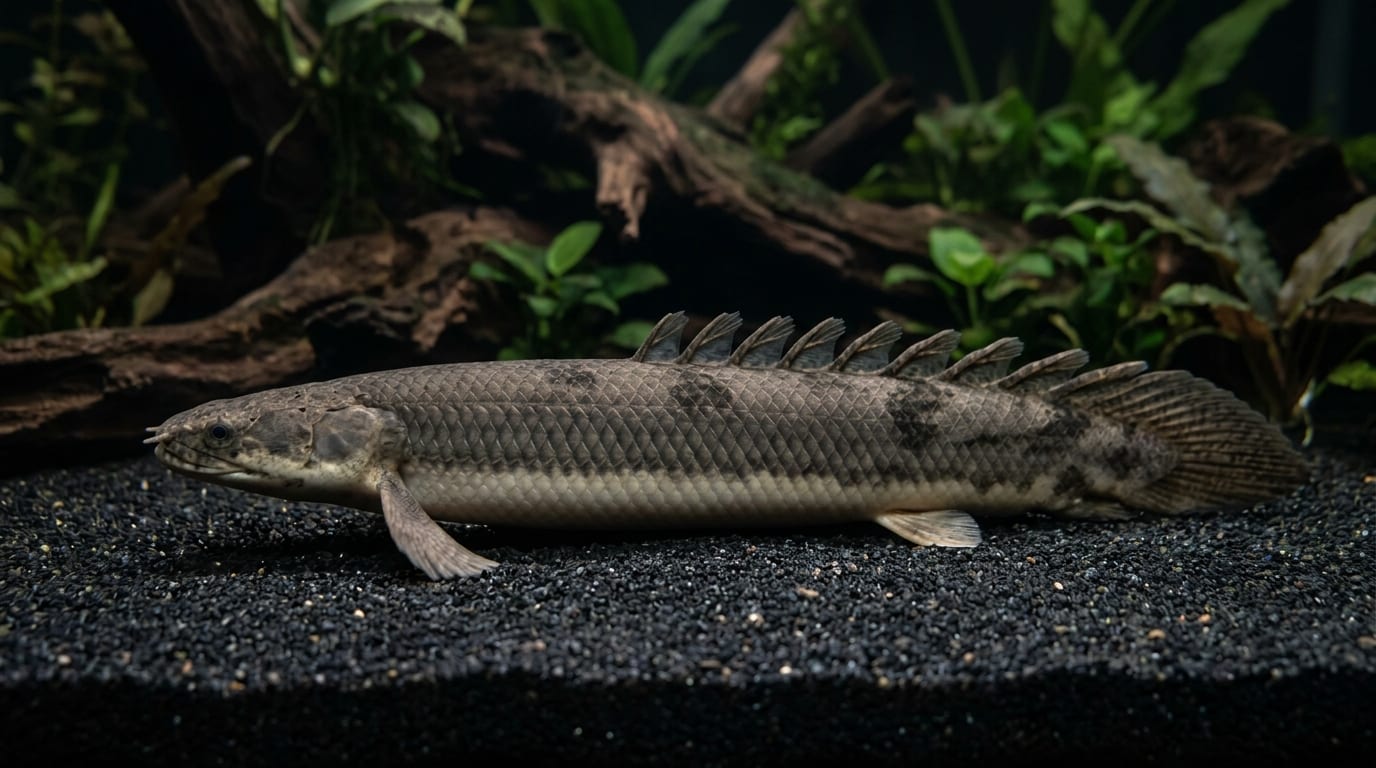
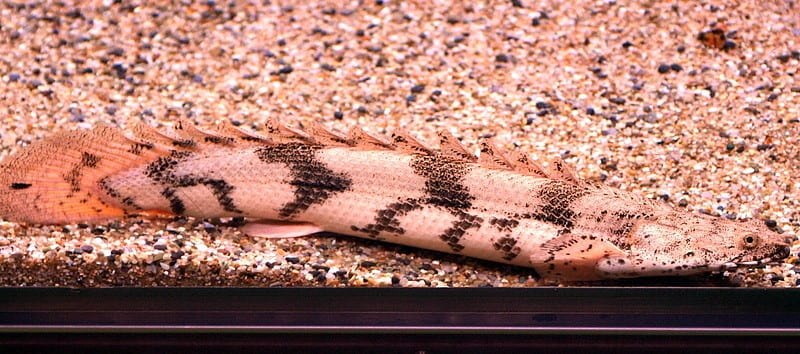
A large bichir with irregular black saddle bands over a yellowish-brown body. Its lower jaw is longer than the upper, and FishBase records a maximum of 65cm SL. It is predatory but not quarrelsome, and an adult needs a very large tank.
Difficulty
Advanced
Temperature
22〜27℃
Lifespan
12-20 years
Size
Up to 65cm SL
Diet
Meaty live and frozen foods such as prawns, earthworms, mussel and lancefish
About
Polypterus endlicherii is a large polypterid ranging widely across Africa in the Nile, Chad, Niger and Volta systems. FishBase records a maximum of 65.5cm SL and 3.4kg, maturity at 32cm, and diagnoses it by a lower jaw longer than the upper and a pectoral fin that reaches the first dorsal ray. The black saddle bands over a yellowish-brown ground vary greatly between individuals, and boldly marked fish are prized. Seriously Fish gives 22-27C, pH 6.0-8.0, 5-25 dGH and, for an adult, a 210 x 120cm base of about 2268 litres. Juveniles can be grown on in smaller tanks, but the final size should decide the setup. It is nocturnal, hunts by smell and eats any fish that fits in its mouth. Because the swim bladder serves as a lung, access to the surface is essential. The IUCN rates it Least Concern and it is not listed by CITES.
Source: Wikipedia (CC BY-SA 4.0)
Lifespan of the Saddled Bichir
The Saddled Bichir lives 12-20 years.
Size of the Saddled Bichir
The Saddled Bichir grows to Up to 65cm SL.
Temperature & humidity for the Saddled Bichir
The ideal temperature for the Saddled Bichir is 22〜27℃.
Basic Info
Origin
Africa (Nile, Chad, Niger and Volta basins)
Lifespan
12-20 years
Care Specifications
- pH
- 6–8
- Hardness (GH)
- 5–25 dGH
- Water Temp.
- 22–27℃
- Min. Tank
- 2268 L
Semi-aggressiveSolitaryBreeding: Hard
Sources: FishBase / Seriously Fish
References & Sources
Edited & verified by: BreederDirect editorial team
The taxonomic, regulatory, and husbandry data on this page are compiled and verified against the authoritative primary sources below.
Taxonomy & Authority
Accepted name: Polypterus endlicherii Heckel, 1847
Synonyms: Polypterus endlicheri
Authority databases: FishBase
Nomenclature follows global taxonomic authority databases.
Regulations & Conservation Status
Not CITES-listedIUCN LC · Least Concern
Sources: CITES Appendices (species not listed) / IUCN Red List
Regulations may change. Always verify the latest information with the relevant authorities.
Saddled Bichir Listings
Loading latest listingsFind listings for this species