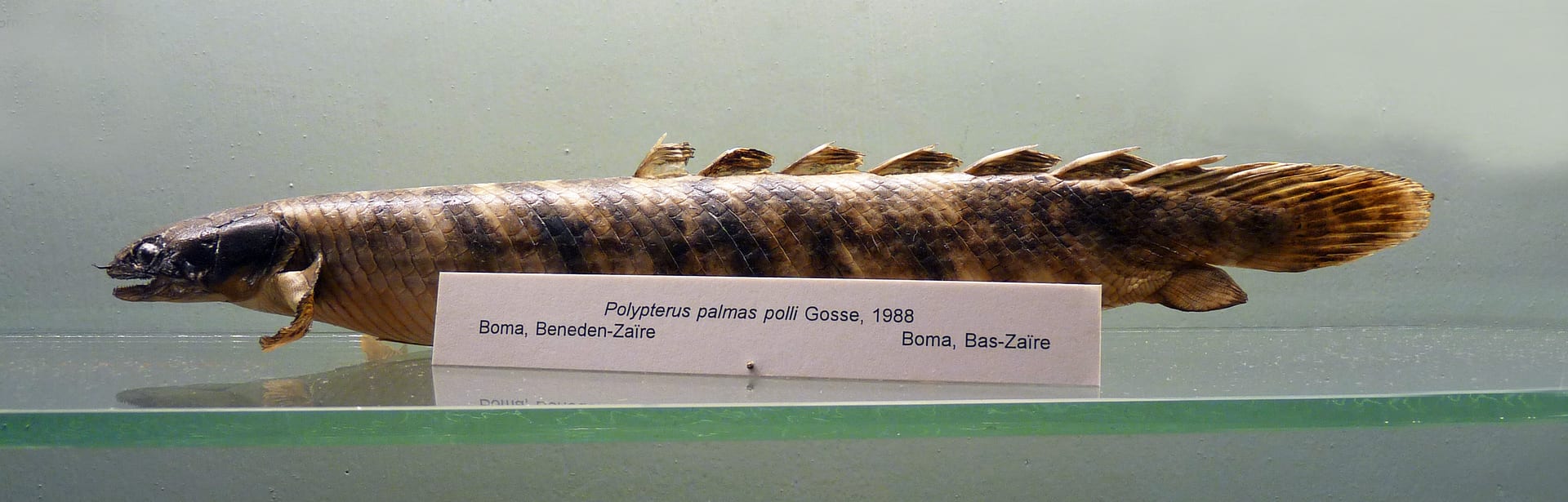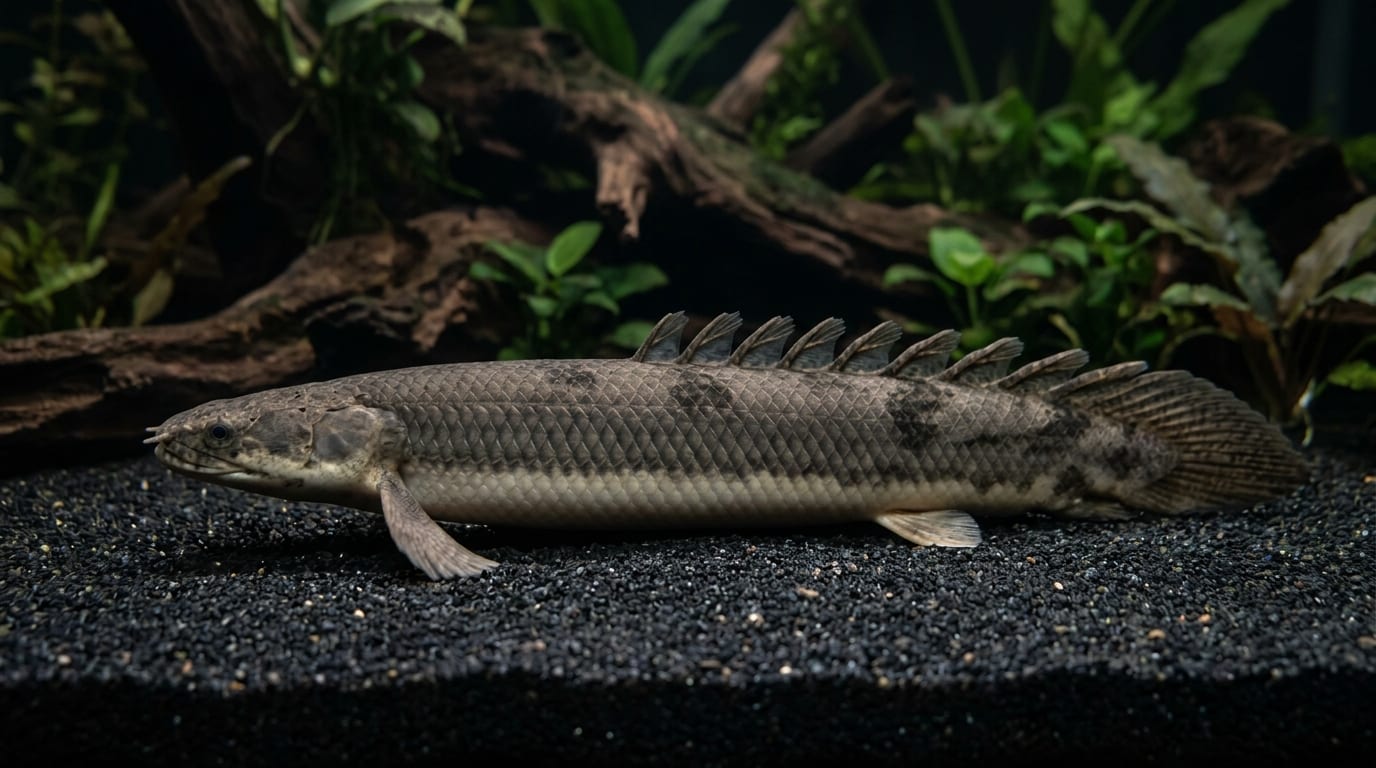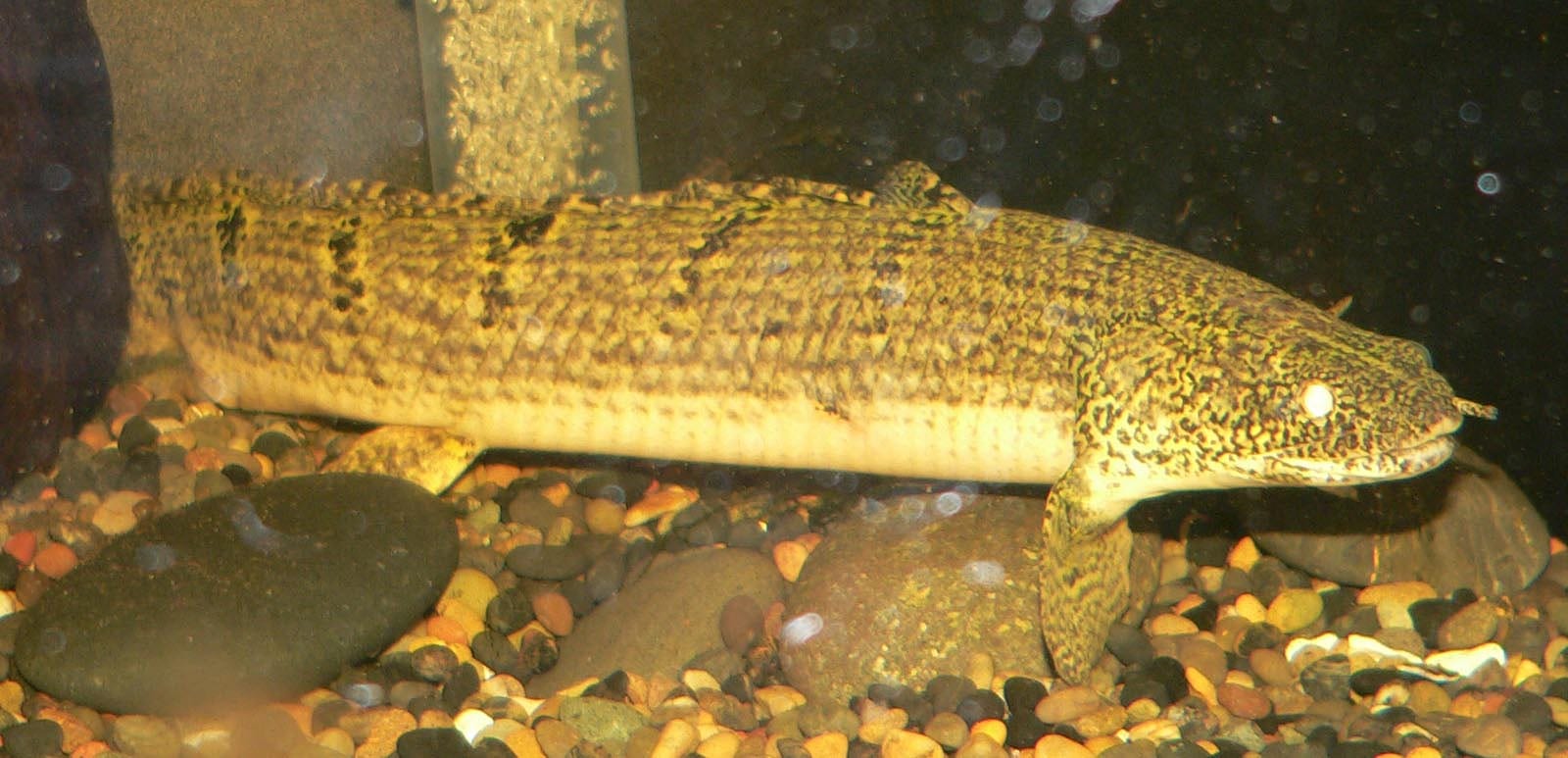
Source: Wikimedia Commons
Mottled Bichir
IntermediatePolypterus weeksii
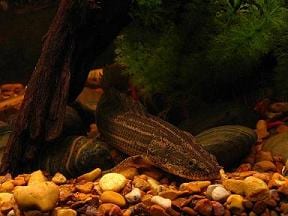
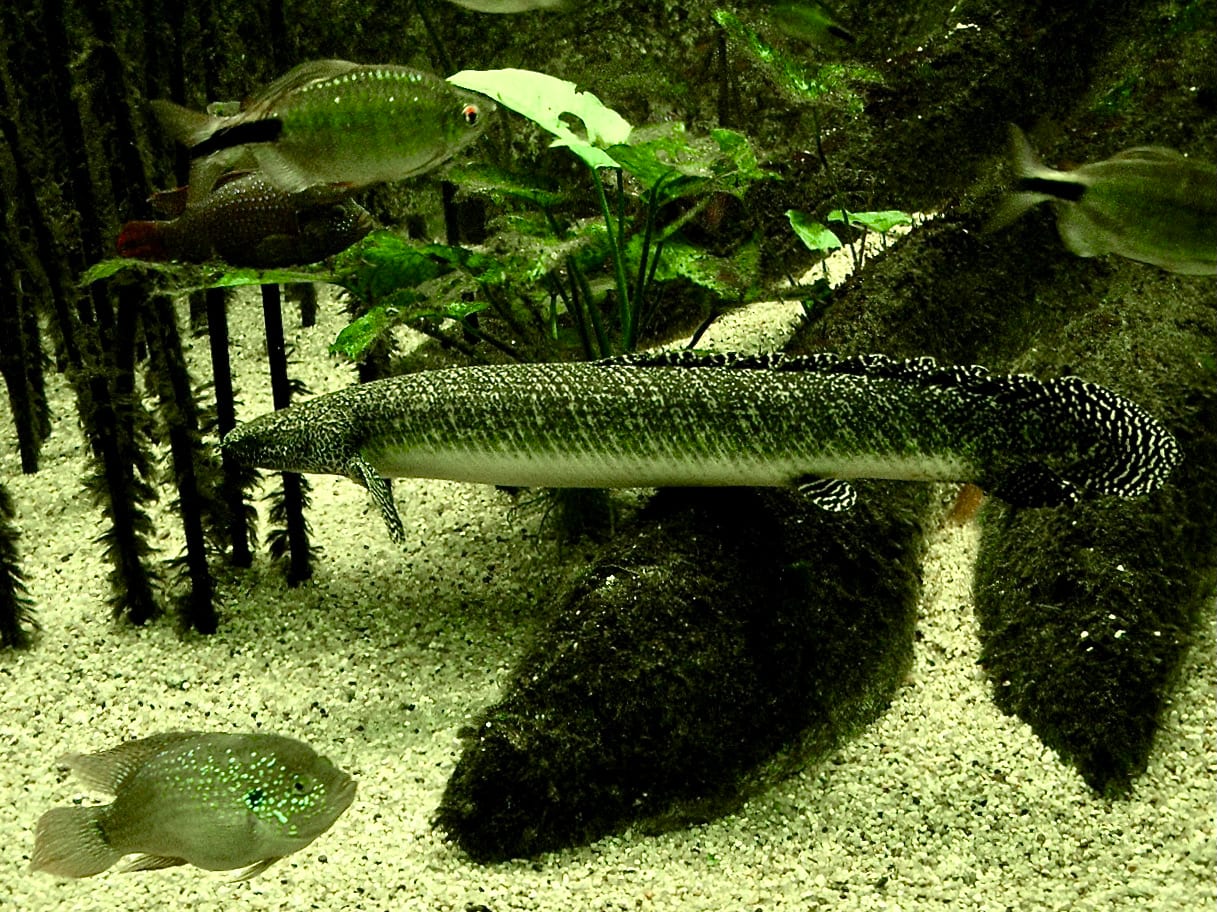
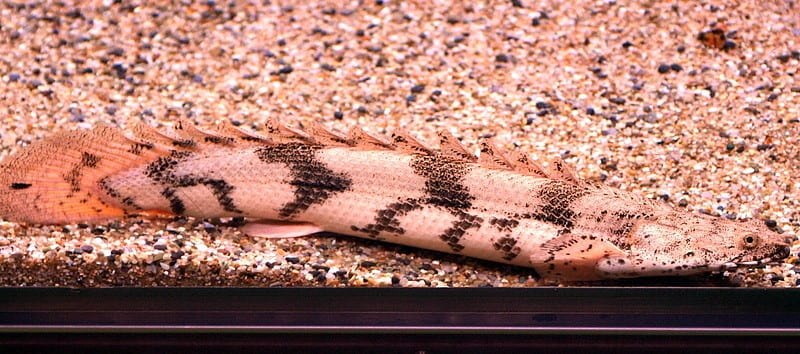
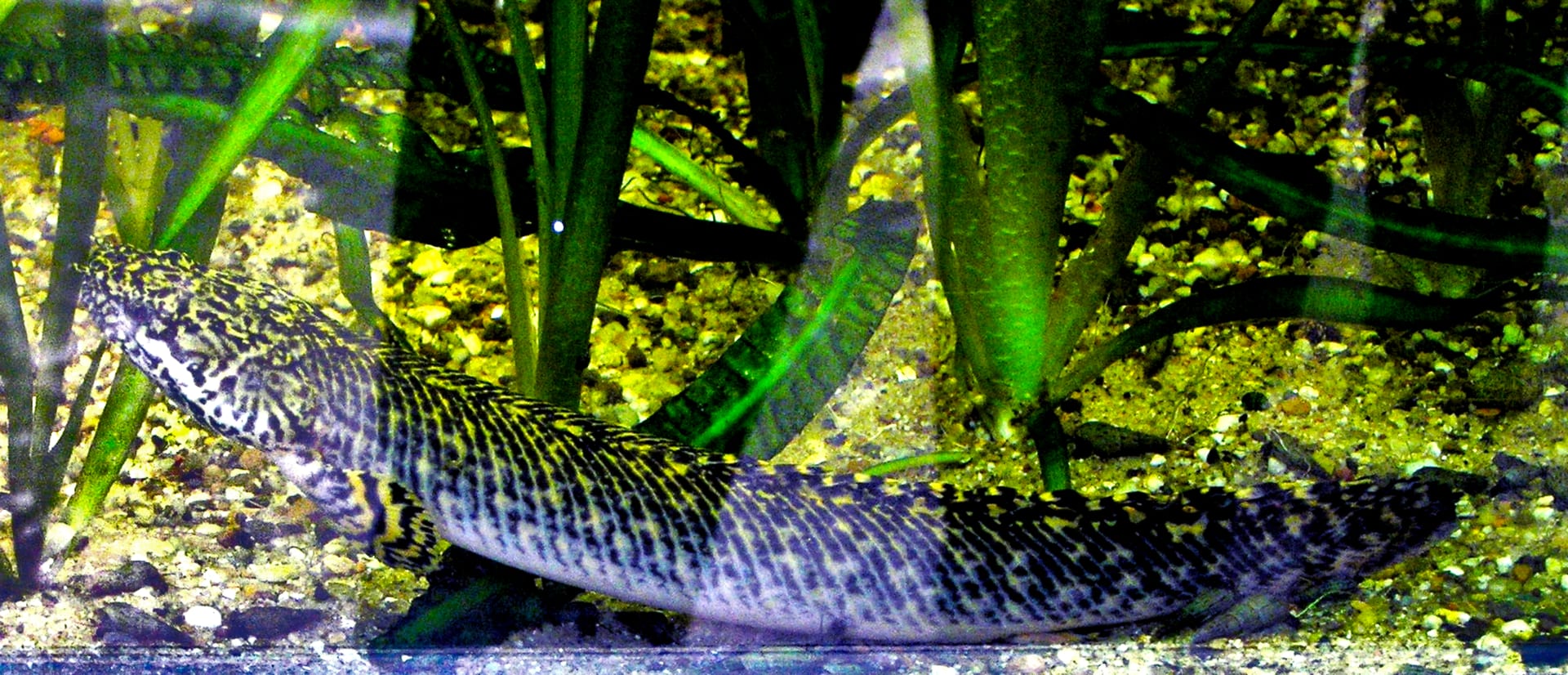
A large bichir with broad dark blotches over a pale ground, found in the middle Congo. FishBase records a maximum of 54cm TL. It belongs to the upper-jawed group and is seen less often in the trade than its congeners.
Difficulty
Intermediate
Temperature
22〜28℃
Lifespan
10-15 years
Size
Up to 54cm TL
Diet
Meaty live and frozen foods such as prawns, earthworms, mussel and lancefish
About
Polypterus weeksii is a large polypterid from the middle Congo basin. FishBase records a maximum of 54cm TL, 9-11 dorsal finlets and a body depth 6.5 to 9.5 times in standard length. Broad dark blotches over a pale ground are its hallmark, and the body is somewhat more compressed than in most congeners. It belongs to the upper-jawed group, in which the upper jaw is as long as or longer than the lower, and Seriously Fish notes it is one of the rarer bichirs in the hobby. That site suggests a 150 x 60cm base of about 540 litres but lists temperature, pH and hardness as not recorded, and FishBase gives none either. Nocturnal and weak-sighted, it locates food by smell and eats any fish that fits in its mouth. The swim bladder serves as a lung, so surface access is essential, and a lid is needed because it escapes readily. The IUCN rates it Least Concern and it is not listed by CITES.
Source: Wikipedia (CC BY-SA 4.0)
Lifespan of the Mottled Bichir
The Mottled Bichir lives 10-15 years.
Size of the Mottled Bichir
The Mottled Bichir grows to Up to 54cm TL.
Basic Info
Origin
Africa (middle Congo basin in the Republic of Congo and DR Congo)
Lifespan
10-15 years
Size
Up to 54cm TL
Temperature
22〜28℃
Care Specifications
References & Sources
Edited & verified by: BreederDirect editorial team
The taxonomic, regulatory, and husbandry data on this page are compiled and verified against the authoritative primary sources below.
Taxonomy & Authority
Accepted name: Polypterus weeksii Boulenger, 1898
Authority databases: FishBase
Nomenclature follows global taxonomic authority databases.
Regulations & Conservation Status
Not CITES-listedIUCN LC · Least Concern
Sources: CITES Appendices (species not listed) / IUCN Red List
Regulations may change. Always verify the latest information with the relevant authorities.
Mottled Bichir Listings
Loading latest listingsFind listings for this species