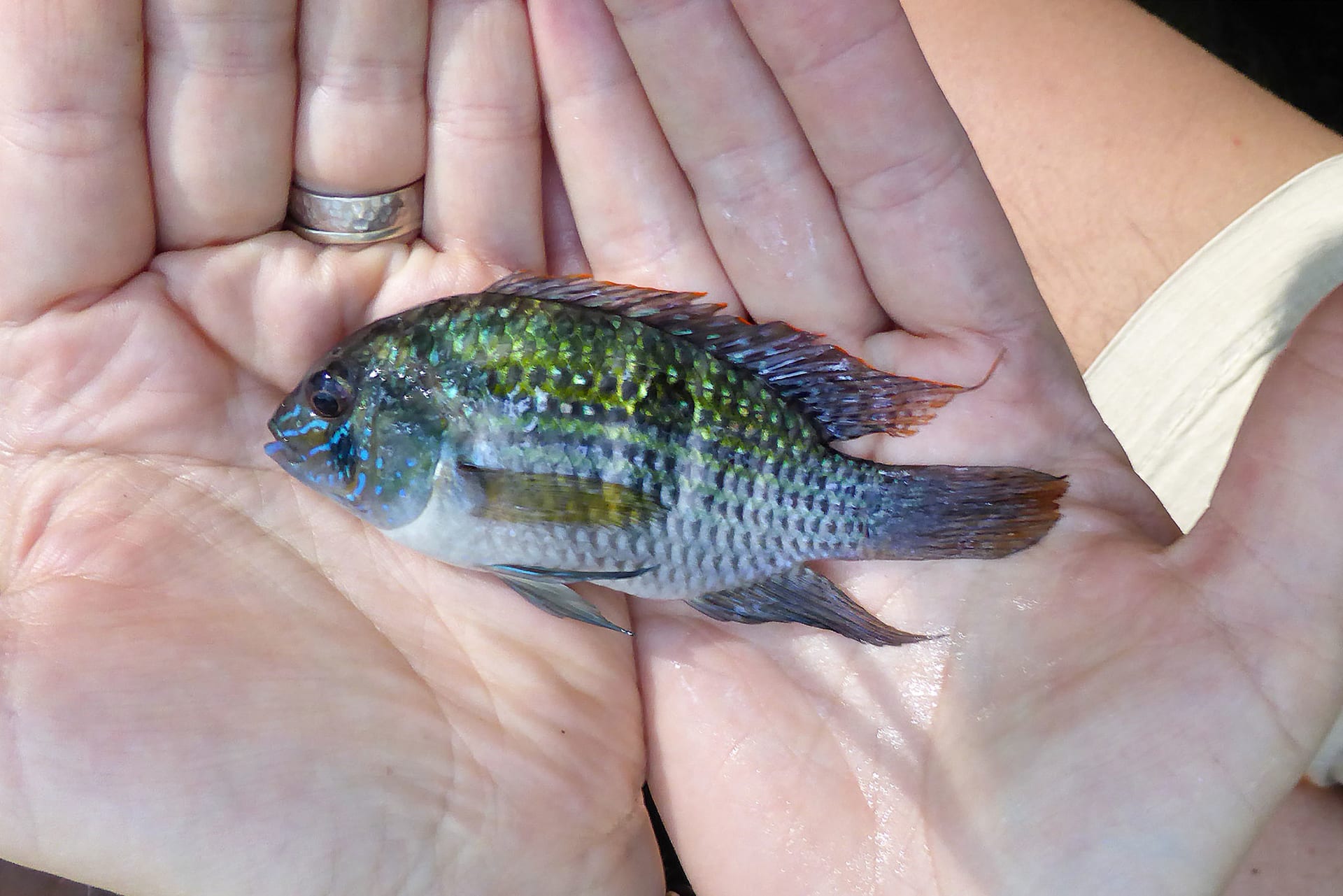
 © Kristof Zyskowski / CC BY 4.0
Blue Acara
The Blue Acara is a mid-sized cichlid native to South America, known for its grayish-blue body scattered with iridescent blue-green spangles and a shimmering pattern running from the cheek to the gill cover that grows more striking as the fish matures. Compared to other cichlids of similar size, it has a notably calm temperament, making it one of the more approachable choices in a group often known for aggression. Adults reach around 15 to 16 cm, so plan for a roomy tank as they grow. They also breed readily, making this an excellent entry point for anyone curious about observing cichlid parenting behavior firsthand.
View Blue Acara encyclopedia →0% commission on your first sales!Register by September 30, 2026 and your first 2 sales are commission-free!
Breeder Wanted!
List on BreederDirect and sell directly to customers nationwide!
Our 6 Transparency Commitments
All Tropical Fish listings include water quality, temperament, and tank size information from verified Breeder.
- Origin Disclosed
- Real Photos
- Water Quality Disclosed
- Recommended Tank Size
- Temperament Disclosed
- Breed Line Disclosed
Browse all 301 breeds
Water Type
Care Level
Verified breeders wanted for Tropical Fish
Breeders are signing up now ahead of launch. Subscribe to be notified when new listings go live.
Getting alerts is free with a member account. When new listings match your saved search, we'll notify you by email and in-app.
Browse other categories
Verified breeders (preview)
Are you raising tropical fish?
Register as a breeder and connect with buyers directly.
Apply as a breederBlue Acara key facts
- Care level
- Beginner-friendly
- Lifespan
- 8-10 years
- Size
- 15-16cm
- Temperature
- 22〜28℃
- Diet
- Frozen bloodworm, brine shrimp, chopped mussel and prawn, prepared foods
- Tank
- Base dimensions of about 120 x 30cm are just about sufficient for a pair. Provide flat stones or wood as spawning sites.
- Water Temperature & Quality
- 22-28C, pH 6.5-8.0, 5-25 dGH.
- Tank Mates
- Peaceful for a cichlid of this size. Medium-sized characins, Corydoras and loricariids make good companions.
- Diet & Feeding
- Mainly carnivorous. Offer frozen bloodworm, brine shrimp and chopped mussel or prawn alongside dried foods.
- Breeding & Spawning
- An easily bred substrate spawner. Eggs hatch in 48-72 hours, fry swim free about 72 hours later, and parental care lasts roughly two weeks.
- Health & Notes
- It becomes temporarily aggressive while defending a spawning territory. In a community tank, provide plenty of refuges.
About Blue Acara
Blue Acara care guide: a calm, mid-sized South American cichlid with striking blue-green spangles, reaching 15-16 cm as an adult. An easy-to-breed, beginner-friendly cichlid.
7 things to know before welcoming a Blue Acara
1Tank Size Guidelines
Adults reach around 15 to 16 cm, so even for a single fish it's best to use a tank of roughly 90 cm or larger. Plenty of swimming space lets a Blue Acara display its naturally relaxed, confident swimming style.
2Temperament and Tankmates
Blue Acaras are relatively calm for a cichlid of their size, but pairs become more territorial during breeding. When keeping them with other fish, add hiding spots and visual barriers so tankmates have somewhere to retreat.
3Water Quality and Temperature
They prefer stable, slightly acidic to neutral water and dislike sudden pH swings. Keep up with filtration and regular water changes, and maintain a temperature suited to tropical fish.
4Substrate and Décor
Flat stones or driftwood provide spawning sites and territory markers, which tends to keep the fish calmer. Since they like to dig, a fine substrate holds up better against rearranging.
5Easy to Breed
Once a pair forms, they typically spawn on a flat surface and both parents guard and care for the fry until they're free-swimming. Watching this cichlid-style parental care is one of the species' distinct appeals.
6Feeding Basics
A base diet of quality pellets, supplemented with frozen or live food, keeps them well balanced. They tend to eat eagerly, so avoid overfeeding to keep water quality in check.
7Before You Bring One Home
Set up the tank, filtration, and overall environment in advance, keeping the adult size and temperament in mind. Choose calm tankmates to help keep the aquarium peaceful.
Frequently asked questions about Blue Acara
- Q.Is the Blue Acara suitable for beginners?
- A.With its calm temperament and hardiness, it's considered one of the more beginner-friendly cichlids. That said, plan for its adult size and keep up with basic water quality management.
- Q.Can it be kept with other fish?
- A.Yes, it can be housed with other calm fish of a similar size. Pairs become more territorial during breeding, so provide hiding spots and monitor how tankmates get along.
- Q.How large does it grow?
- A.Adults typically reach around 15 to 16 cm in length. It's best to plan for a roomy tank in advance to accommodate this growth.
- Q.Does it dig in the substrate?
- A.Yes, Blue Acaras have a natural digging habit. Since this can disturb tank décor, a finer substrate or heavier layout materials tend to hold up better.
- Q.Can it be bred at home?
- A.It's a relatively easy species to breed — once a pair forms, they typically spawn on a flat surface and both parents care for the fry. If you're aiming to breed them, provide flat stones or driftwood as spawning sites.
Useful tools for Blue Acara care
Learn more about Blue Acara in the encyclopedia
View Blue Acara encyclopedia entry →
Care difficulty, lifespan, size and diet — all basics covered.
Blue Acara related articles
See more Blue Acara articles →More in this category
Can't find the one you're looking for?
Post your wishes for free and breeders with matching animals will contact you with introductions.