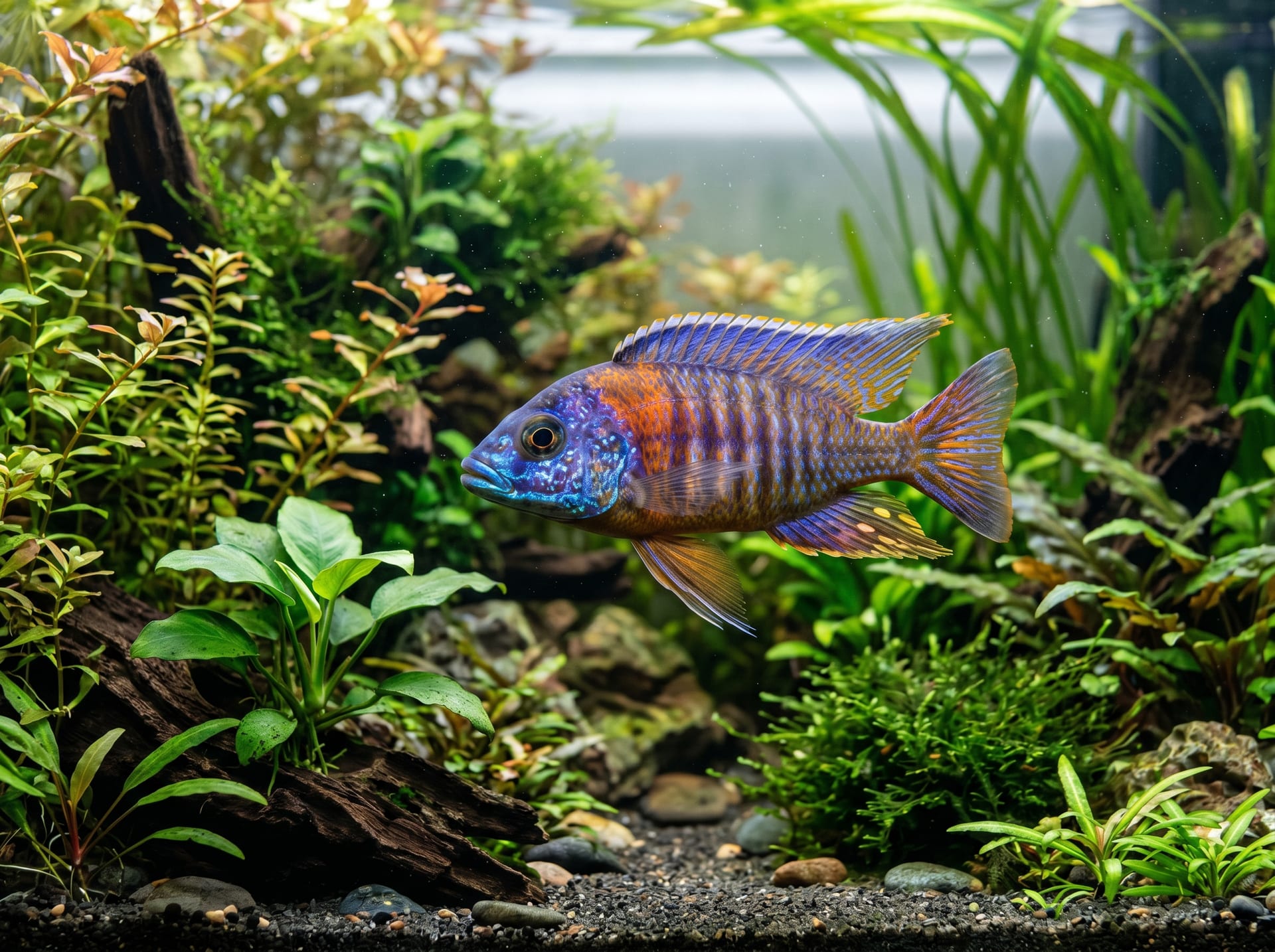
Cichlid
Cichlids are a remarkably diverse group of fish found across Central and South America, Africa, and Asia, with striking variation in color and body shape depending on the species. Known for their strong territorial instincts and expressive behavior, they are a favorite among tropical fish enthusiasts who enjoy observing fish personalities up close. Choosing the right species to match your experience level is part of the fun of keeping cichlids.
0% commission on your first sales!Register by September 30, 2026 and your first 2 sales are commission-free!
Breeder Wanted!
List on BreederDirect and sell directly to customers nationwide!
Our 6 Transparency Commitments
All Tropical Fish listings include water quality, temperament, and tank size information from verified Breeder.
- Origin Disclosed
- Real Photos
- Water Quality Disclosed
- Recommended Tank Size
- Temperament Disclosed
- Breed Line Disclosed
Browse all 27 breeds
Water Type
Care Level
Verified breeders wanted for Tropical Fish
Breeders are signing up now ahead of launch. Subscribe to be notified when new listings go live.
Getting alerts is free with a member account. When new listings match your saved search, we'll notify you by email and in-app.
Browse other categories
Verified breeders (preview)
Are you raising tropical fish?
Register as a breeder and connect with buyers directly.
Apply as a breederAbout Cichlid
Cichlids belong to the family Cichlidae and encompass over 1,500 described species, primarily found in the Rift Valley lakes of Africa—such as Lake Tanganyika and Lake Malawi—and the river systems of Central and South America. Their evolutionary history spans millions of years, during which isolated lake environments drove remarkable speciation. Appearance varies enormously across species: the electric blue of the Aulonocara, the bold black-and-white stripes of the Convict cichlid, and the jewel-like iridescence of the Parrot cichlid are just a few examples. In temperament, cichlids tend to be assertive and active, offering aquarists a front-row seat to territory disputes, courtship rituals, and parental care behaviors. While care requirements differ by species, most cichlids thrive with consistent water quality, appropriate diet, and adequate space. For hobbyists who want a deeper, more interactive fishkeeping experience, cichlids offer endless fascination.
7 things to know before welcoming a Cichlid
1Species Selection Matters
Cichlids encompass hundreds of species ranging from small, peaceful Apistogramma to aggressive Flowerhorns exceeding 60 cm. Beginners are better suited to calmer species like angelfish or German blue rams. Always research the maximum size and temperament of your target species before setting up a tank.
2Tank Size: Bigger Is Better
Cichlids establish territories, and cramped tanks lead to frequent aggression and elevated stress. Mid-sized species generally need a 90 cm tank or larger, while large species do best in 120–180 cm setups. Ample space supports the health of your fish and helps maintain a stable community.
3Choosing Tankmates Carefully
Cichlids often show strong aggression toward the same or closely related species, requiring careful planning for community tanks. African cichlids generally do best with other African species, while American cichlids pair better with fish of similar size. During breeding, aggression intensifies, so always provide hiding spots like driftwood and rock formations.
4Water Quality Essentials
African cichlids from the great lakes prefer alkaline water at pH 7.5–9.0, while Amazonian species thrive in slightly acidic conditions around pH 6.0–7.0. Matching water chemistry to the fish's origin is fundamental to keeping them healthy. Aim for weekly partial water changes of 20–30% and regular filter maintenance.
5Territory and Breeding Behavior
Many cichlid species exhibit sophisticated parental care, with pairs guarding eggs and fry — a fascinating behavior to observe. During breeding, territorial behavior intensifies and a pair may dominate the entire tank. If breeding is not intended, keep track of the sex of your fish to avoid pair formation.
6Diet and Feeding Amount
Most cichlids are omnivorous; a quality cichlid pellet as a staple, supplemented with frozen bloodworms or dried shrimp, works well for many species. However, overfeeding animal protein to herbivorous African cichlids increases the risk of bloat, a serious digestive condition. Feed twice daily in amounts the fish can consume within three to five minutes.
7Setup and Running Costs
Proper cichlid keeping requires a large tank, a powerful filter, and a reliable heater, with initial costs ranging from tens of thousands to over one hundred thousand yen depending on species and tank size. Monthly electricity for heating and filtration typically runs around 2,000–5,000 yen. Planning a realistic budget that includes ongoing costs before you start is key to long-term success.
Frequently asked questions about Cichlid
- Q.Are there cichlid species suitable for beginners?
- A.Convict cichlids and Jewel cichlids are known for their hardiness and adaptability, making them good starting points for beginners. That said, they still exhibit territorial behavior, so choose tank mates carefully.
- Q.Can cichlids be kept with other fish?
- A.Cohabitation is possible but depends heavily on species pairing and tank size. Selecting fish of similar origin and body size, and providing ample hiding spots, helps reduce aggression. Highly aggressive species may be best kept alone.
- Q.How long do cichlids typically live?
- A.Lifespans vary by species, but most cichlids live 5–15 years under good care, with some larger species documented at 20 years or more. Consistent water quality and a proper diet are the biggest factors in longevity.
- Q.Why has my cichlid lost its color?
- A.The most common causes are poor water quality, stress from territorial conflicts or overcrowding, and nutritional deficiencies. Performing a water change, testing water parameters, and reviewing diet and tank mates often leads to improvement.
- Q.Is it possible to breed cichlids at home?
- A.Many cichlid species breed readily in home aquariums, and witnessing spawning, hatching, and fry-rearing is one of the most rewarding aspects of keeping them. Be prepared for increased aggression during breeding periods and consider separating fry or vulnerable tank mates as needed.
Useful tools for Cichlid care
Cichlid related articles
Victoria Lake Cichlid Care Guide | Introduction and Management of Colorful African Cichlids
Explaining the care methods for Victoria Lake cichlids with unique appeal distinct from Tanganyika and Malawi varieties. We cover the characteristics of representative species, water quality management, precautions for mixed-species tanks, and breeding.
Peacock Bass (Cichlid) Care Guide | Species, Equipment, Legal Regulations, Breeding
A comprehensive guide to caring for Peacock Bass (Cichla genus), large carnivorous cichlids native to South America. Compare key species including Monoculus, Temensis, and Ocellaris; understand Japan's legal regulations (release strictly prohibited); set up large aquariums (150cm+); learn feeding transitions to artificial diets; manage mixed-species tanks with large fish; and explore breeding highlights where you can observe spawning bed construction. A complete guide for responsible keeping.
Pike Cichlid (Crenicichla Genus) Care Guide | How to Keep South American Large Predatory Fish
Pike cichlids (Crenicichla genus) are among South America's largest predatory cichlids, native to the Amazon River basin. Their vibrant coloration and impressive presence are captivating, but their strong territoriality and carnivorous nature require careful management. This guide covers species-specific characteristics, tank setup, feeding, and breeding in detail.
Lake Tanganyika Cichlid Care Guide | Tank Management for Lamprologus and Frontosa
Lake Tanganyika's endemic cichlids boast diverse species including Lamprologus, Frontosa, and Electric Yellow. This comprehensive guide covers their unique alkaline hard water requirements, species-specific breeding strategies, and community tank setup methods.
Jewel Cichlid (Hemichromis) Care Guide | Jewelry-Like Coloration, Territorial Behavior, and Breeding Enjoyment
A comprehensive guide to caring for Jewel Cichlids (Hemichromis bimaculatus and similar species). This article covers how to enhance their vibrant red coloration and metallic spots, managing their strong territorial aggression, setting up appropriate environments for solo or pair keeping, and understanding the full breeding cycle from egg-laying to fry rearing.
Flowerhorn Cichlid Care Guide | Growing the Nuchal Hump, Color Enhancement & Tank Setup
Complete guide to caring for hybrid Flowerhorn cichlids. Learn how to grow a large nuchal hump (kok) through genetics, nutrition, and temperature management, bring out vibrant body colors with color-enhancing feeds and proper lighting, set up a solo tank, and prevent diseases such as hole-in-the-head. Detailed care instructions for successful Flowerhorn keeping.
More in this category
Can't find the one you're looking for?
Post your wishes for free and breeders with matching animals will contact you with introductions.