Flowerhorn Cichlid Care Guide | Growing the Nuchal Hump, Color Enhancement & Tank Setup
Complete guide to caring for hybrid Flowerhorn cichlids. Learn how to grow a large nuchal hump (kok) through genetics, nutrition, and temperature management, bring out vibrant body colors with color-enhancing feeds and proper lighting, set up a solo tank, and prevent diseases such as hole-in-the-head. Detailed care instructions for successful Flowerhorn keeping.
Key Takeaways
Complete guide to caring for hybrid Flowerhorn cichlids. Learn how to grow a large nuchal hump (kok) through genetics, nutrition, and temperature management, bring out vibrant body colors with color-enhancing feeds and proper lighting, set up a solo tank, and prevent diseases such as hole-in-the-head. Detailed care instructions for successful Flowerhorn keeping.
Related Species
What is a Flowerhorn Cichlid?
The Flowerhorn Cichlid (Flowerhorn Cichlid) is a hybrid cichlid developed in Malaysia in the late 1990s. Created by crossing multiple Central American and Asian cichlids such as Lucanotis, hybrid, and parrot cichlids, it is an ornamental fish that does not exist in nature.
The Defining Feature of Flowerhorns: The Nuchal Hump (Kok)
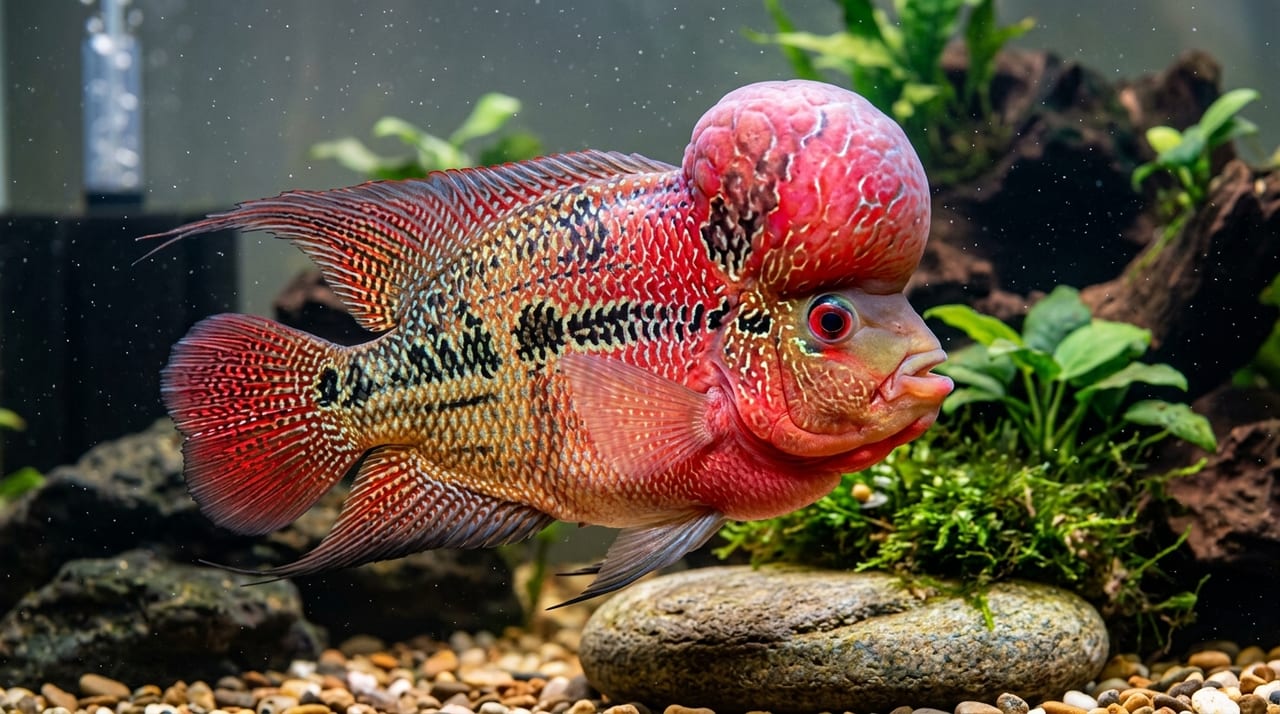
The iconic characteristic of Flowerhorns is the large hump on the head, commonly called the "Nuchal Hump" or "Kok." The size and shape of this hump directly determine the ornamental value, with individuals having large, beautifully-formed humps commanding exceptionally high prices.
Vibrant Body Colors and Flower Pattern
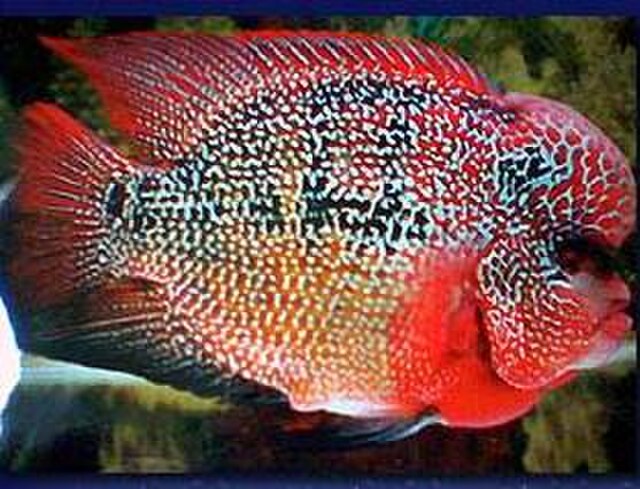
The "flower pattern"—a spotted marking (black markings) scattered across the body sides—is another distinctive feature. Depending on the variety, they display metallic coloration or a diverse palette of reds, yellows, purples, and other hues.
Size and Lifespan
- Adult size: 25–40 cm (varies by variety and individual)
- Lifespan: 8–12 years (with proper care)
- Care difficulty: Intermediate level
Tank Setup and Configuration
Tank Size
Flowerhorns grow to 25–40 cm when fully mature, making them large fish. A minimum of 150L (90 cm tank) per fish is required; ideally, a 120 cm tank or larger (180–240L) is recommended.
Flowerhorns have extremely strong territorial instincts and are normally kept solo. Mixed keeping is difficult and risky, as they are likely to injure or kill most other fish unless they are large predatory species.
Filter Selection
As carnivorous, large fish that produce excess food waste and excrement, strong biological filtration is essential.
- External filter (highly recommended): Excellent filtration capacity and quiet operation. Choose one with flow rate 2–3 times the tank volume
- Hang-on-back filter: Convenient maintenance and practical. Can be combined with an external filter
- Perform 30–50% partial water changes once or twice weekly. Water quality deterioration is a major cause of disease
Water Parameters
- Temperature: 26–30°C (28°C is optimal)
- pH: 7.0–8.0 (neutral to slightly alkaline)
- Hardness: Medium-hard water (similar to native Central American cichlid habitats)
- Ammonia and nitrite: Maintain at 0
Substrate and Layout
Flowerhorns have a habit of digging the bottom. Thin substrate of fine sand or gravel, or bare bottom (no substrate) are both common approaches. Bare bottom offers the advantage of easier maintenance and better water quality management.
Keep the layout simple with only a few large driftwood pieces or rocks. Complex layouts disrupt water flow and make cleaning difficult.
Promoting Nuchal Hump Development
Hump development is influenced by multiple factors that maximize this primary attraction of Flowerhorns.
Genetics
Genetic factors have the greatest influence on hump size. Offspring of parent fish with large humps tend to develop larger humps. When purchasing from breeders, confirm photos and information about the parents.
Nutrition
A high-protein, high-calorie diet supports hump development.
- Specialty pellets (Flowerhorn pellets): Contain color-enhancing ingredients and high protein content
- Live and frozen foods: Live feeds such as small fish, shrimp, and bloodworms excel in palatability and nutrition
- However, overfeeding degrades water quality, so maintain appropriate feeding amounts
Water Quality and Temperature
Maintaining clean water and proper temperature (around 28°C) supports hump growth. Excessively low temperatures reduce metabolism and stunt growth.
Stress-Free Environment
The nuchal hump develops better in a stress-reduced environment where the fish maintains its territory. Stress from mixed keeping inhibits hump development.
Color Enhancement and Pigmentation Management
Several methods bring out beautiful coloration in Flowerhorns.
Color-Enhancing Feed
Color-boosting pellets rich in astaxanthin and carotenoids, or natural pigments derived primarily from shrimp and paprika, are effective.
Lighting
Compared to cool white fluorescent lights, LED lighting with strong red and ruby spectrum output enhances red coloration in Flowerhorns.
Background Color
A dark black or navy-colored tank background makes the fish's body colors pop with enhanced contrast.
Common Diseases and Treatment
Hole-in-the-Head (HITH): Small holes or ulcers develop on the head and face. Caused by Hexamita (flagellate) infection, nutritional deficiency, or poor water quality. Prevention centers on maintaining clean water and switching to high-quality feed. In severe cases, veterinarians may administer metronidazole.
Ich (White Spot Disease): Tiny white granules appear on the body. Temperature fluctuations and stress trigger onset. Treat by raising temperature to 28–30°C and using medicated baths (e.g., methylene blue).
Pop-Eye and Pinecone Disease: Symptoms caused by Aeromonas bacterial infection. Poor water quality is the primary cause. Treat through isolation, frequent water changes, and antibiotics (prescribed by veterinarian).
Flowerhorns are highly individual fish; they often come to the front of the tank in response to their keeper, easily fostering attachment. With proper environment and diet, you can enjoy their dynamic presence for years.