Victoria Lake Cichlid Care Guide | Introduction and Management of Colorful African Cichlids
Explaining the care methods for Victoria Lake cichlids with unique appeal distinct from Tanganyika and Malawi varieties. We cover the characteristics of representative species, water quality management, precautions for mixed-species tanks, and breeding.
Key Takeaways
Explaining the care methods for Victoria Lake cichlids with unique appeal distinct from Tanganyika and Malawi varieties. We cover the characteristics of representative species, water quality management, precautions for mixed-species tanks, and breeding.
Related Species
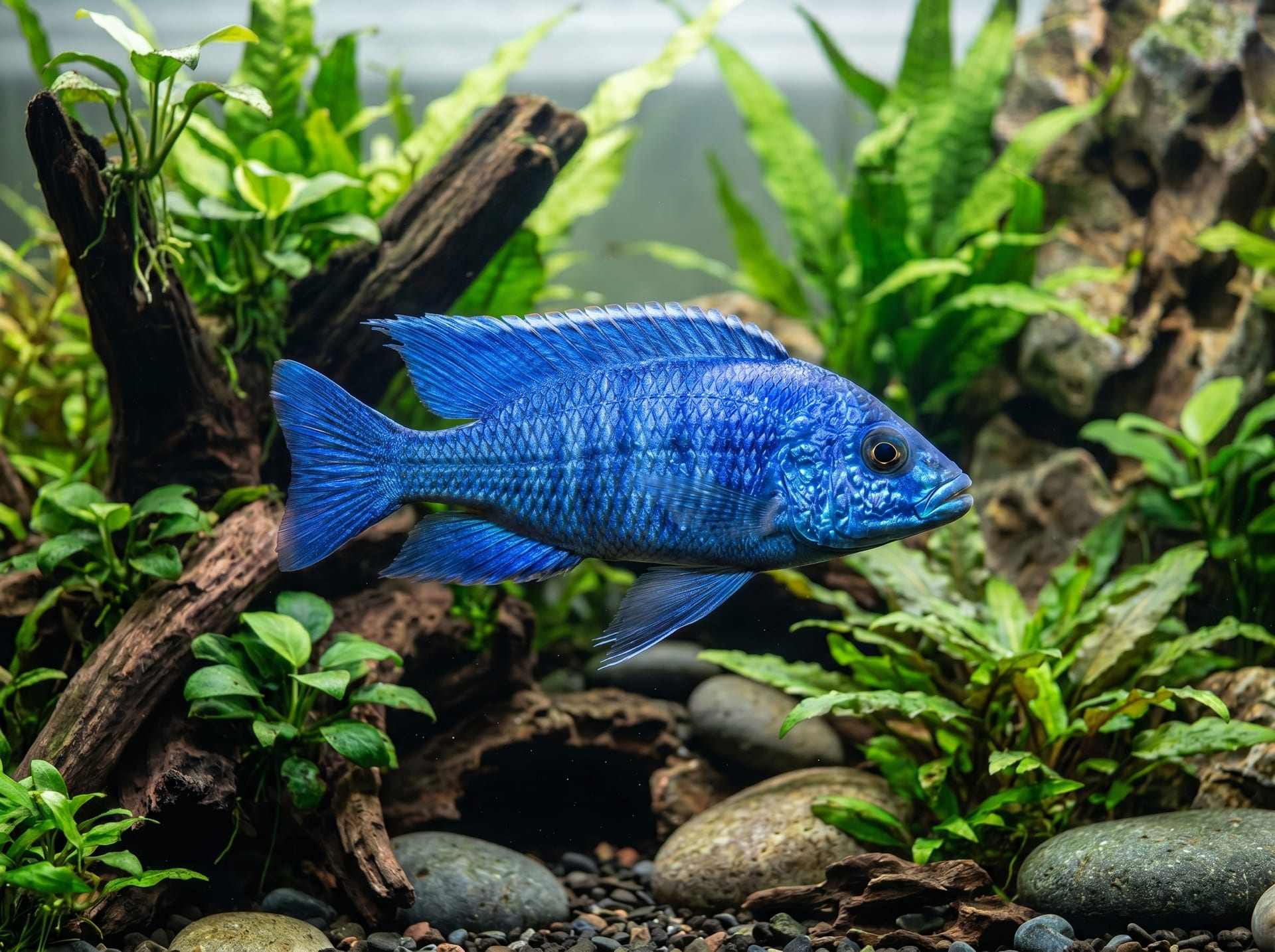
Victoria Lake Cichlids
Lake Victoria, Africa's largest lake spanning Tanzania, Uganda, and Kenya, is home to hundreds of cichlid species. Most belong to the "Haplochromini" tribe and are known for their remarkably diverse coloration and behavior.
While less commonly available in Japan compared to Tanganyika and Malawi cichlids, they enjoy strong popularity among enthusiasts for their rarity and beauty. This guide explains the basic care methods for Victoria Lake cichlids in an easy-to-understand manner.
Representative Species
Pundamilia nyererei
A striking small species with vivid contrasts of red, yellow, and black. Males display beautiful coloration even in captivity, making it ideal as an introductory Victoria Lake cichlid. With a length of approximately 10-12 cm, it can be kept even in relatively small tanks.
Haplochromis electra
A medium-sized species displaying a striking contrast between blue and yellow. Somewhat aggressive, so care is needed when keeping with other fish.
Xystichromis phytophagus
An unusual species with a strong herbivorous tendency. It feeds primarily on green algae and requires a slightly different care approach than other cichlids.
Neochromis umbra
A robust-bodied type that inhabits rocky areas. It has similar ecology to Malawi's mbuna and is ideal for rocky aquascaping.
Required Water Quality and Environment
Victoria Lake's water quality is less strongly alkaline than Tanganyika Lake and has characteristics similar to Malawi Lake.
- pH: 7.5-8.5 (slightly alkaline)
- Hardness (GH): 10-20 dH (medium to hard water)
- Water Temperature: 24-27°C
- Ammonia/Nitrite: 0 (proper filtration is essential)
When using tap water, pH can be stabilized by placing coral sand or oyster shells in the filter. If pH drops below 7, stress and disease risk increase, so regular water quality checks are important.
Substrate and Rock Aquascaping
Lake Victoria has mixed rocky and sandy areas. Similarly in the aquarium, a layout combining rocks (quartzite, lava stone, etc.) and sandy areas is appropriate.
- Stack rocks to create caves and hiding places
- Use white sand or coral sand for a natural appearance
- Live plants are often eaten, so artificial plants or hard-leaved species like Anubias are recommended
Aquarium Size for Keeping
Victoria Lake cichlids are highly territorial, requiring a spacious tank.
| Number of Fish | Recommended Tank Size |
|---|---|
| 1 pair (1 male, 1 female) | 60 cm or larger |
| 3-5 small species | 90 cm or larger |
| Multiple medium-sized species | 120 cm or larger |
Overcrowding leads to territorial disputes and increased aggression, so providing ample space is important.
Feeding
Victoria Lake cichlids are mostly omnivorous to carnivorous and the following foods are suitable.
- Cichlid-specific pellets (ideal as primary food)
- Frozen bloodworms and frozen copepods (as supplements 2-3 times per week)
- Frozen brine shrimp (enhances coloration)
Feed twice daily, in amounts that can be consumed in 5 minutes. Remove uneaten food promptly to prevent water quality deterioration. For herbivorous species, vegetable-based pellets or spirulina-enriched foods help maintain health.
Precautions for Mixed-Species Tanks
Victoria Lake cichlids tend to be highly territorial between males, and keeping multiple males of the same or related species in a small tank leads to constant fighting.
Principles for Safe Mixed-Species Tanks:
- Select fish of similar size (mixing small and large fish poses predation risk)
- Harem setup (1 male : 2-3 females) has the fewest problems
- Provide sufficient "escape routes" such as rock crevices
- Combining species with different colors and patterns may reduce territorial disputes
Mixed-species tanks with Malawi mbuna are compatible due to similar behavior patterns, but be aware of hybridization risk. Mixing with Tanganyika species is not recommended due to different water quality requirements.
About Breeding
Most Victoria Lake cichlids are mouthbrooders. Females incubate eggs in their mouth and protect fry until they are sufficiently developed.
Breeding Process:
- Males intensify coloration and perform courtship dances toward females
- Spawning and fertilization occur on sand or rocks
- Female takes 20-50 eggs into her mouth
- After about 2-3 weeks, fry are released from the female's mouth
- Fry are born at a miniature size similar to adults and swim independently immediately
Females eat little during breeding, so nutrition easily declines. Using separate tanks or breeding boxes increases fry survival. Finely crushed pellets matching the parents' food or brine shrimp nauplii are ideal for fry.
Common Diseases and Treatment
White Spot Disease (Ichthyophthirius)
Often occurs during rapid temperature changes. Treatment involves raising water temperature to 28-30°C to slow the parasite and using malachite green-based medications.
Pop-Eye (Exophthalmia)
Caused by bacterial infection. Treat with salt baths (0.5% saline) and antibacterial agents. Early detection is important.
Wounds from Territorial Disputes
Wounds can develop into bacterial infections. Isolate injured fish and promote recovery with wound disinfection and salt baths.
Summary
Victoria Lake cichlids are African cichlids with unique appeal distinct from Tanganyika and Malawi varieties. From the perspective of collectible coloration, rarity, and mouthbrooding behavior, they are especially recommended for intermediate and advanced aquarists.
By maintaining stable slightly alkaline water quality, providing adequate tank space, and managing tank mates appropriately, you can enjoy their beautiful coloration for a long time. Purchasing healthy specimens directly from breeders allows you to start with minimal transport stress.