Lake Tanganyika Cichlid Care Guide | Tank Management for Lamprologus and Frontosa
Lake Tanganyika's endemic cichlids boast diverse species including Lamprologus, Frontosa, and Electric Yellow. This comprehensive guide covers their unique alkaline hard water requirements, species-specific breeding strategies, and community tank setup methods.
Key Takeaways
Lake Tanganyika's endemic cichlids boast diverse species including Lamprologus, Frontosa, and Electric Yellow. This comprehensive guide covers their unique alkaline hard water requirements, species-specific breeding strategies, and community tank setup methods.
About Lake Tanganyika Cichlids
Lake Tanganyika is an ancient lake located in the eastern part of Africa and is the world's second deepest. It spans four countries—the Democratic Republic of Congo, Tanzania, Zambia, and Burundi. Over an estimated 10+ million years of isolation, more than 200 cichlid species have evolved uniquely, and its diversity is renowned alongside Lake Malawi as a treasure trove of cichlids.
✍️
BreederDirect Editorial
The BreederDirect editorial team specializes in care information for animals, covering veterinary care and breeding to deliver beginner-friendly guides.
Find Tropical Fish on BreederDirect
Buy directly from verified breeders
Browse Related Listings
Find Tropical Fish listings related to this article on BreederDirect. Buy directly from verified breeders.
Related Tools
Related Articles
Browse by Category
🪸Coral
🐠Marine Fish
🐟Tropical Fish
🐡Goldfish
🐟Medaka
🦎Reptiles
Share
Lake Tanganyika cichlids are popular among aquarists for several reasons. Many species exhibit vibrant coloration due to their unique alkaline hard water environment, and diverse ecological behaviors and breeding patterns can be observed—from territorial rock-dwelling species to tiny shell-breeding species to those forming harems of 2–3 individuals. Additionally, they prefer relatively stable water conditions, making them maintainable through proper management.
Representative Species
Lamprologus Genus (Lamprologus / Neolamprologus)
Representative small- to medium-sized cichlids of Tanganyika.
Lamprologus ocellatus
A tiny cichlid measuring 3–5 cm that breeds inside empty snail shells. Males defend the shell territory while females spawn and raise fry within it. It can be kept in tanks as small as 30 cm and is popular as a beginner species.
Neolamprologus brichardi
A graceful 8–10 cm species with elegant white tail fins that exhibits rare social behavior by cooperatively raising young in groups. Multiple generations use the same nest, allowing colony formation to be observed in the aquarium.
Neolamprologus leleupi
A medium-sized species about 10 cm long with stunning bright orange coloration. Highly territorial, so keeping them as pairs is standard. Breeding pairs become zealous guardians and may exhibit increased aggression.
Cyprichromis Genus
An open-water schooling species measuring 8–10 cm. Females practice mouthbrooding. When schooled in large tanks, they are strikingly beautiful.
Frontosa (Cyphotilapia frontosa / gibberosa)
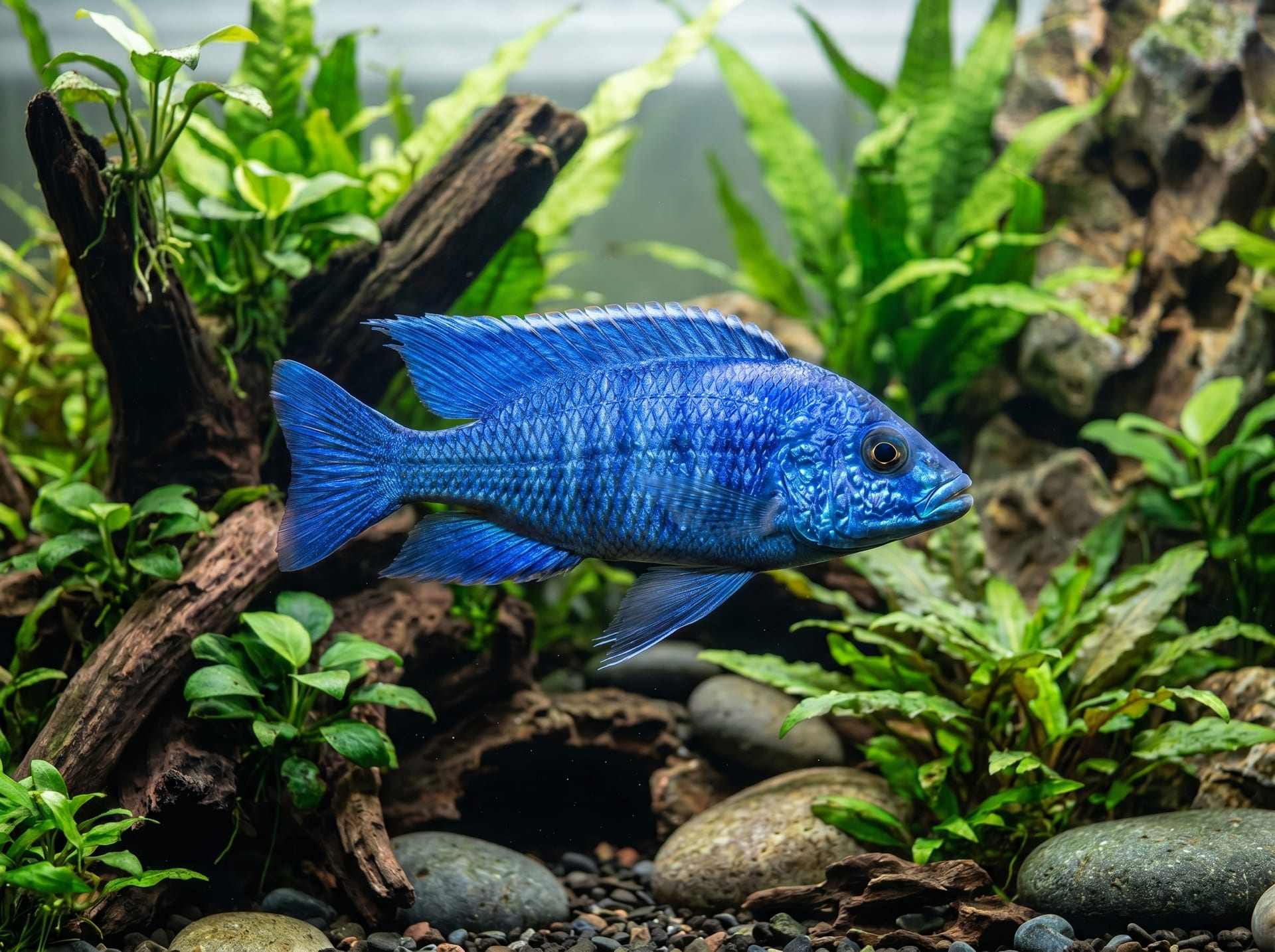
A flagship large cichlid of Tanganyika, reaching 30–40 cm. The cephalic hump develops with age, creating an impressive appearance. They prefer deep areas and exhibit nocturnal tendencies; keeping them in same-species groups (harems) is recommended.
Water Quality Management Basics
Lake Tanganyika's water is hard and alkaline due to its geological characteristics.
Parameter
Target
pH
7.8–9.0
Hardness (GH)
10–20°dGH
Carbonate Hardness (KH)
10–20°dKH
Temperature
24–27°C
Nitrate (NO₃)
20 ppm or below
Maintaining Hard Water and Alkalinity
In soft-water regions, add African cichlid-specific salts (volcanic salt, Tanganyika salt, etc.) to tap water to adjust pH and KH. Using coral sand or calcium-based substrates provides long-term pH buffering.
Regular water changes (1–2 times weekly, 20–30% of total volume) and water testing are key to maintaining stability.
Tank Design and Layout
Rock Reef Layout (for rock-dwelling species)
For rock-dwelling species like Lamprologus and Brichardi, create complex layouts combining lava rock, limestone, and coral rock. Abundant caves and crevices promote territory distribution and stress reduction.
For shell-breeding species like Ocellatus, place empty snail shells on fine sand. Ideal sand depth is 5–8 cm, with more shells than breeding pairs.
Open Water (for Cyprichromis)
Cyprichromis, which swim in the midwater column, require ample swimming space. Horizontal tanks of 60 cm or larger with rocks limited to one area and a clean center work best.
Community Tank Combinations
Same-species community combinations are the standard, but selecting species with similar habits is crucial.
Ocellatus (shells) + Altolamprologus (rock crevices and bottom)
Frontosa alone or in same-species groups (mixed-species combinations are difficult)
Combinations to Avoid
Combining with Mbuna cichlids from Lake Malawi is not recommended due to water quality differences. Aggressive large cichlid combinations also increase stress through territorial disputes.
Enjoying Breeding
The diverse breeding strategies of Tanganyika cichlids are among their greatest attractions.
Substrate spawning (Lamprologus, etc.): Spawn on rocks or in caves; pairs raise fry
Shell spawning (Ocellatus, etc.): Spawn in shells; tiny females manage eggs until hatching
Mouthbrooding (Cyprichromis, etc.): Females incubate and brood fry orally
Cooperative breeding (Brichardi): Offspring from previous generations assist with younger siblings
When breeding begins, parents become more aggressive; adding more hiding places or preparing a separate fry tank provides safety.
Enjoying Lake Tanganyika Cichlids Long-Term
Most Tanganyika cichlids prioritize water stability and do better in mature, fully-cycled tanks than new setups. Performing 4–6 weeks of tank cycling before introduction and establishing stable pH and KH is the first step to success.
With proper water quality and ample hiding places, you can observe breeding, fry-rearing, and schooling behaviors mirroring their wild ecology. Experience the unique diversity of Tanganyika, distinctly different from Lake Malawi cichlids.