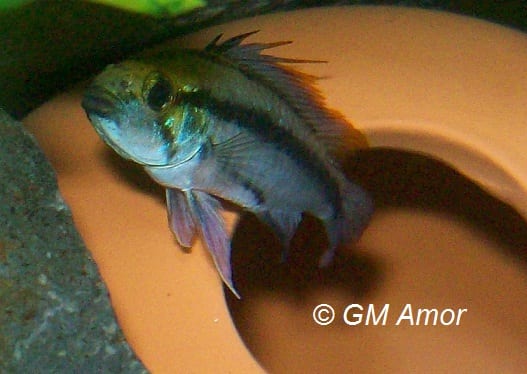
 © GM Amor / CC BY-SA 3.0
Three-striped Dwarf Cichlid
Apistogramma trifasciata, known as the Three-striped Dwarf Cichlid, gets its name from the three dark stripes running along its body. Males develop elegant, elongated extensions on the front of the dorsal fin and on the pelvic fins, adding to their striking appearance. While they can show some territorial behavior, this species does well in a harem setup with one male and several females, and watching their breeding behavior is part of the appeal. Adults stay compact, with males reaching about 5.5cm and females about 4cm in standard length. Because they prefer slightly cooler water than many related species, keeping an eye on tank temperature during summer is especially important. With some basic experience in water quality and temperature management, this is a rewarding fish for intermediate keepers.
View Three-striped Dwarf Cichlid encyclopedia →0% commission on your first sales!Register by September 30, 2026 and your first 2 sales are commission-free!
Breeder Wanted!
List on BreederDirect and sell directly to customers nationwide!
Our 6 Transparency Commitments
All Tropical Fish listings include water quality, temperament, and tank size information from verified Breeder.
- Origin Disclosed
- Real Photos
- Water Quality Disclosed
- Recommended Tank Size
- Temperament Disclosed
- Breed Line Disclosed
Browse all 301 breeds
Water Type
Care Level
Verified breeders wanted for Tropical Fish
Breeders are signing up now ahead of launch. Subscribe to be notified when new listings go live.
Getting alerts is free with a member account. When new listings match your saved search, we'll notify you by email and in-app.
Browse other categories
Verified breeders (preview)
Are you raising tropical fish?
Register as a breeder and connect with buyers directly.
Apply as a breederThree-striped Dwarf Cichlid key facts
- Care level
- Intermediate
- Lifespan
- 3-5 years
- Size
- Males about 5.5cm, females about 4cm standard length
- Temperature
- 20〜25℃
- Diet
- Live and frozen Artemia, Daphnia, Moina and bloodworm
- Tank
- From 45x30cm, about 41 litres. If keeping a harem, provide one cave per female and break up lines of sight with driftwood and leaf litter.
- Water Temperature & Quality
- 20-25C, pH 5.0-7.0 and 1-10 dGH. It prefers cooler water than most relatives, so watch for overheating in summer.
- Tank Mates
- Captive-raised fish suit community tanks, while wild specimens are best alone or with small dither fishes. Males hold territory but normally tolerate several females.
- Diet & Feeding
- Largely carnivorous on benthic invertebrates. Offer live and frozen Artemia, Daphnia, Moina and chironomid larvae regularly.
- Breeding & Spawning
- A substrate spawner. Depending on temperature eggs hatch in 36-72 hours and fry are free-swimming a few days later; the female tends the brood while the male defends the territory.
- Health & Notes
- The male's filamentous fins are vulnerable to strong flow and to nipping tank mates. Do not mix with other Apistogramma.
About Three-striped Dwarf Cichlid
A compact cichlid named for the three dark stripes on its body. Learn the essentials about Apistogramma trifasciata — harem breeding, summer water temperature care, and more before bringing one home.
7 things to know before welcoming a Three-striped Dwarf Cichlid
1Watch Water Temperature
This species prefers slightly cooler water than many related Apistogramma. Plan ahead for summer with proper tank placement or cooling measures such as a fan or chiller to prevent overheating.
2A Compact Adult Size
Adults stay small, with males reaching about 5.5cm and females about 4cm in standard length. This compact size makes them manageable even in smaller aquariums.
3Harem-Style Grouping
This species does well kept as a harem — one male with several females. Housing multiple males together in the same tank often leads to conflict, so this should be avoided.
4The Male's Elongated Fins
Males develop striking thread-like extensions on the front of the dorsal fin and on the pelvic fins as they mature. This is also a helpful way to tell males and females apart.
5Territory and Hiding Spots
This species can show territorial behavior, so providing driftwood, flowerpots, or plants to create hiding spots and sightline breaks helps reduce conflict between individuals.
6Prefers Slightly Acidic Water
Like many Apistogramma species, it tends to favor soft, slightly acidic water. Avoid sudden shifts in water chemistry and maintain a stable environment with regular partial water changes.
7Preparing Before You Bring One Home
It's important to have a fully cycled tank with stable water quality and temperature ready in advance. Setting up hiding spots in the layout beforehand also helps the fish settle into its new environment.
Frequently asked questions about Three-striped Dwarf Cichlid
- Q.Can this fish be kept with other species?
- A.It can show territorial behavior, so avoid combining it with other males of the same species or aggressive tankmates. Providing hiding spots and keeping it in a harem — one male with several females — tends to work well.
- Q.How can I tell males and females apart?
- A.Size is the easiest clue — males reach about 5.5cm in standard length while females stay around 4cm. Males also develop distinctive thread-like extensions on the front of the dorsal fin and on the pelvic fins.
- Q.What should I watch for with summer water temperatures?
- A.This species prefers slightly cooler water than many related species, so it's important to prevent the tank from overheating in summer. Consider a cooling fan or chiller as a precaution.
- Q.How difficult is this species to keep?
- A.It's considered suitable for intermediate keepers. Some prior experience with water quality and temperature management makes it easier to keep successfully.
- Q.Is this species subject to CITES?
- A.No, Apistogramma trifasciata is not subject to CITES.
Useful tools for Three-striped Dwarf Cichlid care
Learn more about Three-striped Dwarf Cichlid in the encyclopedia
View Three-striped Dwarf Cichlid encyclopedia entry →
Care difficulty, lifespan, size and diet — all basics covered.
More in this category
Can't find the one you're looking for?
Post your wishes for free and breeders with matching animals will contact you with introductions.