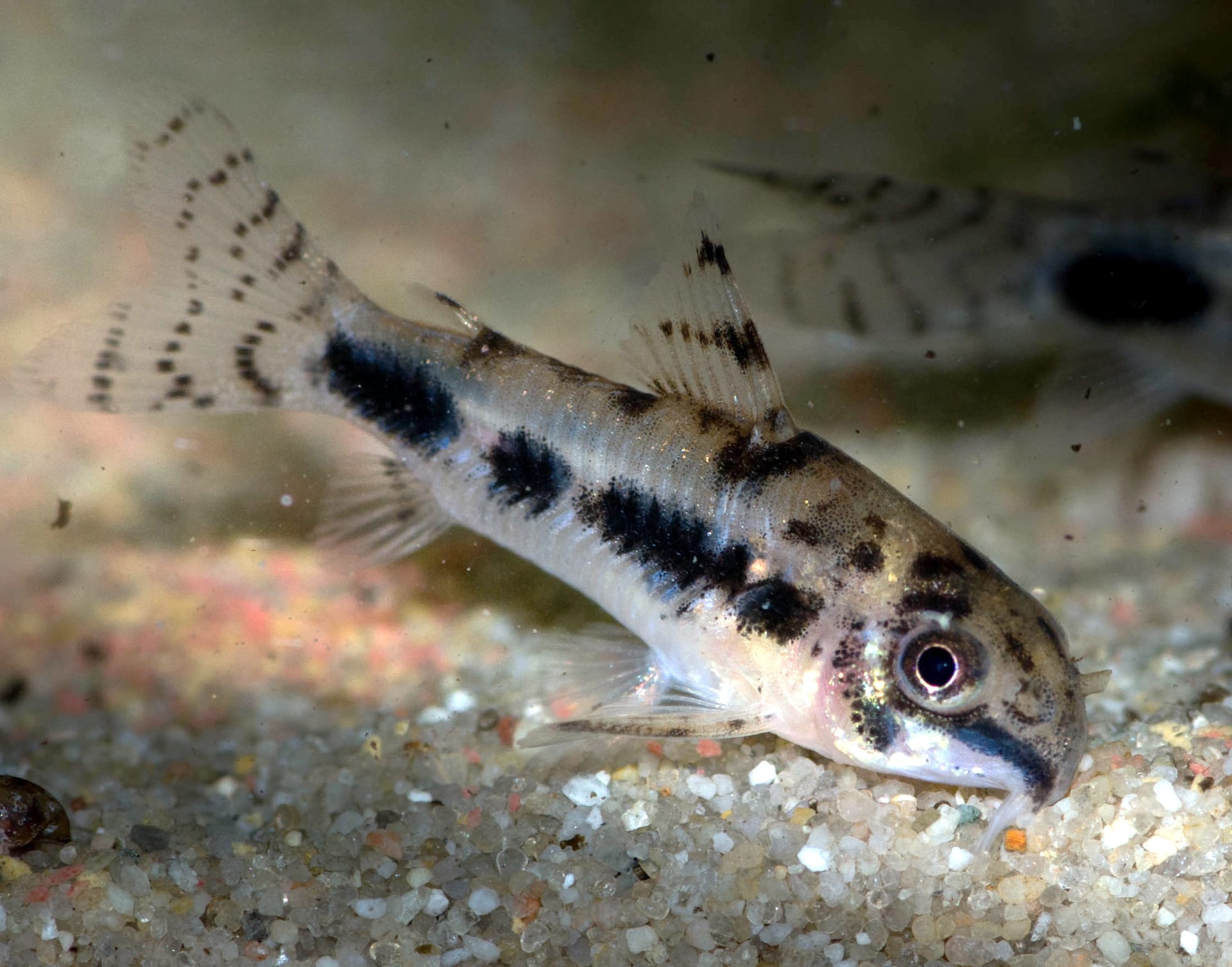
 © D.W. / CC0
Salt and Pepper Corydoras
The Salt and Pepper Corydoras is a truly tiny catfish, topping out at just 2 to 3.5 cm as an adult. Its name comes from the three rows of dark, dash-like markings that run along its flanks, giving it a speckled, salt-and-pepper look. Because it barely disturbs the substrate, it's a good match for planted tanks where the layout needs to stay intact. Peaceful and social, it spends its time foraging along the bottom in a loose shoal, which makes for calm, endearing viewing. Its mouth is quite small, though, so keeping it well fed means offering fine sinking foods, which is one reason this species is generally considered better suited to more experienced keepers.
View Salt and Pepper Corydoras encyclopedia →0% commission on your first sales!Register by September 30, 2026 and your first 2 sales are commission-free!
Breeder Wanted!
List on BreederDirect and sell directly to customers nationwide!
Our 6 Transparency Commitments
All Tropical Fish listings include water quality, temperament, and tank size information from verified Breeder.
- Origin Disclosed
- Real Photos
- Water Quality Disclosed
- Recommended Tank Size
- Temperament Disclosed
- Breed Line Disclosed
Browse all 341 breeds
Water Type
Care Level
Verified breeders wanted for Tropical Fish
Breeders are signing up now ahead of launch. Subscribe to be notified when new listings go live.
Getting alerts is free with a member account. When new listings match your saved search, we'll notify you by email and in-app.
Browse other categories
Verified breeders (preview)
Are you raising tropical fish?
Register as a breeder and connect with buyers directly.
Apply as a breederSalt and Pepper Corydoras key facts
- Care level
- Intermediate
- Lifespan
- 3-5 years
- Size
- 2-3.5cm
- Temperature
- 20〜26℃
- Diet
- Sinking dried foods, frozen bloodworm, Tubifex
- Tank
- A 60 x 30cm base, about 54 litres, is the practical minimum. Use fine rounded sand so the barbels are not damaged.
- Water Temperature & Quality
- 20-26C, pH 5.5-7.5, 2-10dGH. FishBase records pH 6.0-8.0 and 2-25dH in the wild.
- Tank Mates
- Peaceful and gregarious; keep at least 4-6 and ideally 10 or more. Being tiny it cannot compete with much larger or more boisterous fish.
- Diet & Feeding
- A foraging omnivore. Offer sinking dried food plus small live and frozen items such as bloodworm and Tubifex. Do not treat it as a clean-up crew.
- Breeding & Spawning
- Use two or more males per female. Once females are gravid, repeat 50-70 percent water changes with soft, cooler water daily. Eggs are laid on glass, fine-leaved plants or spawning mops and hatch in 3-4 days.
- Health & Notes
- Assessed Near Threatened by the IUCN Red List, on the basis of its restricted range in the upper Orinoco basin.
About Salt and Pepper Corydoras
The Salt and Pepper Corydoras is a tiny catfish reaching just 2-3.5 cm, known for its three rows of dark dash-like markings. It suits planted tanks well but is best kept by more experienced aquarists.
7 things to know before welcoming a Salt and Pepper Corydoras
1A Remarkably Small Body
Adults grow to only about 2-3.5 cm, making this one of the smallest Corydoras species available. That small size means it can fit into more compact tanks, but the smaller water volume also calls for closer attention to water quality changes.
2Where the Name Comes From
Three rows of dark, dash-like markings run along its flanks, and this pattern is exactly what gives the Salt and Pepper Corydoras its English name. The exact arrangement of spots varies a little from fish to fish, so over time you can learn to tell individuals apart.
3A Good Fit for Planted Tanks
It doesn't dig through substrate with much force, so it's unlikely to uproot plants or disturb a carefully arranged layout. That makes it a comfortable choice for planted tanks, including ones with delicate foreground plants.
4Feeding a Tiny Mouth
Its mouth is quite small, so standard-sized sinking pellets can be hard for it to eat. It's best to offer fine, powder-like or micro-granule sinking foods sized for its small mouth.
5Keeping Them in a Group
This species is happiest kept in a small group rather than alone, and watching a cluster of them move together along the bottom is part of the appeal. When bringing them home, it's worth adding several at once so they can settle in together.
6Choosing Peaceful Tankmates
Being small and peaceful, it can struggle to get enough food or end up stressed when housed with larger or more assertive fish. Choosing similarly small, calm tankmates is the safer approach.
7Why It Suits Experienced Keepers
Because its tiny size makes it sensitive to shifts in water quality, and its small mouth calls for some thought around feeding, this species is generally considered better suited to more experienced keepers. Anyone who already has some Corydoras-keeping experience will likely find its charm easy to appreciate.
Frequently asked questions about Salt and Pepper Corydoras
- Q.How big does the Salt and Pepper Corydoras get?
- A.As an adult it reaches only about 2-3.5 cm, making it one of the smaller Corydoras species. That small size is part of why it can work well in more compact tanks.
- Q.Is this a good choice for beginners?
- A.This species is generally rated as suited to more experienced keepers. Its tiny size makes it sensitive to water quality changes, and its small mouth needs some thought around feeding, so some prior fishkeeping experience helps.
- Q.Can it be kept in a planted tank?
- A.Because it doesn't dig through substrate with much force, it's unlikely to disturb a planted layout, making it a good fit for planted tanks. It can generally be added even to tanks with delicate foreground plants.
- Q.What should it be fed?
- A.Its mouth is quite small, so standard-sized sinking foods can be difficult for it to eat. Fine, powder-like or micro-granule sinking foods sized for its small mouth work best.
- Q.Are there any CITES restrictions on this species?
- A.The Salt and Pepper Corydoras is not subject to CITES.
Useful tools for Salt and Pepper Corydoras care
Learn more about Salt and Pepper Corydoras in the encyclopedia
View Salt and Pepper Corydoras encyclopedia entry →
Care difficulty, lifespan, size and diet — all basics covered.
More in this category
Can't find the one you're looking for?
Post your wishes for free and breeders with matching animals will contact you with introductions.