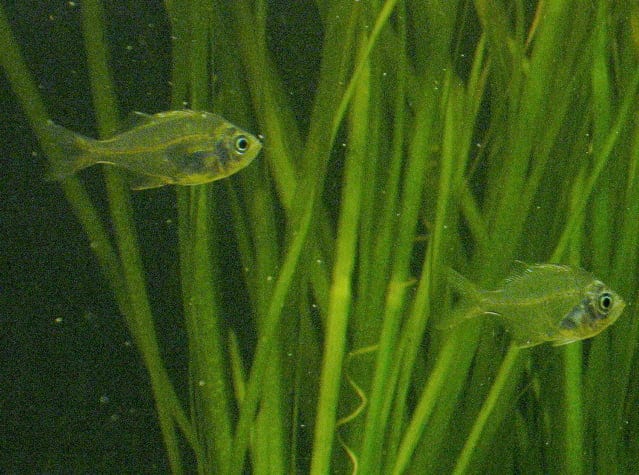
 © Neale Monks / CC BY-SA 3.0
Indian glassy fish
The Indian glassy fish is a small, see-through fish whose skeleton and internal organs can be seen through its body, which makes it a striking sight in a home aquarium. Males have blue edging on the dorsal and anal fins. The species adapts to conditions from fresh water to mildly brackish water and settles down best when kept in a group. Adults reach a maximum total length of 9.5 cm (FishBase), and the species is considered suitable for beginners. In Japan it appears on the list of alien species that can harm ecosystems, so please never release a pet into natural waters.
View Indian glassy fish encyclopedia →Breeder Wanted!
List on BreederDirect and sell directly to customers nationwide!
BreederDirect's 6 Transparency Commitments
All Tropical Fish listings include water quality, temperament, and tank size information from verified Breeder.
- Origin Disclosed
- Real Photos
- Water Quality Disclosed
- Recommended Tank Size
- Temperament Disclosed
- Breed Line Disclosed
Browse all 341 breeds
Water Type
Care Level
Verified breeders wanted for Tropical Fish
Breeders are signing up now ahead of launch. Subscribe to be notified when new listings go live.
Getting alerts is free with a member account. When new listings match your saved search, we'll notify you by email and in-app.
Browse other categories
Verified breeders (preview)
Are you raising tropical fish?
Register as a breeder and connect with buyers directly.
Apply as a breederIndian glassy fish key facts
- Care level
- Beginner-friendly
- Lifespan
- Few reliable data
- Size
- Up to 9.5 cm TL (FishBase)
- Temperature
- 20〜30℃
- Diet
- Omnivore leaning to meaty foods (frozen/live foods, prepared foods)
- Water Temperature & Quality
- 20-30°C, pH 7.0-8.0, 9-19 dH (FishBase). Can be kept in fresh or slightly brackish water.
- Aquarium
- FishBase recommends groups of five or more in at least a 60 cm tank. It is shy, so plant some areas densely and add floating plants; a dark substrate helps it settle and colour up.
- Tank Mates & Compatibility
- Peaceful and shy, so avoid boisterous or aggressive fish. In fresh water it can live with barbs, livebearers and small rainbowfish. It does poorly kept singly or in pairs.
- Diet & Feeding
- Accepts most live, frozen and dried foods; in the wild it eats small invertebrates and crustaceans.
- Breeding & Egg-laying
- Eggs are laid among plants and hatch in about 24 hours. Fry wait for food to drift past rather than hunting, which makes them hard to raise.
- Cautions
- Do not buy dyed fish. Listed as an invasive alien species in Japan, so never release it into the wild.
About Indian glassy fish
The Indian glassy fish is a small, transparent tropical fish. Males have blue-edged dorsal and anal fins. It adapts from fresh to mildly brackish water, does best in a group, and suits beginners. Maximum length is 9.5 cm.
7 things to know before welcoming a Indian glassy fish
1See-through body, blue-edged males
Its defining feature is a body so transparent that the skeleton and internal organs show through. Under good lighting you can see its inner structure clearly. Males have blue edging on the dorsal and anal fins, which gives you one clue for telling the sexes apart.
2A small fish, up to 9.5 cm
Adults reach a maximum total length of 9.5 cm (FishBase), so this is a small fish. Because it is best kept in a group, it is reassuring to prepare a tank with enough room for everyone to swim freely.
3Calmer when kept in a group
This fish tends to settle down better in a group than on its own. A lone individual may stay restless or spend much of its time hiding. When you plan your purchase, it helps to prepare for bringing home several fish together.
4Fresh to mildly brackish water
It adapts to conditions from fresh water to mildly brackish water, and its care level is beginner-friendly. Even so, sudden changes in water quality or temperature are stressful. Take your time with acclimation after bringing it home.
5Choose calm, similar-sized tankmates
Because it is small and can be timid, it is safer to avoid large or aggressive tankmates. Pairing it with calm fish of a similar size makes it easier for the group to stay relaxed.
6Feeding and health checks
Offer food small enough for its mouth in modest amounts, and remove leftovers promptly. Because the body is transparent, changes such as a swollen or thin belly or marks on the skin are easy to spot. If something looks unusual, check the water quality first.
7Never release into the wild
In Japan this species appears on the list of alien species that can harm ecosystems. Never release a pet into rivers, ponds, or other natural waters. Bring it home only if you are prepared to care for it to the end, including planning for situations where you might no longer be able to keep it.
Frequently asked questions about Indian glassy fish
- Q.Can beginners keep Indian glassy fish?
- A.Yes, its care level is beginner-friendly. It adapts to a wide range from fresh to mildly brackish water and settles down when kept in a group. Still, avoid sudden changes in water quality or temperature, and acclimate it carefully.
- Q.How large do they grow?
- A.It is a small fish with a maximum total length of 9.5 cm (FishBase). Individuals vary, so treat this figure as an upper guide. It is wise to choose a tank with room for a group to swim.
- Q.Can I keep just one?
- A.Since this fish settles down best in a group, keeping several together is recommended. A single fish may feel unsettled and tend to hide.
- Q.Is fresh water enough, or do I need brackish water?
- A.It adapts to conditions from fresh water to mildly brackish water, so brackish water is not a requirement. Either way, avoid sudden changes and let the fish adjust gradually.
- Q.How long do they live?
- A.There is little published information on lifespan, so we cannot give a reliable figure. To keep your fish healthy over the long term, maintain stable water quality and observe it closely every day.
Useful tools for Indian glassy fish care
Learn more about Indian glassy fish in the encyclopedia
View Indian glassy fish encyclopedia entry →
Care difficulty, lifespan, size and diet — all basics covered.
More in this category
Can't find the one you're looking for?
Post your wishes for free and breeders with matching animals will contact you with introductions.