Source: Wikimedia Commons
Indian glassy fish
BeginnerChanda ranga
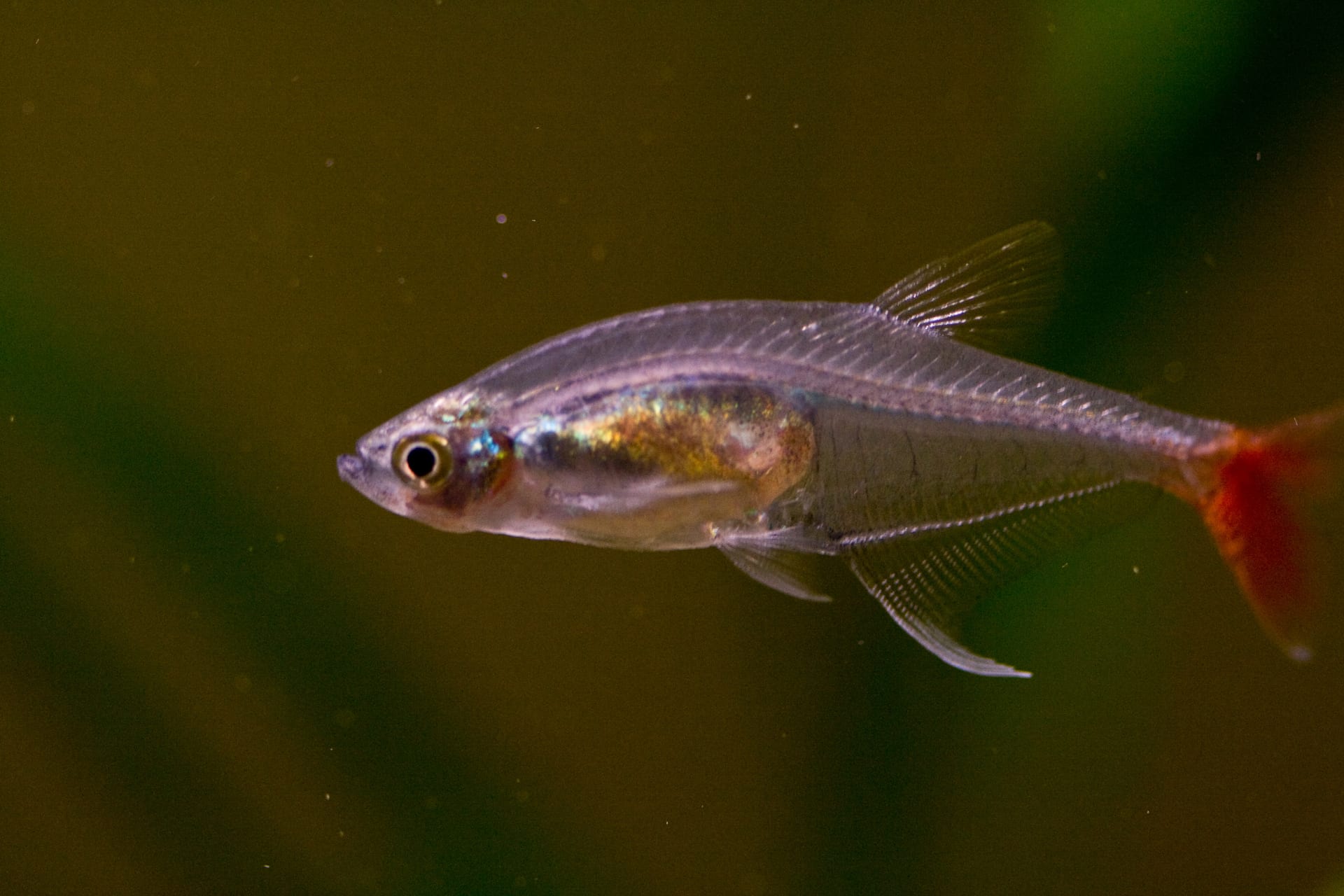
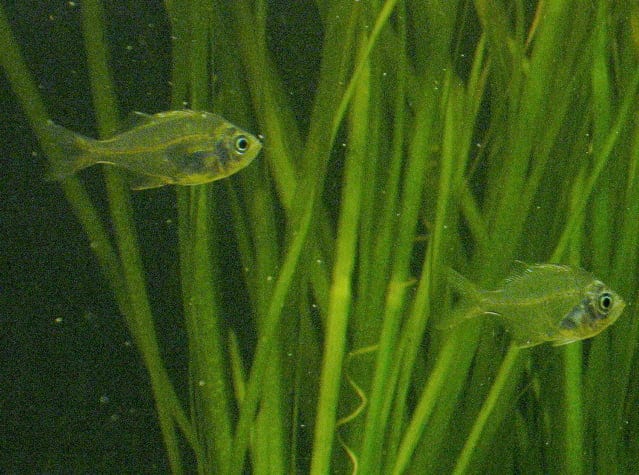
A small fish so transparent that its skeleton and organs show through; males have blue-edged fins. It tolerates fresh to slightly brackish water and settles best in a group. Listed on Japan's invasive alien species list.
Difficulty
Beginner
Temperature
20〜30℃
Lifespan
Few reliable data
Size
Up to 9.5 cm TL (FishBase)
Diet
Omnivore leaning to meaty foods (frozen/live foods, prepared foods)
About
The Indian glassy fish, Chanda ranga, is a small ambassid found in Pakistan, India, Bangladesh, Myanmar, Thailand, Malaysia and Nepal (FishBase). FishBase uses Chanda ranga, but Parambassis ranga is widely used and is the accepted name in GBIF; Japan's Ministry of the Environment lists it as Pseudambassis ranga. It reaches 9.5 cm TL. Its transparent body reveals bones and organs, and males have blue-edged dorsal and anal fins and a more yellow body. It lives in sluggish and standing water, is most abundant in the rainy season, and can be kept in fresh or slightly brackish water. Fish injected with fluorescent dye were once sold as 'painted glassfish', a practice criticised for the harm it causes. In Japan it appears on the Ministry of the Environment's list of invasive alien species (Ogasawara and Nansei Islands category). Sale and keeping are not prohibited, but it must never be released. It is a regular in Japanese aquarium shops.
Source: Wikipedia (CC BY-SA 4.0)
Size of the Indian glassy fish
The Indian glassy fish grows to Up to 9.5 cm TL (FishBase).
Temperature & humidity for the Indian glassy fish
The ideal temperature for the Indian glassy fish is 20〜30℃.
Basic Info
Origin
South and Southeast Asia (Pakistan, India, Bangladesh, Myanmar, Thailand, Malaysia, Nepal)
Lifespan
Few reliable data
Size
Up to 9.5 cm TL (FishBase)
References & Sources
Edited & verified by: BreederDirect editorial team
The taxonomic, regulatory, and husbandry data on this page are compiled and verified against the authoritative primary sources below.
Taxonomy & Authority
Regulations & Conservation Status
Not CITES-listedIUCN LC · Least Concern
Not listed in the CITES Appendices (checked on Species+). It appears on Japan's Ministry of the Environment List of Invasive Alien Species as Pseudambassis ranga (Ogasawara and Nansei Islands category). It is not a designated invasive alien species, so keeping and trading it are not prohibited, but it must never be released into the wild.
Sources: Species+ (CITES) / FishBase / Ministry of the Environment: List of Invasive Alien Species
Regulations may change. Always verify the latest information with the relevant authorities.
Indian glassy fish Listings
Loading latest listingsFind listings for this species