Source: Wikimedia Commons
Glass Catfish
IntermediateKryptopterus vitreolus
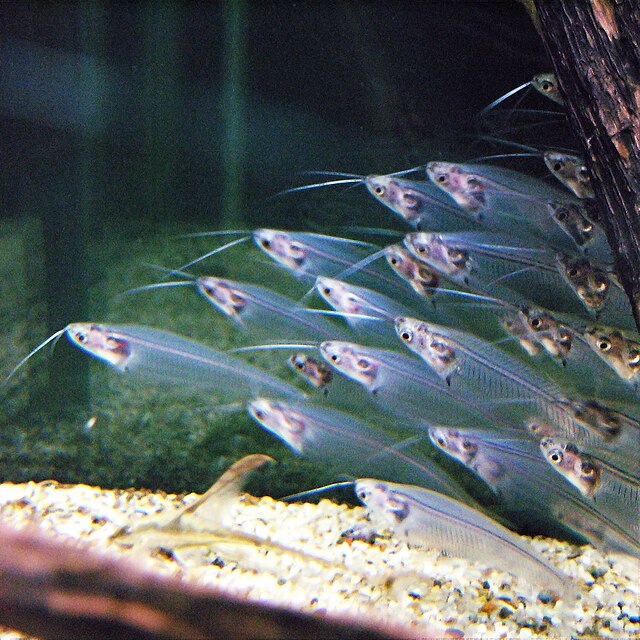
A unique catfish with transparent body showing visible skeleton. Fantastical appearance when swimming in groups.
Difficulty
Intermediate
Temperature
22〜28℃
Lifespan
5-8 years
Size
8-12cm
Diet
Frozen food, Artificial feed
About
The glass catfish (Kryptopterus vitreolus) is a freshwater catfish native to rivers of Thailand, Cambodia, and the Malay Peninsula, renowned for its entirely transparent body through which the spine, organs, and swim bladder are clearly visible — one of the most otherworldly appearances in the freshwater aquarium hobby. Growing to 6–10 cm, glass catfish are obligate schoolers: they must be kept in groups of five or more, hovering in mid-water currents in a characteristic stationary formation. Solitary individuals become withdrawn, stop eating, and decline rapidly. Diet favors live and frozen foods — daphnia, bloodworms, brine shrimp — though they can be trained to accept quality dry foods. Slightly subdued lighting suits them best. When a healthy school catches the light at an angle, their transparent bodies shimmering with iridescence create one of the most uniquely beautiful displays in fishkeeping.
Lifespan of the Glass Catfish
The Glass Catfish lives 5-8 years.
Size of the Glass Catfish
The Glass Catfish grows to 8-12cm.
Temperature & humidity for the Glass Catfish
The ideal water temperature for the Glass Catfish is 20〜26℃.
They prefer slightly acidic to neutral water (pH 6.5–7.5) at 22–26°C, with moderate water flow to replicate their natural riverine environment.
Basic Info
Origin
rivers of Thailand, Cambodia, and the Malay Peninsula
Lifespan
5-8 years
Care Specifications
References & Sources
Edited & verified by: BreederDirect editorial team
The taxonomic, regulatory, and husbandry data on this page are compiled and verified against the authoritative primary sources below.
Primary sources
Taxonomy & Authority
Regulations & Conservation Status
Not CITES-listed
Kryptopterus vitreolus is not CITES-listed.
Sources: Seriously Fish / CITES Appendices (Checklist)
Regulations may change. Always verify the latest information with the relevant authorities.
Glass Catfish Listings
Loading latest listingsFind listings for this species