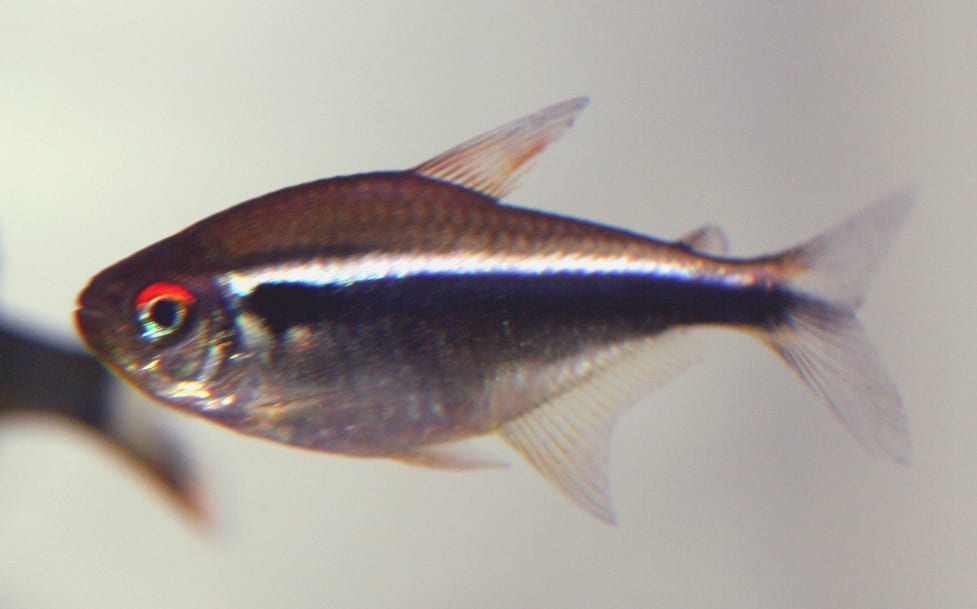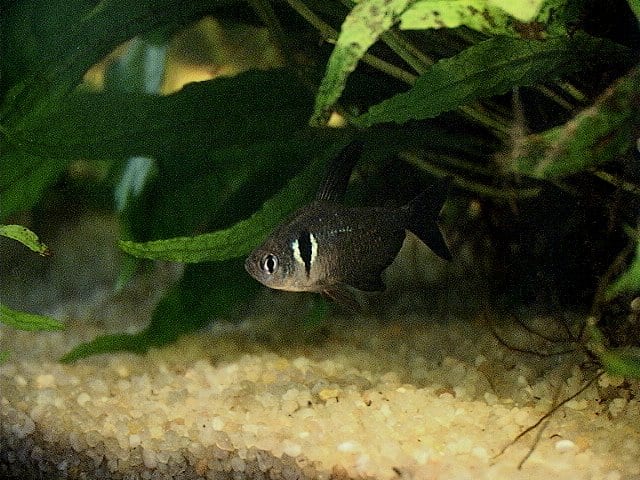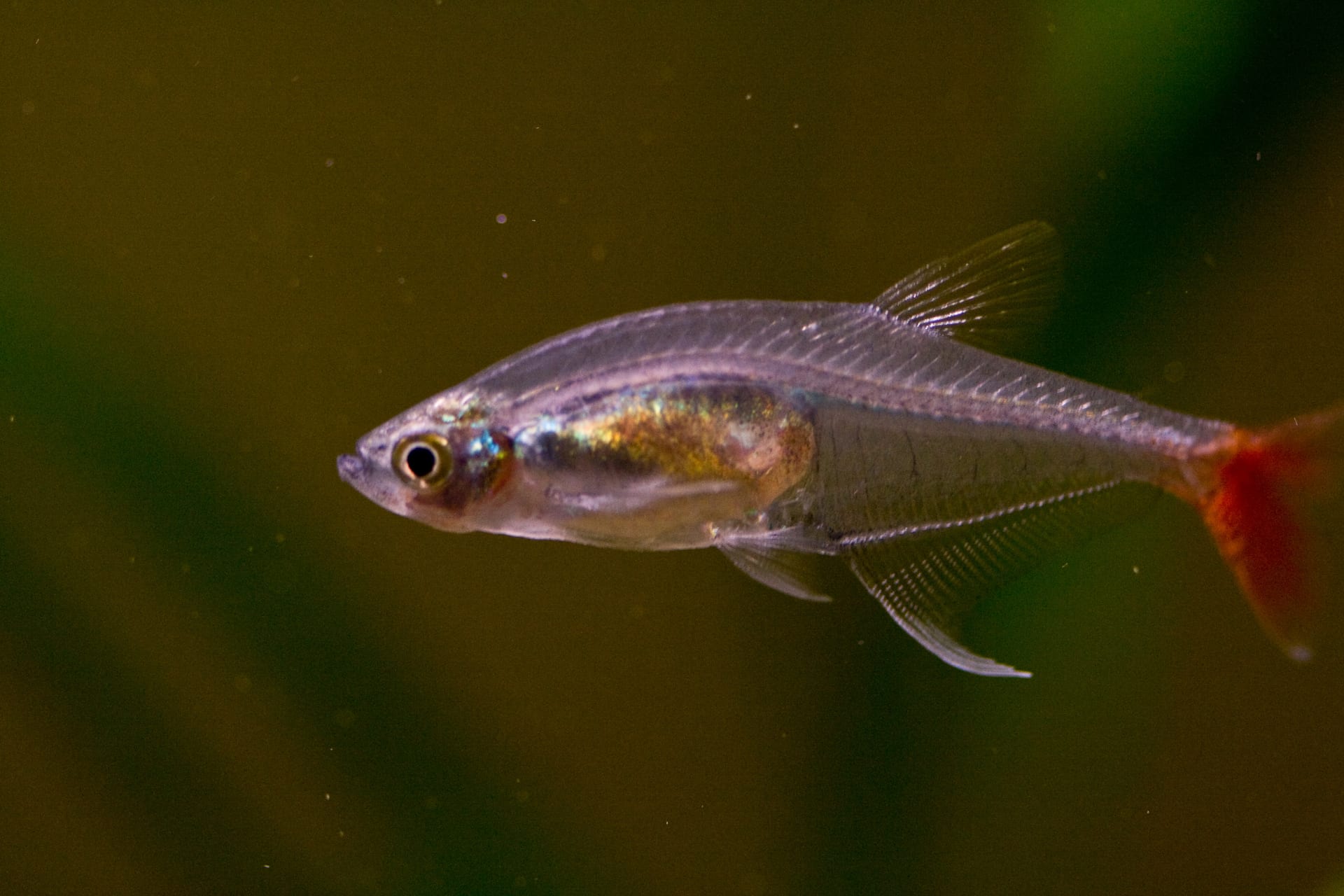
Source: Wikimedia Commons
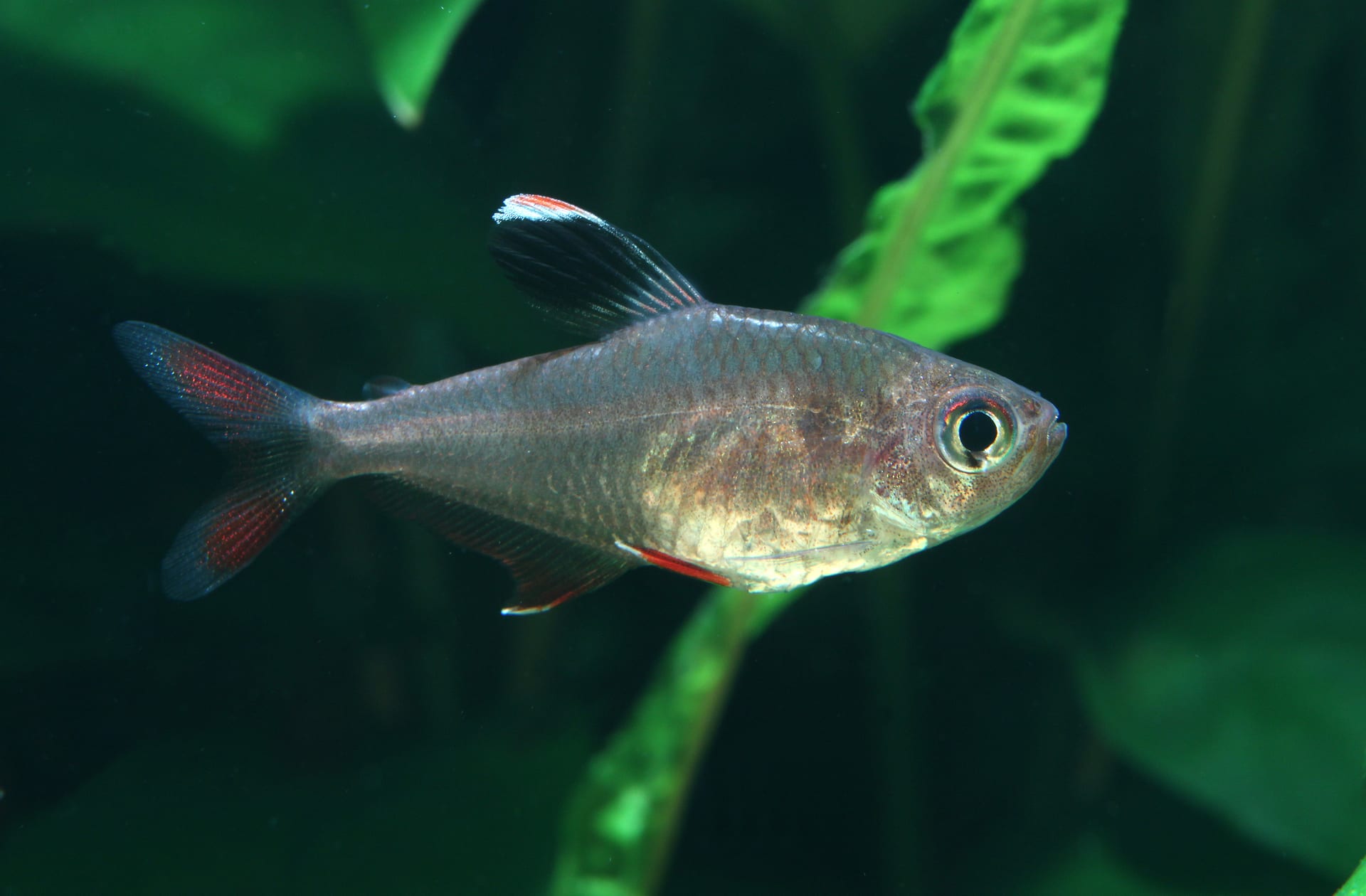
Glass bloodfin
BeginnerPrionobrama filigera
A transparent-bodied characin from South American rivers, slender with a red caudal fin. It swims actively near the surface and looks best in a group. A different genus from the bloodfin tetra.
Difficulty
Beginner
Temperature
23〜27℃
Lifespan
Few reliable data
Size
Up to 6 cm TL (FishBase)
Diet
Omnivore (prepared foods, small frozen and live foods)
About
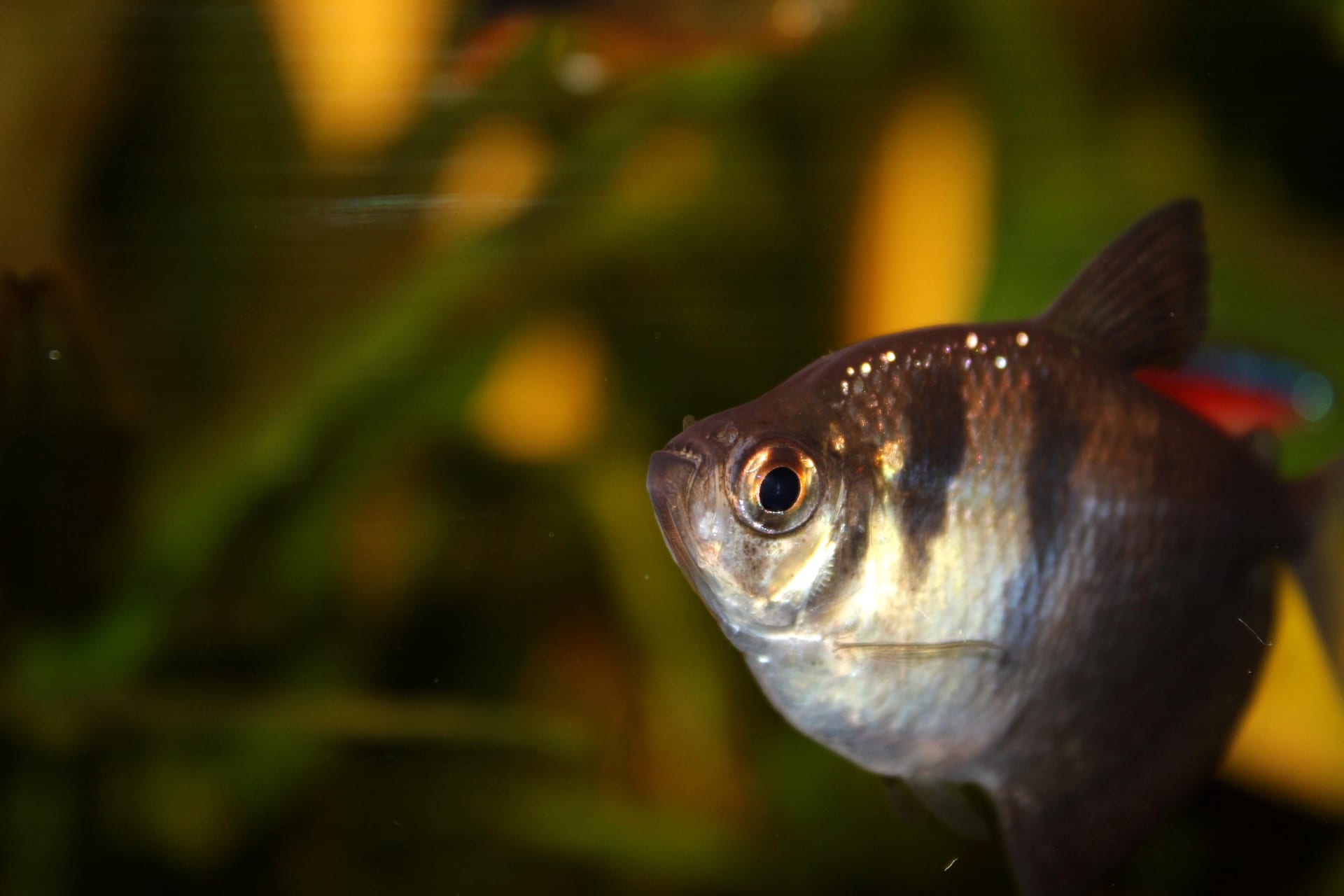
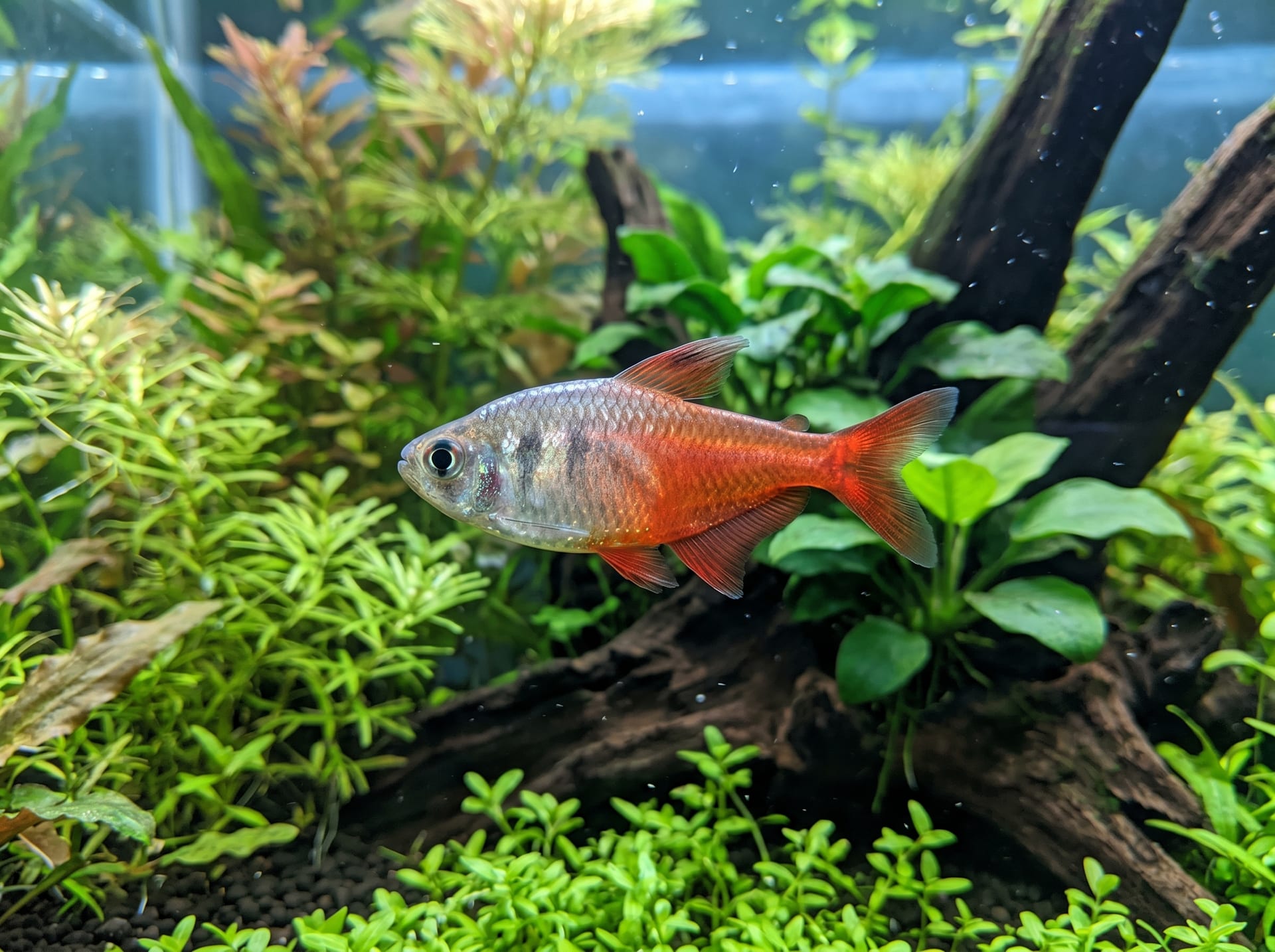
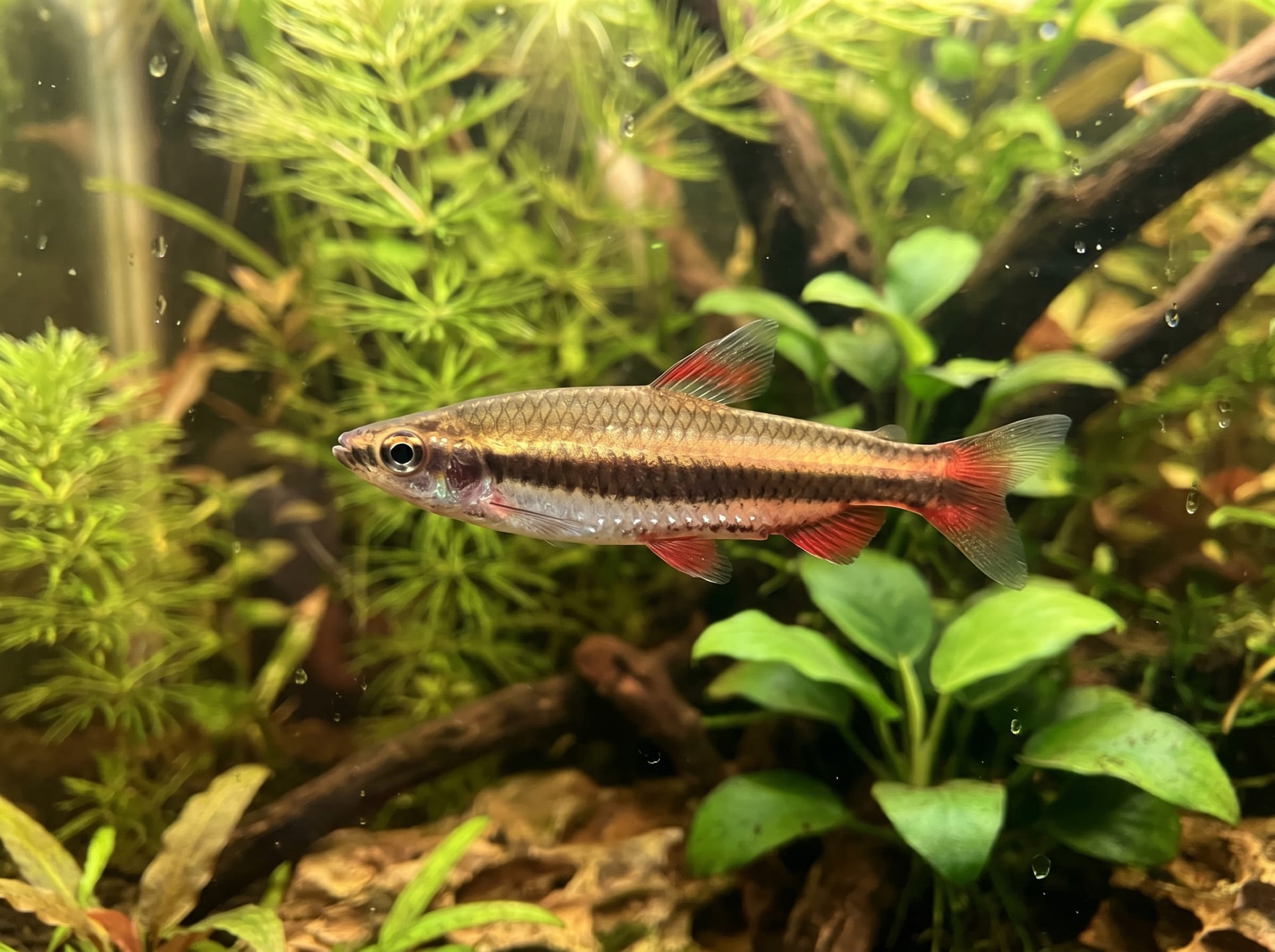
The glass bloodfin, Prionobrama filigera, is a small characid recorded from the Amazon drainage in Ecuador, Colombia, Peru, Bolivia and Brazil (FishBase, Seriously Fish). It reaches 6 cm TL. Its slender, transparent body contrasts with a red caudal fin. The upturned mouth suggests it feeds mainly on small invertebrates at the surface. It differs from the similarly named bloodfin tetra (Aphyocharax anisitsi), a different genus, by its more elongate, transparent body; the only other species in its genus, P. paraguayensis, lacks red in the tail. Adaptable, it tolerates slightly acidic to slightly alkaline and soft to hard water. Peaceful, it mixes well with other small characins, Corydoras and Apistogramma. Mature males show a dark stripe on the anal fin. It is a common schooling characin in Japanese aquarium shops.
Source: Wikipedia (CC BY-SA 4.0)
Size of the Glass bloodfin
The Glass bloodfin grows to Up to 6 cm TL (FishBase).
Temperature & humidity for the Glass bloodfin
The ideal temperature for the Glass bloodfin is 23〜27℃.
Basic Info
Origin
South America (Amazon drainage in Ecuador, Colombia, Peru, Bolivia and Brazil)
Lifespan
Few reliable data
Size
Up to 6 cm TL (FishBase)
Temperature
23〜27℃
References & Sources
Edited & verified by: BreederDirect editorial team
The taxonomic, regulatory, and husbandry data on this page are compiled and verified against the authoritative primary sources below.
Primary sources
Taxonomy & Authority
Accepted name: Prionobrama filigera (Cope, 1870)
Synonyms: Aphyocharax analialbis Nodc, 1996, Aphyocharax analis Nichols, 1915, Aphyocharax filigerus Cope, 1870, Bleptonema amazonae Eigenmann, 1914, Prionobrama amazonae (Eigenmann, 1914), Prionobrama madeirae Fowler, 1913
Authority databases: GBIF · GBIF · FishBase
Nomenclature follows global taxonomic authority databases.
Regulations & Conservation Status
Not CITES-listedIUCN LC · Least Concern
Not listed in the CITES Appendices (checked on Species+). Not designated under Japan's Invasive Alien Species Act, nor on the Ministry of the Environment's list of invasive alien species. Never release aquarium fish into the wild.
Sources: Species+ (CITES) / FishBase
Regulations may change. Always verify the latest information with the relevant authorities.
Glass bloodfin Listings
Loading latest listingsFind listings for this species