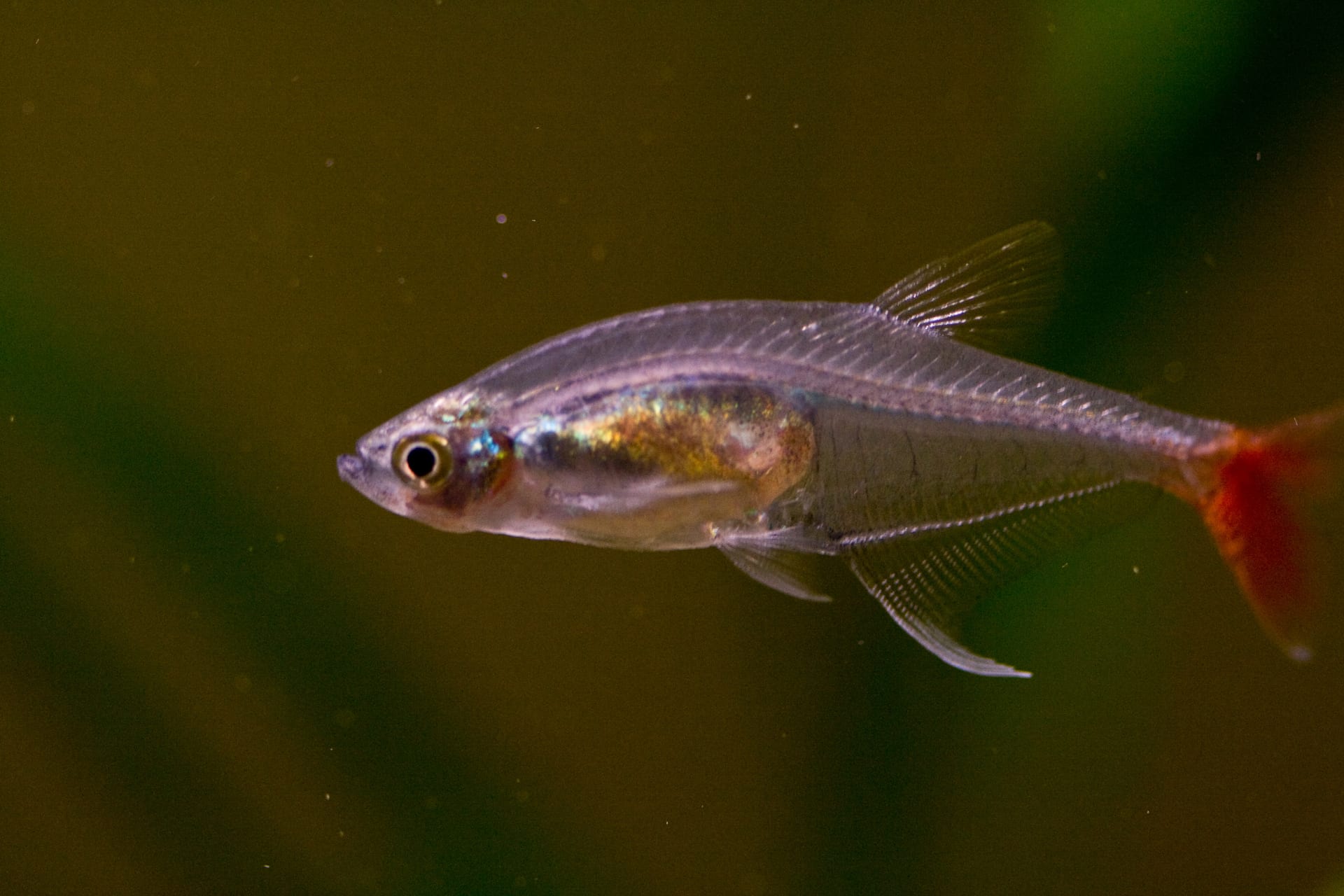
 © Chronotopian / CC BY-SA 3.0
Glass bloodfin
The glass bloodfin is a transparent-bodied characin from the rivers of South America. Its body is slender, and a red tint runs from the base of the tail fin out into the tail, which stands out nicely against the clear body. It swims actively near the surface and looks its best when kept in a group. Adults reach a maximum total length of 6 cm, and the species is rated as beginner-friendly. Note that it belongs to a different genus from the similarly named bloodfin tetra, so double-check the name before you bring one home.
View Glass bloodfin encyclopedia →0% commission on your first sales!Register by September 30, 2026 and your first 2 sales are commission-free!
Breeder Wanted!
List on BreederDirect and sell directly to customers nationwide!
Our 6 Transparency Commitments
All Tropical Fish listings include water quality, temperament, and tank size information from verified Breeder.
- Origin Disclosed
- Real Photos
- Water Quality Disclosed
- Recommended Tank Size
- Temperament Disclosed
- Breed Line Disclosed
Browse all 341 breeds
Water Type
Care Level
Verified breeders wanted for Tropical Fish
Breeders are signing up now ahead of launch. Subscribe to be notified when new listings go live.
Getting alerts is free with a member account. When new listings match your saved search, we'll notify you by email and in-app.
Browse other categories
Verified breeders (preview)
Are you raising tropical fish?
Register as a breeder and connect with buyers directly.
Apply as a breederGlass bloodfin key facts
- Care level
- Beginner-friendly
- Lifespan
- Few reliable data
- Size
- Up to 6 cm TL (FishBase)
- Temperature
- 23〜27℃
- Diet
- Omnivore (prepared foods, small frozen and live foods)
- Water Temperature & Quality
- 23-27°C, pH 6.0-7.8, up to 30 dH (FishBase). Very adaptable.
- Aquarium
- Seriously Fish suggests a 60 x 38 cm footprint. It swims in the upper layers, so leave open space, with plants and some floating cover to calm it.
- Tank Mates & Compatibility
- Peaceful with small characins, Corydoras, small plecos and Apistogramma. Avoid larger, fast fish in the same layer. Keep six to eight or more to spread rival males' squabbles.
- Diet & Feeding
- Especially fond of frozen or live Daphnia and bloodworm, but readily takes prepared foods.
- Breeding & Egg-laying
- Not difficult to breed. An egg scatterer, so spawn it in a separate tank with fine-leaved plants or mesh that eggs can fall through.
- Health & Cautions
- Newly added fish can be skittish and jump; add floating plants and use a lid.
About Glass bloodfin
Meet the glass bloodfin, a transparent South American characin that grows to 6 cm at most. Learn about its red-tinged tail, its schooling habits near the surface, beginner-friendly care, and answers to common questions before you bring one home.
7 things to know before welcoming a Glass bloodfin
1Keep them in a group
The charm of this fish is watching a school swim near the surface. A single fish rarely shows its best, so it is better to bring home several at once. Some individuals may seem unsettled in very small groups, so build up the numbers if your tank has room.
2Favor a wide tank
Adults are small, reaching a maximum total length of 6 cm (FishBase), but a school needs horizontal room to swim well. Because they are active near the surface, choose a tank with plenty of open swimming space.
3Use a tight lid
Fish that swim actively near the surface can jump out when startled. Use a well-fitting lid and close any gaps around cables and tubing to be safe.
4Choose calm tank mates
Because they are small, it is safest to avoid tank mates with large mouths. Pick peaceful fish of a similar size instead. Before adding any companion, check its adult size and temperament.
5Feed small portions
This is a small fish with a small mouth, so choose foods in an easy-to-eat size, such as fine-grained prepared food. Since it swims near the surface, foods that float may be easier for it to take. Uneaten food can foul the water, so feed small amounts at a time.
6Acclimate and keep water stable
Newly arrived fish can be stressed by the change in environment, so acclimate them slowly. Afterward, keep the water stable with regular water changes, and watch daily for changes in feeding or any abnormalities on the body and fins.
7Show off the red tail
Because the body is transparent, lighting and background change how the fish looks. Plants and a darker substrate can make the red in the tail stand out more. Plan a layout that lets you enjoy the school swimming in view.
Frequently asked questions about Glass bloodfin
- Q.Can beginners keep glass bloodfins?
- A.Its care difficulty is listed as beginner-friendly. Still, it is a small, delicate fish, so prepare a tank that fits a school, keep the water stable, and acclimate new arrivals carefully.
- Q.How large do they grow?
- A.Adults reach a maximum total length of 6 cm (FishBase). They are small, but a roomy tank lets you enjoy them swimming as a school.
- Q.Is it the same as the bloodfin tetra?
- A.No, they belong to different genera. The names are similar, but the glass bloodfin is known for its transparent body and the red coloring from the base of the tail fin into the tail. It is worth checking the name before you bring one home.
- Q.How many should I keep together?
- A.This fish swims in a school near the surface, so keeping several together suits it better than keeping one alone. Build up the numbers within what your tank can comfortably hold.
- Q.How long do they live?
- A.There is little documentation on lifespan, so a clear figure cannot be given. Keeping the water stable and observing your fish daily is the foundation for keeping them long term.
Useful tools for Glass bloodfin care
Learn more about Glass bloodfin in the encyclopedia
View Glass bloodfin encyclopedia entry →
Care difficulty, lifespan, size and diet — all basics covered.
More in this category
Can't find the one you're looking for?
Post your wishes for free and breeders with matching animals will contact you with introductions.