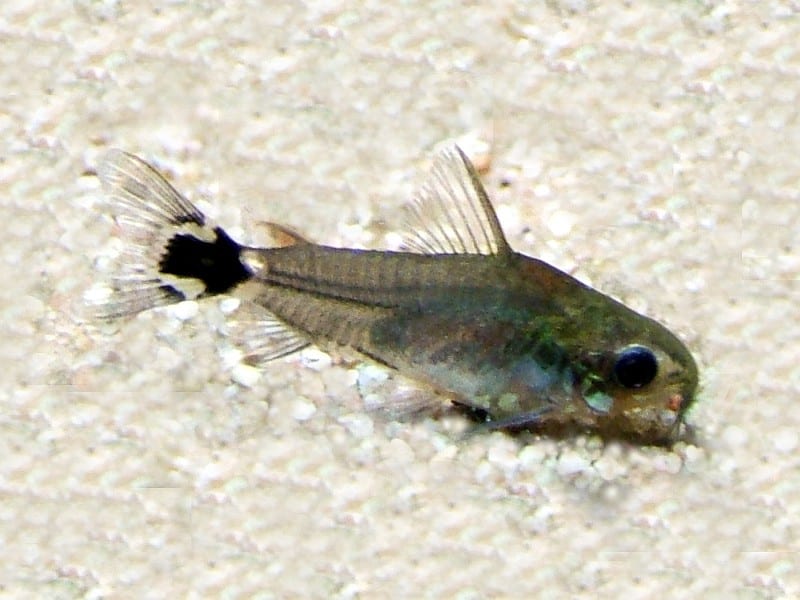
 © AquariaNR / CC BY-SA 3.0 DE
Dwarf Corydoras
Corydoras hastatus is one of the smallest Corydoras species, reaching just 2.4 to 3.2 cm as an adult. Unlike most corydoras that stay glued to the substrate, this species swims in loose schools through the middle of the water column, with a small black diamond-shaped mark at the base of the tail as its signature feature. Its temperament is extremely peaceful, and it rarely bothers other fish. Because of its tiny size, though, care is needed when choosing tankmates and food small enough for it to eat. Suited to intermediate keepers, dwarf corydoras show their best character when kept in a proper-sized group rather than alone.
View Dwarf Corydoras encyclopedia →0% commission on your first sales!Register by September 30, 2026 and your first 2 sales are commission-free!
Breeder Wanted!
List on BreederDirect and sell directly to customers nationwide!
Our 6 Transparency Commitments
All Tropical Fish listings include water quality, temperament, and tank size information from verified Breeder.
- Origin Disclosed
- Real Photos
- Water Quality Disclosed
- Recommended Tank Size
- Temperament Disclosed
- Breed Line Disclosed
Browse all 301 breeds
Water Type
Care Level
Verified breeders wanted for Tropical Fish
Breeders are signing up now ahead of launch. Subscribe to be notified when new listings go live.
Getting alerts is free with a member account. When new listings match your saved search, we'll notify you by email and in-app.
Browse other categories
Verified breeders (preview)
Are you raising tropical fish?
Register as a breeder and connect with buyers directly.
Apply as a breederDwarf Corydoras key facts
- Care level
- Intermediate
- Lifespan
- 3-5 years
- Size
- 2.4-3.2cm
- Temperature
- 20〜26℃
- Diet
- Sinking dried foods, Artemia, Daphnia
- Tank
- A 60 x 30cm base and about 54 litres is the minimum. Because it swims in midwater, open swimming space matters as much as floor area.
- Water Temperature & Quality
- 20-26C, pH 6.0-7.5, 2-12dGH. FishBase records pH 6.0-8.0 and 5-19dH in the wild.
- Tank Mates
- Extremely peaceful and gregarious; keep at least 4-6 and ideally 10 or more. Pair it with similarly sized fish such as small characins, never with large species.
- Diet & Feeding
- Partly adapted to pelagic zooplankton. Alongside sinking dried food, offer live Daphnia and Artemia regularly.
- Breeding & Spawning
- Two or more males per female. Repeat daily 50-70 percent water changes with soft, cooler water. Eggs hatch in 3-4 days and fry take microworm and Artemia nauplii.
- Health & Notes
- Its small size makes it vulnerable to poor water quality and starvation. Fit a sponge guard over filter intakes. IUCN status is Least Concern.
About Dwarf Corydoras
Dwarf Corydoras (Corydoras hastatus) is one of the smallest corydoras species, known for schooling in mid-water instead of staying on the substrate. Peaceful temperament, adult size 2.4–3.2 cm, suited to intermediate keepers.
7 things to know before welcoming a Dwarf Corydoras
1Schools in Mid-Water
Unlike most corydoras that stay glued to the substrate, Corydoras hastatus swims and schools through the middle of the water column. It tends to look unsettled if kept alone or in small numbers, so keeping a proper group brings out its natural behavior.
2One of the Smallest Corydoras
Adults reach only about 2.4 to 3.2 cm, making this one of the smallest Corydoras species. Look for the black diamond-shaped mark at the base of the tail to identify it.
3A Very Peaceful Temperament
It rarely shows aggression and almost never chases other fish. It can be somewhat shy, though, so plants or driftwood that offer hiding spots help it settle in.
4Mind the Size Gap With Tankmates
Despite its calm nature, its small size means it's best to avoid large or boisterous tankmates. Choosing similarly sized, peaceful fish keeps things stress-free.
5Offer Small, Sinking Food
Its small mouth can struggle with standard-sized food. Use small sinking pellets or crumbled food, and check at feeding time that faster tankmates aren't eating it all.
6Keep a Proper-Sized Group
Because it's a schooling species, small numbers tend to leave it nervous and hiding. Bring home a group sized to your tank so you can enjoy its natural schooling behavior.
7Sensitive to Water Changes
Its small body makes it more affected by sudden shifts in water quality or temperature than larger fish. This species suits intermediate keepers who can maintain stable conditions through regular water changes and close observation.
Frequently asked questions about Dwarf Corydoras
- Q.How is it different from other corydoras?
- A.While most corydoras spend their time on the substrate, Corydoras hastatus schools in the middle of the water column instead. It's also one of the smallest corydoras, reaching only about 2.4 to 3.2 cm.
- Q.Is it suitable for beginners?
- A.This species is generally considered suitable for intermediate keepers. Its small size makes it more sensitive to water quality changes, so some prior fishkeeping experience helps.
- Q.How many should I keep together?
- A.Since it's a schooling fish, it shows its natural behavior best in a proper group rather than alone or in a pair. Choose a group size that fits comfortably in your tank.
- Q.Can it be kept with other fish?
- A.It's peaceful and rarely bothers other fish. Because of its small size, though, it's best to avoid large or aggressive tankmates and stick with similarly sized, calm species.
- Q.Is it subject to CITES?
- A.Corydoras hastatus is not subject to CITES. That's worth keeping in mind as a reference point when considering keeping this species.
Useful tools for Dwarf Corydoras care
Learn more about Dwarf Corydoras in the encyclopedia
View Dwarf Corydoras encyclopedia entry →
Care difficulty, lifespan, size and diet — all basics covered.
More in this category
Can't find the one you're looking for?
Post your wishes for free and breeders with matching animals will contact you with introductions.