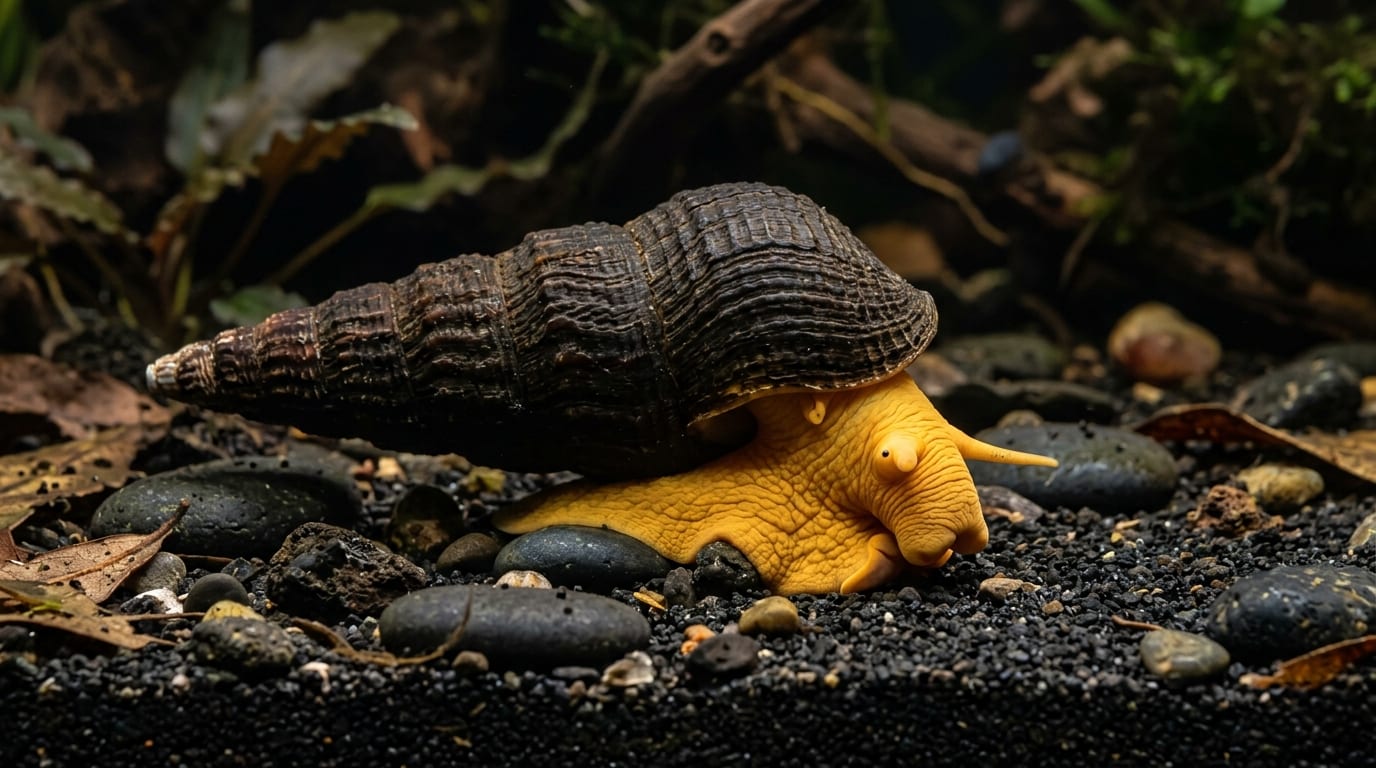
Rabbit Snail
Rabbit snails are large freshwater snails native to the lakes of Sulawesi, known for their tall, spiraling shells and rabbit-like facial features, including antennae that resemble a pair of ears. They move slowly and have a calm temperament, making them easy to house alongside fish and other snails. As diligent cleanup crew members, they graze on leftover food, algae, and detritus at the bottom of the tank. One of their most distinctive traits is livebearing reproduction — rather than laying eggs, females give birth to fully shelled young one at a time. With their charming expressions and unique shape, rabbit snails add a quiet, distinctive presence to any aquarium. They are generally considered suitable for intermediate keepers, as they can be sensitive to water quality changes, so it is worth preparing a stable environment before bringing one home.
View Rabbit Snail encyclopedia →0% commission on your first sales!Register by September 30, 2026 and your first 2 sales are commission-free!
Breeder Wanted!
List on BreederDirect and sell directly to customers nationwide!
Our 6 Transparency Commitments
All Tropical Fish listings include water quality, temperament, and tank size information from verified Breeder.
- Origin Disclosed
- Real Photos
- Water Quality Disclosed
- Recommended Tank Size
- Temperament Disclosed
- Breed Line Disclosed
Browse all 301 breeds
Water Type
Care Level
Verified breeders wanted for Tropical Fish
Breeders are signing up now ahead of launch. Subscribe to be notified when new listings go live.
Getting alerts is free with a member account. When new listings match your saved search, we'll notify you by email and in-app.
Browse other categories
Verified breeders (preview)
Are you raising tropical fish?
Register as a breeder and connect with buyers directly.
Apply as a breederRabbit Snail key facts
- Care level
- Intermediate
- Lifespan
- 4-6 years
- Diet
- Algae, biofilm, sinking prepared foods and blanched vegetables
- Tank
- It uses substrates from sand through rock to sunken wood, so combine a fine sand it can burrow into with stone and driftwood where algae grow. It is a large snail that eats a good deal, so allow a generous water volume.
- Water Temperature & Quality
- It is endemic to the lakes of Sulawesi and is a lowland snail absent above about 700m. Avoid strongly acidic water, which erodes the shell.
- Tank Mates
- Peaceful and harmless to other animals. Do not house it with snail-eating fish or with assassin snails, and avoid fish that nip at tentacles. It sometimes eats the soft new growth of aquatic plants.
- Diet & Feeding
- The genus has a radula that varies with diet and substrate, and the snail rasps algae and organic matter from the bottom. It is too large to live on tank algae alone, so give sinking foods and blanched vegetables regularly.
- Breeding & Spawning
- Gonochoric and ovoviviparous, bearing young that already carry a shell and can reach 2cm, among the largest newborns of any freshwater snail. Few are produced at a time and increase is very slow, so overpopulation is unlikely.
- Health & Notes
- Several Tylomelania species are traded indiscriminately as rabbit snails, so the identity of a purchased animal is often uncertain. Never use copper-based fish medications, which are toxic to snails. It is not listed by CITES.
About Rabbit Snail
A large freshwater snail from Sulawesi with a tall spiral shell and a rabbit-like face. Calm and community-friendly, it reproduces via livebearing. Generally considered suitable for intermediate keepers.
7 things to know before welcoming a Rabbit Snail
1Stable Water Quality Matters
Rabbit snails are somewhat sensitive to sudden shifts in water quality, which is why they're generally considered suitable for intermediate keepers. They tend to do better in an established, stable tank rather than a newly set-up one.
2Peaceful Community Tankmate
They move slowly and show no aggression, making them compatible with many fish and other snail species. Their non-confrontational nature makes them easy to add to a community aquarium.
3Acclimate with Care
Because they are sensitive to water parameter changes, it is best to take extra time when acclimating a new rabbit snail. Sudden shifts in pH or temperature can be stressful for them.
4Natural Tank Cleanup Crew
They graze on algae, detritus, and leftover food that settles on the substrate. Many keepers value them as a helpful part of the tank's cleanup crew.
5Livebearing, Not Egg-Laying
Unlike many snails that lay eggs, rabbit snails give birth to fully shelled young one at a time. Because brood sizes are small, they are unlikely to overpopulate a tank.
6Calcium Supports Shell Health
Calcium levels in the water play a role in keeping the shell strong and healthy. If you notice white streaks or pitting on the shell, it may be worth reviewing your water parameters.
7Provide Places to Hide
Rabbit snails appreciate shaded spots like driftwood or plant cover where they can retreat and feel secure. A fine-grained substrate suits their habit of burrowing.
Frequently asked questions about Rabbit Snail
- Q.Are rabbit snails good for beginners?
- A.They are generally considered suitable for intermediate keepers, as they can be somewhat sensitive to water quality changes. They are best suited to keepers who already have some experience managing water parameters.
- Q.Can rabbit snails live with other fish?
- A.Yes, they are calm and non-aggressive, making them compatible with many tropical fish and other snail species. Their peaceful nature makes them a good fit for community tanks.
- Q.Is a cracked or chipped shell a problem?
- A.Minor chips may repair themselves over time, but significant damage can be stressful for the snail. It is worth reviewing your tank's water quality, including calcium levels, if you notice shell damage.
- Q.How easily do rabbit snails breed?
- A.Since they give birth to fully shelled young one at a time rather than laying eggs, brood sizes are small. This means they are unlikely to overpopulate a tank.
- Q.Does CITES apply to rabbit snails?
- A.Rabbit snails are not listed under CITES.
Useful tools for Rabbit Snail care
Learn more about Rabbit Snail in the encyclopedia
View Rabbit Snail encyclopedia entry →
Care difficulty, lifespan, size and diet — all basics covered.
More in this category
Can't find the one you're looking for?
Post your wishes for free and breeders with matching animals will contact you with introductions.