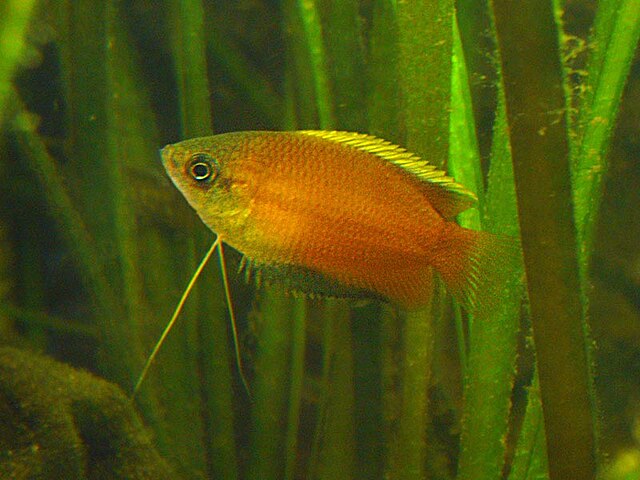
 © Antoondommerholt at Dutch Wikipedia / CC BY-SA 3.0
Honey Gourami
The Honey Gourami is a small, warm-toned freshwater fish named for its honey-colored body. Known for its gentle, easygoing temperament, it rarely chases or nips at tankmates, making it a great choice for peaceful community aquariums. Adults stay compact at around 4 to 5 cm, so they thrive even in smaller tanks, and they take readily to both prepared flakes or pellets and frozen foods — a forgiving trait for first-time fishkeepers. With a lifespan of roughly 4 to 6 years, they make a long-term companion that rewards patient owners with quiet, unhurried swimming that's a pleasure to watch.
View Honey Gourami encyclopedia →0% commission on your first sales!Register by September 30, 2026 and your first 2 sales are commission-free!
Breeder Wanted!
List on BreederDirect and sell directly to customers nationwide!
Our 6 Transparency Commitments
All Tropical Fish listings include water quality, temperament, and tank size information from verified Breeder.
- Origin Disclosed
- Real Photos
- Water Quality Disclosed
- Recommended Tank Size
- Temperament Disclosed
- Breed Line Disclosed
Browse all 341 breeds
Water Type
Care Level
Verified breeders wanted for Tropical Fish
Breeders are signing up now ahead of launch. Subscribe to be notified when new listings go live.
Getting alerts is free with a member account. When new listings match your saved search, we'll notify you by email and in-app.
Browse other categories
Verified breeders (preview)
Are you raising tropical fish?
Register as a breeder and connect with buyers directly.
Apply as a breederHoney Gourami key facts
- Care level
- Beginner-friendly
- Lifespan
- 4-6 years
- Size
- 4-5cm
- Diet
- Artificial feed, Frozen food
- Tank Mates & Compatibility
- Almost never aggressive and one of the most peaceful gouramis; it can be kept with many small fish and shrimp.
- Housing
- Floating plants such as Amazon frogbit or hornwort improve its condition. Keep the flow gentle and the surface calm.
- Water Temperature & Quality
- Suited to 24-28°C and slightly acidic to neutral water (pH 6.0-7.5). It breathes air with its labyrinth organ, so keep the surface accessible.
- Diet & Feeding
- Accepts a wide range of foods such as flakes, frozen bloodworms and brine shrimp. Feed amounts it can finish, in several portions.
- Breeding & Egg-laying
- When breeding, the male builds a bubble nest anchored to floating plants and tends the eggs through hatching. It is hardy with fairly good disease resistance.
- Coloration
- Males turn orange in breeding colour
About Honey Gourami
The Honey Gourami is a small, gentle freshwater fish with a warm honey-colored body. Growing to 4 to 5 cm with a 4 to 6 year lifespan, it's a beginner-friendly choice ideal for community tanks.
7 things to know before welcoming a Honey Gourami
1Peaceful Tankmate
Honey Gouramis are known for their calm, non-aggressive temperament and rarely chase or harass other fish. Pairing them with similarly gentle, small species helps create a relaxed community tank. If housing them with more assertive fish, provide plenty of plants or driftwood for cover.
2Tank Size Guidance
Adults stay compact at around 4 to 5 cm, so they can comfortably live in smaller aquariums. That said, they tend to show more natural, relaxed behavior when kept in a small group, so it's best to allow enough swimming space for several individuals.
3Easy to Feed
Honey Gouramis readily accept both prepared flake or pellet food and frozen foods, making feeding straightforward. Using flakes as a staple diet and occasionally offering frozen bloodworms can help provide balanced nutrition.
4Water Conditions
As with most tropical fish, sudden changes in water quality or temperature can cause stress. Keep them in a heated, filtered tank, and try to match the temperature of new water closely during water changes.
5Male vs. Female
As breeding season approaches, males often develop more vivid coloration, which can make it easier to tell the sexes apart. Observing these subtle changes is one of the small pleasures of keeping this species.
6A Multi-Year Commitment
Honey Gouramis typically live around 4 to 6 years, making them a longer-term companion among small tropical fish. Before bringing one home, it's worth considering whether you can maintain a suitable environment for them over that time.
7Before Bringing One Home
Before welcoming a Honey Gourami, set up the tank with a heater, filter, and other basic equipment, and let the water conditions stabilize. When introducing the fish, take time for a slow, gradual acclimation to the new environment.
Frequently asked questions about Honey Gourami
- Q.Can Honey Gouramis live with other fish?
- A.Yes, Honey Gouramis have a gentle, low-aggression temperament that makes them well suited to community tanks. Pairing them with similarly peaceful small fish works best, though adding plenty of hiding spots helps if housed with more assertive tankmates.
- Q.Is the Honey Gourami suitable for beginners?
- A.Yes, the Honey Gourami is generally considered a beginner-friendly species. It readily accepts prepared foods and has a calm temperament, making it manageable for those keeping tropical fish for the first time.
- Q.How big do Honey Gouramis grow?
- A.Adults typically reach around 4 to 5 cm in length, staying quite compact. This makes them a good fit for smaller aquariums as well as larger community tanks.
- Q.How long do Honey Gouramis live?
- A.They typically live around 4 to 6 years. That's fairly long for a small tropical fish, giving owners plenty of time to enjoy watching them over the years.
- Q.What should I feed a Honey Gourami?
- A.A staple of prepared flake or pellet food combined with occasional frozen foods like bloodworms works well. They tend to adapt readily to both types of food.
Useful tools for Honey Gourami care
Learn more about Honey Gourami in the encyclopedia
View Honey Gourami encyclopedia entry →
Care difficulty, lifespan, size and diet — all basics covered.
More in this category
Can't find the one you're looking for?
Post your wishes for free and breeders with matching animals will contact you with introductions.