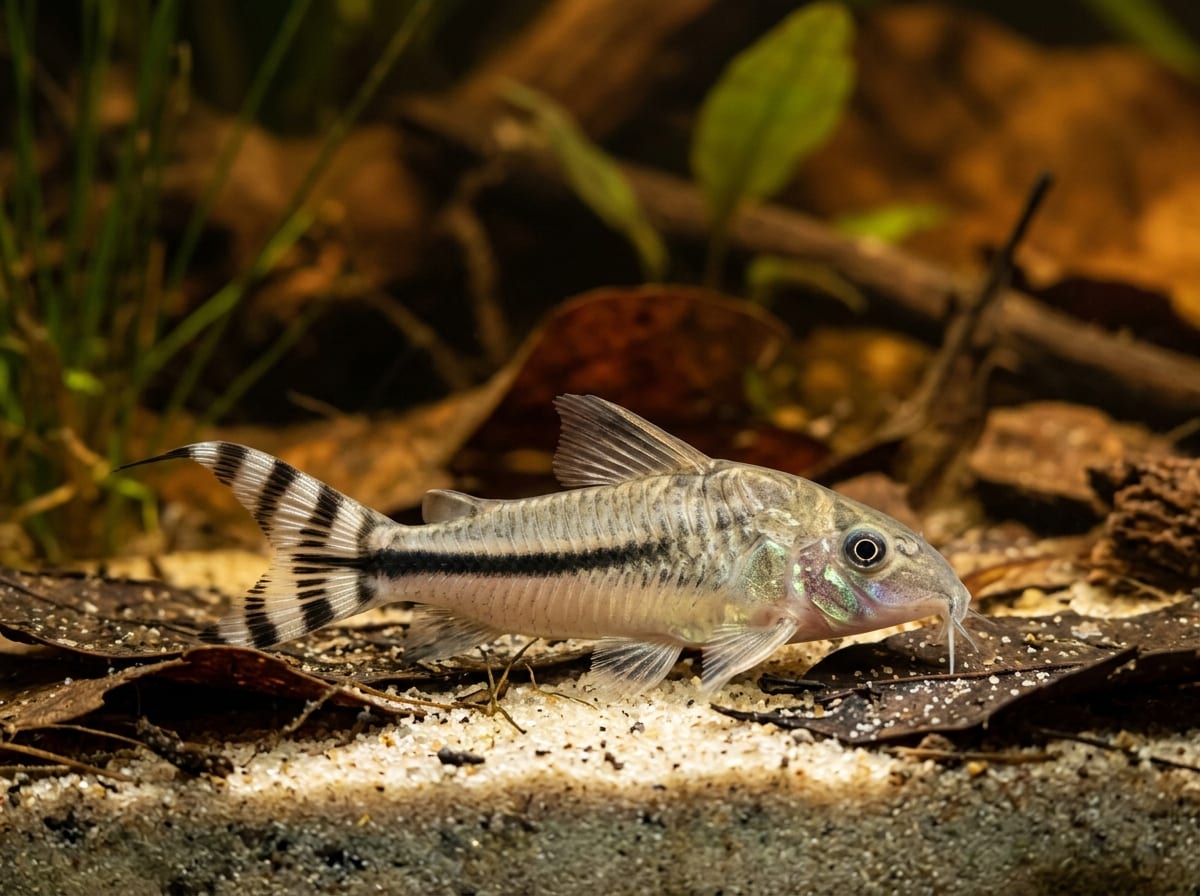
Bannertail catfish
Corydoras robineae, known in English as the Bannertail catfish, is a long-snouted corydoras from the upper Rio Negro basin in Brazil. A black vertical band runs along each side, and the tail fin carries several black stripes, which is where the common name comes from. It stays small, reaching a maximum standard length of 4.4 cm (FishBase), and spends its day sifting through the bottom of the tank. Peaceful and social, it prefers to live in a group. Care is rated as intermediate, and little reliable information exists on its lifespan, so it suits keepers who enjoy patient, attentive husbandry.
View Bannertail catfish encyclopedia →0% commission on your first sales!Register by September 30, 2026 and your first 2 sales are commission-free!
Breeder Wanted!
List on BreederDirect and sell directly to customers nationwide!
BreederDirect's 6 Transparency Commitments
All Tropical Fish listings include water quality, temperament, and tank size information from verified Breeder.
- Origin Disclosed
- Real Photos
- Water Quality Disclosed
- Recommended Tank Size
- Temperament Disclosed
- Breed Line Disclosed
Browse all 341 breeds
Water Type
Care Level
Verified breeders wanted for Tropical Fish
Breeders are signing up now ahead of launch. Subscribe to be notified when new listings go live.
Getting alerts is free with a member account. When new listings match your saved search, we'll notify you by email and in-app.
Browse other categories
Verified breeders (preview)
Are you raising tropical fish?
Register as a breeder and connect with buyers directly.
Apply as a breederBannertail catfish key facts
- Care level
- Intermediate
- Lifespan
- Few reliable data
- Size
- Up to 4.4 cm SL (FishBase)
- Temperature
- 23〜26℃
- Diet
- Omnivore (sinking prepared foods, frozen foods)
- Water Temperature & Quality
- 23-26°C, pH 6.0-8.0, 5-12 dH (FishBase); Seriously Fish gives 21-26°C and pH 6.5-7.5. It likes oxygen-rich water, so provide surface movement and some flow.
- Aquarium
- Use fine sand with smooth rocks and driftwood for shelter, plus dense planting and some floating cover. Avoid undergravel filters and keep the substrate clean.
- Tank Mates & Compatibility
- Very peaceful; suits small characins, cyprinids, anabantoids and dwarf cichlids. Keep a group of six or more.
- Diet & Feeding
- Takes most sinking dried foods; add frozen or live bloodworm, brine shrimp and chopped earthworm for variety.
- Breeding & Egg-laying
- Considered harder to spawn than many corys. Use about two males per female and, when females fill with eggs, make large cooler water changes while increasing oxygen and flow.
- Health & Cautions
- Because the valid name is now Brochis robineae, books and sale listings often show the old name Corydoras robineae alongside.
About Bannertail catfish
Corydoras robineae (Bannertail catfish) is a peaceful, long-snouted corydoras from the upper Rio Negro in Brazil. Maximum standard length is 4.4 cm, and care is rated intermediate. Learn its traits, tank setup and FAQs.
7 things to know before welcoming a Bannertail catfish
1Intermediate-level care
Care is rated as intermediate, so it helps to have the tank cycled and the water stable before the fish arrives. Rather than assuming it is as forgiving as every other corydoras, prepare carefully. Lifespan data are scarce, so set up the tank with a long-term commitment in mind.
2A small fish, max 4.4 cm
Its standard length tops out at 4.4 cm (FishBase), but it lives on the bottom, so choose a tank for floor area rather than height. The long snout, the black band on the flank and the striped tail fin make a group especially attractive to watch.
3Keep them in a group
This species is gentle and prefers company, so a group is usually a better fit than a single fish. Aim for several individuals and give them spots where they can shelter. Make sure the floor area matches the number of fish.
4Prioritize stable water
Its home river, the Rio Negro, is generally described as having soft, slightly acidic water. To avoid sudden changes, do small, frequent water changes and match the temperature of new water before adding it. Suitable conditions can vary with the individual fish, so it is worth asking the seller about the water it is currently kept in before you bring it home.
5Fine, soft substrate
Corydoras search the bottom with their barbels, so fine, smooth sand suits them better than sharp gravel, which may damage the barbels. Driftwood, plants and small hiding spots give them cover. They also encourage natural foraging behavior.
6Make sure food sinks
Because it stays near the bottom, sinking tablets or granules made for corydoras are the staple. Faster fish may eat the food first, so watch that it actually reaches the bottom. Leftovers can foul the water, so start with small portions and adjust.
7Tankmates and health checks
Its peaceful nature makes calm, small fish the natural companions. Large, active fish may outcompete it for food. After arrival, check for worn barbels, white spots on the body and damaged fins. Corydoras are said to be sensitive to some medications, so read the label before using any and ask the seller or an expert if you are unsure.
Frequently asked questions about Bannertail catfish
- Q.Can a beginner keep this fish?
- A.Care is rated as intermediate, so it suits people with some experience keeping corydoras or tropical fish. If you are new to the hobby, make sure the tank is cycled and the water is stable, and check the care details with the seller before bringing it home.
- Q.How large does it grow?
- A.The maximum standard length is 4.4 cm (FishBase). It is small, but it spends its time on the bottom, so choose a tank for floor area rather than height.
- Q.Is it fine to keep just one?
- A.It prefers company, so a group suits it better than a single fish. Keep several together and provide floor space that matches the number of fish.
- Q.How long does it live?
- A.Reliable information on its lifespan is limited, so no definite number can be given. Plan for a long-term commitment and keep the water conditions stable.
- Q.Can it share a tank with other fish?
- A.It is peaceful, so pairing it with calm, small fish is the general approach. Avoid large, active or aggressive fish, which can outcompete it for food and cause stress.
Useful tools for Bannertail catfish care
Learn more about Bannertail catfish in the encyclopedia
View Bannertail catfish encyclopedia entry →
Care difficulty, lifespan, size and diet — all basics covered.
More in this category
Can't find the one you're looking for?
Post your wishes for free and breeders with matching animals will contact you with introductions.