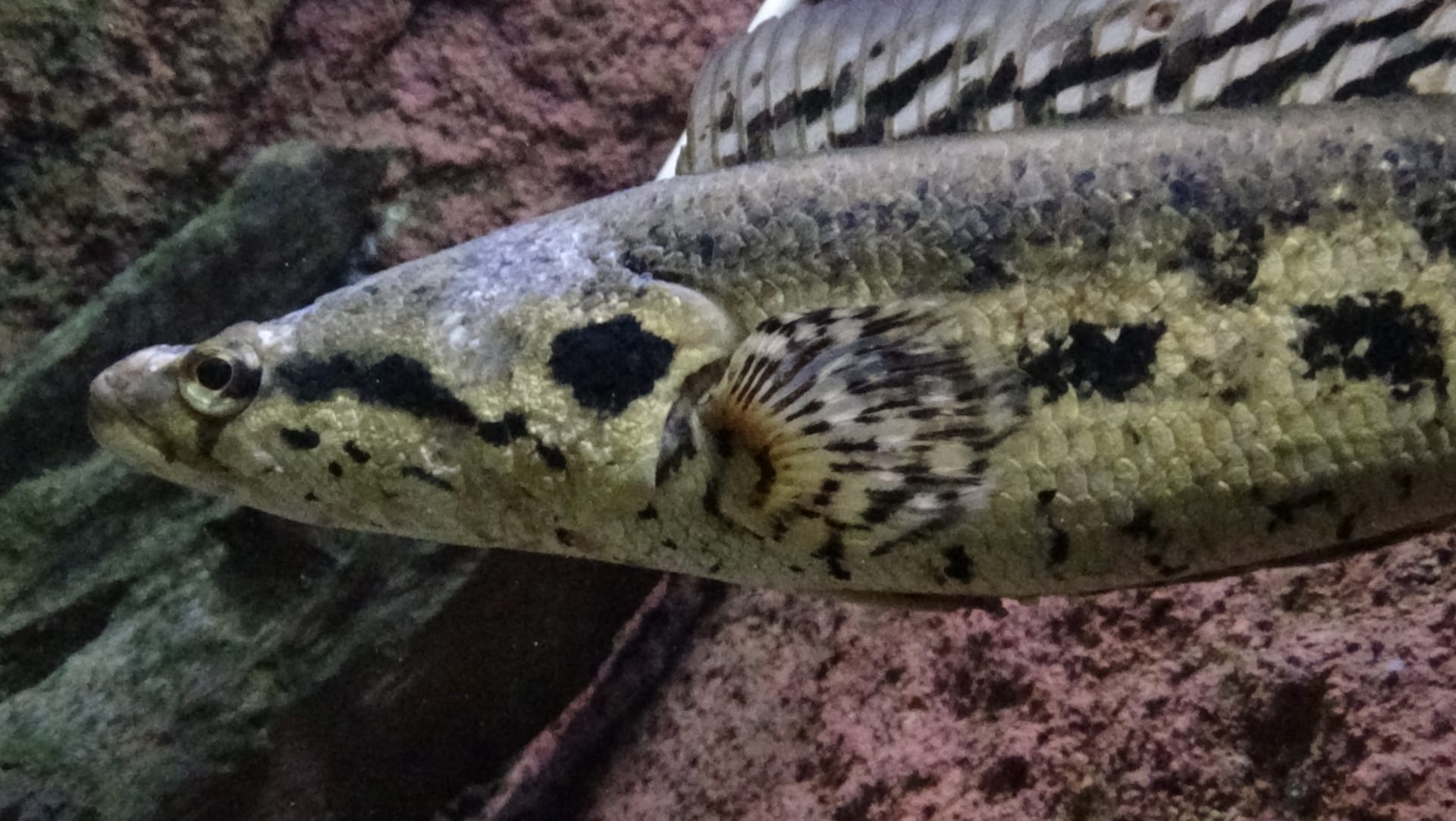
 © Cedricguppy - Loury Cédric / CC BY-SA 4.0
African obscure snakehead
The African obscure snakehead (Channa obscura) ranges widely across Africa, from West Africa through the Nile and Congo river systems. Its brown body marked with rows of dark blotches gives it a rugged, understated look, and it can reach a standard length of up to 50 cm. A carnivore, it relies on breathing air and regularly gulps it at the surface, which makes it fascinating to watch. It is also a fish for experienced keepers, since it needs a large tank, a tightly sealed lid and, in most cases, a tank to itself. Before you commit, be sure you are ready for its full adult size and a long-term keeping plan.
View African obscure snakehead encyclopedia →0% commission on your first sales!Register by September 30, 2026 and your first 2 sales are commission-free!
Breeder Wanted!
List on BreederDirect and sell directly to customers nationwide!
Our 6 Transparency Commitments
All Tropical Fish listings include water quality, temperament, and tank size information from verified Breeder.
- Origin Disclosed
- Real Photos
- Water Quality Disclosed
- Recommended Tank Size
- Temperament Disclosed
- Breed Line Disclosed
Browse all 341 breeds
Water Type
Care Level
Verified breeders wanted for Tropical Fish
Breeders are signing up now ahead of launch. Subscribe to be notified when new listings go live.
Getting alerts is free with a member account. When new listings match your saved search, we'll notify you by email and in-app.
Browse other categories
Verified breeders (preview)
Are you raising tropical fish?
Register as a breeder and connect with buyers directly.
Apply as a breederAfrican obscure snakehead key facts
- Care level
- Advanced
- Lifespan
- Few reliable data
- Size
- Up to 50 cm SL and 1 kg recorded (FishBase)
- Temperature
- 26〜28℃
- Diet
- Carnivore (fish, prawns, bloodworm, mussels)
- Water Temperature & Quality
- 26-28°C (FishBase); Seriously Fish gives 26-30°C, pH 6.0-7.5 and hardness 5-20, and notes it is strictly tropical.
- Aquarium
- Adults exceed 40 cm, so lifelong care needs a large tank with ample length and depth. Cover part of the surface with floating plants, leave open swimming space, and use a gap-free lid with an air layer.
- Tank Mates & Compatibility
- Eats fish smaller than about two-thirds of its size. It has been kept with similarly large, robust fish such as bichirs and big catfish, but this is not safe; keeping it alone is best.
- Diet & Feeding
- Carnivorous and fond of live food, but adapts well to frozen prawns, bloodworm and mussels; it usually refuses dried foods.
- Breeding & Egg-laying
- Rarely bred. Pairs may form among grown-on juveniles, but the others may then be killed.
- Health & Cautions
- It drowns without surface access. Guard against jumping and escape, and never release it.
About African obscure snakehead
The African obscure snakehead (Channa obscura) is a carnivorous, air-breathing fish from West Africa, the Nile and the Congo basin, reaching 50 cm SL. Learn what advanced keepers should check before bringing one home.
7 things to know before welcoming a African obscure snakehead
1Grows up to 50 cm
Records show a maximum standard length of 50 cm and a weight of 1 kg (FishBase). Even if you start with a small fish, plan for a large tank with enough width and depth for an adult to stretch out and turn around.
2An air-breathing fish
This fish relies on breathing air and comes to the surface to do so. Leave an air space between the water and the lid, and arrange the tank so the fish can reach the surface at any time. Avoid letting floating plants cover the whole surface.
3Prevent jumping out
Snakeheads can jump out of open tanks, so a lid without gaps is essential. Seal the openings around filter pipes and heater cords as well.
4A meat-based diet
As a carnivore, it needs a diet based on animal foods. Whether a fish accepts prepared foods varies between individuals, so ask the seller what it is currently eating before you buy. Remove leftovers and adjust portions, since uneaten food fouls the water.
5Best kept alone
Any fish small enough to fit in its mouth may be treated as food, and even snakeheads of the same species may not get along. Plan on keeping it alone at first. If you do try tankmates, think carefully about tank size and how large the other fish are.
6Filtration and water changes
Large carnivores foul the water quickly with leftovers and waste. Choose filtration with some headroom and keep up regular water changes. Driftwood or pipes that give the fish a place to hide can help create a calmer setup.
7Made for experienced keepers
Our guide rates its care difficulty as advanced. Little reliable information exists on its lifespan, so it is hard to say how long you will be caring for it. Bring one home only once you are ready, and equipped, to keep a large fish over the long term, and ask the seller about anything you are unsure of.
Frequently asked questions about African obscure snakehead
- Q.Can beginners keep this fish?
- A.Our guide rates it as advanced. It needs a large tank, a secure lid and usually a tank to itself, so it is best considered after you have gained experience with large fish.
- Q.How large does it get?
- A.Records show a maximum standard length of 50 cm and a weight of 1 kg (FishBase). Those are upper-end figures, and actual size varies between individuals.
- Q.What does air breathing mean here?
- A.This fish comes to the surface to gulp air and relies on doing so. Keep it able to reach the surface freely, and leave an air space above the water.
- Q.Can it live with other fish?
- A.It is a carnivore, and fish small enough to fit in its mouth may be eaten. Plan on keeping it alone, and if you try tankmates, judge their size and the tank space carefully.
- Q.How long does it live?
- A.Little reliable information exists on its lifespan, so no firm figure can be given. It is safest to plan your equipment and care on the assumption that you will keep it for a long time.
Useful tools for African obscure snakehead care
Learn more about African obscure snakehead in the encyclopedia
View African obscure snakehead encyclopedia entry →
Care difficulty, lifespan, size and diet — all basics covered.
More in this category
Can't find the one you're looking for?
Post your wishes for free and breeders with matching animals will contact you with introductions.