Source: Wikimedia Commons
African obscure snakehead
AdvancedParachanna obscura
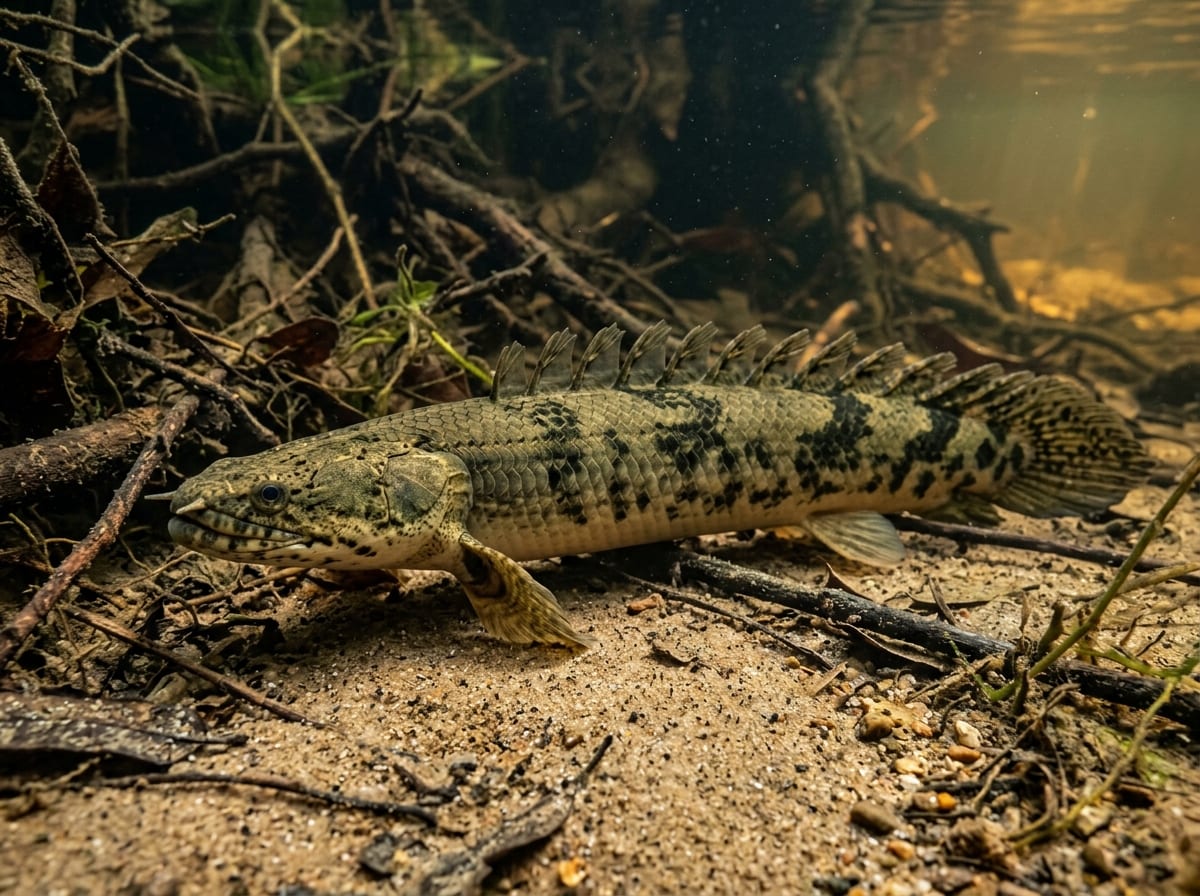
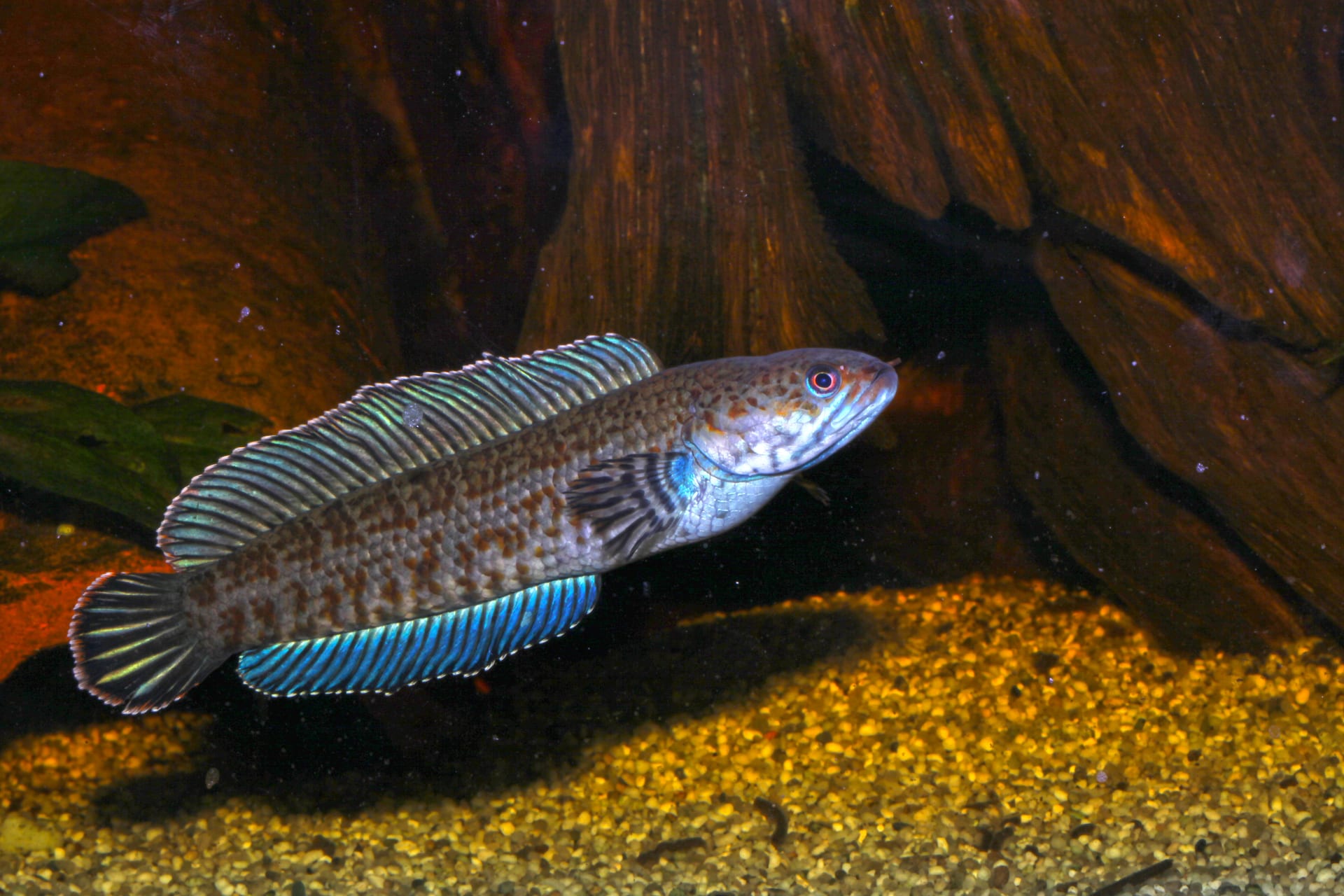
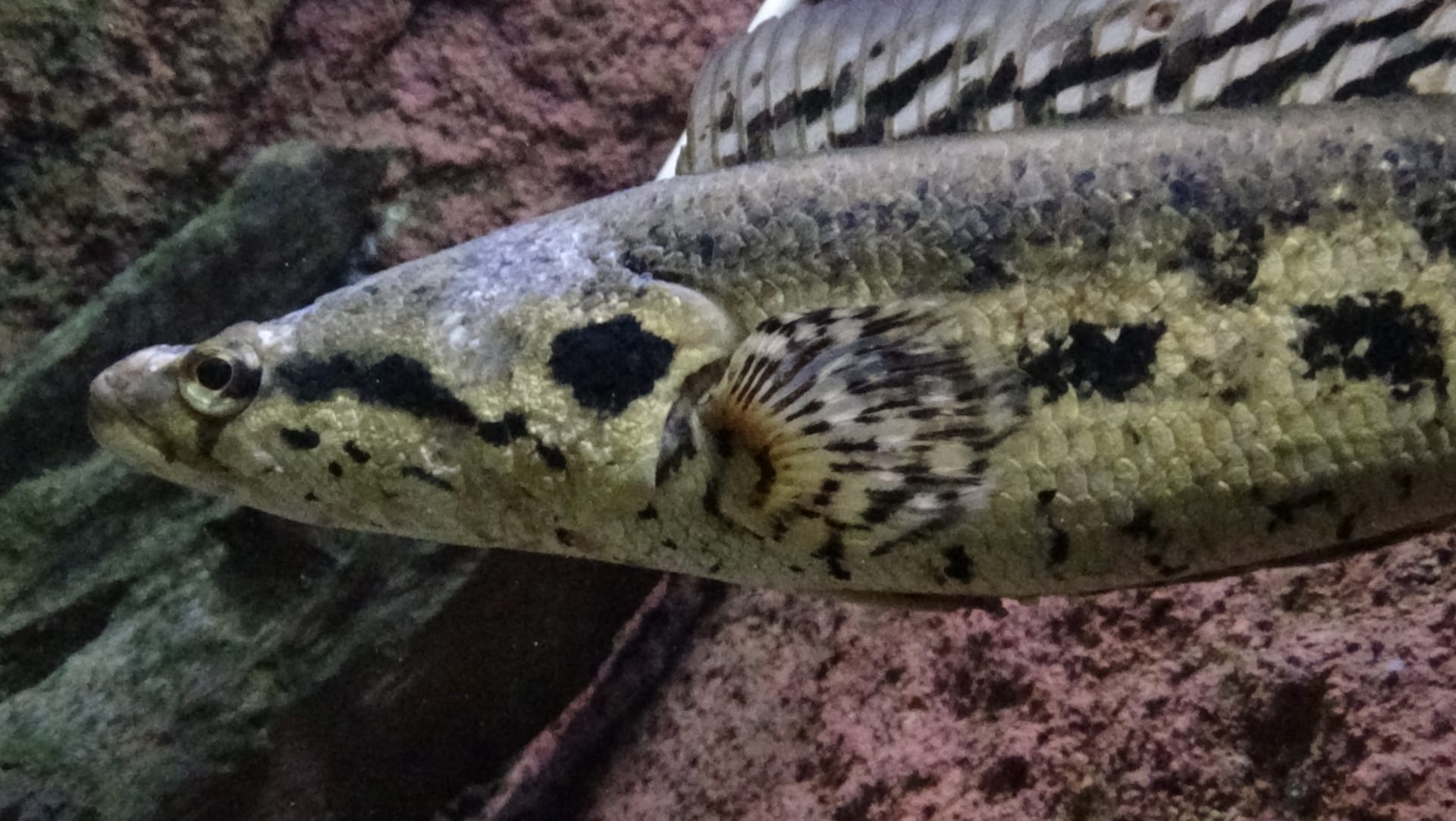
An African snakehead ranging from West Africa to the Nile and Congo basins, brown with dark blotches. A predator approaching 50 cm, it depends on breathing air at the surface.
Difficulty
Advanced
Temperature
26〜28℃
Lifespan
Few reliable data
Size
Up to 50 cm SL and 1 kg recorded (FishBase)
Diet
Carnivore (fish, prawns, bloodworm, mussels)
About
Parachanna obscura is sold in Japan as 'Channa obscura'. Once known as Channa obscurus, it belongs to Parachanna, a genus of snakeheads found only in Africa and separate from the Asian Channa. It is widespread from the Senegal River to the Chad system, including the Volta, Niger and many coastal West African basins, as well as the Nile and Congo basins (FishBase). FishBase records up to 50 cm SL and 1 kg. It lives among marginal vegetation and on floodplains, feeding on insects and small fish, and is an obligate air-breather that drowns without surface access. Captive breeding is rare: some report pairs spawning in an embrace among floating plants with both parents guarding the eggs, others report cave spawning. It treats fish smaller than two-thirds of its size as food, so it is best kept alone. Juveniles are sold by Japanese specialist shops; consider the adult size before buying.
Source: Wikipedia (CC BY-SA 4.0)
Size of the African obscure snakehead
The African obscure snakehead grows to Up to 50 cm SL and 1 kg recorded (FishBase).
Temperature & humidity for the African obscure snakehead
The ideal temperature for the African obscure snakehead is 26〜28℃.
Basic Info
Origin
Africa (West African rivers, Nile and Congo basins)
Lifespan
Few reliable data
Size
Up to 50 cm SL and 1 kg recorded (FishBase)
References & Sources
Edited & verified by: BreederDirect editorial team
The taxonomic, regulatory, and husbandry data on this page are compiled and verified against the authoritative primary sources below.
Primary sources
Taxonomy & Authority
Accepted name: Parachanna obscura (Günther, 1861)
Synonyms: Channa obscurus (Günther, 1861), Ophicephalus obscurus (Günther, 1861), Ophiocephalus obscurus Günther, 1861, Paraphiocephalus obscurus (Günther, 1861), Parophiocephalus obscurus (Günther, 1861)
Authority databases: GBIF · GBIF · FishBase
Nomenclature follows global taxonomic authority databases.
Regulations & Conservation Status
Not CITES-listedIUCN LC · Least Concern
Not listed in the CITES Appendices (checked on Species+). Not designated under Japan's Invasive Alien Species Act nor on the invasive species list (as of September 2026). A large predator approaching 50 cm, so Plan for lifelong housing and never release it into the wild.
Sources: Species+ (CITES) / FishBase
Regulations may change. Always verify the latest information with the relevant authorities.
African obscure snakehead Listings
Loading latest listingsFind listings for this species