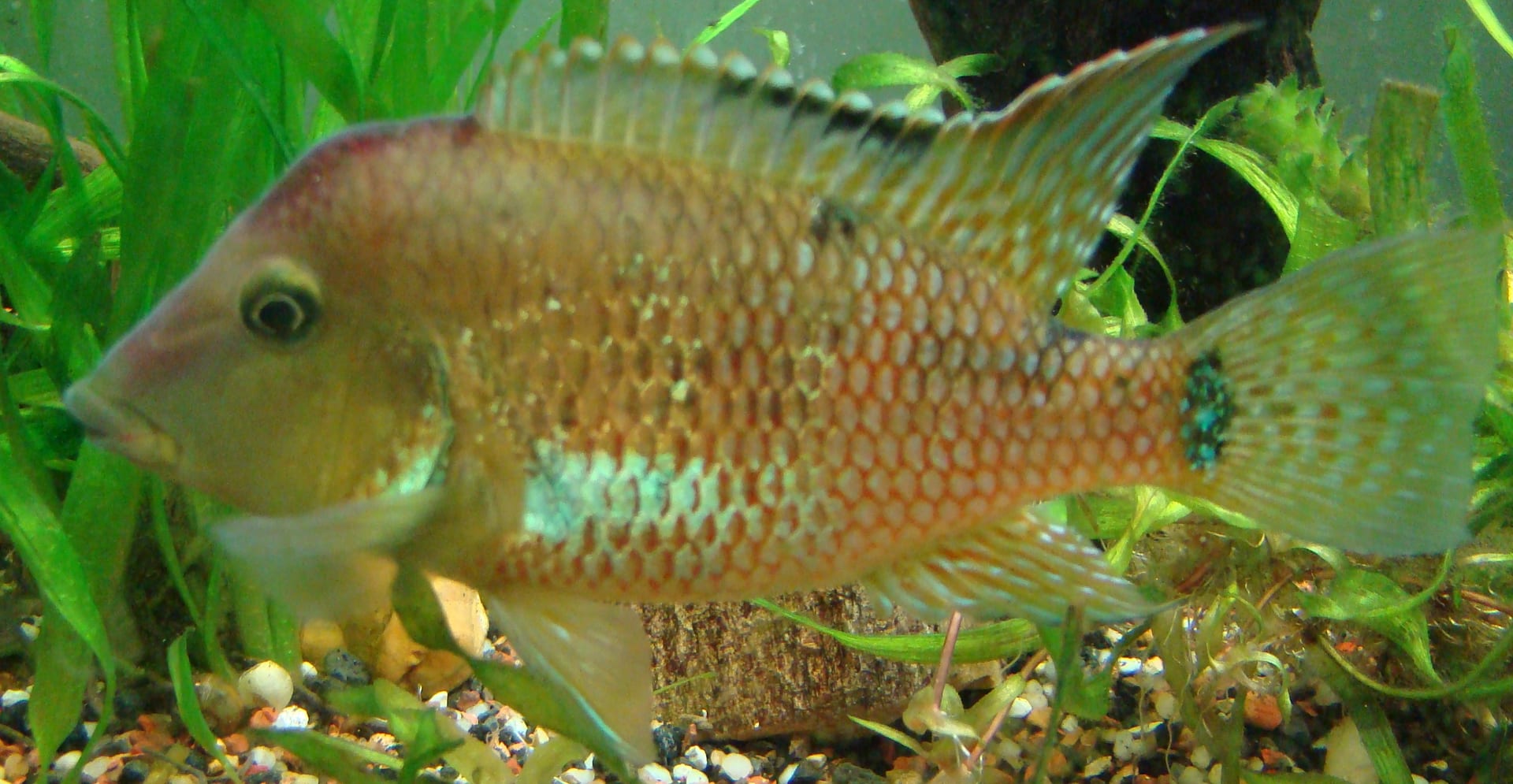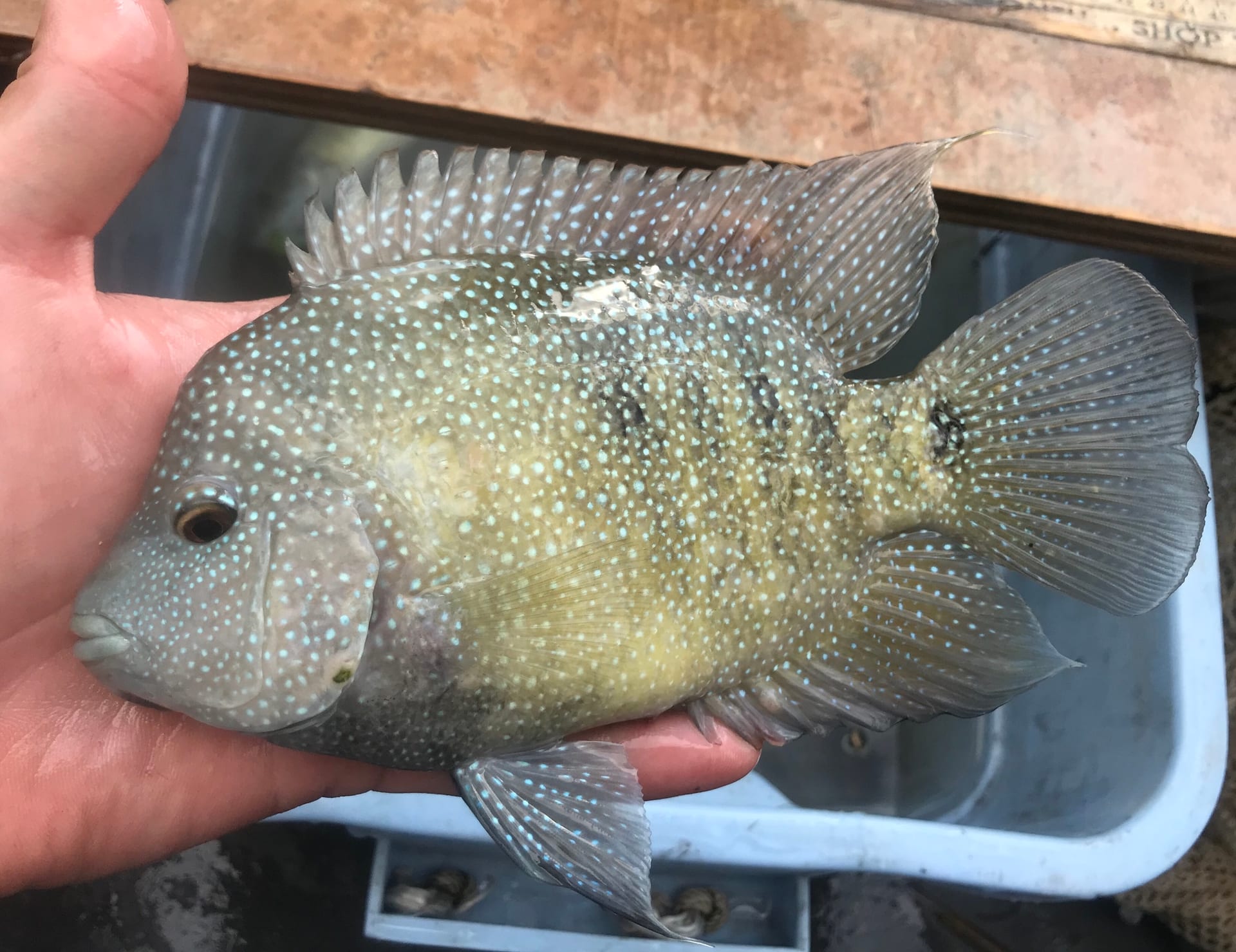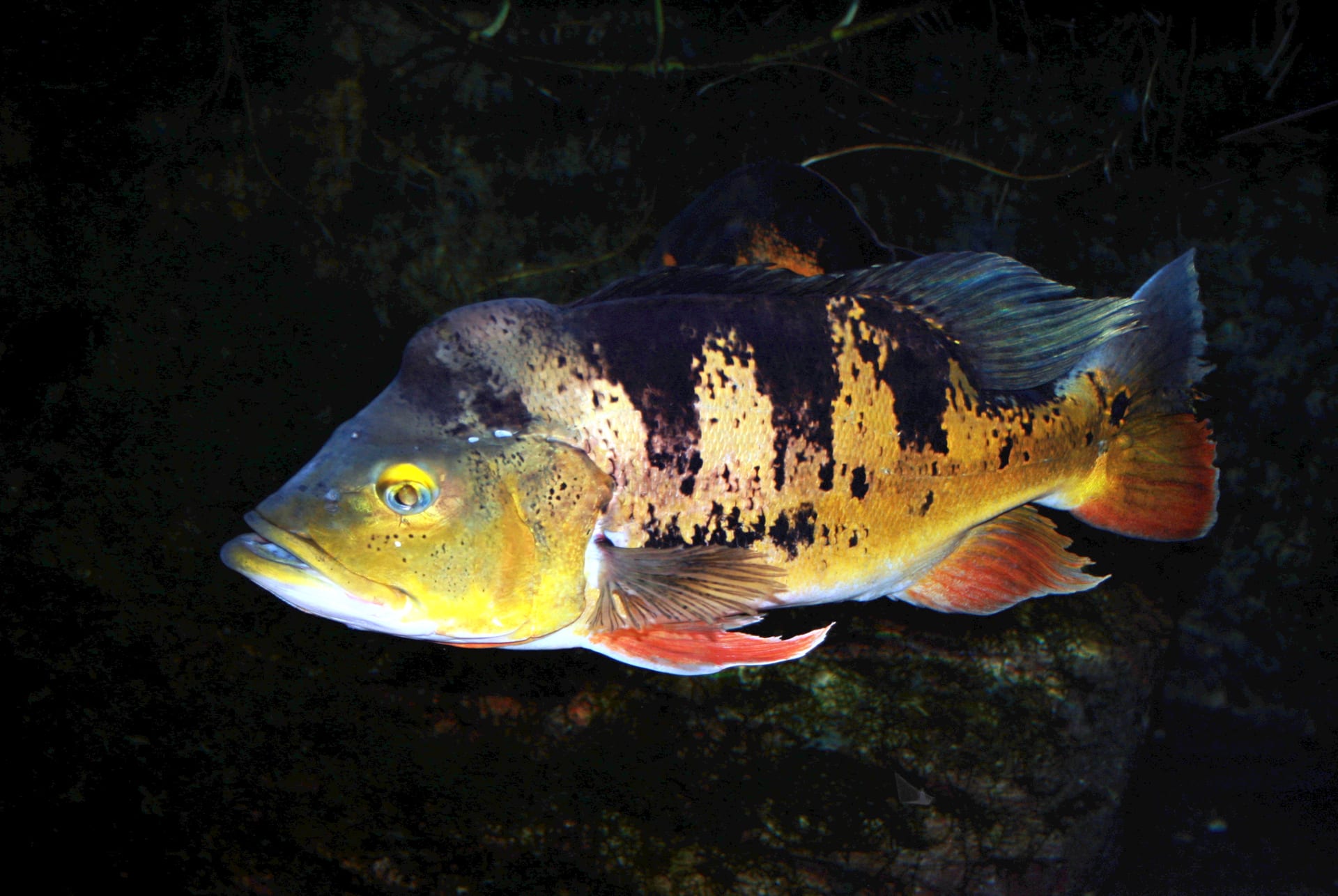
Source: Wikimedia Commons
Peacock cichlid
AdvancedCichla ocellaris
A large predatory cichlid from rivers of northeastern South America, yellow-green with dark bars and a ringed eyespot on the tail base. Recorded to 74 cm, it is also a noted game fish.
Difficulty
Advanced
Temperature
24〜27℃
Lifespan
Few reliable data
Size
Up to 74 cm TL and 6.8 kg (FishBase)
Diet
Piscivore (fish, prawns, mussels)
About
Cichla ocellaris is a large cichlid known as the peacock bass or butterfly peacock bass. FishBase restricts its range to the Marowijne drainage (Suriname, French Guiana) through to the Essequibo (Guyana); Cichla from other regions are usually treated as other species. Several Cichla species are traded as 'peacock bass', so check the scientific name and origin before buying. It is recorded to 74 cm TL and 6.8 kg. It lives in schools in rapids and rocky, moderately deep waters and feeds almost entirely on small fish. It reproduces year-round with a peak at the start of the rainy season. It has been introduced for sport fishing to places such as the USA and Singapore. It is often sold as a cute juvenile of about 5 cm, but it becomes a very large predator that requires an extra-large tank for life.
Source: Wikipedia (CC BY-SA 4.0)
Size of the Peacock cichlid
The Peacock cichlid grows to Up to 74 cm TL and 6.8 kg (FishBase).
Temperature & humidity for the Peacock cichlid
The ideal temperature for the Peacock cichlid is 24〜27℃.
Basic Info
Origin
Northeastern South America (the Guianas: Suriname, French Guiana, Guyana)
Lifespan
Few reliable data
Size
Up to 74 cm TL and 6.8 kg (FishBase)
Temperature
24〜27℃
References & Sources
Edited & verified by: BreederDirect editorial team
The taxonomic, regulatory, and husbandry data on this page are compiled and verified against the authoritative primary sources below.
Taxonomy & Authority
Regulations & Conservation Status
Not CITES-listedIUCN LC · Least Concern
Not listed in the CITES Appendices (checked on Species+). Not designated under Japan's Invasive Alien Species Act nor on the Ministry of the Environment's invasive species list (as of September 2026). A large predatory fish reaching over 70 cm, it has established populations outside its native range after releases. Introduced populations exist in the USA and Singapore, among others. Plan for lifelong housing and never release it into the wild.
Sources: Species+ (CITES) / FishBase / Ministry of the Environment: list of invasive alien species
Regulations may change. Always verify the latest information with the relevant authorities.
Peacock cichlid Listings
Loading latest listingsFind listings for this species