Royal Gramma and Burgess's Dottyback: Keeping and Tank Compatibility Guide | The Charm and Precautions of Beautiful Small Marine Fish
A comprehensive comparison of Royal Gramma and Burgess's Dottyback characteristics, husbandry environment, and tank compatibility. From differences in aggression to feeding and breeding challenges, this guide covers how to safely keep these beautiful small marine fish from the Caribbean and Indo-Pacific.
Key Takeaways
A comprehensive comparison of Royal Gramma and Burgess's Dottyback characteristics, husbandry environment, and tank compatibility. From differences in aggression to feeding and breeding challenges, this guide covers how to safely keep these beautiful small marine fish from the Caribbean and Indo-Pacific.
Related Species
What Are Gramma and Dottyback Fish?
Gramma (genus Gramma) and Dottyback (family Dottybackidae) are small marine fish native to the Caribbean and Indo-Pacific. They are beloved by marine aquarists worldwide for their striking purple, yellow, and orange coloring and hardiness. Both species prefer to live nestled in rock crevices and coral gaps, displaying "reclusive" behavior, and they are excellent matches for rocky layouts and cave-style aquascaping.
Representative species include the Royal Gramma (Gramma loreto), Burgess's Dottyback (Pseudochromis paccagnellae), and Orchid Dottyback (Pseudochromis fridmani).
Royal Gramma: Characteristics and Care
Appearance and Behavior
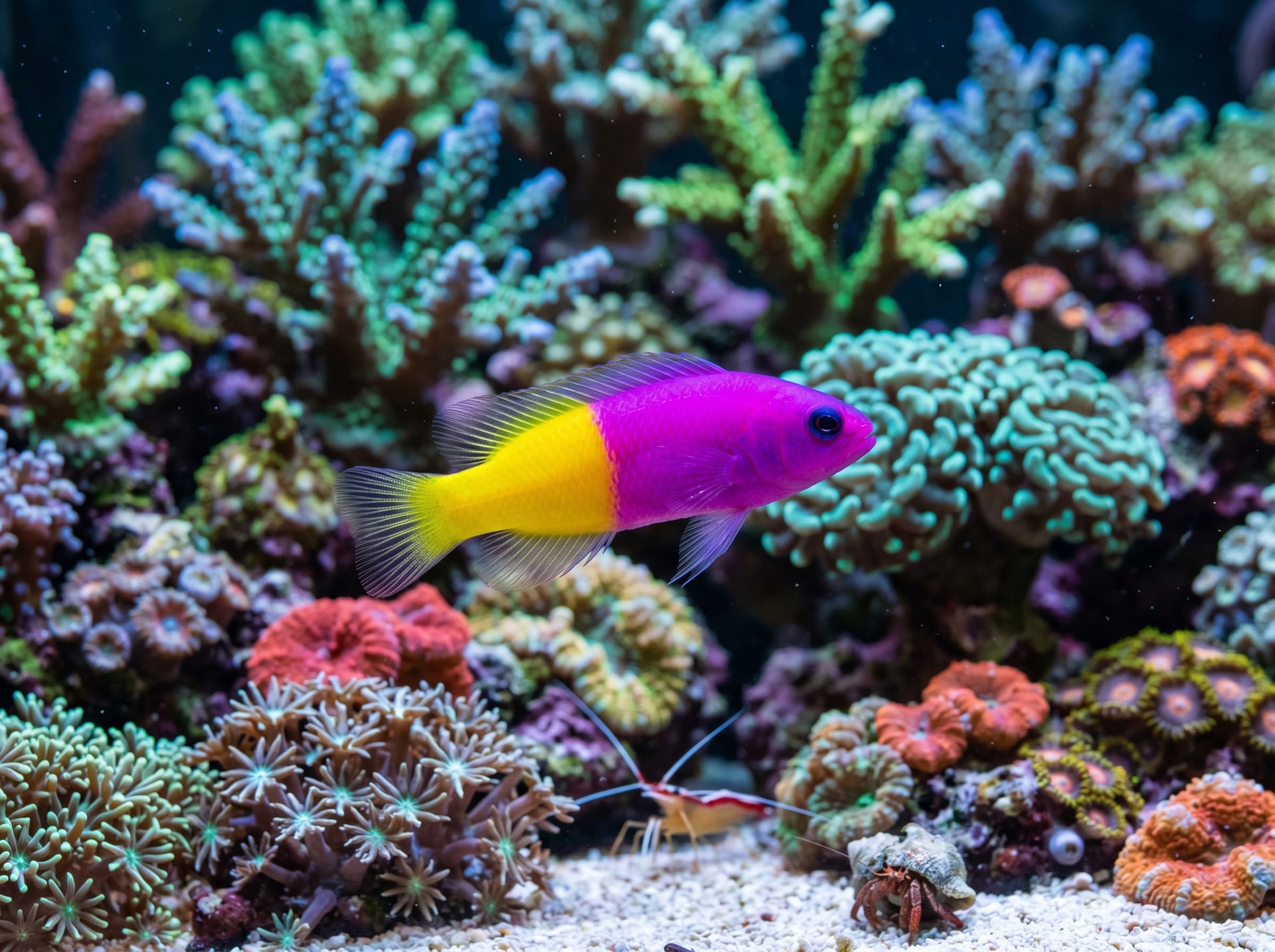
The Royal Gramma reaches about 8 cm in length and is a strikingly beautiful fish with a distinctive gradient—purple in the front half and yellow in the rear. It inhabits coral reefs in the Caribbean, making rock crevices its base as it hunts small crustaceans and plankton.
Basic Husbandry
| Parameter | Ideal Range |
|---|---|
| Temperature | 24–26°C |
| Specific Gravity | 1.025–1.026 |
| pH | 8.1–8.4 |
| Recommended Tank Size | 60 cm or larger (single) / 90 cm or larger (community) |
| Diet | Carnivorous (crustaceans, plankton, small fish) |
Acclimating to Prepared Foods
Shortly after introduction, offer frozen brine shrimp or live copepods to stimulate appetite. Once feeding stabilizes, gradually mix in pellets or frozen mixed diets in small amounts over 1–2 weeks, shifting the fish toward prepared foods.
Keeping with Conspecifics and Related Species
The Royal Gramma is territorial toward its own kind. Keeping two or more in a 60 cm tank is essentially impossible. However, breeding has been observed when a mated pair is kept in a larger tank (90 cm or more) with multiple live rock caves.
Tank Layout Considerations
Whether the Royal Gramma has secure hiding spots significantly affects how easily it adapts to its new environment. By stacking live rock to create multiple cave-like crevices with good depth, the fish can retreat quickly when startled by noise or sudden movement, making it easier to settle. Conversely, in open layouts with few hiding places, the fish may spend time searching for shelter and experience stress-related feeding difficulties. Thoughtful aquascaping is especially important during the acclimation phase.
Burgess's Dottyback (Spotted-Tail Dottyback): Characteristics
Appearance and Behavior
Burgess's Dottyback (Pseudochromis paccagnellae) reaches about 7 cm in length. It is purple in the front half and yellow in the rear, closely resembling the Royal Gramma so much that it is also called the "Royal Dottyback." It inhabits the Indian and Pacific Oceans, with a distribution entirely separate from the Caribbean-based Royal Gramma.
Husbandry Considerations: Aggression
Burgess's Dottyback exhibits the high aggression typical of its family. It attacks fish with similar coloring (including Royal Gramma) vigorously, making solo keeping or community tanks with notably larger, hardy fish the only viable options.
Tips to Minimize Aggression
- Provide multiple hiding spots using live rock
- Add the fish to an established tank with existing residents (to disperse territorial focus)
- Use a spacious tank 90 cm or larger
Diet and Feeding
It is strongly carnivorous, preferring frozen brine shrimp, daphnia, and small crustaceans. It takes longer to adapt to prepared foods than the Royal Gramma, but NLS pellets are effective due to their high palatability.
Acclimation Precautions
A gradual acclimation process is essential when introducing new fish, avoiding sudden changes in water quality or temperature. Fish fresh from transport are often depleted from the stress of change; placing them in a dimly lit, quiet environment for a short time before returning to normal lighting and feeding schedules reduces the risk of refusal to feed and health issues. Because some Burgess's Dottybacks are sensitive to environmental change, provide ample hiding places and observe patiently without rushing.
Tank Compatibility: Gramma and Dottyback Fish
Compatible Fish Species
- Gobies and Blennies (bottom-dwelling fish with minimal territorial overlap)
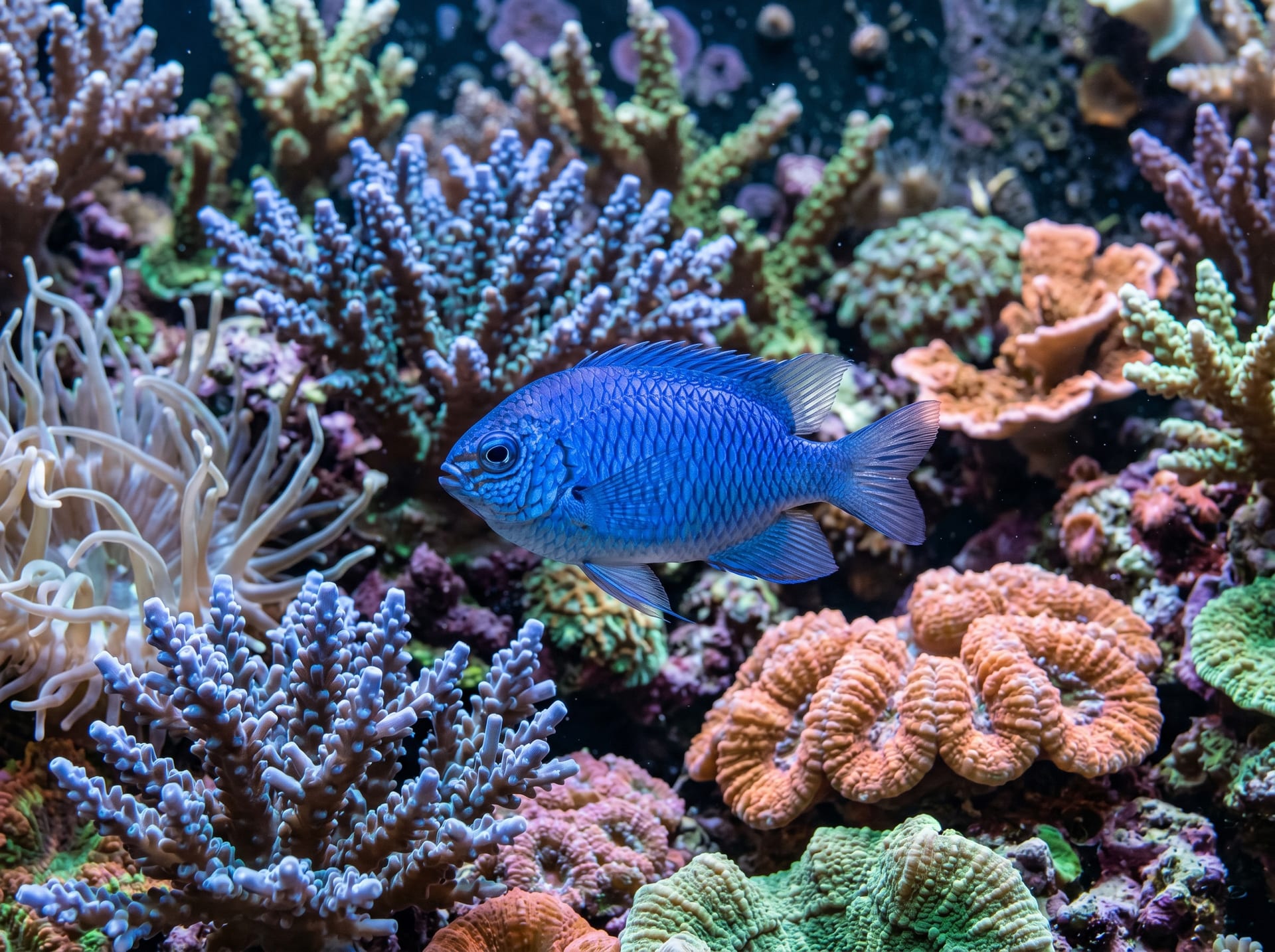
- Hardy small damsels such as Talbot's Damselfish (Dottybacks rarely attack these unilaterally)
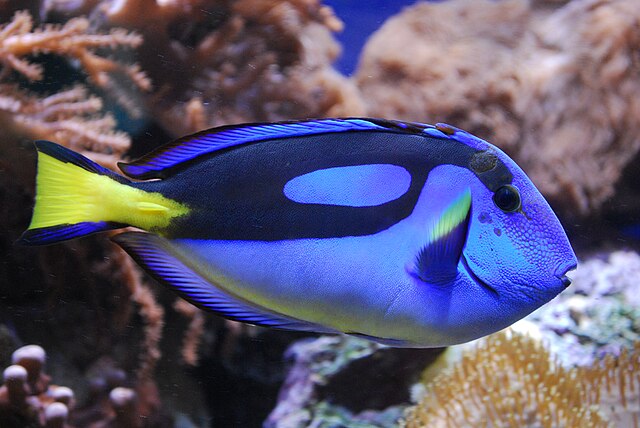
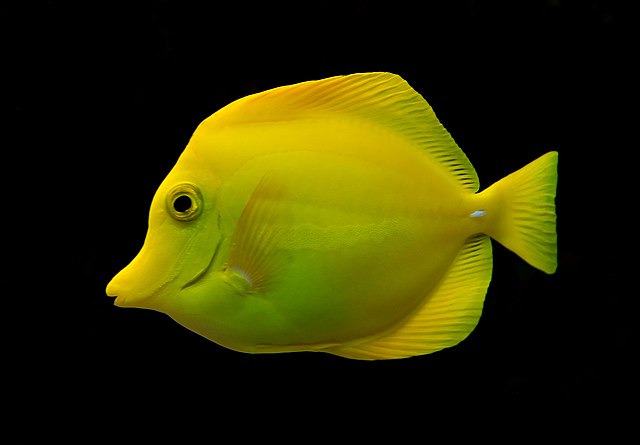
- Large, docile tangs (Yellow Tang, Palette Surgeonfish, etc.)
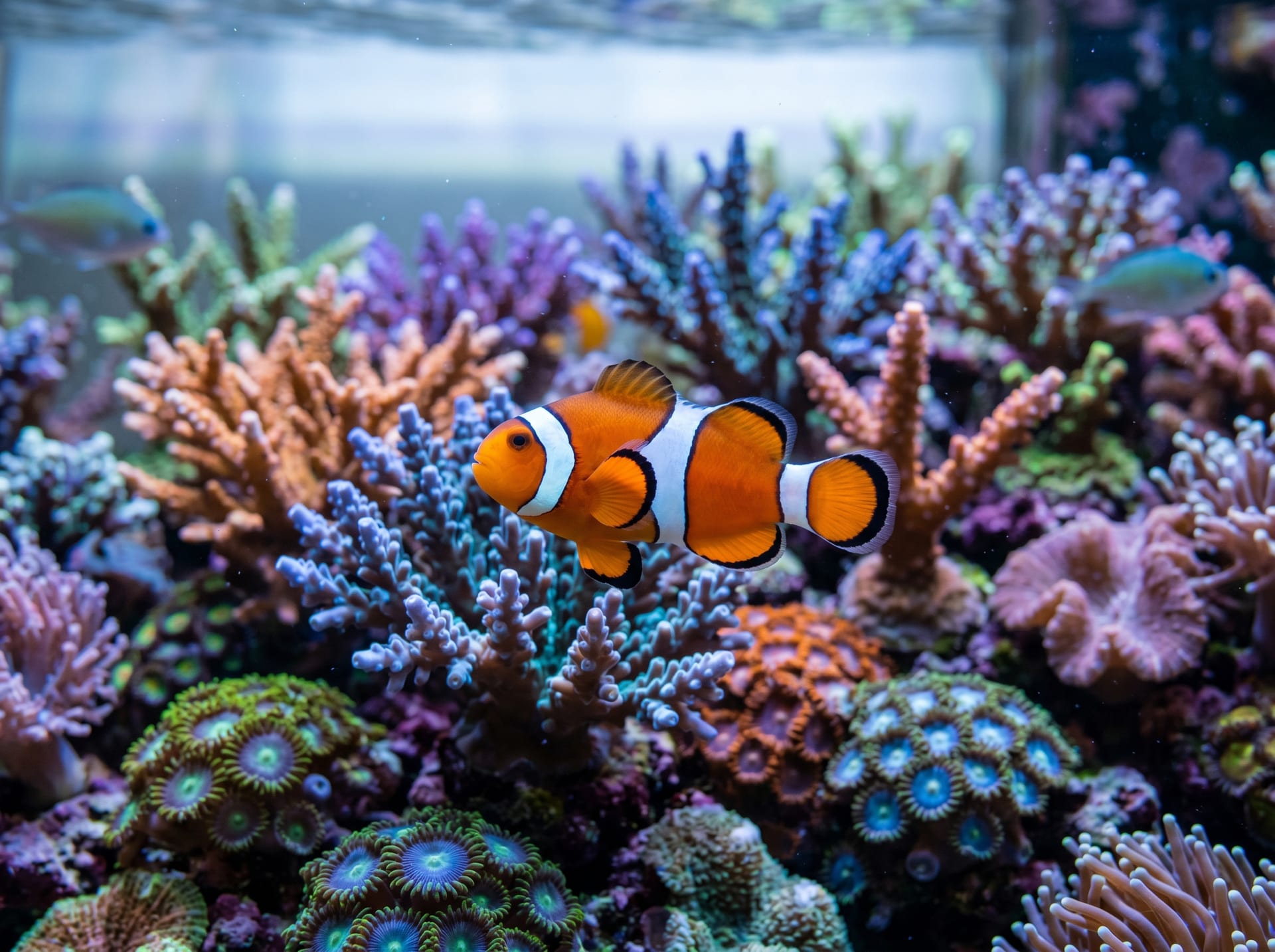
- Clownfish (cohabitation is possible in spacious tanks)
Problematic Tank Mates
- Conspecifics and related species (Gramma and Dottyback cohabitation is generally not possible)
- Fish with similar coloring (resemblance tends to trigger increased aggression)
- Small, timid fish (some goby species) risk stress-related death from being chased
Health Monitoring and Daily Care
Pay attention to color intensity, fin condition, and swimming behavior during daily observation. Dull coloring or prolonged hiding with fins clamped may indicate water quality decline or stress from other fish. When purchasing, select individuals with clear skin (no wounds or white spots) and good feeding response for smoother husbandry.
Regular water changes and filter maintenance form the foundation of water quality management. Although Gramma and Dottyback fish are known for their hardiness due to their coral reef origins, sudden water quality decline can cause gill and body-surface issues. Paying close attention to tank changes daily is key to long-term success. Continued stress from fighting tankmates or insufficient hiding spots can also contribute to health problems, so we recommend observation from both layout and compatibility perspectives.
Breeding Challenges
The Royal Gramma forms a harem society and sex differentiation is difficult. Breeding in captivity is not impossible, and spawning has been observed when using a sufficiently large tank and confirmed breeding pairs. Burgess's Dottyback breeding reports remain scarce domestically and require large tanks and abundant live rock.
Summary
Both the Royal Gramma and Burgess's Dottyback are popular small marine fish with striking coloration and relative hardiness. Both are reclusive and territorial, requiring caution when considering same-species or related-species pairings. While the Royal Gramma is comparatively docile, the Burgess's Dottyback (and Dottyback family in general) exhibits high aggression, so select tankmates carefully. With thoughtful rock arrangement and appropriate community setup, you can fully bring out the beauty of these small marine fish.