 © Karelj / Public domain
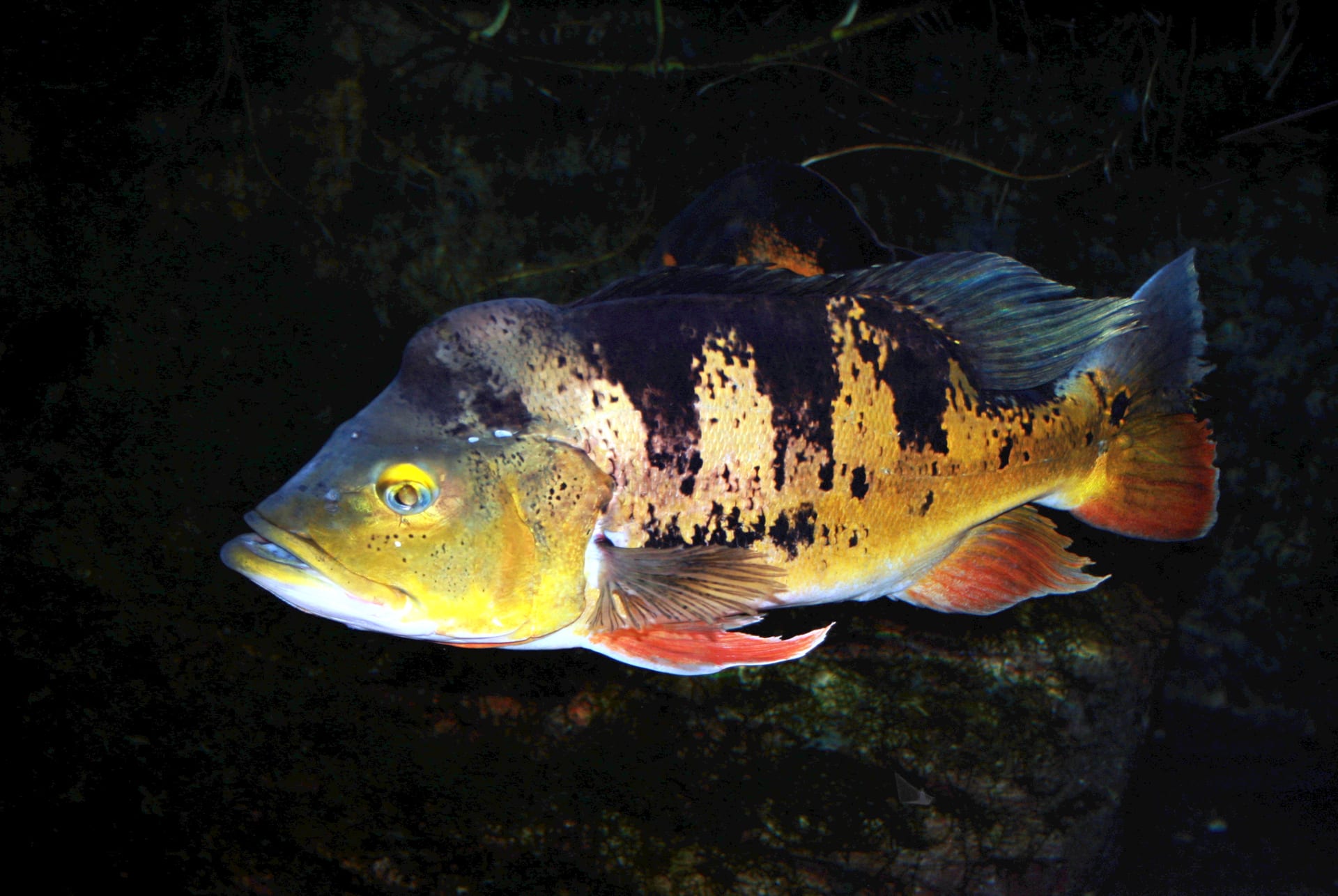
Peacock cichlid
The peacock cichlid (Cichla ocellaris) is a large, predatory cichlid from rivers in northeastern South America. Its yellow-green body carries dark vertical bars, and a ringed eyespot sits at the base of the tail. Records reach 74 cm in total length and 6.8 kg in weight, and the fish is also well known as a sport fish. It swims powerfully and reacts quickly at feeding time, which gives it real presence. However, any fish small enough to fit in its mouth is prey, so it needs a very large tank and careful preparation. Its care difficulty is rated advanced.
View Peacock cichlid encyclopedia →0% commission on your first sales!Register by September 30, 2026 and your first 2 sales are commission-free!
Breeder Wanted!
List on BreederDirect and sell directly to customers nationwide!
Our 6 Transparency Commitments
All Tropical Fish listings include water quality, temperament, and tank size information from verified Breeder.
- Origin Disclosed
- Real Photos
- Water Quality Disclosed
- Recommended Tank Size
- Temperament Disclosed
- Breed Line Disclosed
Browse all 341 breeds
Water Type
Care Level
Verified breeders wanted for Tropical Fish
Breeders are signing up now ahead of launch. Subscribe to be notified when new listings go live.
Getting alerts is free with a member account. When new listings match your saved search, we'll notify you by email and in-app.
Browse other categories
Verified breeders (preview)
Are you raising tropical fish?
Register as a breeder and connect with buyers directly.
Apply as a breederPeacock cichlid key facts
- Care level
- Advanced
- Lifespan
- Few reliable data
- Size
- Up to 74 cm TL and 6.8 kg (FishBase)
- Temperature
- 24〜27℃
- Diet
- Piscivore (fish, prawns, mussels)
- Water Temperature & Quality
- 24-27°C (FishBase), pH 6.5-7.0, up to 15 dH (Seriously Fish). A messy feeder that needs powerful filtration such as external or sump systems.
- Aquarium
- Adults may exceed 70 cm and need open swimming space: an extra-large tank much longer than the adult fish and deeper than its body length, for life. Keep décor to large driftwood and robust plants.
- Tank Mates & Compatibility
- Territorial and moderately aggressive; eats any fish it can swallow. Companions are limited to similarly large fish such as arowanas or big catfish, and that needs a huge tank.
- Diet & Feeding
- Piscivorous. Feed meaty foods such as prawns, mussels and fish pieces, and wean it onto pellets for predatory fish.
- Breeding & Egg-laying
- Few reports of captive breeding. Mature males develop a nuchal hump.
- Health & Cautions
- Sold as small juveniles but grows quickly into a large fish. Never release it into the wild.
About Peacock cichlid
Learn about the peacock cichlid (Cichla ocellaris), a large predatory cichlid from northeastern South America that reaches 74 cm and 6.8 kg. Covers its advanced-level care, points to know before bringing one home, and common questions.
7 things to know before welcoming a Peacock cichlid
1Advanced keepers only
This is a large species with records of 74 cm in total length and 6.8 kg in weight, and its care difficulty is rated advanced. Before committing, consider whether you can keep up the equipment and daily care it will need once fully grown.
2Tank sized for adults
A tank that suits a young fish will soon become too small. Plan for generous volume, length and depth that match its adult size. It also pays to check that the floor where the tank will stand can bear the weight.
3Choose tankmates carefully
It is a predator and will treat any fish that fits in its mouth as food. If you consider tankmates at all, weigh their size and temperament carefully. Keeping it on its own is also a sound option.
4Check the diet first
It is a fish-eating predator by nature, but what individual fish accept in captivity varies. Before bringing one home, ask the breeder what the fish is currently fed and have the same foods ready.
5Water quality and filtration
Large predators eat a lot and can foul the water quickly. Generous filtration capacity and regular water changes help keep water quality stable.
6Secure the lid
It is a powerful swimmer and may jump when startled. Use a well-fitted lid that stays firmly in place, and leave no gaps.
7Limited lifespan data
Reliable information on lifespan is scarce, so no clear estimate can be given. It is wise to plan for the possibility of a long commitment. Asking the breeder about the fish's background can also help.
Frequently asked questions about Peacock cichlid
- Q.Can a beginner keep this fish?
- A.Its care difficulty is rated advanced. Given its size of up to 74 cm and 6.8 kg, plus its predatory diet and tendency to foul water, experience with large fish is reassuring.
- Q.How large does it get?
- A.The recorded maximum is 74 cm in total length and 6.8 kg in weight (FishBase). These are record figures, but you should prepare the tank and equipment on the assumption that it will grow large.
- Q.Can it live with other fish?
- A.Because it is a predator, any fish small enough to fit in its mouth is likely to be eaten. Treat single-fish keeping as the baseline, and if you try tankmates, judge their size and temperament carefully.
- Q.What does it eat?
- A.It is a fish-eating predator. What individual fish accept in captivity differs, so ask the breeder what the fish is normally fed when you arrange to bring it home.
- Q.How long does it live?
- A.Reliable data is scarce, so a clear lifespan cannot be given. Allow for the possibility of a long commitment, and set up your equipment and care routine before bringing one home.
Useful tools for Peacock cichlid care
Learn more about Peacock cichlid in the encyclopedia
View Peacock cichlid encyclopedia entry →
Care difficulty, lifespan, size and diet — all basics covered.
More in this category
Can't find the one you're looking for?
Post your wishes for free and breeders with matching animals will contact you with introductions.