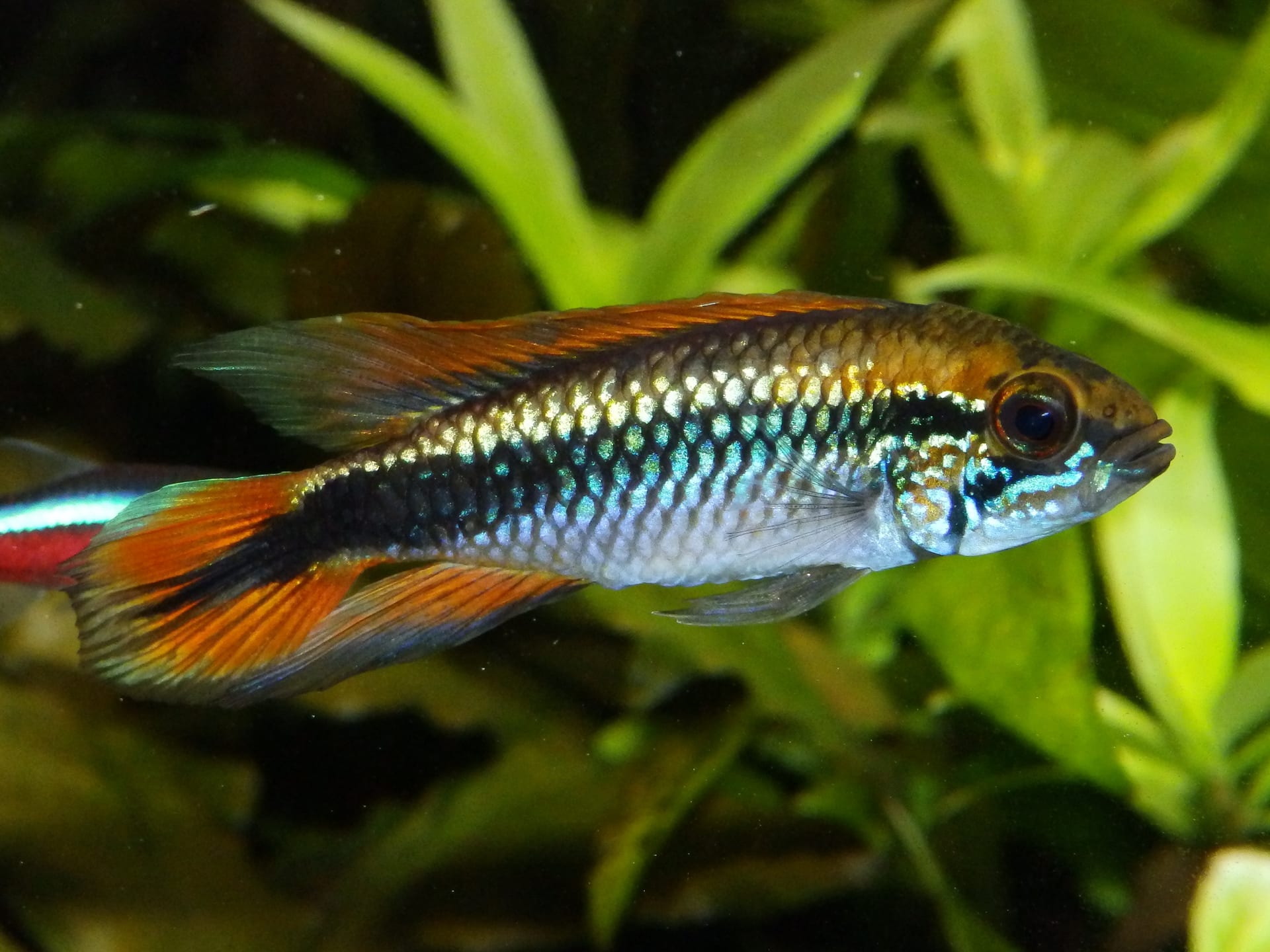
 © Cisamarc / CC BY-SA 3.0
Agassiz's Dwarf Cichlid
Agassiz's Dwarf Cichlid (Apistogramma agassizii) is a small cichlid found widely across the main channels of the Amazon River. Males are easily recognized by a spear-tipped caudal fin, and coloration varies dramatically between wild locality variants, so no two forms look quite alike. Somewhat territorial by nature, pairs can be encouraged to spawn on flat surfaces or in small caves, making this one of the most iconic dwarf cichlids among Apistogramma keepers. Suited to intermediate aquarists, attentive water quality management and plenty of hiding spots reward keepers with the chance to observe fascinating breeding behavior.
View Agassiz's Dwarf Cichlid encyclopedia →0% commission on your first sales!Register by September 30, 2026 and your first 2 sales are commission-free!
Breeder Wanted!
List on BreederDirect and sell directly to customers nationwide!
Our 6 Transparency Commitments
All Tropical Fish listings include water quality, temperament, and tank size information from verified Breeder.
- Origin Disclosed
- Real Photos
- Water Quality Disclosed
- Recommended Tank Size
- Temperament Disclosed
- Breed Line Disclosed
Browse all 301 breeds
Water Type
Care Level
Verified breeders wanted for Tropical Fish
Breeders are signing up now ahead of launch. Subscribe to be notified when new listings go live.
Getting alerts is free with a member account. When new listings match your saved search, we'll notify you by email and in-app.
Browse other categories
Verified breeders (preview)
Are you raising tropical fish?
Register as a breeder and connect with buyers directly.
Apply as a breederAgassiz's Dwarf Cichlid key facts
- Care level
- Intermediate
- Lifespan
- 3-5 years
- Size
- Males about 7.5cm, females about 5cm standard length
- Temperature
- 22〜29℃
- Diet
- Live and frozen Artemia, Daphnia and bloodworm, plus prepared foods
- Tank
- A pair can be kept from 60x30cm, about 54 litres. Provide caves and spawning sites with driftwood, leaf litter and pipes, and break up lines of sight.
- Water Temperature & Quality
- 22-29C, pH 5.0-7.0 and 0-10 dGH. Wild populations live in extremely acidic water of pH 3-4, but commercially bred fish tolerate a much wider range.
- Tank Mates
- Captive-raised fish suit community tanks. Wild specimens are best kept alone or with small dither fishes, and should not be mixed with other Apistogramma.
- Diet & Feeding
- In nature it feeds on benthic invertebrates. Base the diet on live and frozen Artemia, Daphnia and chironomid larvae, supplemented with dried foods.
- Breeding & Spawning
- A substrate spawner laying in crevices or cavities. The female guards eggs and fry and turns aggressive afterwards, so in smaller tanks the male may need removing.
- Health & Notes
- Colour varies markedly by locality and forms are separated by A-numbers such as A234. Check labelling at purchase so that different localities are not crossed.
About Agassiz's Dwarf Cichlid
A guide to Agassiz's Dwarf Cichlid (Apistogramma agassizii), a popular Amazonian dwarf cichlid: key traits, temperament, care basics, and answers to common questions for intermediate aquarists.
7 things to know before welcoming a Agassiz's Dwarf Cichlid
1Coloration Varies by Locality
Apistogramma agassizii shows dramatic color variation depending on its collection locality. Since individuals from different variants can look quite different, it helps to check which locality a fish comes from before bringing one home.
2Spear-Shaped Tail Fin
Males develop a distinctive spear-shaped point at the center of the caudal fin that becomes more pronounced with maturity, while females stay smaller with a less elongated tail.
3Territorial Temperament
Females in particular can become quite assertive around spawning time and may chase tankmates in a crowded tank. If keeping them with other fish, provide plenty of hiding spots and visual barriers.
4Substrate-Spawning Breeder
This species is a substrate spawner, laying eggs on flat stones, driftwood, or in caves and pots. When a pair bonds well, watching them tend their eggs is one of the rewards of keeping them.
5Water Quality Matters
As an Amazonian native, this cichlid tends to prefer calm, slightly acidic to neutral water conditions. Avoiding sudden changes and keeping up with regular water changes helps maintain its health.
6Provide Plenty of Hiding Spots
Adding driftwood, rocks, and plants to create multiple hiding spots helps this fish feel secure. Pairs and females in particular benefit from having their own defined territory.
7Prepare the Tank Before Arrival
As this species suits intermediate keepers, it's best introduced into a tank with already-stable water conditions. Setting up hiding spots and layout in advance helps it settle into its new environment more easily.
Frequently asked questions about Agassiz's Dwarf Cichlid
- Q.Can beginners keep this fish?
- A.This species is generally considered suited to intermediate aquarists. With some basic knowledge of water quality management and tank setup it's approachable, but it may require extra care as a first tropical fish.
- Q.How can I tell males and females apart?
- A.Males develop a spear-shaped point at the center of the caudal fin and grow larger overall (around 7.5cm standard length), while females stay smaller, at around 5cm, with a less pronounced tail shape.
- Q.Can it be kept with other fish?
- A.This cichlid can be somewhat territorial, especially females around spawning time. If housing it with other fish, provide ample hiding spots and choose a tank with enough space for everyone.
- Q.Is breeding difficult?
- A.As a substrate spawner, breeding is considered achievable when a compatible pair is established. Providing flat stones or small caves as potential spawning sites can help.
- Q.Is this species subject to CITES?
- A.No, this species is not subject to CITES.
Useful tools for Agassiz's Dwarf Cichlid care
Learn more about Agassiz's Dwarf Cichlid in the encyclopedia
View Agassiz's Dwarf Cichlid encyclopedia entry →
Care difficulty, lifespan, size and diet — all basics covered.
More in this category
Can't find the one you're looking for?
Post your wishes for free and breeders with matching animals will contact you with introductions.