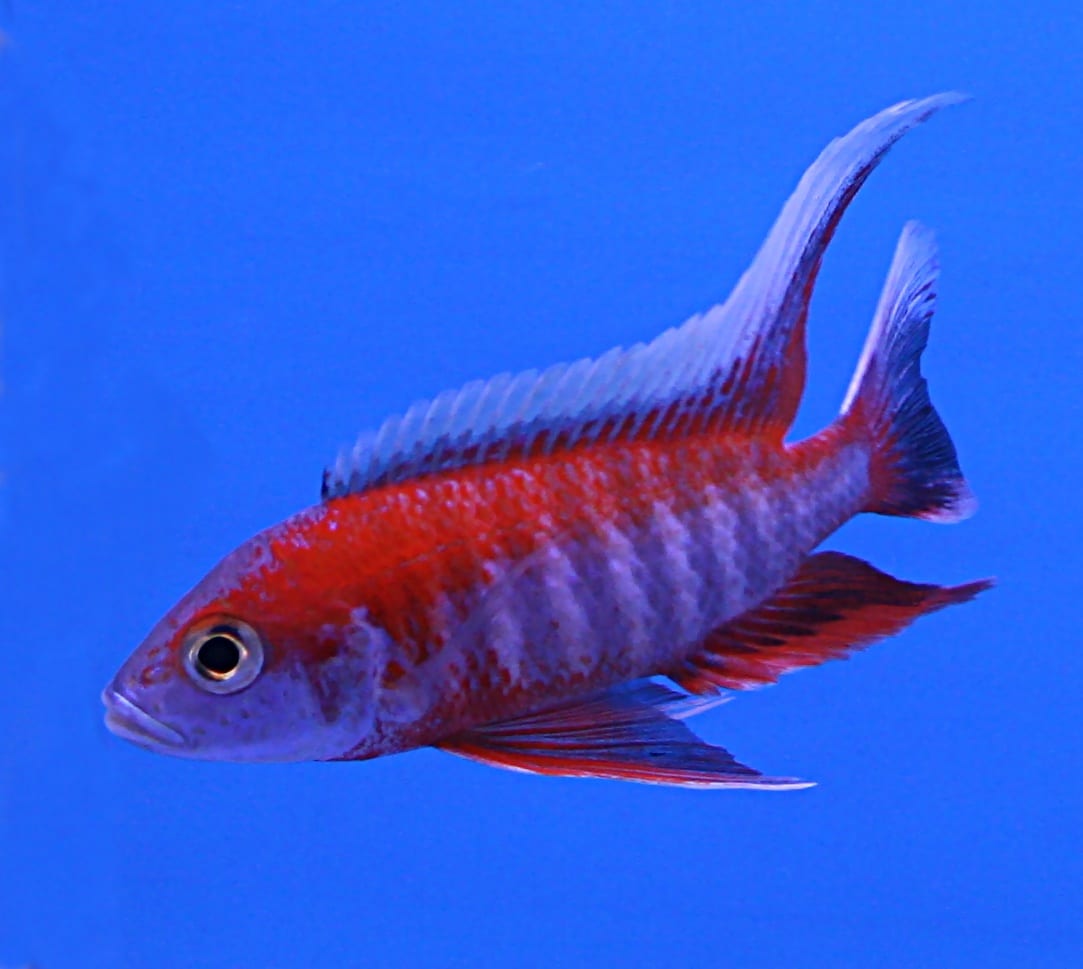
 © Lerdsuwa / CC BY-SA 3.0
Fairy Cichlid
The Fairy Cichlid, or Aulonocara jacobfreibergi, is a peacock cichlid native to Lake Malawi in Africa, where it makes its home among cave-like rock crevices. Mature males develop a striking coloration of blue overlaid with reddish gold, and they flare wide, white-edged fins as they swim. One of the species' most distinctive traits is its feeding behavior: it scoops up mouthfuls of sand and sifts out food particles. Adults typically reach 15 to 17 cm, giving them a solid presence among mid-sized cichlids. Because they call for careful water quality management and thoughtful tankmate selection, this species is generally best suited to keepers with some prior experience.
View Fairy Cichlid encyclopedia →0% commission on your first sales!Register by September 30, 2026 and your first 2 sales are commission-free!
Breeder Wanted!
List on BreederDirect and sell directly to customers nationwide!
Our 6 Transparency Commitments
All Tropical Fish listings include water quality, temperament, and tank size information from verified Breeder.
- Origin Disclosed
- Real Photos
- Water Quality Disclosed
- Recommended Tank Size
- Temperament Disclosed
- Breed Line Disclosed
Browse all 301 breeds
Water Type
Care Level
Verified breeders wanted for Tropical Fish
Breeders are signing up now ahead of launch. Subscribe to be notified when new listings go live.
Getting alerts is free with a member account. When new listings match your saved search, we'll notify you by email and in-app.
Browse other categories
Verified breeders (preview)
Are you raising tropical fish?
Register as a breeder and connect with buyers directly.
Apply as a breederFairy Cichlid key facts
- Care level
- Intermediate
- Lifespan
- 8-12 years
- Size
- 15-17cm
- Temperature
- 25〜29℃
- Diet
- Fine-grade prepared foods and frozen bloodworm
- Tank
- 120 x 60cm (about 430 litres) or larger. Build cave-like spaces from rock over a fine substrate the fish can sift.
- Water Temperature & Quality
- 25-29C, pH 7.5-9.0, 10-25 dGH. Keep the water hard and alkaline.
- Tank Mates
- Males react strongly to similarly coloured fish. Differently patterned Copadichromis or Placidochromis suit it, and outside very large tanks keep one male with four to six females.
- Diet & Feeding
- Match its sand-sifting habit with fine-grade prepared foods plus small live or frozen chironomid larvae, given as three or four small meals a day.
- Breeding & Spawning
- A mouthbrooder. The female responds to the egg spots on the male's anal fin for fertilisation, then carries the brood for up to four weeks.
- Health & Notes
- Aulonocara hybrids circulate readily, so fish with a stated locality help keep lines pure. Because it stirs the substrate, fine sand is best.
About Fairy Cichlid
A guide to the Fairy Cichlid (Aulonocara jacobfreibergi) from Lake Malawi — appearance, temperament, and key care basics before bringing one home.
7 things to know before welcoming a Fairy Cichlid
1Prepare Rocky Hiding Spots
In the wild, this species lives among cave-like rock crevices, so recreate that in your tank with rock piles or ceramic hides. Having places to retreat reduces skirmishes driven by territorial instinct.
2Males Color Up With Age
Juveniles start out fairly plain, but mature males develop a striking blue body overlaid with reddish gold. Their fins also take on a distinctive white edge as they reach maturity.
3Sand Substrate Is Essential
This species scoops sand into its mouth and sifts out food particles, a distinctive feeding behavior. Fine sand substrate lets it express this natural feeding style; without it, normal feeding behavior won't appear.
4Keep Water Hard and Alkaline
Like other Lake Malawi cichlids, this species prefers moderately hard, alkaline water. Sudden shifts in water chemistry are stressful, so match temperature and parameters gradually during water changes.
5Males Can Clash Over Territory
Territorial instincts run strong, and mature males in particular tend to spar with one another. If keeping several together, add extra hiding spots and choose tankmates carefully.
6Best Suited to Experienced Keepers
This species is considered suitable for intermediate keepers who have some experience managing water quality and choosing compatible tankmates. First-time aquarists should build up basic knowledge before taking one on.
7Plan a Tank for Adult Size
Adults reach 15 to 17 cm, so it helps to set up a tank sized for their full-grown length even while they're still young. Make sure there's enough open swimming space.
Frequently asked questions about Fairy Cichlid
- Q.Is the Fairy Cichlid suitable for beginners?
- A.It's considered an intermediate-level fish, so it suits keepers with some prior aquarium experience. It helps to learn the basics of water quality management and tankmate selection before bringing one home.
- Q.Can it be kept with other fish?
- A.It has fairly strong territorial instincts, and mature males in particular can spar with each other. If mixing species, provide plenty of hiding spots and introduce tankmates gradually while watching compatibility.
- Q.What substrate should I use?
- A.Since it scoops sand into its mouth to sift out food, fine sand substrate lets it display this natural feeding behavior. Coarse gravel can get in the way of normal feeding.
- Q.How large does it grow as an adult?
- A.Adults typically reach about 15 to 17 cm. It's a good idea to plan for a tank with enough swimming room for that eventual size.
- Q.Are there any legal restrictions on keeping this species?
- A.The Fairy Cichlid (Aulonocara jacobfreibergi) is not subject to CITES. There's no special permit or registration to worry about for this species.
Useful tools for Fairy Cichlid care
Learn more about Fairy Cichlid in the encyclopedia
View Fairy Cichlid encyclopedia entry →
Care difficulty, lifespan, size and diet — all basics covered.
More in this category
Can't find the one you're looking for?
Post your wishes for free and breeders with matching animals will contact you with introductions.