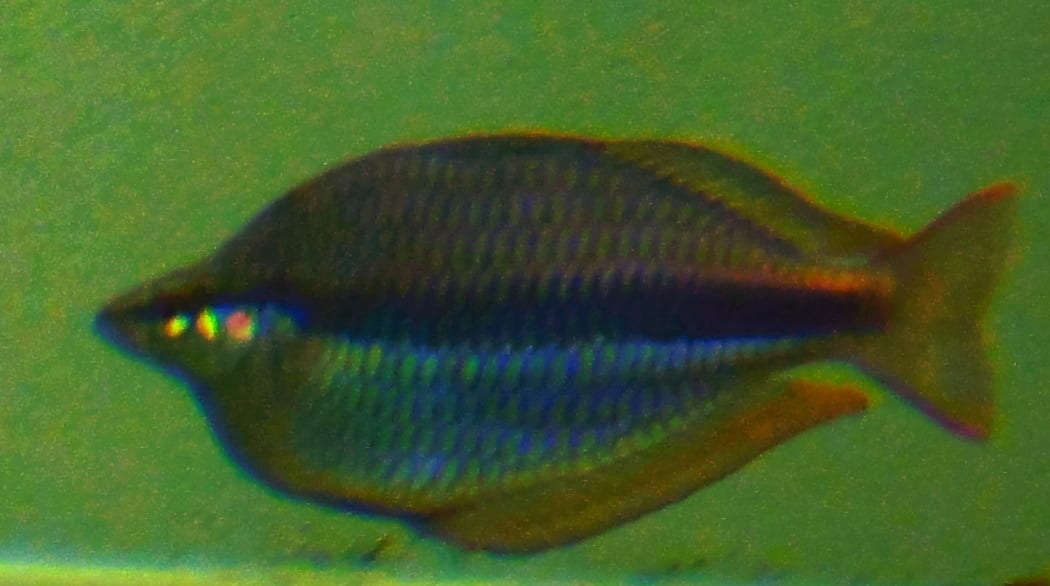
 © Jutta234 / CC BY-SA 3.0
Banded Rainbowfish
The Banded Rainbowfish is an Australian tropical fish known for the single dark stripe running along its body and the vivid coloring that varies subtly by locality. It's a peaceful, shoaling fish that shows its true character best when kept in groups. As males mature, their bodies grow taller and their colors more vivid, making their appearance change noticeably over time. Growing to about 13cm, they appreciate a tank with enough room to swim comfortably in numbers. Because fish from different localities can crossbreed if mixed, it's best to stock a tank with individuals from a single origin. Basic water quality management is needed, which is why this species is considered suited to intermediate keepers.
View Banded Rainbowfish encyclopedia →0% commission on your first sales!Register by September 30, 2026 and your first 2 sales are commission-free!
Breeder Wanted!
List on BreederDirect and sell directly to customers nationwide!
Our 6 Transparency Commitments
All Tropical Fish listings include water quality, temperament, and tank size information from verified Breeder.
- Origin Disclosed
- Real Photos
- Water Quality Disclosed
- Recommended Tank Size
- Temperament Disclosed
- Breed Line Disclosed
Browse all 301 breeds
Water Type
Care Level
Verified breeders wanted for Tropical Fish
Breeders are signing up now ahead of launch. Subscribe to be notified when new listings go live.
Getting alerts is free with a member account. When new listings match your saved search, we'll notify you by email and in-app.
Browse other categories
Verified breeders (preview)
Are you raising tropical fish?
Register as a breeder and connect with buyers directly.
Apply as a breederBanded Rainbowfish key facts
- Care level
- Intermediate
- Lifespan
- 4-7 years
- Size
- Up to 13cm SL
- Temperature
- 24〜33℃
- Diet
- Dried, frozen and live foods
- Tank
- Seriously Fish suggests a 120 x 30cm base of about 108 litres. It swims strongly, so choose a long tank and separate densely planted areas from open swimming space.
- Water Temperature & Quality
- Seriously Fish gives a wide 24-33C, pH 6.5-8.0 and 8-20 dGH, while FishBase records pH 7.0-8.0, 9-19 dH and 25-30C in the wild. Neutral to slightly alkaline, moderately hard water suits it.
- Tank Mates
- Peaceful but fast and fairly large, so it unsettles small or slow fish. Similar-sized rainbowfish, characins, danios, barbs, freshwater gobies and Corydoras suit it, and a shoal of six to eight or more settles it.
- Diet & Feeding
- Unfussy, taking dried, frozen and live foods. Regular frozen and live feeds bring out the best colour.
- Breeding & Spawning
- An egg scatterer that spawns readily, though the fry take effort. Use a spawning tank at about pH 7.5 and 26.5-29C with java moss or spawning mops. Never house different locality forms together, as they hybridise.
- Health & Notes
- Young fish on sale show little colour; depth and colour come with maturity. Keep locality-labelled fish strictly by locality so no hybrids are produced. The IUCN rates it Least Concern and it is not listed by CITES.
About Banded Rainbowfish
An Australian rainbowfish with a signature dark stripe and locality-based coloring. Peaceful and shoaling, males gain height and color as they mature. Grows to about 13cm; suited to intermediate keepers.
7 things to know before welcoming a Banded Rainbowfish
1Best Kept in Groups
Banded Rainbowfish are shoaling fish that do best in groups rather than alone. Keeping several together reduces their skittishness and lets you see their natural, active swimming and coloring.
2Grows Up to 13cm
Adults grow to about 13cm, so a small tank can quickly feel cramped. Since they're kept in groups, choose a tank with enough swimming room for several fish.
3Don't Mix Origins
Coloring and patterning vary by locality, and mixing fish from different origins can lead to crossbreeding. If you want to preserve a particular locality's traits, stock your tank with fish from a single origin.
4Males Color With Age
As males mature, their bodies grow taller and their colors become more vivid. Fish that look plain when young can change dramatically over time, which is part of the appeal of raising them.
5Stable Water Quality Matters
This species is sensitive to sudden shifts in water quality, so frequent small water changes are safer than large infrequent ones. Getting comfortable with filtration and temperature control will help keep them stable.
6Mainly Pellet-Fed
A quality pellet or flake diet forms the base of their feeding. Adding frozen foods now and then can help support their coloring and vitality.
7Best for Intermediate Keepers
Banded Rainbowfish are considered suitable for intermediate keepers, requiring some attention to water quality and tankmate compatibility. Prior experience with other tropical fish will make care go more smoothly.
Frequently asked questions about Banded Rainbowfish
- Q.Can beginners keep this fish?
- A.This species is considered suitable for intermediate keepers, so it helps to have some experience with other tropical fish first. Beginners can still succeed if they're comfortable with basic water quality management.
- Q.Can it be kept with other tropical fish?
- A.Yes — it's peaceful and can be kept with similarly sized, calm tropical fish. Since it's a shoaling species, keeping several individuals together is recommended.
- Q.Is it okay to mix fish from different localities?
- A.Mixing fish from different localities can cause crossbreeding, since coloring and patterning vary by origin. If you want to preserve a particular locality's traits, stock with fish from a single origin.
- Q.How can you tell males and females apart?
- A.Mature males develop a taller body shape and more vivid coloring than females. These differences become clearer as the fish matures.
- Q.Is this species subject to CITES?
- A.Banded Rainbowfish are not subject to CITES. No CITES-related procedures are required when keeping this species.
Useful tools for Banded Rainbowfish care
Learn more about Banded Rainbowfish in the encyclopedia
View Banded Rainbowfish encyclopedia entry →
Care difficulty, lifespan, size and diet — all basics covered.
More in this category
Can't find the one you're looking for?
Post your wishes for free and breeders with matching animals will contact you with introductions.