 © Citron / CC BY-SA 3.0
Emperor Tetra
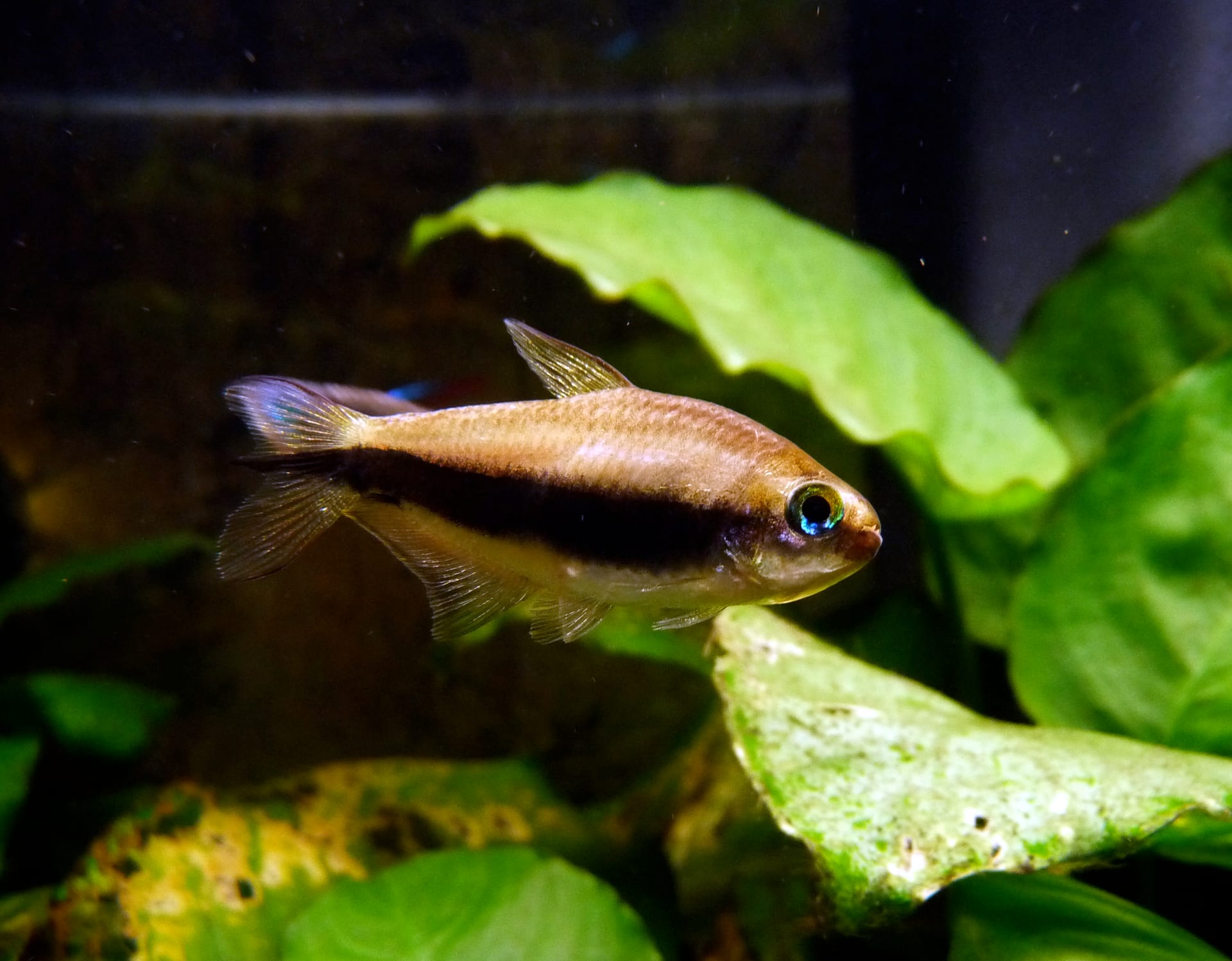
The Emperor Tetra is a small characin with a grayish-purple body marked by a bold black stripe. Its dorsal, anal, and caudal fins trail elegantly, and unusually for a characin, the central rays of the tail fin also extend, giving it a distinctive trident-like shape. Males have blue irises, while females show a greenish tint, making the sexes easy to tell apart. Calm and social by nature, it shows off its best colors and movement when kept in a small group. Reaching only about 4.2 cm as an adult and considered beginner-friendly to keep, it's a great pick for anyone new to the aquarium hobby.
View Emperor Tetra encyclopedia →0% commission on your first sales!Register by September 30, 2026 and your first 2 sales are commission-free!
Breeder Wanted!
List on BreederDirect and sell directly to customers nationwide!
Our 6 Transparency Commitments
All Tropical Fish listings include water quality, temperament, and tank size information from verified Breeder.
- Origin Disclosed
- Real Photos
- Water Quality Disclosed
- Recommended Tank Size
- Temperament Disclosed
- Breed Line Disclosed
Browse all 301 breeds
Water Type
Care Level
Verified breeders wanted for Tropical Fish
Breeders are signing up now ahead of launch. Subscribe to be notified when new listings go live.
Getting alerts is free with a member account. When new listings match your saved search, we'll notify you by email and in-app.
Browse other categories
Verified breeders (preview)
Are you raising tropical fish?
Register as a breeder and connect with buyers directly.
Apply as a breederEmperor Tetra key facts
- Care level
- Beginner-friendly
- Lifespan
- 3-5 years
- Size
- About 4.2cm
- Temperature
- 23〜27℃
- Diet
- Dried foods, frozen bloodworm, Daphnia, brine shrimp
- Tank
- Seriously Fish suggests a base of at least 90 by 30cm, about 81 litres at 30cm depth, and FishBase likewise recommends 80cm or more. Rival males hold territories, so several sight breaks of plants and wood keep the disputes mild.
- Water Temperature & Quality
- Seriously Fish gives 23-27C, pH 5.0-7.5 and 1-12 dGH; FishBase gives a slightly wider pH 5.0-8.0 with 5-19 dH and 23-27C. Most fish are farmed and tolerate a broad range.
- Tank Mates
- Lively and peaceful, it suits a general community and mixes with other tetras, Corydoras, small loricariids, gouramis and dwarf cichlids. Do not keep it with fish large enough to see it as food. Keep six or more, preferably ten or more. Rival males dispute territories, but no serious damage is done in a tank with enough room.
- Diet & Feeding
- It takes dried food but should not live on it alone. Daily meals of small live and frozen fare such as bloodworm, Daphnia and brine shrimp bring up the colour and encourage breeding condition. FishBase records worms and crustaceans in the wild.
- Breeding & Spawning
- Breeding is not difficult. Use a dimly lit separate tank of about 40 by 20 by 20cm with fine-leaved plants or a spawning mop, and remove the adults as soon as eggs appear. The eggs hatch in twenty-four to thirty-six hours and the fry swim four to five days later. Spawn in pairs for numbers, or in a group in a tank large enough for the males' territories.
- Health & Notes
- FishBase lists it as IUCN Data Deficient, not on the CITES appendices and harmless to people. It is sometimes confused with the congeneric N. lacortei, but the male's iris is blue here and red in that species. Kept in small numbers it shows neither its proper colour nor its proper behaviour.
About Emperor Tetra
Emperor Tetra: a small characin with a grayish-purple body, a black stripe, and a distinctive trident-shaped tail. Reaches about 4.2 cm and is considered beginner-friendly to keep.
7 things to know before welcoming a Emperor Tetra
1Keep them in a group
Emperor Tetras have a strong schooling instinct and tend to look nervous or dull when kept alone or in very small numbers. Keeping a proper group together lets them display their natural schooling behavior and coloring.
2Telling males from females
Males have blue irises and, as they mature, tend to grow longer central rays on the tail fin. Females have greenish irises and a somewhat rounder body shape, making the sexes easier to distinguish once they reach adulthood.
3Peaceful and community-friendly
They are peaceful fish that rarely chase tankmates, making them a good fit for community tanks with other calm species of similar size. Housing them with aggressive fish can lead to their long fins being nipped, so tankmate choice matters.
4Avoid sudden water changes
As a small South American characin, this species tends to be sensitive to sudden shifts in water parameters. Acclimate them carefully when introducing them to a new tank, and favor small, frequent water changes over large infrequent ones.
5Fins can be easily damaged
The long dorsal, anal, and tail fins are beautiful but can be damaged by strong water flow, sharp decorations, or aggressive tankmates. It helps to consider flow strength and layout when setting up their tank.
6Provide places to retreat
Adding driftwood and plants to create shaded spots helps them feel secure enough to show their natural colors and schooling behavior. They tend to prefer moderate lighting over very bright setups.
7Prepared food works well
They are omnivorous and do well on small pellet or flake food as a staple diet. Since their mouths are small, check that the food size is appropriate and feed small amounts several times a day to avoid leftovers.
Frequently asked questions about Emperor Tetra
- Q.Is the Emperor Tetra suitable for beginners?
- A.Yes, the Emperor Tetra is generally considered beginner-friendly to keep. That said, since they are a schooling species, it's best to keep several together rather than just one or two.
- Q.How can you tell males and females apart?
- A.The easiest way is by iris color — males have blue irises while females have a greenish tint. As they mature, differences in body shape and fin length also become more noticeable.
- Q.Can they be kept with other fish?
- A.Yes, their peaceful temperament makes them a good match for other calm species of similar size. Avoid pairing them with aggressive fish, which may nip at their long fins.
- Q.How big do Emperor Tetras get?
- A.They stay small, reaching about 4.2 cm as adults, which makes them manageable even in smaller aquariums.
- Q.How many should be kept together?
- A.Because they have a strong schooling instinct, it's best to keep a group rather than just one or two fish. Schooling together helps them feel secure and show their natural coloring.
Useful tools for Emperor Tetra care
Learn more about Emperor Tetra in the encyclopedia
View Emperor Tetra encyclopedia entry →
Care difficulty, lifespan, size and diet — all basics covered.
More in this category
Can't find the one you're looking for?
Post your wishes for free and breeders with matching animals will contact you with introductions.