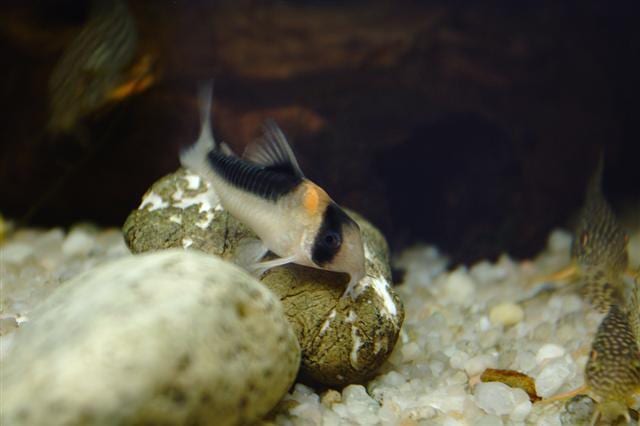
 © Marek Kriz / CC BY 3.0
Duplicate Corydoras
Corydoras duplicareus is a small catfish known for its white body, bold black eye stripe, a broad dark diagonal band across its flank, and a bright orange patch behind the head. It's often compared to the closely related Corydoras adolfoi, but its diagonal band is noticeably wider and bolder. Native to the upper Rio Negro, it naturally favors soft, slightly acidic water, so water quality needs a bit of attention. Its calm temperament and habit of moving in groups along the substrate make it an endearing addition to a peaceful tank. Considered suitable for intermediate keepers, it rewards a little care with a satisfying keeping experience.
View Duplicate Corydoras encyclopedia →0% commission on your first sales!Register by September 30, 2026 and your first 2 sales are commission-free!
Breeder Wanted!
List on BreederDirect and sell directly to customers nationwide!
Our 6 Transparency Commitments
All Tropical Fish listings include water quality, temperament, and tank size information from verified Breeder.
- Origin Disclosed
- Real Photos
- Water Quality Disclosed
- Recommended Tank Size
- Temperament Disclosed
- Breed Line Disclosed
Browse all 301 breeds
Water Type
Care Level
Verified breeders wanted for Tropical Fish
Breeders are signing up now ahead of launch. Subscribe to be notified when new listings go live.
Getting alerts is free with a member account. When new listings match your saved search, we'll notify you by email and in-app.
Browse other categories
Verified breeders (preview)
Are you raising tropical fish?
Register as a breeder and connect with buyers directly.
Apply as a breederDuplicate Corydoras key facts
- Care level
- Intermediate
- Lifespan
- 4-6 years
- Size
- 4-5cm
- Temperature
- 20〜26℃
- Diet
- Sinking dried foods, frozen bloodworm, Tubifex
- Tank
- Use fine rounded sand with wood and leaf litter for cover, and never block access to the water surface.
- Water Temperature & Quality
- 20-26C, pH 4.0-7.0, 1-5dGH; soft, acidic water is preferred. FishBase records 22-26C, pH 6.0-8.0 and 2-25dH in the wild.
- Tank Mates
- Peaceful and gregarious; keep at least four to six. Pair it with fishes of similar water requirements, such as soft-water characins.
- Diet & Feeding
- A foraging omnivore. Offer sinking dried food plus frozen bloodworm and Tubifex. It must never be expected to live on leftovers or to clean the tank.
- Breeding & Spawning
- Use two males per female. Once females are gravid, make a 50-70 percent water change with cooler water and raise oxygenation and flow. Eggs are laid on glass, fine-leaved plants or spawning mops.
- Health & Notes
- Listed as Data Deficient by the IUCN Red List. It closely resembles Hoplisoma adolfoi, so a shop label alone may not identify which species you have.
About Duplicate Corydoras
A small catfish with a white body, black eye stripe, broad dark diagonal band, and an orange nape patch. Native to the upper Rio Negro, it favors soft, acidic water and suits intermediate keepers.
7 things to know before welcoming a Duplicate Corydoras
1Prefers Soft, Acidic Water
In the wild, this species lives in the soft, slightly acidic waters of the upper Rio Negro. Keeping tank water close to that range helps it stay healthy and settled.
2How to Tell It Apart
Look for the white body, black eye stripe, broad dark diagonal band, and bright orange patch behind the head. It closely resembles Corydoras adolfoi, but its diagonal band is noticeably wider.
3Calm and Social by Nature
This is a peaceful species that rarely bothers tankmates. Keeping several together lets them display their natural schooling behavior along the substrate.
4Choose Soft Substrate
These fish forage along the bottom and probe the sand with their barbels, so sharp or coarse gravel can damage them. Fine, rounded sand is a safer choice.
5Pick Peaceful Tankmates
Housing them with aggressive species can leave them stressed and hiding. Calm, similarly sized fish, or their own kind, make better companions.
6Watch for Water Quality Stress
Living near the substrate makes them sensitive to declining water quality. Frayed barbels or dull coloring can be early signs of trouble, so regular water changes and observation matter.
7Cycle the Tank Before Bringing Them Home
Make sure the tank's filtration is fully established before adding new fish. Avoid placing them straight into a brand-new setup, and acclimate them slowly to the new water.
Frequently asked questions about Duplicate Corydoras
- Q.How difficult is Corydoras duplicareus to keep?
- A.It's generally considered suitable for intermediate keepers. It isn't extremely demanding, but understanding basic water quality management, especially maintaining soft, slightly acidic water similar to its natural habitat, helps it thrive.
- Q.Can it live with other fish?
- A.Yes, its calm temperament makes it compatible with other peaceful species. Aggressive or very large tankmates are best avoided.
- Q.How is it different from Corydoras adolfoi?
- A.The two species look very similar, but Corydoras duplicareus is said to have a wider dark diagonal band along its side. Their ranges also overlap in the upper Rio Negro.
- Q.What water conditions does it need?
- A.Since it naturally lives in soft, slightly acidic water, keeping tank parameters close to that range helps it stay healthy. Avoid sudden water changes and maintain a regular maintenance schedule.
- Q.Is this species regulated under CITES?
- A.Corydoras duplicareus is not subject to CITES.
Useful tools for Duplicate Corydoras care
Learn more about Duplicate Corydoras in the encyclopedia
View Duplicate Corydoras encyclopedia entry →
Care difficulty, lifespan, size and diet — all basics covered.
More in this category
Can't find the one you're looking for?
Post your wishes for free and breeders with matching animals will contact you with introductions.