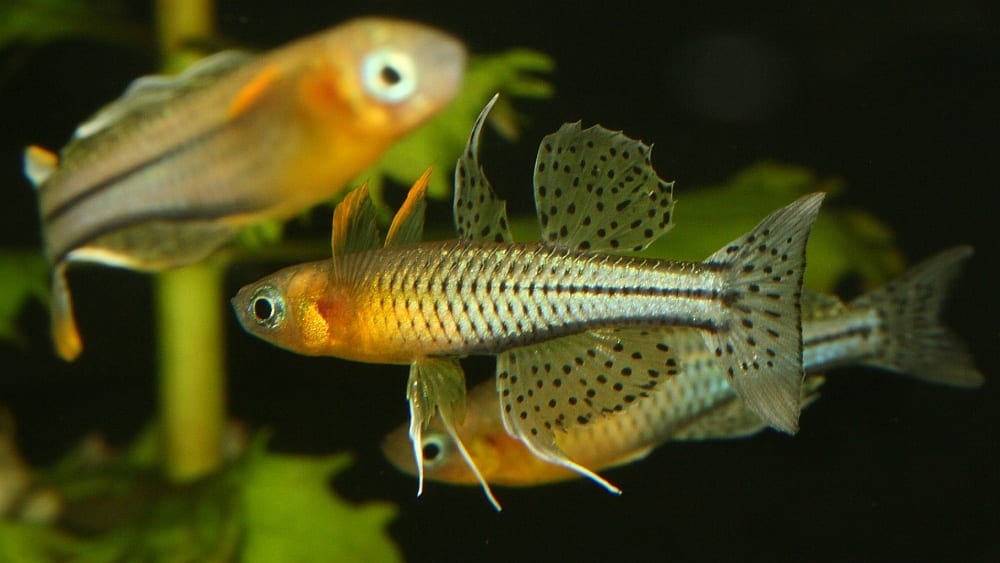
 © Der Regenbogenfisch / CC BY-SA 3.0 de
Spotted Blue-eye
The Spotted Blue-eye (Pseudomugil gertrudae) is a tiny rainbowfish relative with a translucent body scattered with black spots and fins edged in yellow. Reaching a maximum length of only about 3.8 cm, it can be kept in numbers without crowding a tank. Males put on a striking display for such a small fish, spreading their fins wide to court females. At the same time, this species has a somewhat timid nature and is particular about tankmates, doing best in a single-species setup or alongside only the calmest, smallest companions. Given a quiet, well-suited environment, its subtle colors and natural behavior really come into their own. Classed as suited to intermediate keepers, it rewards attentive care with water quality and surroundings tailored to its sensitive temperament.
View Spotted Blue-eye encyclopedia →Breeder Wanted!
List on BreederDirect and sell directly to customers nationwide!
BreederDirect's 6 Transparency Commitments
All Tropical Fish listings include water quality, temperament, and tank size information from verified Breeder.
- Origin Disclosed
- Real Photos
- Water Quality Disclosed
- Recommended Tank Size
- Temperament Disclosed
- Breed Line Disclosed
Browse all 341 breeds
Water Type
Care Level
Verified breeders wanted for Tropical Fish
Breeders are signing up now ahead of launch. Subscribe to be notified when new listings go live.
Getting alerts is free with a member account. When new listings match your saved search, we'll notify you by email and in-app.
Browse other categories
Verified breeders (preview)
Are you raising tropical fish?
Register as a breeder and connect with buyers directly.
Apply as a breederSpotted Blue-eye key facts
- Care level
- Intermediate
- Lifespan
- 2-3 years
- Size
- Up to 3.8cm SL
- Temperature
- 21〜28℃
- Diet
- Fine dried foods and live or frozen brine shrimp and daphnia
- Tank
- Seriously Fish suggests a 45 x 30cm base. Dense planting and floating plants to soften the light help it settle, and a lid is advisable because it jumps.
- Water Temperature & Quality
- Seriously Fish gives 21-28C, pH 4.5-7.5 and 5-12 dGH, extending well into acidic water, while FishBase records pH 6.0, 5-12 dH and 25-30C in the wild. Soft, slightly acidic water, for example over peat, suits it well.
- Tank Mates
- Peaceful but timid and easily outcompeted, so it is unsuited to a general community. A species tank, fish of comparable size and disposition, or Caridina and Neocaridina shrimp are the better options.
- Diet & Feeding
- Its mouth is very small, so choose the finest dried foods. Live or frozen brine shrimp and daphnia improve colour and breeding condition. Feed small amounts several times a day.
- Breeding & Spawning
- An egg scatterer with no parental care that eats its own eggs and fry. Spawning is more likely towards the upper end of the temperature range, the female attaching a few eggs daily over several days. Moving the eggs to a separate container raises survival.
- Health & Notes
- Peaceful but timid, and it will go hungry alongside faster fish. Groups of eight to ten or more settle it and bring out male display. It reacts badly to sudden changes in chemistry, so make small, frequent water changes in a small tank. The IUCN rates it Least Concern and it is not covered by CITES.
About Spotted Blue-eye
Pseudomugil gertrudae, the Spotted Blue-eye, is a tiny rainbowfish with a translucent body and yellow-edged fins. Max 3.8 cm, suited to intermediate keepers.
7 things to know before welcoming a Spotted Blue-eye
1Small Size, Careful Volume
Adults reach only about 3.8 cm, but this species naturally schools. Rather than keeping just one or two, aim for enough tank volume to house a small group so you can observe its natural swimming behavior.
2A Timid Temperament
This fish tends to be shy, so providing plants or other cover where it can retreat helps it settle in. A calm, secure environment brings out its natural coloration and behavior more readily.
3Choosing Tankmates Carefully
Because of its timid nature, this species does best in a single-species tank or alongside only very calm, small fish. Housing it with more active or larger fish can cause it to become stressed and withdrawn.
4Watching Male Displays
Males display by spreading their fins wide. Keeping several individuals in a calm setting gives you the chance to observe this courtship-like behavior.
5Suited to Intermediate Keepers
This species is generally considered suitable for intermediate keepers. It can be sensitive to sudden changes in water quality or environment, so maintaining stability is important.
6Preparing the Tank in Advance
Given its shy, delicate nature, setting up hiding spots and a calm layout before bringing the fish home can help it adjust more smoothly to its new environment.
7What to Watch Day to Day
With its translucent body, black spots, and yellow-edged fins, this species has a distinctive look that makes it easier to notice changes in coloration or fin condition during daily observation. Knowing its normal appearance is helpful.
Frequently asked questions about Spotted Blue-eye
- Q.Can beginners keep the Spotted Blue-eye?
- A.This species is classed as suitable for intermediate keepers. Its timid temperament and sensitivity to water quality changes make it better suited to those with some prior fishkeeping experience.
- Q.Can it be kept with other fish?
- A.Because it is timid, a single-species tank or pairing with only very calm, small fish works best. It can become withdrawn if kept with more active tankmates, so choose companions carefully.
- Q.How large does it grow?
- A.It is a very small species, reaching a maximum of only about 3.8 cm as an adult. Part of its appeal is watching it school in a group despite its diminutive size.
- Q.How can males and females be told apart?
- A.Males are known for spreading their fins wide in a display behavior. An individual showing this courtship-like posturing is likely to be male.
- Q.Is this species subject to CITES regulations?
- A.The Spotted Blue-eye is not subject to CITES.
Useful tools for Spotted Blue-eye care
Learn more about Spotted Blue-eye in the encyclopedia
View Spotted Blue-eye encyclopedia entry →
Care difficulty, lifespan, size and diet — all basics covered.
More in this category
Can't find the one you're looking for?
Post your wishes for free and breeders with matching animals will contact you with introductions.