Source: Wikimedia Commons
Spotted Blue-eye
IntermediatePseudomugil gertrudae
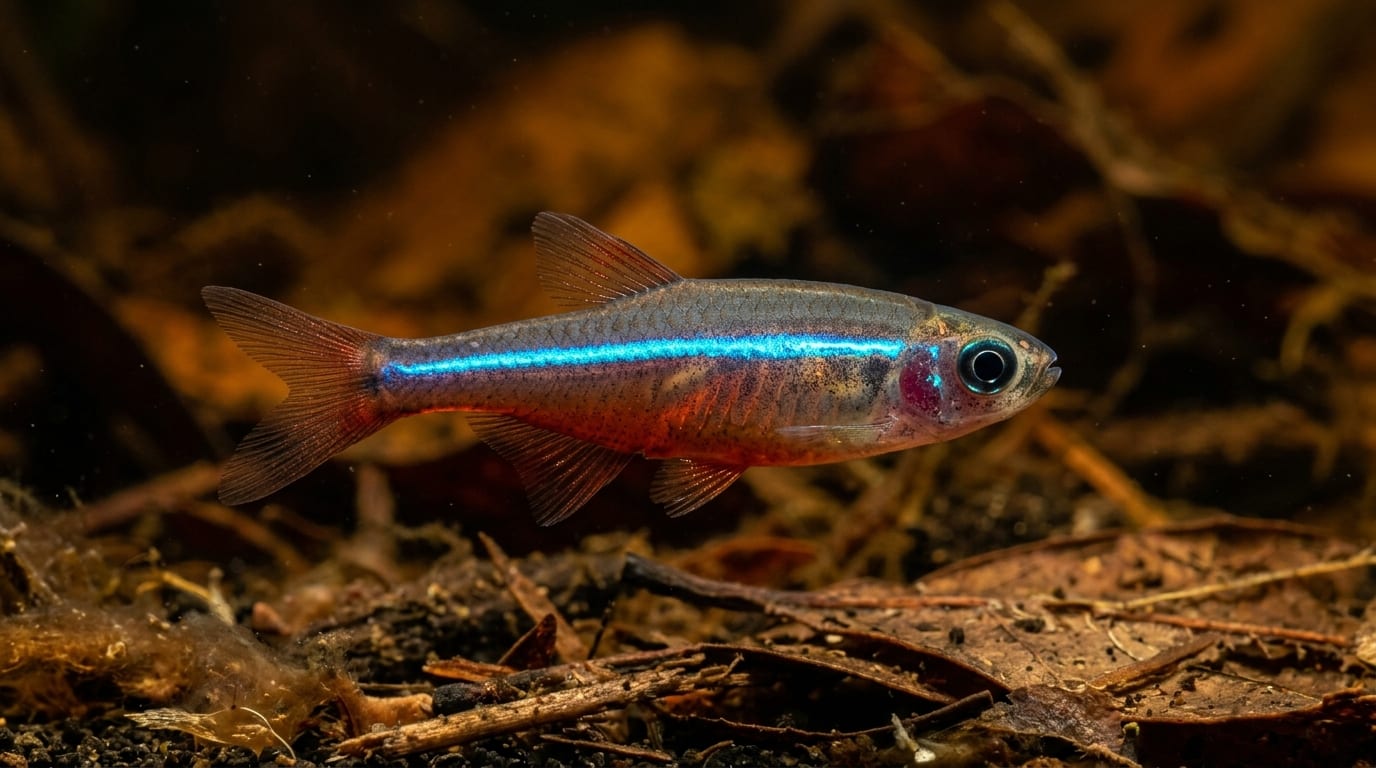
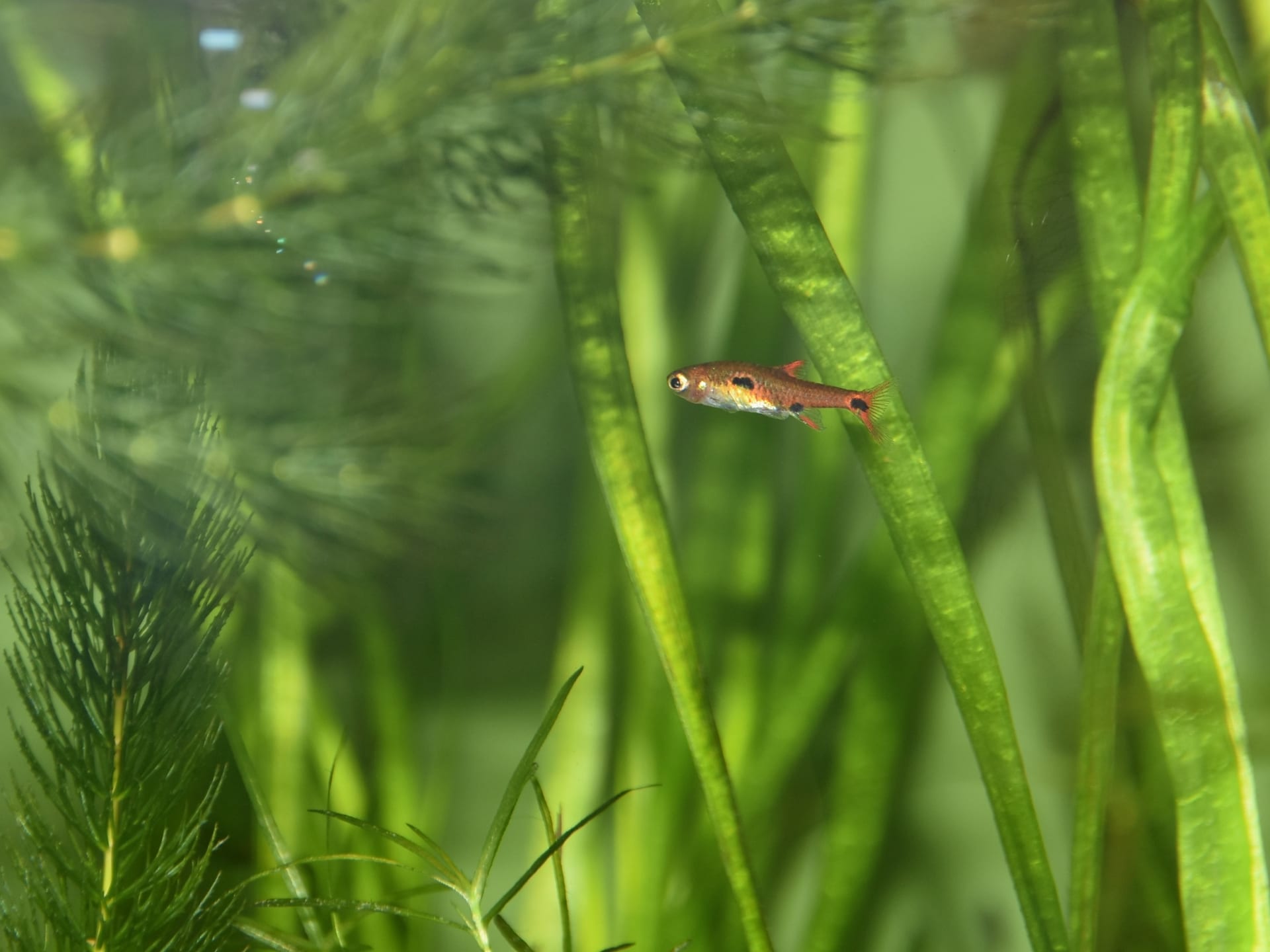
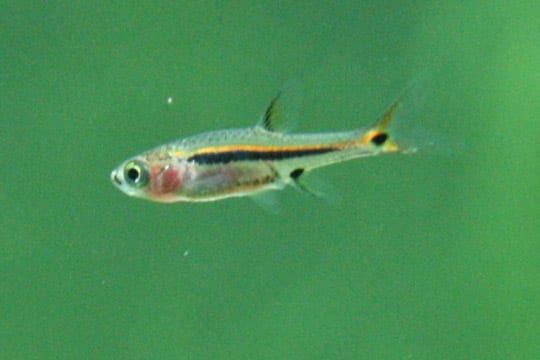
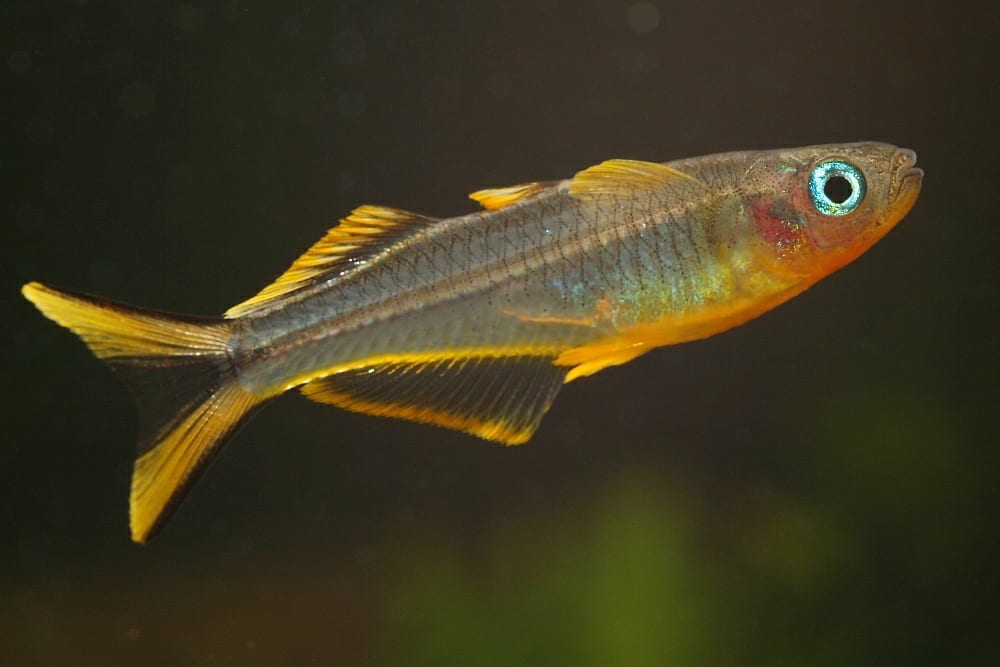
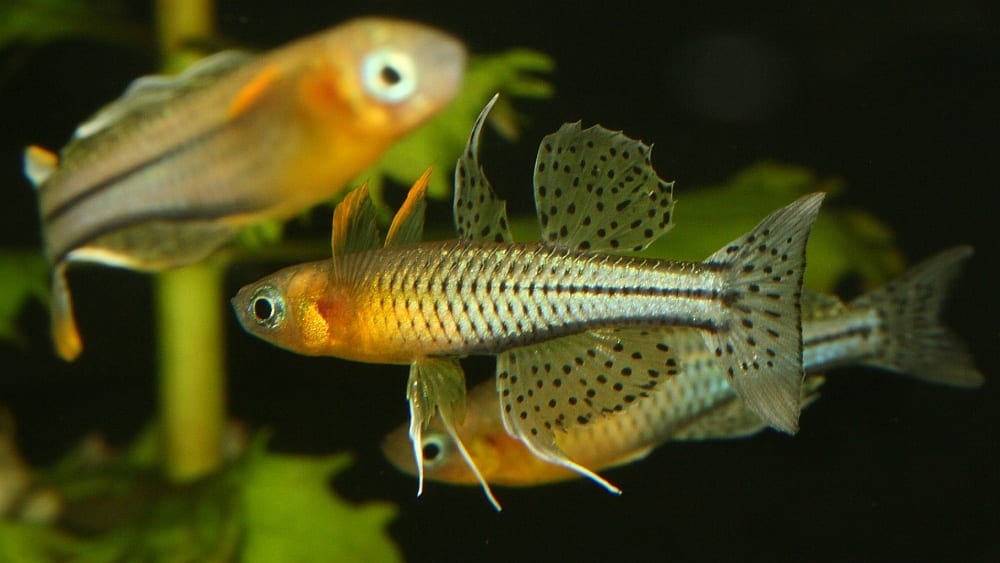
A tiny blue-eye with black spots over a translucent body and yellow-edged fins. Males display with their fins spread wide. It is timid, so a species tank or very peaceful small companions suit it best.
Difficulty
Intermediate
Temperature
21〜28℃
Size
Up to 3.8cm SL
Diet
Fine dried foods and live or frozen brine shrimp and daphnia
About
Pseudomugil gertrudae is a tiny blue-eye ranging from northern Australia through southern New Guinea to the Aru Islands. FishBase records a maximum of 3.8cm SL, pH 6.0, 5-12 dH and 25-30C, and notes it lives in small creeks, swampy marshes and heavily shaded pools. Seriously Fish gives 21-28C, pH 4.5-7.5, 5-12 dGH and a 45 x 30cm base, recommending groups of eight to ten or more. Peaceful but timid and easily outcompeted at feeding time, it is unsuited to a general community tank. Wild populations are largely isolated and show marked local differences in colour, size and fin shape, but almost all fish on sale come from a single commercially produced strain. It is an egg scatterer with no parental care, and spawning is more likely at the warmer end of its range. The IUCN rates it Least Concern and it is not covered by CITES.
Source: Wikipedia (CC BY-SA 4.0)
Size of the Spotted Blue-eye
The Spotted Blue-eye grows to Up to 3.8cm SL.
Temperature & humidity for the Spotted Blue-eye
The ideal temperature for the Spotted Blue-eye is 21〜28℃.
Basic Info
Origin
Northern Australia, southern New Guinea and the Aru Islands
Size
Up to 3.8cm SL
Temperature
21〜28℃
Diet
Care Specifications
- pH
- 4.5–7.5
- Hardness (GH)
- 5–12 dGH
- Water Temp.
- 21–28℃
PeacefulGroupBreeding: Moderate
Sources: FishBase / Seriously Fish
References & Sources
Edited & verified by: BreederDirect editorial team
The taxonomic, regulatory, and husbandry data on this page are compiled and verified against the authoritative primary sources below.
Taxonomy & Authority
Accepted name: Pseudomugil gertrudae Weber, 1911
Authority databases: FishBase
Nomenclature follows global taxonomic authority databases.
Regulations & Conservation Status
Not CITES-listedIUCN LC · Least Concern
Sources: CITES Appendices (species not listed) / IUCN Red List
Regulations may change. Always verify the latest information with the relevant authorities.
Spotted Blue-eye Listings
Loading latest listingsFind listings for this species