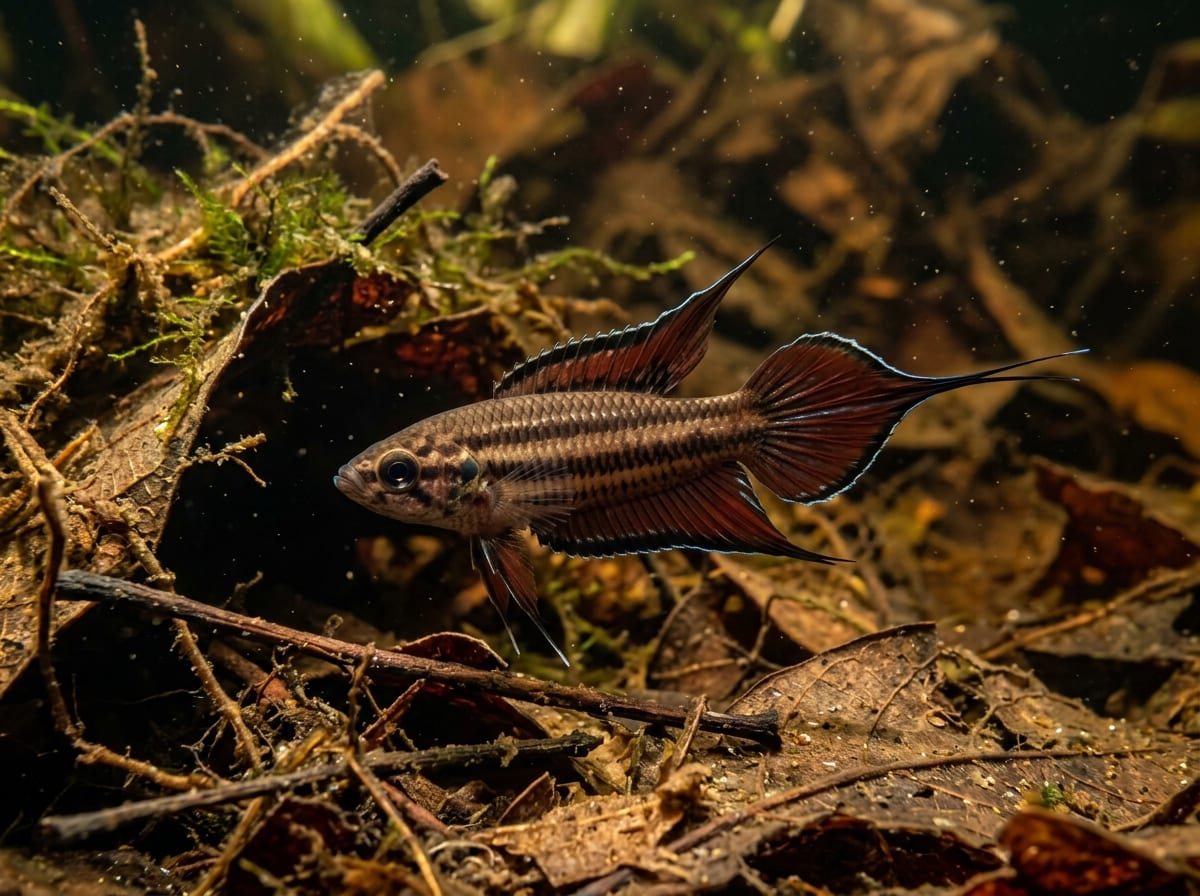
Spiketail gourami
The Spiketail gourami is a tiny licorice gourami from southeastern Borneo, reaching about 4 to 4.5 cm in total length. Males stand out for their tail: the center of the caudal fin extends into a long filament, edged in black with a thin bluish-white rim. This species breeds by building a large bubble nest on the ceiling of a cave, a distinctive habit that is fascinating to watch. Small and gentle by nature, it looks its best in a calm, well-planted tank with plenty of hiding places. It needs attentive water and feeding care, so it suits intermediate keepers who enjoy patient observation.
View Spiketail gourami encyclopedia →0% commission on your first sales!Register by September 30, 2026 and your first 2 sales are commission-free!
Breeder Wanted!
List on BreederDirect and sell directly to customers nationwide!
Our 6 Transparency Commitments
All Tropical Fish listings include water quality, temperament, and tank size information from verified Breeder.
- Origin Disclosed
- Real Photos
- Water Quality Disclosed
- Recommended Tank Size
- Temperament Disclosed
- Breed Line Disclosed
Browse all 341 breeds
Water Type
Care Level
Verified breeders wanted for Tropical Fish
Breeders are signing up now ahead of launch. Subscribe to be notified when new listings go live.
Getting alerts is free with a member account. When new listings match your saved search, we'll notify you by email and in-app.
Browse other categories
Verified breeders (preview)
Are you raising tropical fish?
Register as a breeder and connect with buyers directly.
Apply as a breederSpiketail gourami key facts
- Care level
- Intermediate
- Lifespan
- Few reliable data
- Size
- About 4-4.5 cm TL (FishBase; The Parosphromenus Project)
- Temperature
- 21〜28℃
- Diet
- Carnivore (small live and frozen foods)
- Water Temperature & Quality
- 21-28°C (FishBase). The Parosphromenus Project describes it as one of the least demanding species in the genus.
- Aquarium
- Suits a small tank. Provide small caves (clay tubes), leaf litter and plants under dim light, with a lid to prevent jumping.
- Tank Mates & Compatibility
- Small and shy, it is best kept in a species tank where it does not compete for food.
- Diet & Feeding
- Offer small live or frozen foods such as baby brine shrimp, Daphnia and small bloodworm.
- Breeding & Egg-laying
- The male carries air repeatedly to build a large foam nest inside a cave and courts head-down. Usually 50-70 eggs, up to about 200.
- Health & Cautions
- Seriously threatened by habitat loss in the wild; captive-bred fish are the better choice.
About Spiketail gourami
The Spiketail gourami is a 4 to 4.5 cm licorice gourami from southeastern Borneo. Males have a filament-tipped tail and build bubble nests on cave ceilings. Suited to intermediate keepers; read this before bringing one home.
7 things to know before welcoming a Spiketail gourami
1A Tiny Fish of 4 to 4.5 cm
Adults reach only about 4 to 4.5 cm in total length, so they are quiet residents of any tank. Their small size also makes them sensitive to strong currents and sudden water changes, so prepare a calm, stable setup before bringing them home.
2Why It Suits Intermediate Keepers
This species is rated for intermediate keepers. Water quality and feeding both need attention, so it is easier to succeed once you are comfortable setting up a tank and managing water.
3Relatively Undemanding Water Needs
Within the licorice gourami genus, this species is considered not to need any special water conditions, and it is recommended for people keeping licorice gouramis for the first time. Aim for 21–28°C. Driftwood, leaf litter and subdued lighting help create a dim, calm layout where they feel secure.
4Provide Cave-Like Shelters
This species breeds by building a large bubble nest on a cave ceiling. Adding shelters with a roof, such as a small tube or a clay cave, gives the fish a secure place to settle and lets you watch the nest-building.
5Choose Calm Tank Mates
Being small and reserved, they can lose out at feeding time or become stressed around active or large fish. If you keep tank mates, stick to small, slow-moving species.
6Offer Small, Moving Foods
With such a small mouth, they often prefer tiny frozen or live foods. Some individuals may not be used to dry food, so check what a fish is eating before you bring it home.
7Acclimate Slowly
Fish are prone to stress after transport, so acclimate them slowly, for example by drip acclimation. After introduction, keep the lighting low and watch for faded color, refusal to eat, or lethargy, and review water quality and the setup if you see any of these.
Frequently asked questions about Spiketail gourami
- Q.Can a beginner keep this fish?
- A.This species is rated for intermediate keepers. Because it needs attention to water quality and feeding, it is best to gain some tank-keeping experience first.
- Q.How long does it live?
- A.Reliable information on lifespan is limited, so no clear figure can be given. Stable water quality, suitable food and a calm environment matter most for keeping it healthy over the long term.
- Q.Can I tell males from females?
- A.Males have a tail whose center stretches into a long filament, with a black edge and a thin bluish-white rim, which is a useful clue. It can be harder to judge in fish that are still growing, so check the listing details and look at the individual carefully.
- Q.How big does it get?
- A.Adults reach about 4 to 4.5 cm in total length (FishBase, Parosphromenus Project). Although small, it is sensitive to water changes, so a tank with a comfortable water volume is easier to keep stable.
- Q.Can I breed it?
- A.It breeds by building a large bubble nest on the ceiling of a cave. Providing a covered shelter and a calm environment is the place to start, though success is not guaranteed.
Useful tools for Spiketail gourami care
Learn more about Spiketail gourami in the encyclopedia
View Spiketail gourami encyclopedia entry →
Care difficulty, lifespan, size and diet — all basics covered.
More in this category
Can't find the one you're looking for?
Post your wishes for free and breeders with matching animals will contact you with introductions.