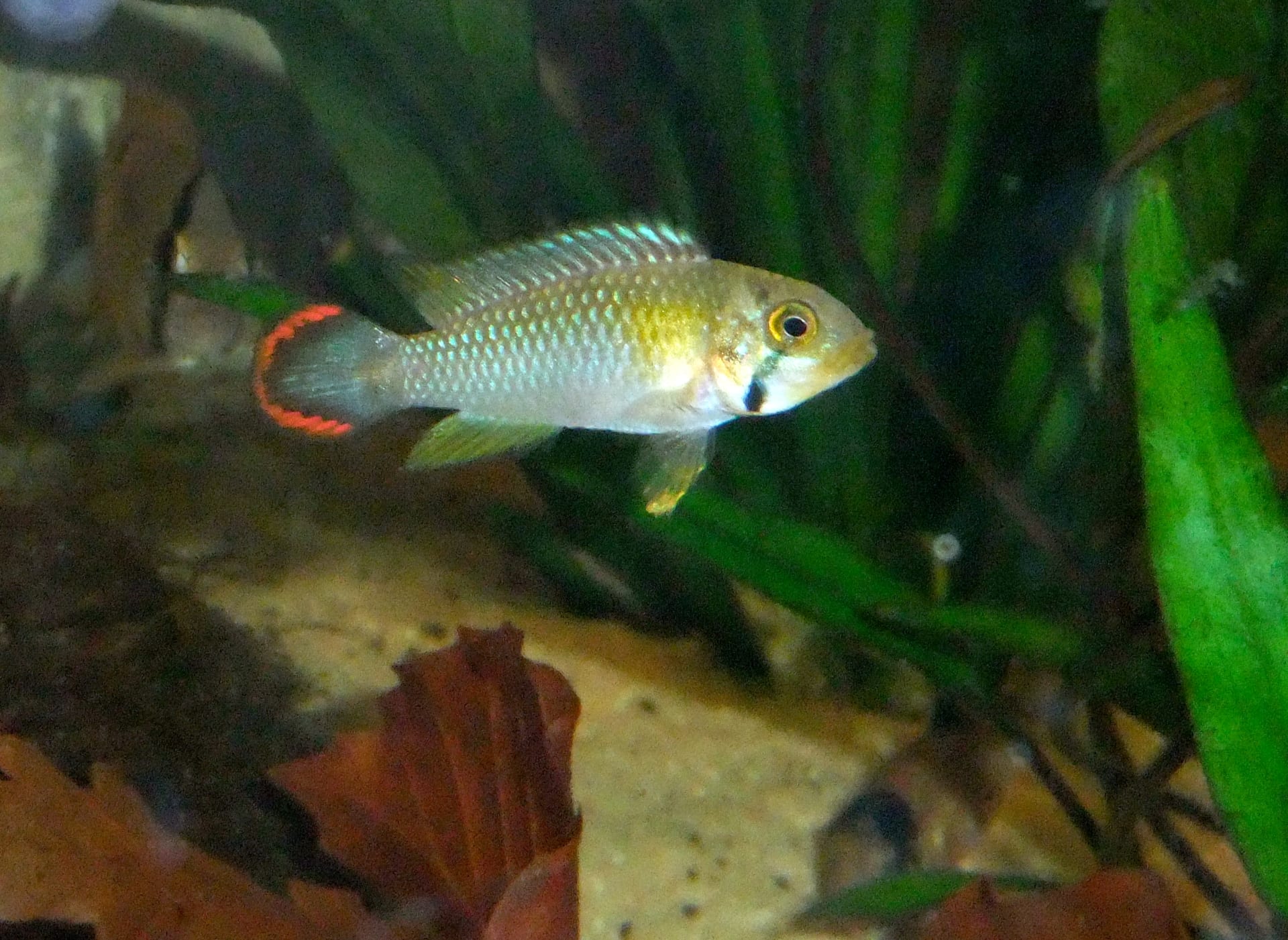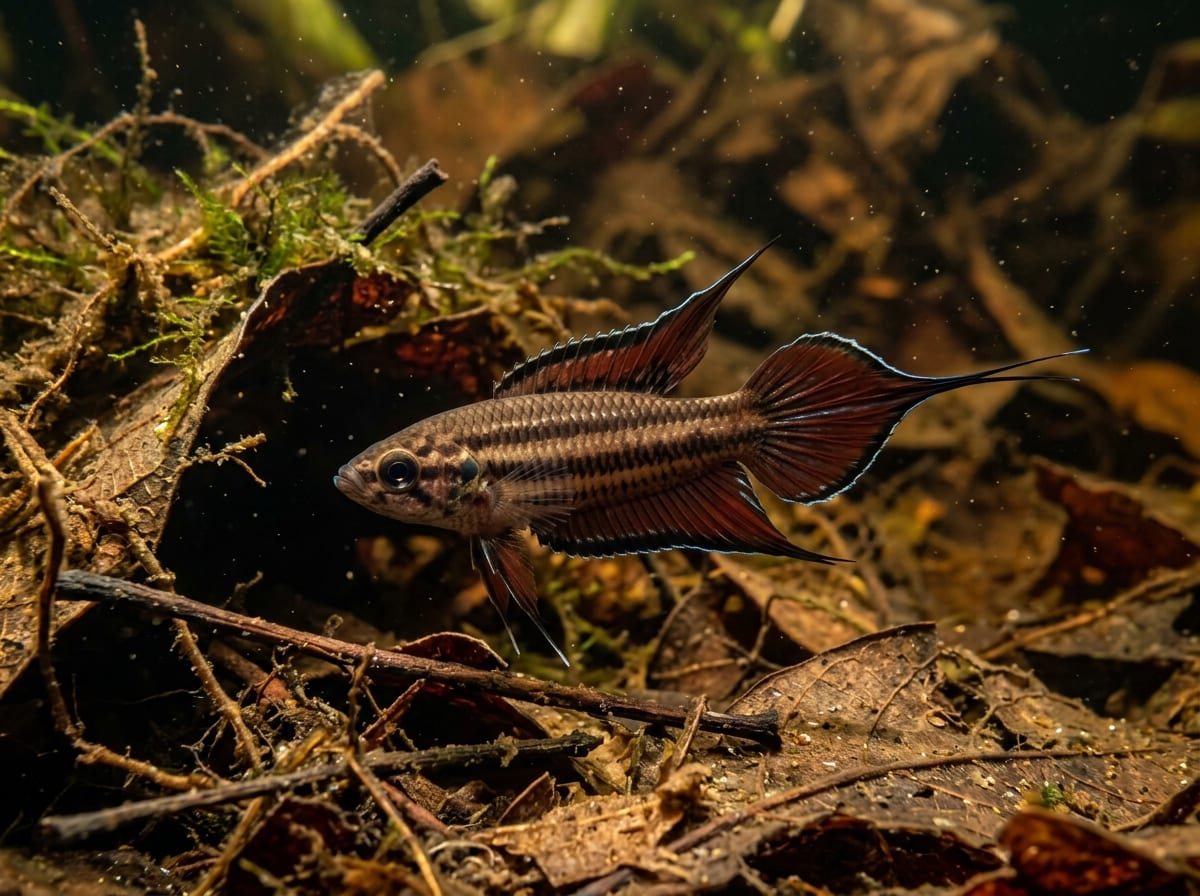
AI-generated image
Spiketail gourami
IntermediateParosphromenus filamentosus
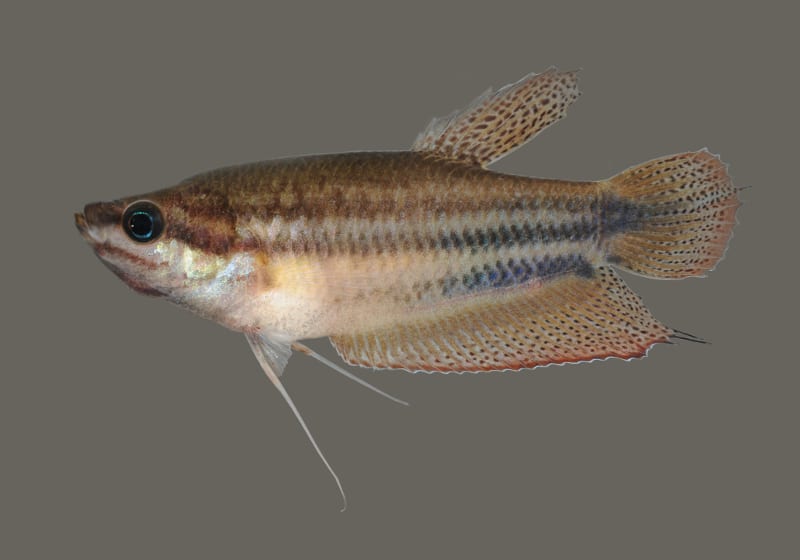
A licorice gourami of about 4 cm from southeastern Borneo. The male's tail ends in a long central filament framed in black with a thin blue-white edge. It builds a large bubble nest on a cave ceiling.
Difficulty
Intermediate
Temperature
21〜28℃
Size
About 4-4.5 cm TL (FishBase; The Parosphromenus Project)
Diet
Carnivore (small live and frozen foods)
About
Parosphromenus filamentosus is a small osphronemid described in 1981 from forest river systems near Banjarmasin, Central Kalimantan, southeastern Borneo; the exact extent of its range is unknown. It reaches about 4-4.5 cm (FishBase; The Parosphromenus Project). The male's caudal fin is pointed with a central filament, brown-red inside with a broad black frame and a thin blue-white edge. It belongs to the group with a long-based dorsal fin and is unlikely to be confused with other licorice gouramis. Large-scale forest destruction has occurred around its habitat, and it is assessed as Endangered on the IUCN Red List. It is regarded as one of the least specialised species of the genus and is recommended even for those new to licorice gouramis. It builds a large foam nest inside a cave and usually lays 50-70 eggs. It appears only occasionally in the international trade, and availability in Japanese specialist shops is limited.
Source: Wikipedia (CC BY-SA 4.0)
Size of the Spiketail gourami
The Spiketail gourami grows to About 4-4.5 cm TL (FishBase; The Parosphromenus Project).
Temperature & humidity for the Spiketail gourami
The ideal temperature for the Spiketail gourami is 21〜28℃.
Basic Info
Origin
Southeast Asia (southeastern Borneo, Central Kalimantan, Indonesia)
Size
About 4-4.5 cm TL (FishBase; The Parosphromenus Project)
Temperature
21〜28℃
References & Sources
Edited & verified by: BreederDirect editorial team
The taxonomic, regulatory, and husbandry data on this page are compiled and verified against the authoritative primary sources below.
Taxonomy & Authority
Regulations & Conservation Status
Not CITES-listedIUCN EN · Endangered
Not listed in the CITES Appendices (checked on Species+). Assessed as Endangered (EN) on the IUCN Red List. Not regulated under Japan's Invasive Alien Species Act. Never release aquarium fish into the wild.
Sources: Species+ (CITES) / FishBase
Regulations may change. Always verify the latest information with the relevant authorities.
Spiketail gourami Listings
Loading latest listingsFind listings for this species