Source: Wikimedia Commons
Croaking gourami
BeginnerTrichopsis vittata
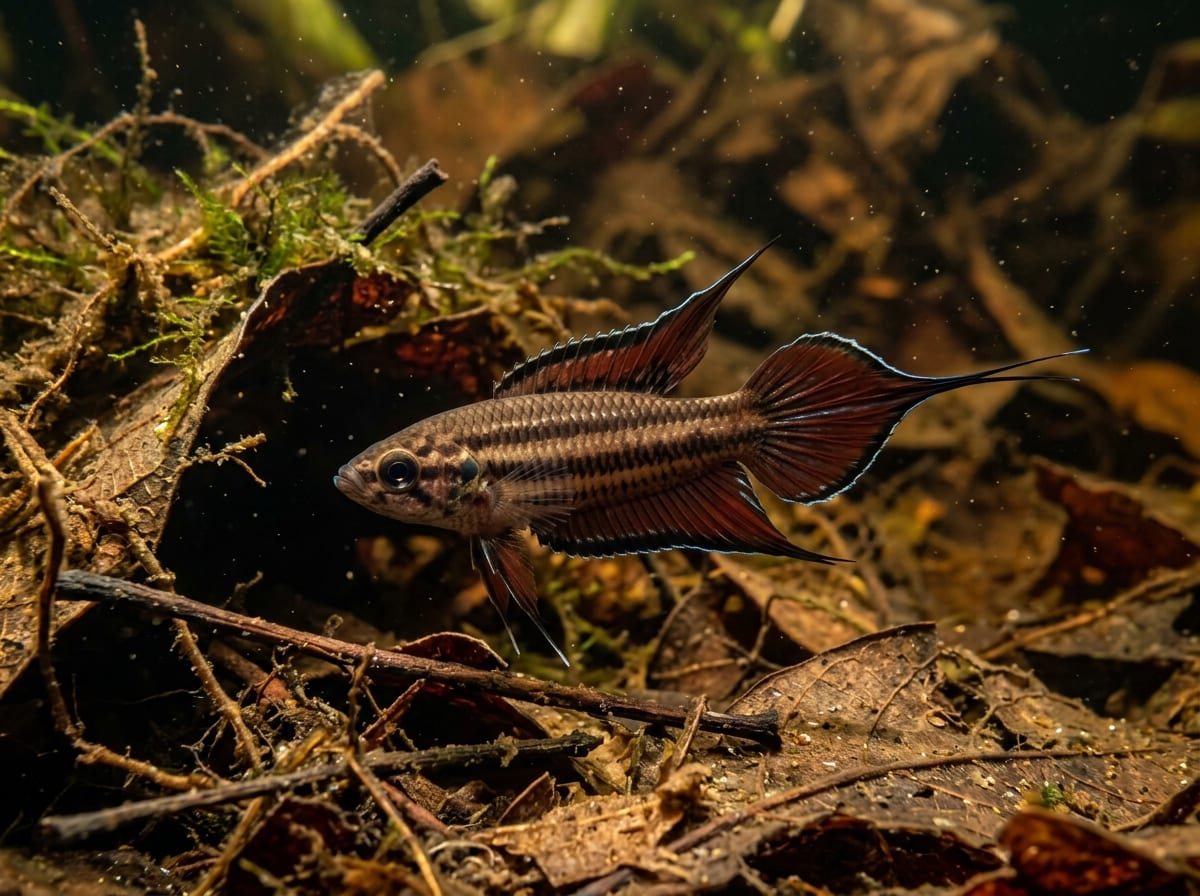
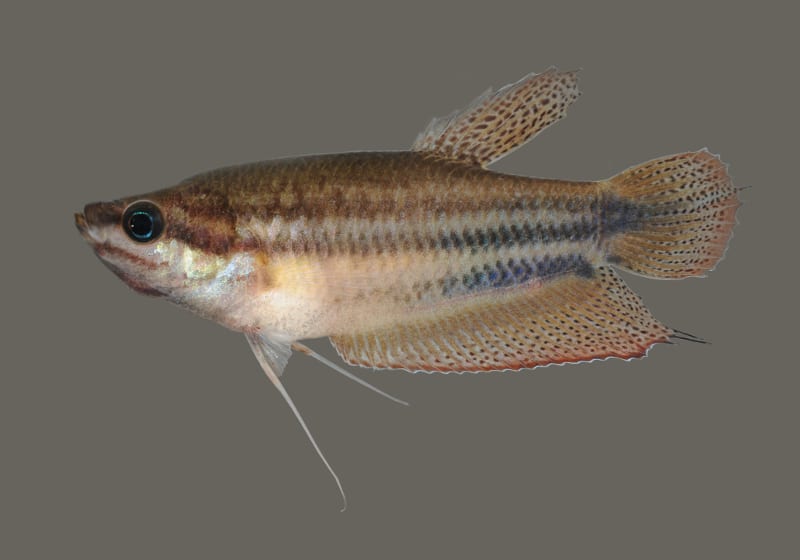
A small gourami of Southeast Asian paddies and swamps, famous for producing audible croaking sounds with a special pectoral-fin mechanism. Tan with dark horizontal lines, it breeds in bubble nests.
Difficulty
Beginner
Temperature
22〜28℃
Lifespan
Few reliable data
Size
Up to 8 cm TL, commonly about 4 cm (FishBase)
Diet
Mainly carnivorous (small frozen/live foods, prepared foods)
About
The croaking gourami, Trichopsis vittata, occurs in Indochina from Thailand to Vietnam and in Sumatra, Borneo and Java (FishBase), though the Sunda records may represent a distinct species. It reaches 8 cm TL, commonly about 4 cm. Feral populations are established in the Philippines, India and the USA. It produces sounds with a pectoral-fin mechanism in which tendons are plucked like guitar strings; both sexes 'croak', especially during disputes and courtship. It has a labyrinth organ for breathing air. It lives in shallow, still or slow, weedy waters including paddies, canals and roadside ditches. The male builds a bubble nest, and sinking eggs are collected and carried into it. It is a larger congener of the pygmy gourami (T. pumila) and is sold in Japan as a hardy small gourami.
Source: Wikipedia (CC BY-SA 4.0)
Size of the Croaking gourami
The Croaking gourami grows to Up to 8 cm TL, commonly about 4 cm (FishBase).
Temperature & humidity for the Croaking gourami
The ideal temperature for the Croaking gourami is 22〜28℃.
Basic Info
Origin
Southeast Asia (Indochina from Thailand to Vietnam; Sumatra, Borneo, Java)
Lifespan
Few reliable data
Size
Up to 8 cm TL, commonly about 4 cm (FishBase)
Temperature
22〜28℃
References & Sources
Edited & verified by: BreederDirect editorial team
The taxonomic, regulatory, and husbandry data on this page are compiled and verified against the authoritative primary sources below.
Primary sources
Taxonomy & Authority
Regulations & Conservation Status
Not CITES-listedIUCN LC · Least Concern
Not listed in the CITES Appendices (checked on Species+). Not designated under Japan's Invasive Alien Species Act, nor on the Ministry of the Environment's list of invasive alien species. Never release aquarium fish into the wild.
Sources: Species+ (CITES) / FishBase
Regulations may change. Always verify the latest information with the relevant authorities.
Croaking gourami Listings
Loading latest listingsFind listings for this species