Source: Wikimedia Commons
Giant gourami
IntermediateOsphronemus goramy
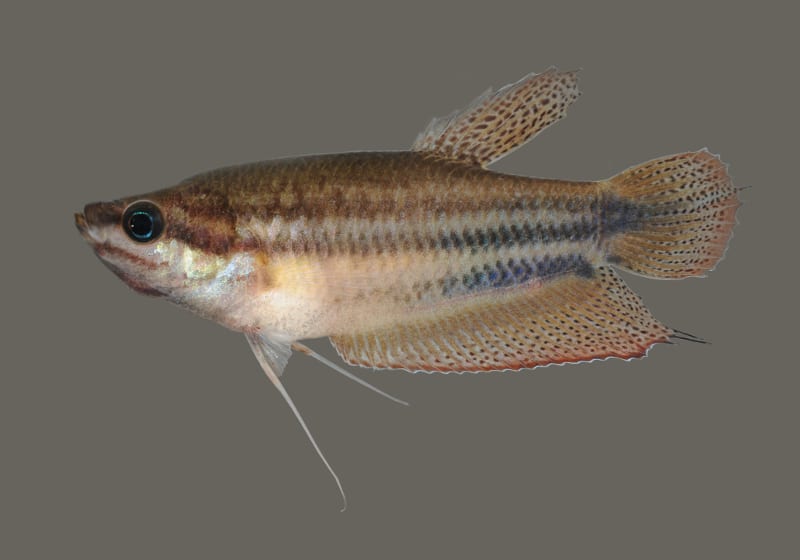
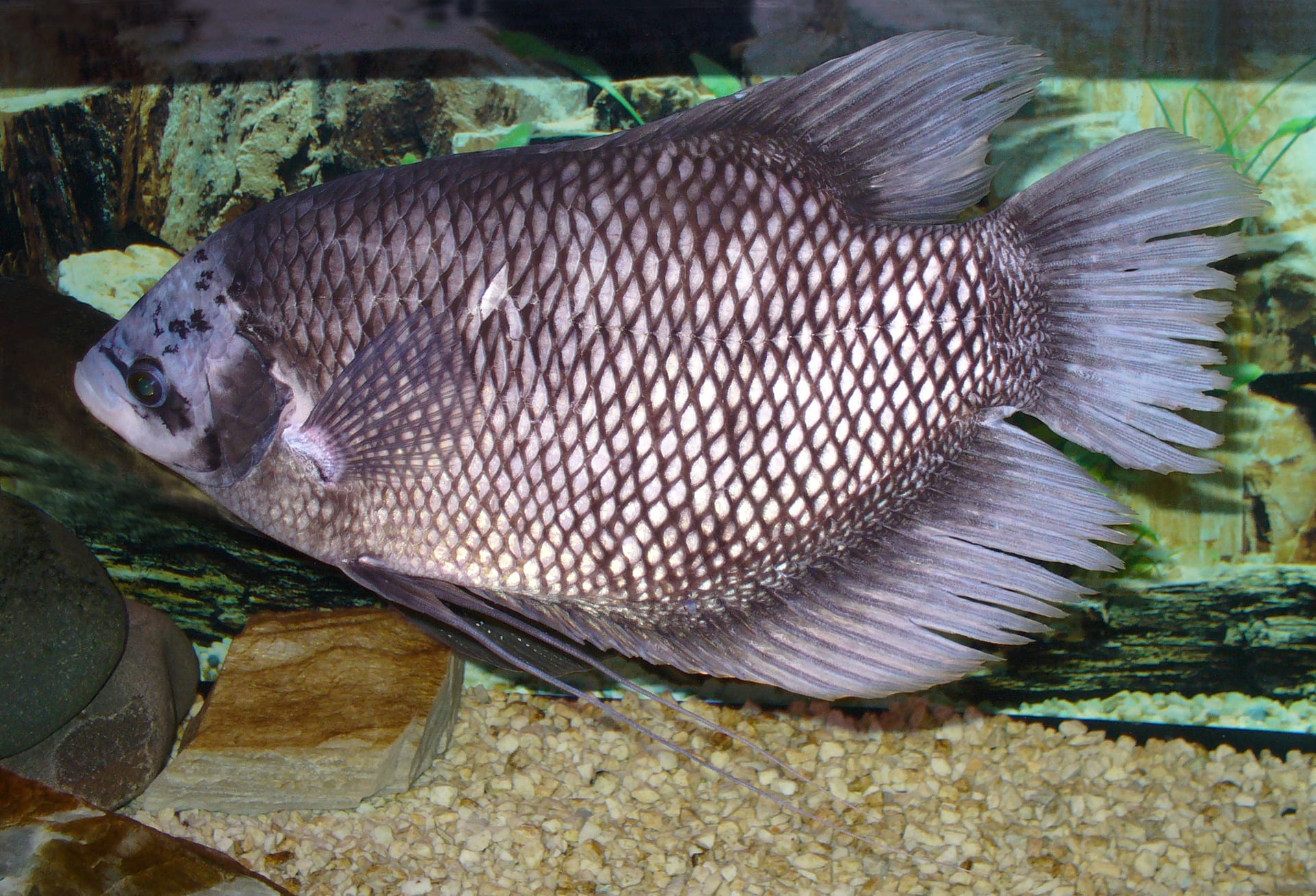
One of the largest gouramis, native to Southeast Asia. Barred juveniles look charming, but adults reach 70 cm SL with a bulging forehead and may live over 20 years, needing an extra-large tank.
Difficulty
Intermediate
Temperature
20〜30℃
Lifespan
Can live over 20 years in captivity (Seriously Fish)
Size
Up to 70 cm SL, commonly about 45 cm (FishBase)
Diet
Omnivore (prepared foods, frozen foods, vegetables)
About
The giant gourami, Osphronemus goramy, is a large osphronemid of Sumatra, Borneo, Java, the Malay Peninsula, Thailand and the Mekong basin of Indochina (FishBase). Widely farmed for food, it has been introduced to many countries. It reaches 70 cm SL, commonly 45 cm. It lives among vegetation in swamps, lakes, rivers and flooded forest and relies on air-breathing. An omnivore, it eats aquatic plants, fish, frogs and earthworms. Males build large nests of plant fibres rather than bubble nests. Barred juveniles are sold small but grow fast, and Seriously Fish notes captive fish can live over 20 years and learn to recognise their owners. A golden variety exists, and dyed fish injected with colour sometimes appear. The smaller, red-finned O. laticlavius is a separate species.
Source: Wikipedia (CC BY-SA 4.0)
Lifespan of the Giant gourami
The Giant gourami lives Can live over 20 years in captivity (Seriously Fish).
Juveniles are available from Japanese specialist shops; consider the adult size and lifespan before buying.
Size of the Giant gourami
The Giant gourami grows to Up to 70 cm SL, commonly about 45 cm (FishBase).
Temperature & humidity for the Giant gourami
The ideal temperature for the Giant gourami is 20〜30℃.
Basic Info
Origin
Southeast Asia (Sumatra, Borneo, Java, Malay Peninsula, Thailand, Mekong basin)
References & Sources
Edited & verified by: BreederDirect editorial team
The taxonomic, regulatory, and husbandry data on this page are compiled and verified against the authoritative primary sources below.
Primary sources
Taxonomy & Authority
Accepted name: Osphronemus goramy Lacepède, 1801
Synonyms: Osphromenus gourami Lacepède, 1801, Osphromenus notatus Cuvier, 1831, Osphromenus olfax Cuvier, 1831, Osphromenus satyrus (Shaw, 1803), Osphronemus gouramy Lacepède, 1801, Trichopode mentonnier Lacepède, 1801, Trichopodus mentum Lacepède, 1801, Trichopus goramy (Lacepède, 1801), Trichopus satyrus Shaw, 1803
Authority databases: GBIF · GBIF · FishBase
Nomenclature follows global taxonomic authority databases.
Regulations & Conservation Status
Not CITES-listedIUCN LC · Least Concern
Not listed in the CITES Appendices (checked on Species+). Not designated under Japan's Invasive Alien Species Act nor on the invasive species list (as of September 2026). It reaches 70 cm SL and may live over 20 years, so plan for lifelong housing and never release it into the wild.
Sources: Species+ (CITES) / FishBase
Regulations may change. Always verify the latest information with the relevant authorities.
Giant gourami Listings
Loading latest listingsFind listings for this species