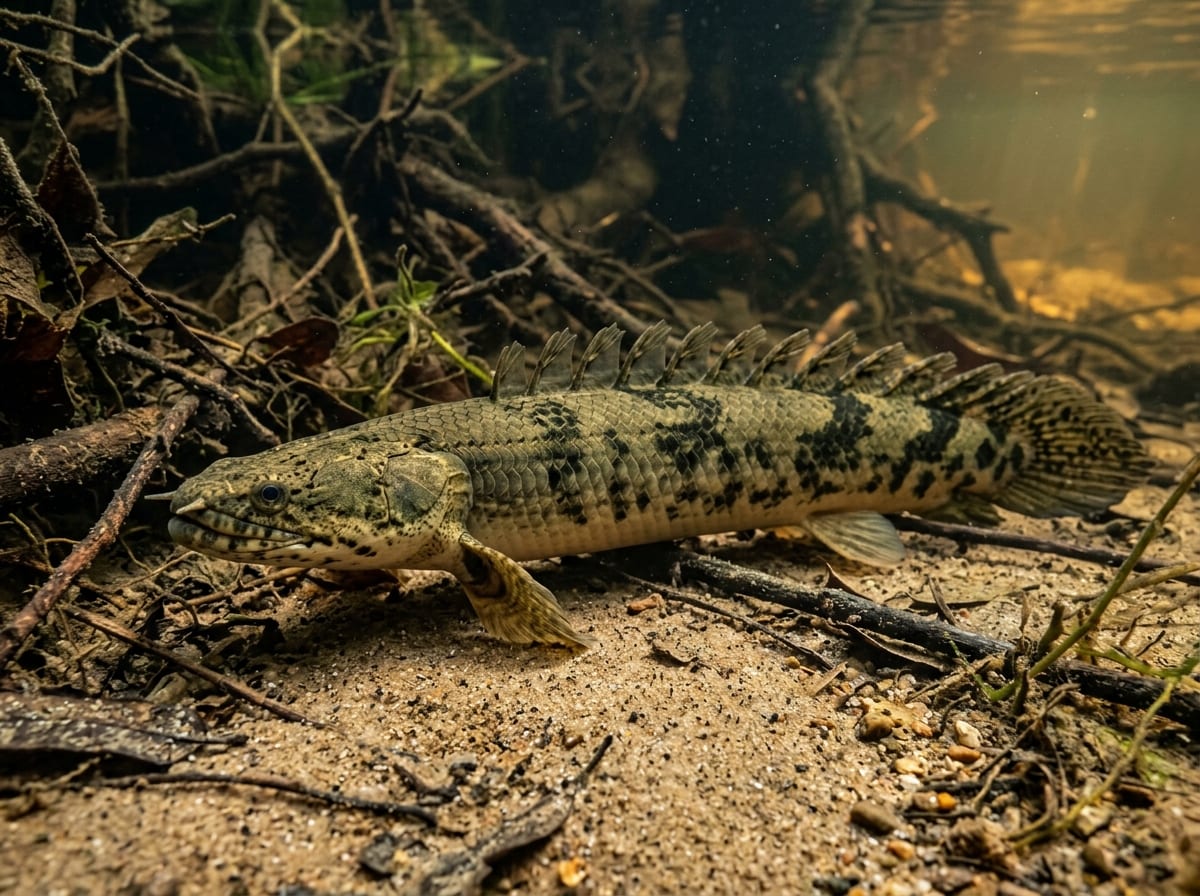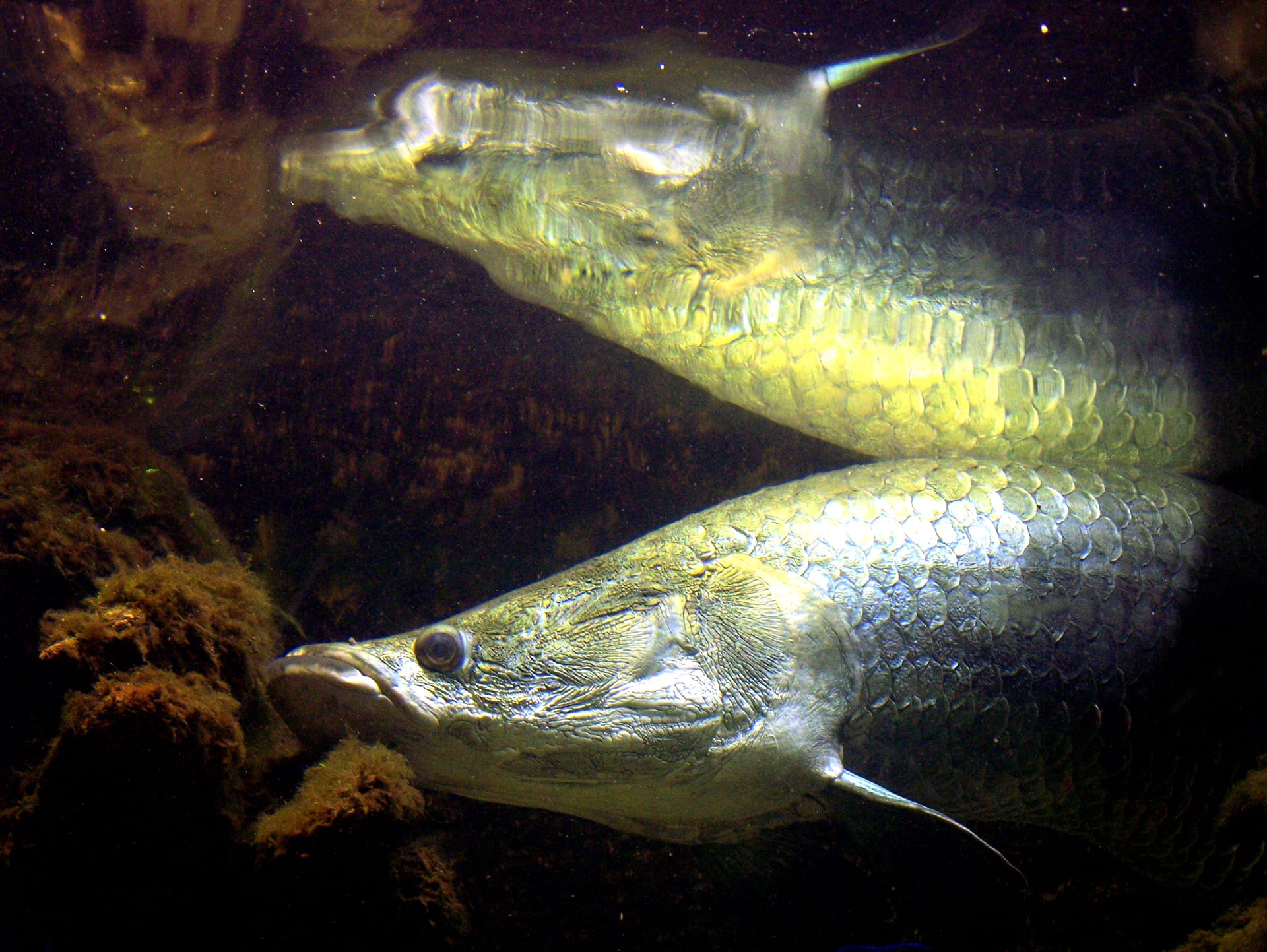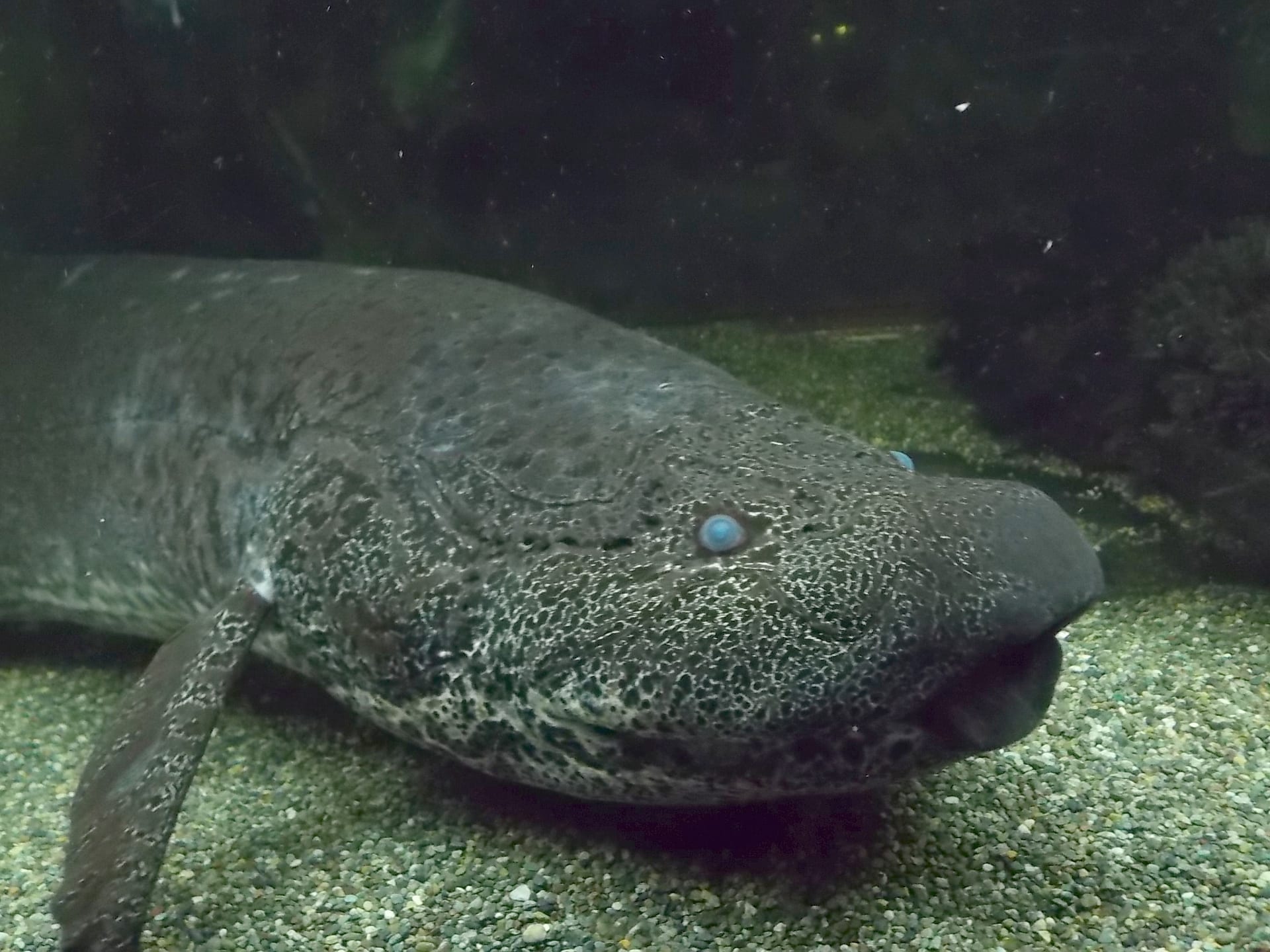
Source: Wikimedia Commons
Marbled lungfish
AdvancedProtopterus aethiopicus
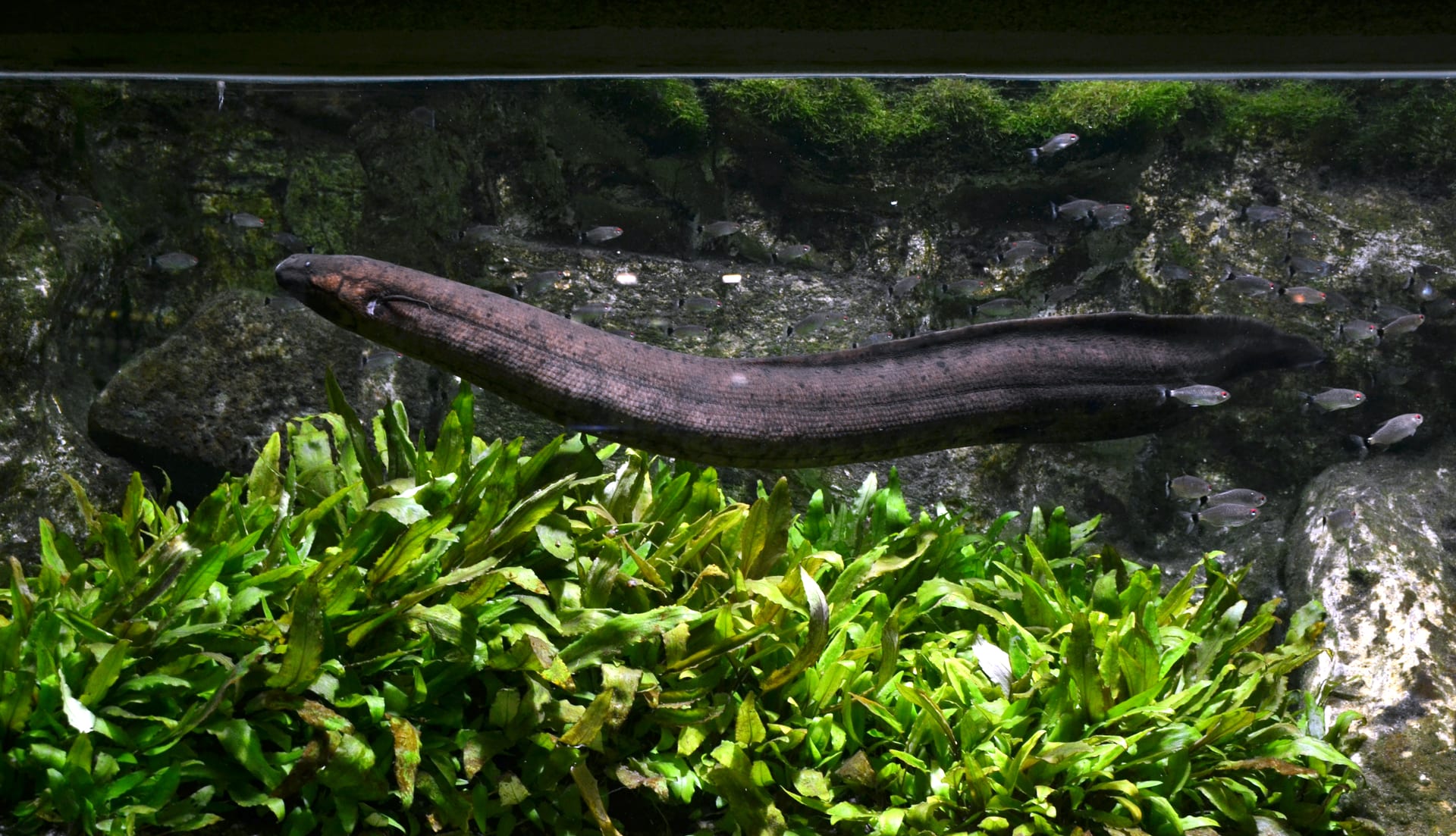
A large lungfish of eastern and central Africa, grey with black marbling and thread-like paired fins. Recorded to 2 m, it is among the largest lungfish, and lifelong housing is the key challenge.
Difficulty
Advanced
Temperature
25〜30℃
Size
Up to 200 cm TL, commonly about 130 cm
Diet
Mainly carnivorous (fish, molluscs, shrimp, sinking prepared food)
About
Protopterus aethiopicus, the marbled lungfish, is divided by FishBase into three subspecies: the nominate form in the Nile basin and lakes such as Victoria and Tanganyika, P. a. congicus from the upper Congo to Kinshasa, and P. a. mesmaekersi in the lower Congo. In Japan it is often sold by subspecies name, 'aethiopicus' or 'congicus'. It inhabits river and lake margins, swamps and floodplains, with juveniles among papyrus roots; an obligate air-breather, it can survive long periods in waters that dry out. It grows far larger than the familiar P. annectens. Juveniles are handled by Japanese specialist shops; before buying, confirm you can house a fish that may approach 2 m for its whole life.
Source: Wikipedia (CC BY-SA 4.0)
Size of the Marbled lungfish
The Marbled lungfish grows to Up to 200 cm TL, commonly about 130 cm.
FishBase gives a maximum of 200 cm TL, a common length of 130 cm and a maximum weight of 17 kg.
Temperature & humidity for the Marbled lungfish
The ideal temperature for the Marbled lungfish is 25〜30℃.
Basic Info
Origin
Eastern and central Africa (Nile basin, East African great lakes, Congo basin)
Size
Up to 200 cm TL, commonly about 130 cm
Temperature
25〜30℃
Diet
References & Sources
Edited & verified by: BreederDirect editorial team
The taxonomic, regulatory, and husbandry data on this page are compiled and verified against the authoritative primary sources below.
Primary sources
Taxonomy & Authority
Accepted name: Protopterus aethiopicus Heckel, 1851
Synonyms: Lepidosiren annectens Gray, 1860, Lepidosiren arnaudii Castelnau, 1855, Protopterus aethiopicus aethiopicus, Protopterus aethiopicus congicus Poll, 1961, Protopterus aethiopicus mesmaekeri Poll, 1961, Protopterus aethiopicus mesmaekersi Poll, 1961
Authority databases: GBIF · GBIF · FishBase
Nomenclature follows global taxonomic authority databases.
Regulations & Conservation Status
Not CITES-listedIUCN LC · Least Concern
Not listed in the CITES Appendices (checked on Species+). Not regulated under Japan's Invasive Alien Species Act. It exceeds 1 m, so plan for lifelong housing and never release it into the wild.
Sources: Species+ (CITES) / FishBase
Regulations may change. Always verify the latest information with the relevant authorities.
Marbled lungfish Listings
Loading latest listingsFind listings for this species