Source: Wikimedia Commons
Asian arowana
AdvancedScleropages formosus
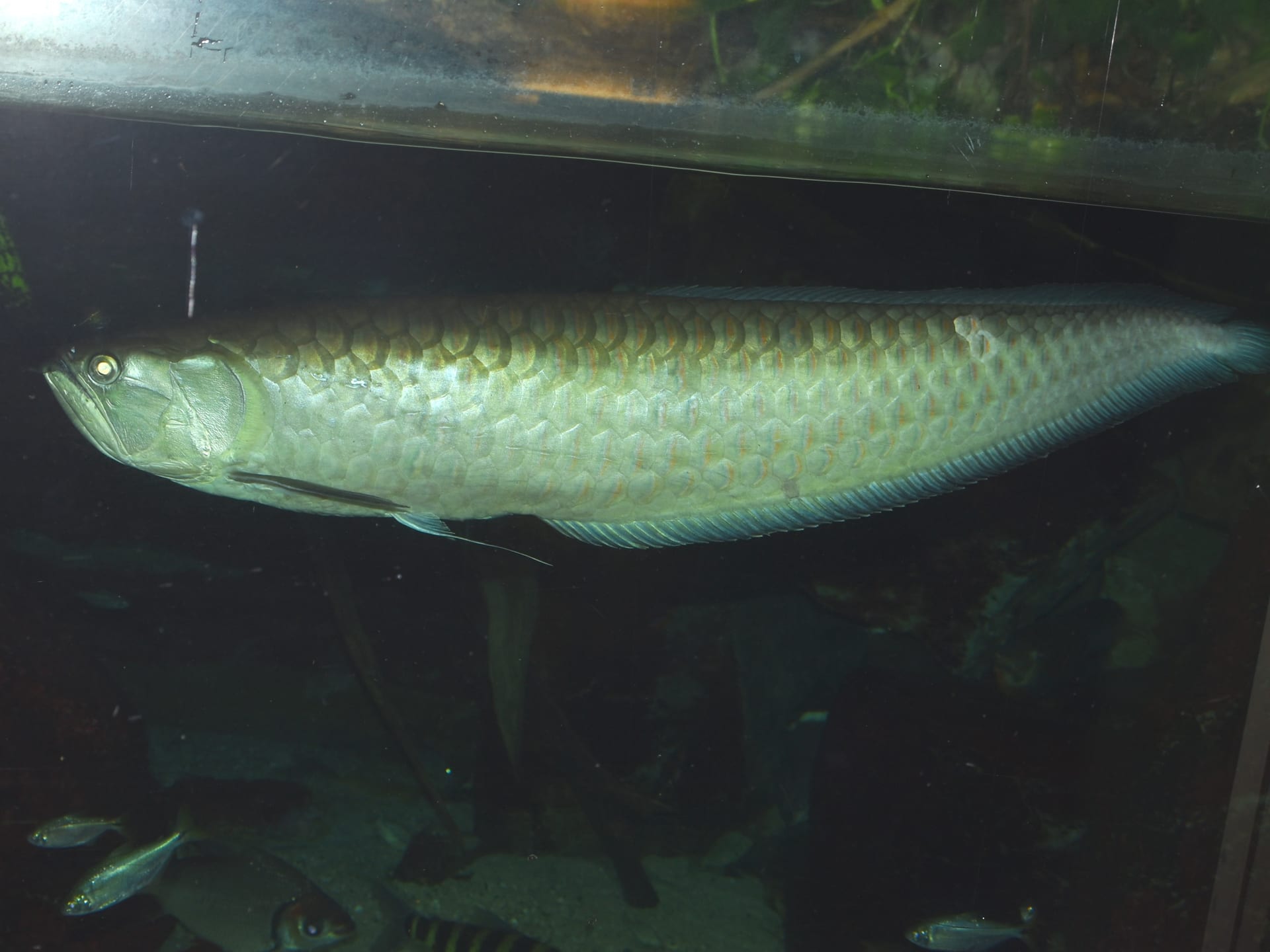
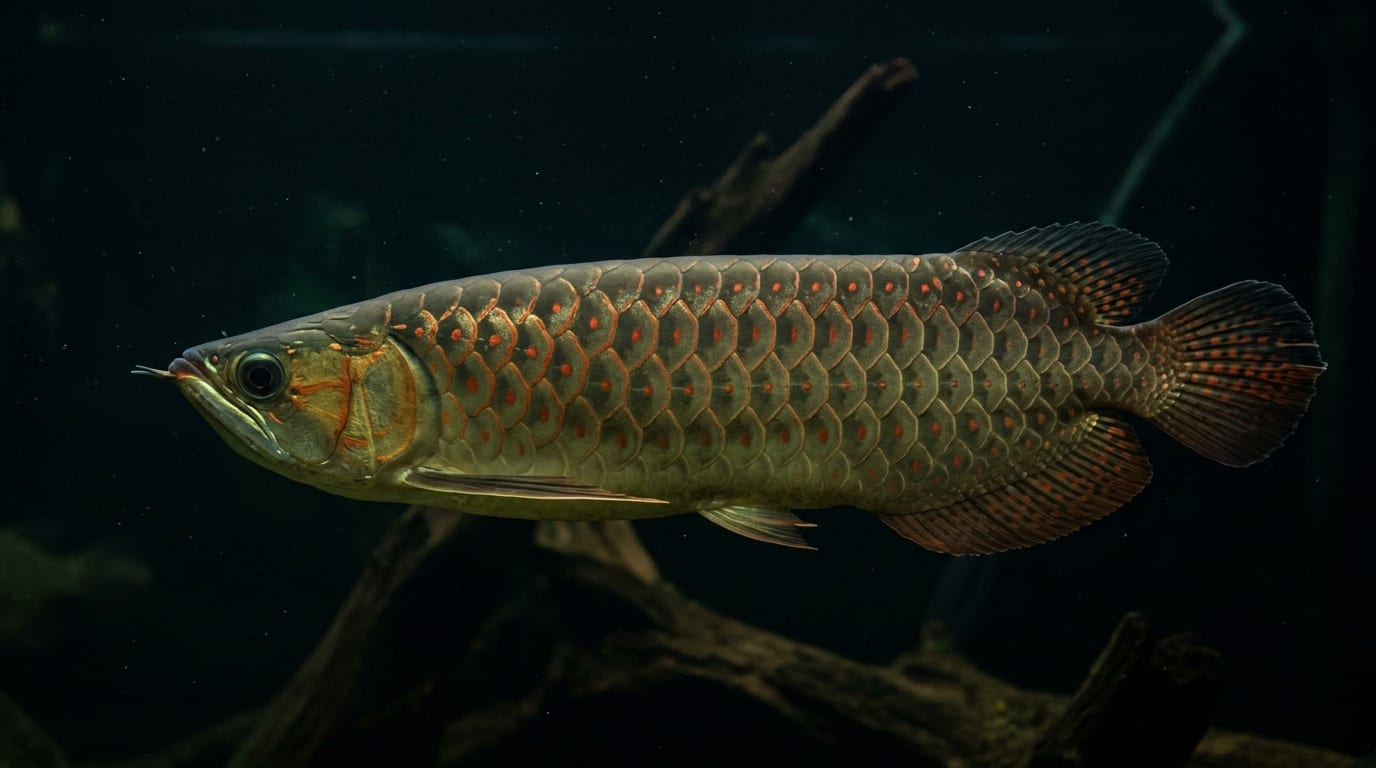
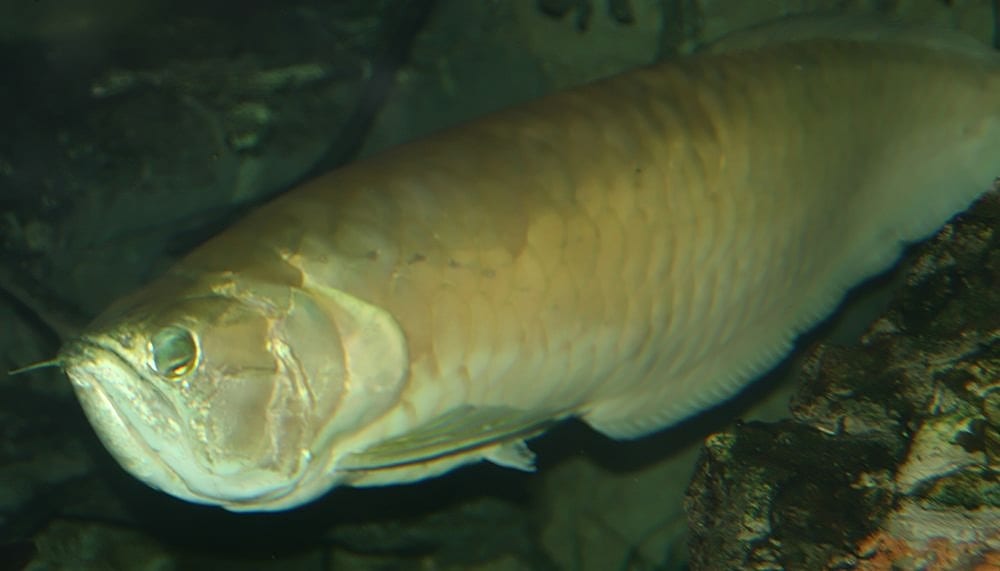
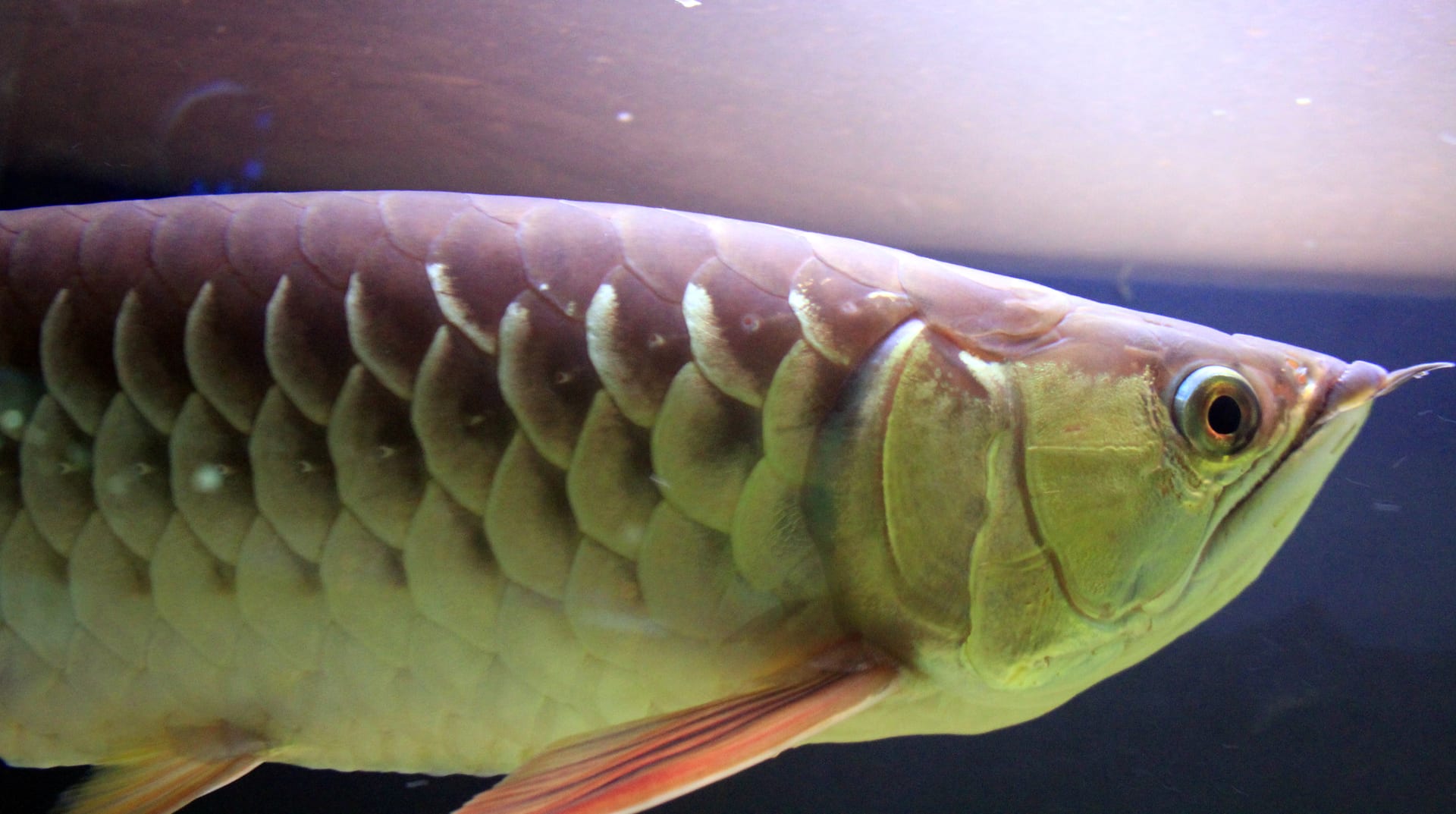
A large arowana of Southeast Asian blackwater rivers and swamps, with big scales and chin barbels, reaching 90 cm. Listed in CITES Appendix I; in Japan only registered individuals with a certificate may be transferred or sold.
Difficulty
Advanced
Temperature
24〜30℃
Lifespan
Few reliable data
Size
Up to 90 cm TL (FishBase)
Diet
Carnivore (insects, prawns, fish pieces, prepared foods)
About
The Asian arowana, Scleropages formosus, is an osteoglossid of Southeast Asia, recorded from the Mekong system (Vietnam, Cambodia), eastern Thailand, Peninsular Malaysia, Sumatra and Borneo, though it has disappeared from much of this range. FishBase gives a maximum of 90 cm TL. It inhabits tannin-stained forest streams, lakes, swamps and flooded forest; juveniles take insects at the surface and adults eat fish. The male mouthbroods the eggs and young. Wild colour forms include the widespread green form, the 'super red' of the upper Kapuas, the 'cross back golden' of the Malay Peninsula and the 'red tail golden' of Sumatra. Red and golden forms were described as separate species in 2003 (S. legendrei, S. aureus, S. macrocephalus), but GBIF treats these names as synonyms and most authorities still include them in S. formosus. It is listed in CITES Appendix I and assessed as Endangered on the IUCN Red List. In Japan, farmed fish accompanied by a registration certificate under the Act on Conservation of Endangered Species are traded.
Source: Wikipedia (CC BY-SA 4.0)
Size of the Asian arowana
The Asian arowana grows to Up to 90 cm TL (FishBase).
Temperature & humidity for the Asian arowana
The ideal temperature for the Asian arowana is 24〜30℃.
Basic Info
Origin
Southeast Asia (Mekong basin, eastern Thailand, Malay Peninsula, Sumatra, Borneo)
Lifespan
Few reliable data
Size
Up to 90 cm TL (FishBase)
References & Sources
Edited & verified by: BreederDirect editorial team
The taxonomic, regulatory, and husbandry data on this page are compiled and verified against the authoritative primary sources below.
Taxonomy & Authority
Accepted name: Scleropages formosus (Müller & Schlegel, 1840)
Synonyms: Osteoglossum formosum Müller & Schlegel, 1840, Scleropages aureus Pouyaud, Sudarto & Teugels, 2003, Scleropages legendrei Pouyaud, Sudarto & Teugels, 2003, Scleropages macrocephalus Pouyaud, Sudarto & Teugels, 2003
Authority databases: GBIF · GBIF · FishBase
Nomenclature follows global taxonomic authority databases.
Regulations & Conservation Status
CITES Appendix IIUCN EN · Endangered
Listed in CITES Appendix I (checked on Species+). In Japan it is a nationally designated internationally endangered species under the Act on Conservation of Endangered Species: transfer (including sale and rental) and display or advertising for sale are prohibited in principle. Only individuals registered with the designated registration body (Japan Wildlife Research Center) and issued a registration certificate may be transferred or displayed. Always confirm the certificate accompanies the fish; the new owner must notify the registration body within 30 days of acquiring it. Registrations of live animals have a validity period and must be renewed before expiry. The certificate proves registration but does not guarantee species identity. Assessed as Endangered (EN) on the IUCN Red List.
Sources: Species+ (CITES) / FishBase / Ministry of the Environment: registration of specimens / Ministry of the Environment: notification after acquiring registered specimens / Japan Wildlife Research Center: registration procedures
Regulations may change. Always verify the latest information with the relevant authorities.
Asian arowana Listings
Loading latest listingsFind listings for this species