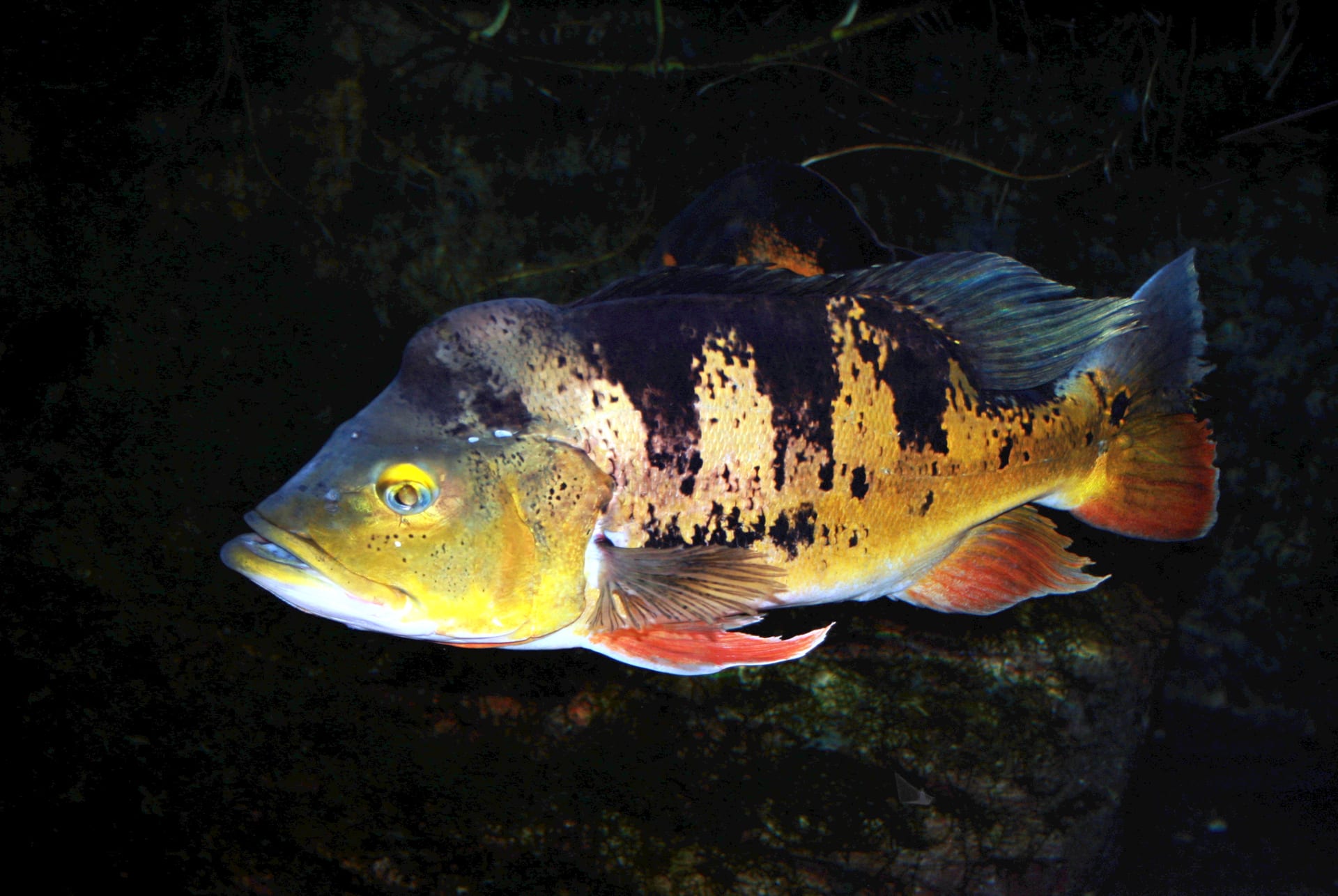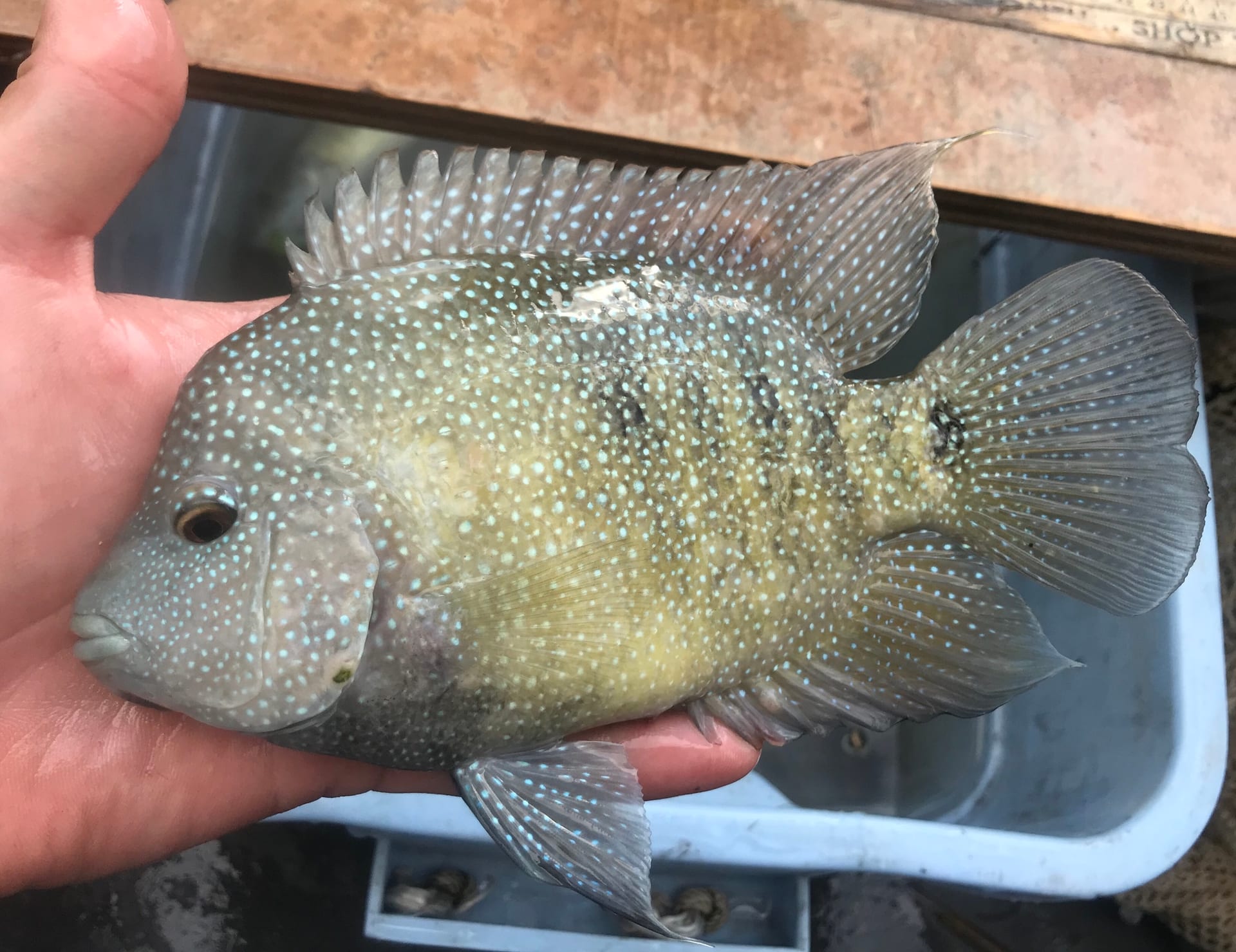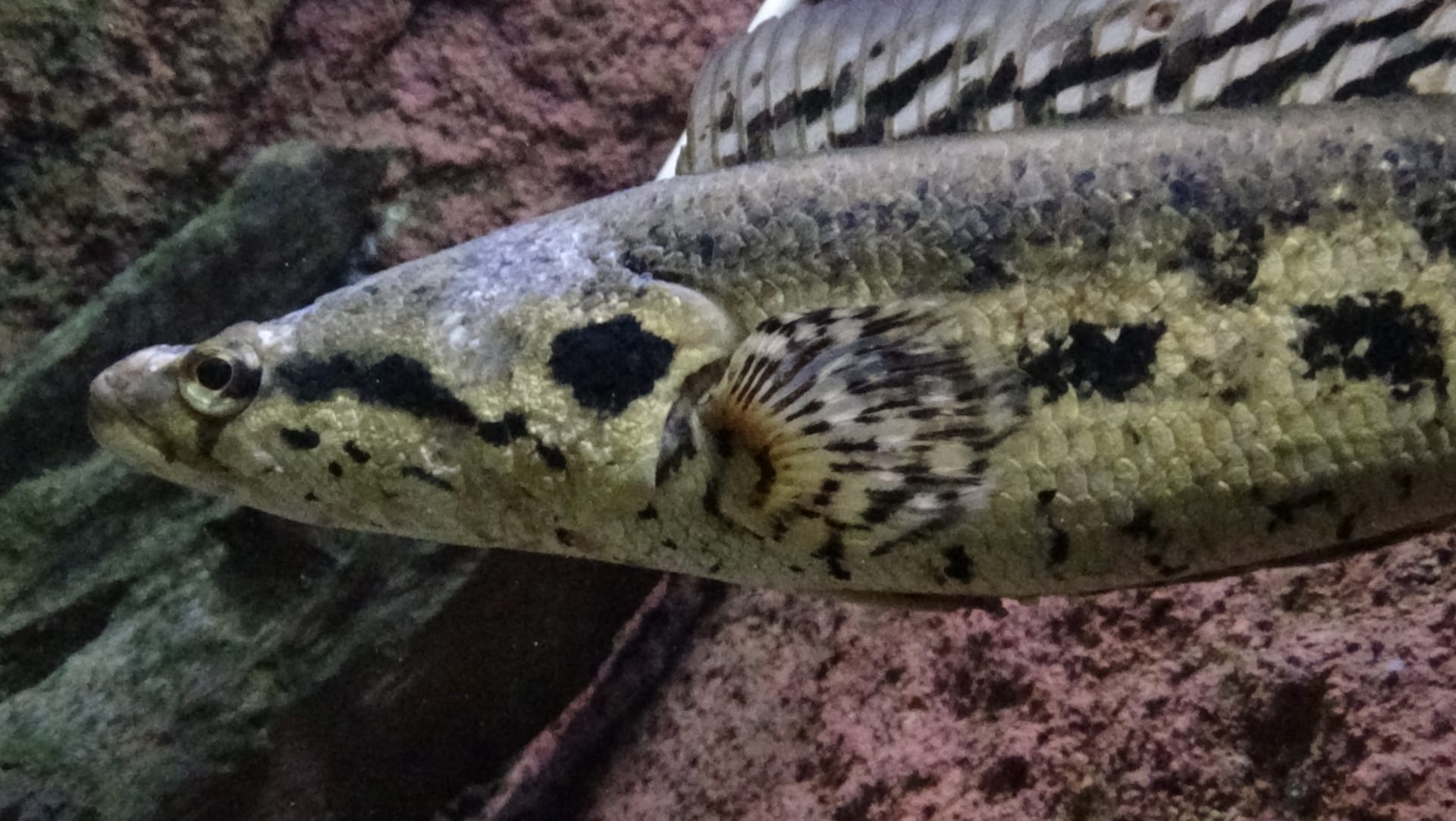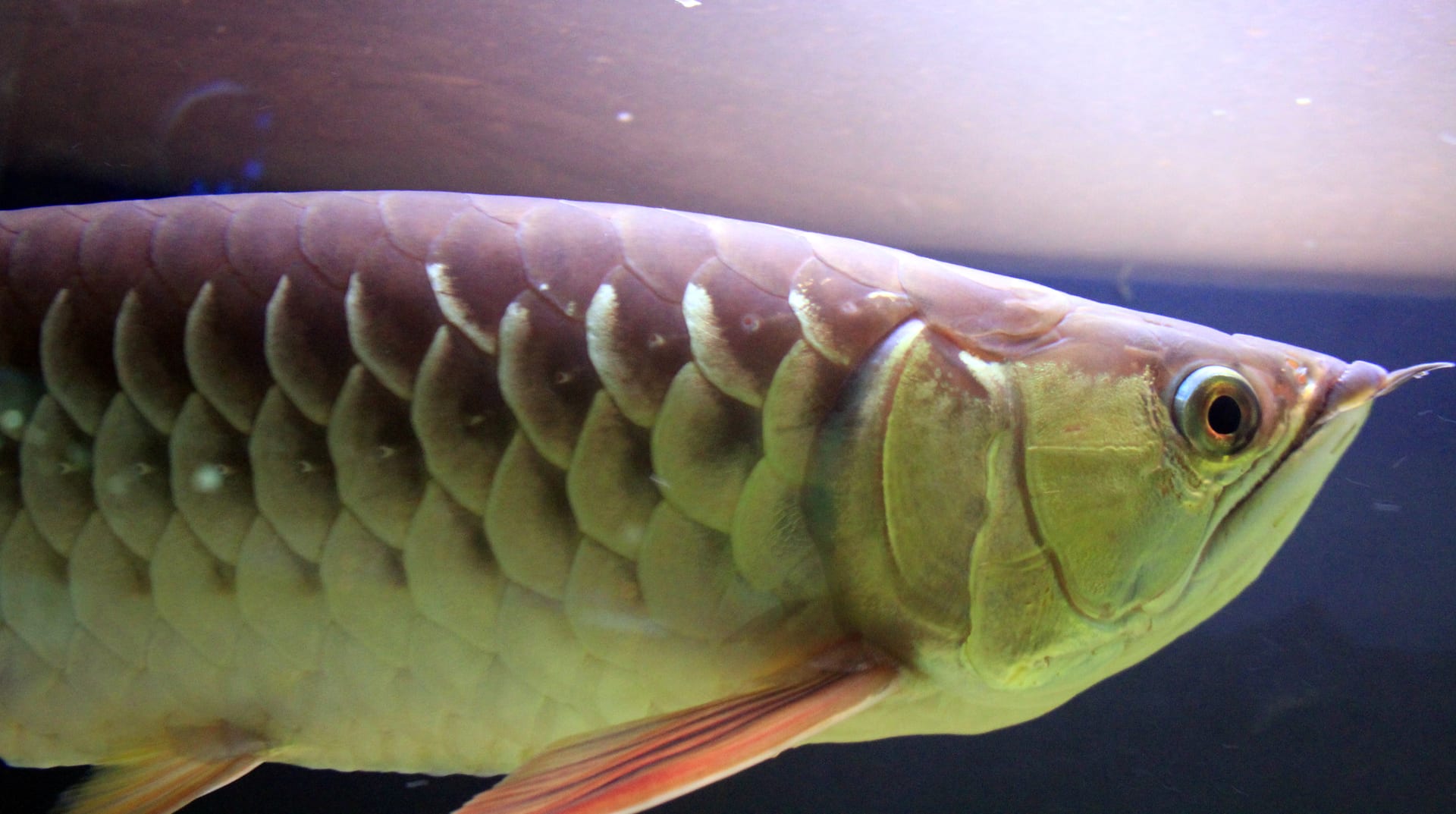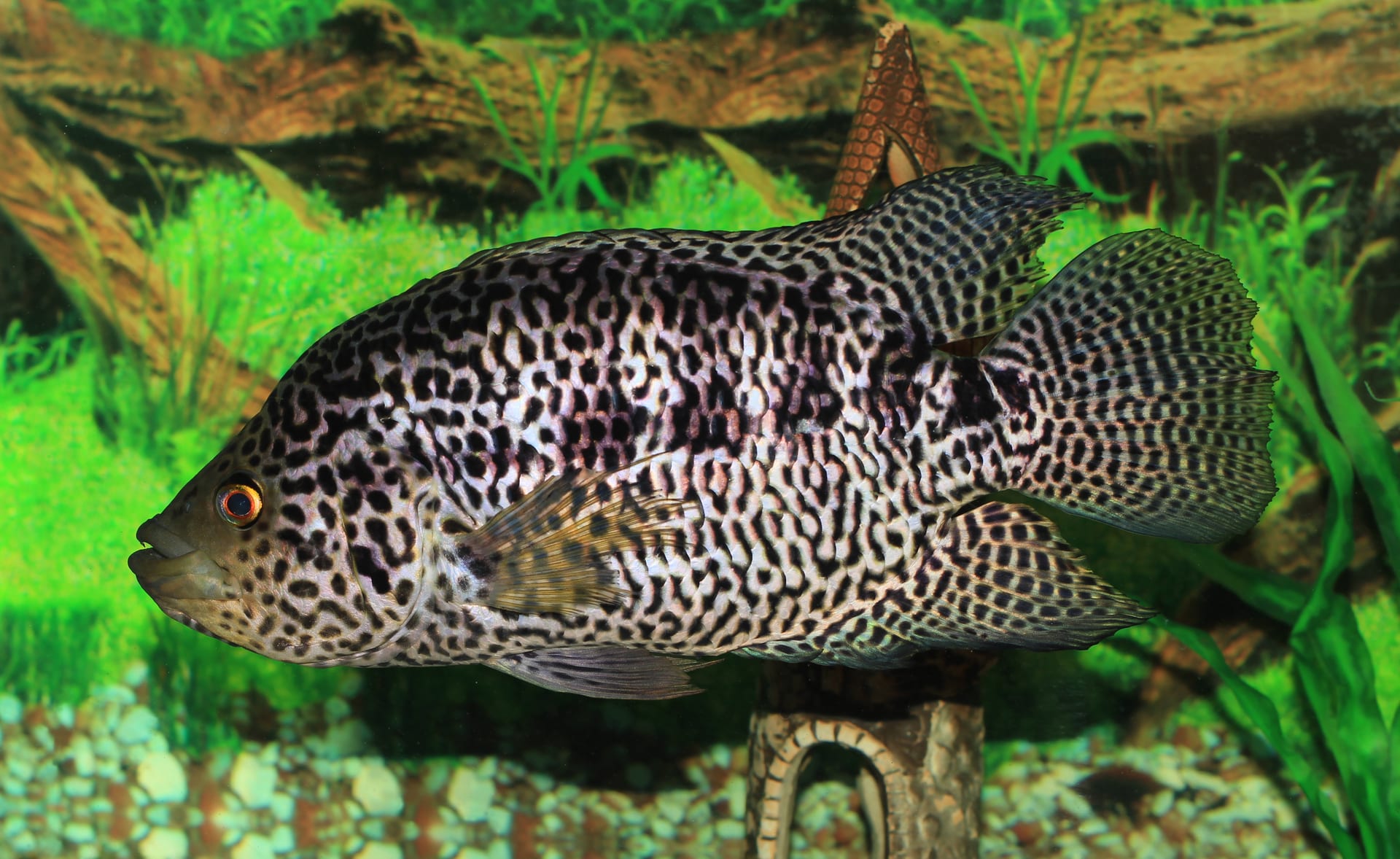
Source: Wikimedia Commons
Jaguar guapote
AdvancedParachromis managuensis
A large predatory cichlid from Central American lakes and swamps, silver to golden with jaguar-like black spots. Recorded to 55 cm and 1.6 kg, it swallows small fish whole.
Difficulty
Advanced
Temperature
23〜25℃
Lifespan
Few reliable data
Size
Up to 55 cm TL (63 cm recorded), 1.6 kg (FishBase)
Diet
Carnivore (fish, shrimp, large invertebrates)
About
The jaguar cichlid, Parachromis managuensis, is a large cichlid of the Atlantic slope of Central America from the Ulúa River (Honduras) to the Matina River (Costa Rica) (FishBase). It favours turbid, muddy, highly eutrophic lakes and warm, oxygen-poor floodplain lakes. It reaches 55 cm TL (63 cm recorded) and 1.6 kg, and is highly predatory, feeding mainly on small fishes and macroinvertebrates. Clutches are huge — up to 5,000 eggs, with over 10,000 recorded — and both parents guard eggs and fry. It has been introduced to other Central American countries, Hawaii, the USA, the Philippines and Singapore. It is also known by old names such as Cichlasoma managuense or Nandopsis managuense, and in Japan is sold as 'Nandopsis managuense' or 'Managuense'. Juveniles are sold small but grow to around 50 cm, and a single spawn produces thousands of fry, so plan for them before allowing breeding.
Source: Wikipedia (CC BY-SA 4.0)
Size of the Jaguar guapote
The Jaguar guapote grows to Up to 55 cm TL (63 cm recorded), 1.6 kg (FishBase).
Temperature & humidity for the Jaguar guapote
The ideal temperature for the Jaguar guapote is 23〜25℃.
Basic Info
Origin
Central America (Atlantic slope, Honduras to Costa Rica)
Lifespan
Few reliable data
Size
Up to 55 cm TL (63 cm recorded), 1.6 kg (FishBase)
References & Sources
Edited & verified by: BreederDirect editorial team
The taxonomic, regulatory, and husbandry data on this page are compiled and verified against the authoritative primary sources below.
Primary sources
Taxonomy & Authority
Accepted name: Parachromis managuensis (Günther, 1867)
Synonyms: ? managuense Günther, 1867, Cichlasoma managuense (Günther, 1867), Cichlasoma managueuse (Günther, 1867), Cichlosoma managuense (Günther, 1867), Herichthys managuense (Günther, 1867), Heros managuensis Günther, 1867, Nandopsis managuense (Günther, 1867), Nandopsis managuensis (Günther, 1867), Parachromis gulosus Agassiz, 1859
Authority databases: GBIF · GBIF · FishBase
Nomenclature follows global taxonomic authority databases.
Regulations & Conservation Status
Not CITES-listedIUCN LC · Least Concern
Not listed in the CITES Appendices (checked on Species+). Not designated under Japan's Invasive Alien Species Act nor on the Ministry of the Environment's invasive species list (as of September 2026). A large predatory fish reaching 55 cm, it has established populations outside its native range after releases. Plan for lifelong housing and never release it into the wild.
Sources: Species+ (CITES) / FishBase
Regulations may change. Always verify the latest information with the relevant authorities.
Jaguar guapote Listings
Loading latest listingsFind listings for this species