Source: Wikimedia Commons
Rio Grande cichlid
IntermediateHerichthys cyanoguttatus
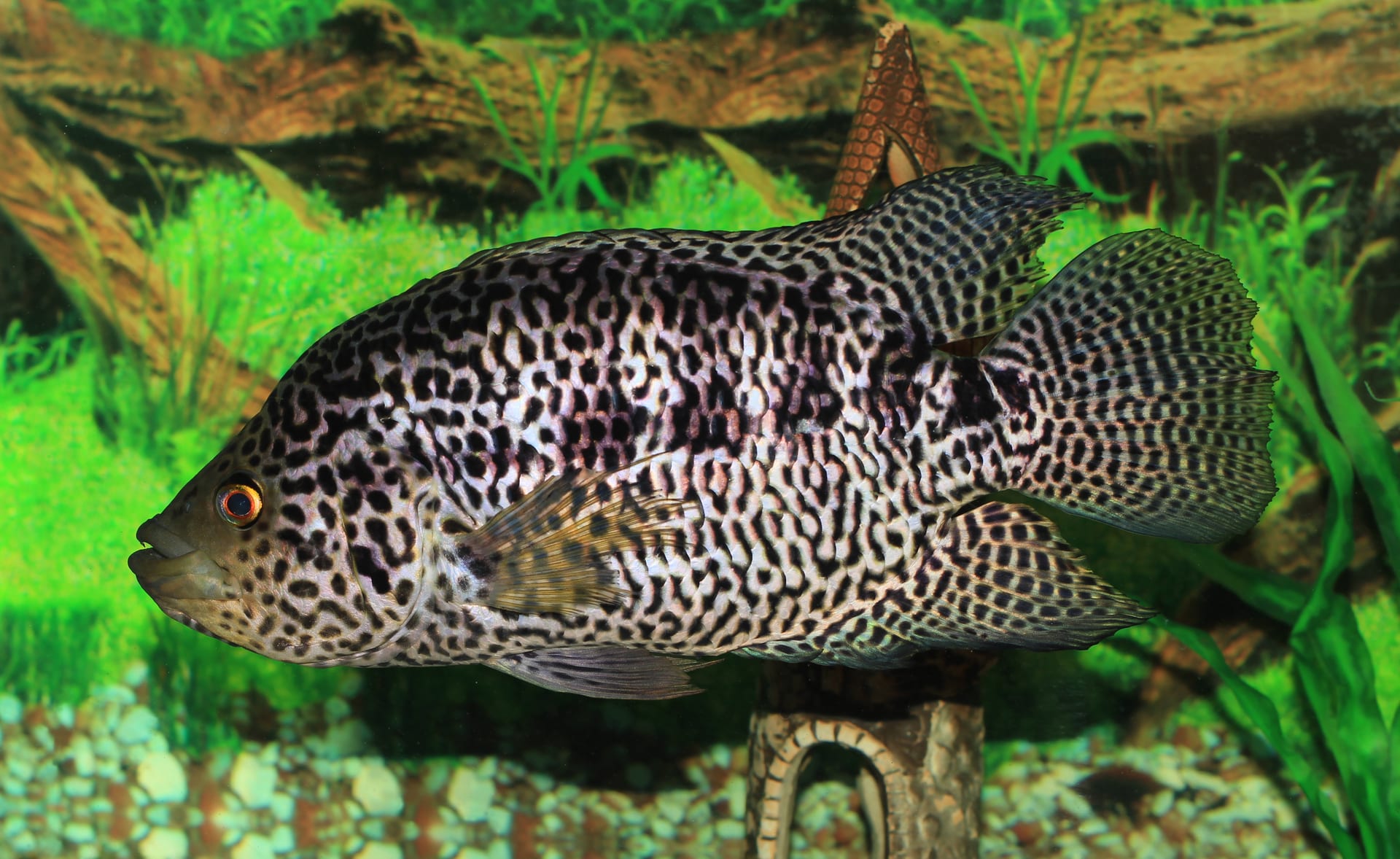
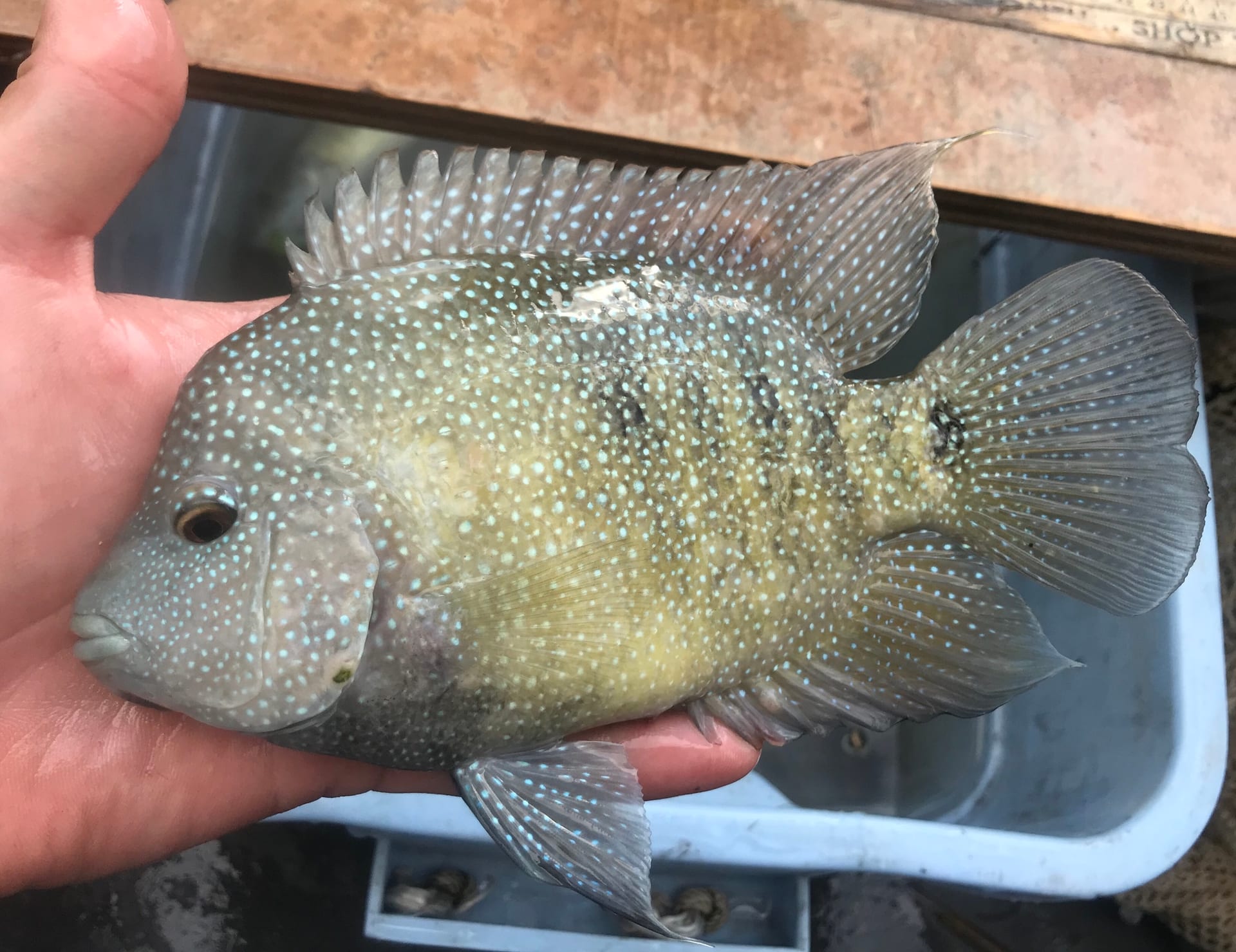
A medium-large cichlid from Texas and northeastern Mexico, grey-green with dense pearly blue spots. The only cichlid native to the USA, adults reach 30 cm.
Difficulty
Intermediate
Temperature
20〜33℃
Lifespan
Few reliable data
Size
Up to 30 cm TL, commonly about 11 cm (FishBase)
Diet
Omnivore (prepared foods, frozen foods, plant matter)
About
The Texas or Rio Grande cichlid, Herichthys cyanoguttatus, is native to the lower Rio Grande drainage in Texas and northeastern Mexico and is considered the only cichlid native to the USA. It has been introduced to and established on the Edwards Plateau of central Texas and in central Florida (FishBase). It reaches 30 cm TL, commonly about 11 cm. Grey-green with fine pearly blue spots, mature males may develop a nuchal hump. It favours pools and slow runs with submerged rocks, branches or vegetation, eating worms, crustaceans, insects and plant matter. It is belligerent and territorial, so tankmates and tank size need care. Both parents guard eggs and fry. Also known under the old name Cichlasoma cyanoguttatum, it is a standard Central American cichlid in Japanese shops. Never release it if you can no longer keep it.
Source: Wikipedia (CC BY-SA 4.0)
Size of the Rio Grande cichlid
The Rio Grande cichlid grows to Up to 30 cm TL, commonly about 11 cm (FishBase).
Temperature & humidity for the Rio Grande cichlid
The ideal temperature for the Rio Grande cichlid is 20〜33℃.
Basic Info
Origin
North America (lower Rio Grande drainage, Texas to northeastern Mexico)
Lifespan
Few reliable data
Size
Up to 30 cm TL, commonly about 11 cm (FishBase)
Temperature
References & Sources
Edited & verified by: BreederDirect editorial team
The taxonomic, regulatory, and husbandry data on this page are compiled and verified against the authoritative primary sources below.
Primary sources
Taxonomy & Authority
Accepted name: Herichthys cyanoguttatus Baird & Girard, 1854
Synonyms: Cichlasoma cyanoguttatum (Baird & Girard, 1854), Cichlasoma pavonaceum (Garman, 1881), Heros pavonaceus Garman, 1881, Parapetenia cyanostigma Hernandez-Rolon, 1990
Authority databases: GBIF · GBIF · FishBase
Nomenclature follows global taxonomic authority databases.
Regulations & Conservation Status
Not CITES-listedIUCN LC · Least Concern
Not listed in the CITES Appendices (checked on Species+). Not designated under Japan's Invasive Alien Species Act nor on the Ministry of the Environment's invasive species list (as of September 2026). A large predatory fish reaching 30 cm, it has established populations outside its native range after releases. Plan for lifelong housing and never release it into the wild.
Sources: Species+ (CITES) / FishBase
Regulations may change. Always verify the latest information with the relevant authorities.
Rio Grande cichlid Listings
Loading latest listingsFind listings for this species