Source: Wikimedia Commons
Hongslo's dwarf cichlid
IntermediateApistogramma hongsloi
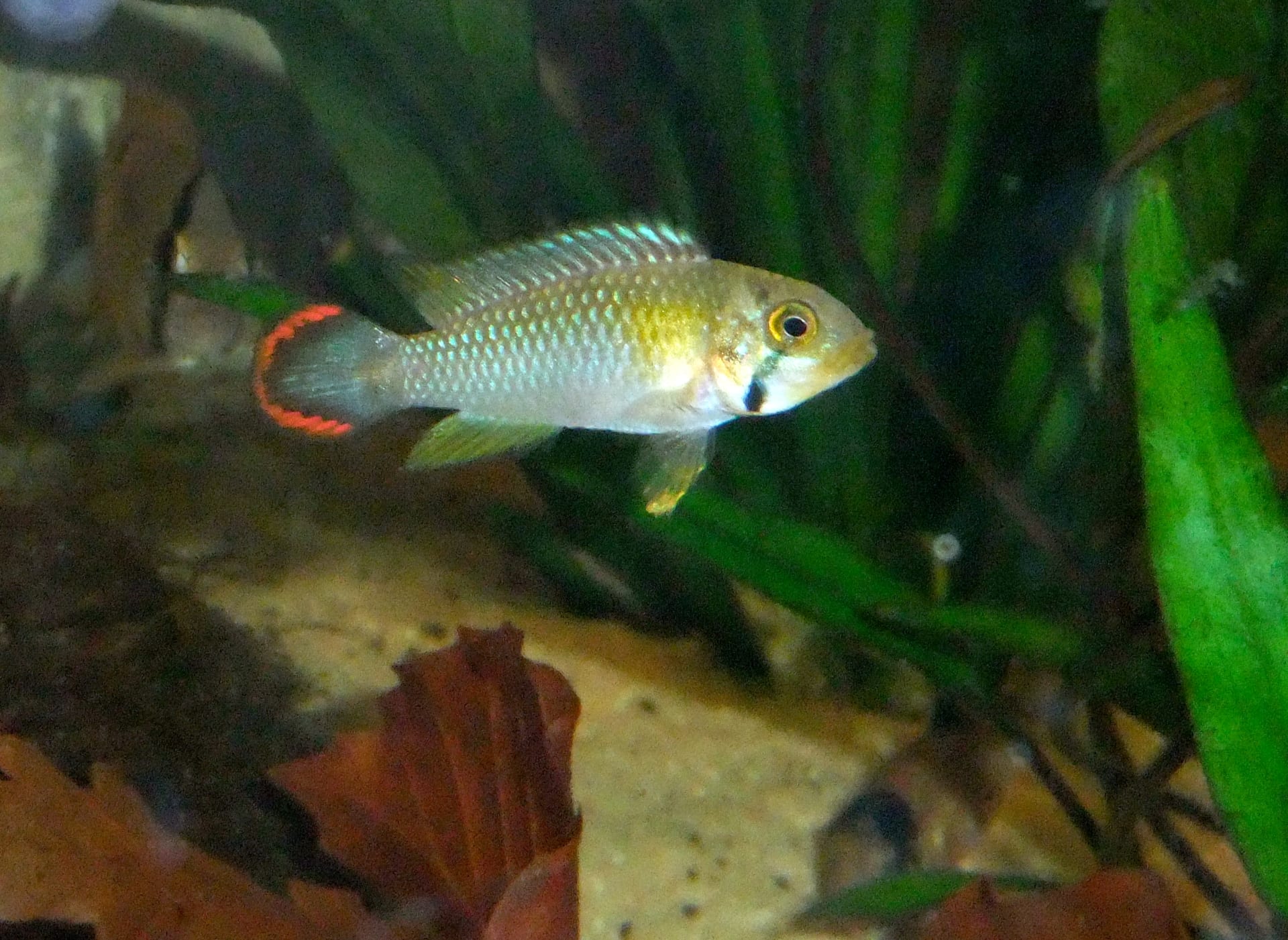
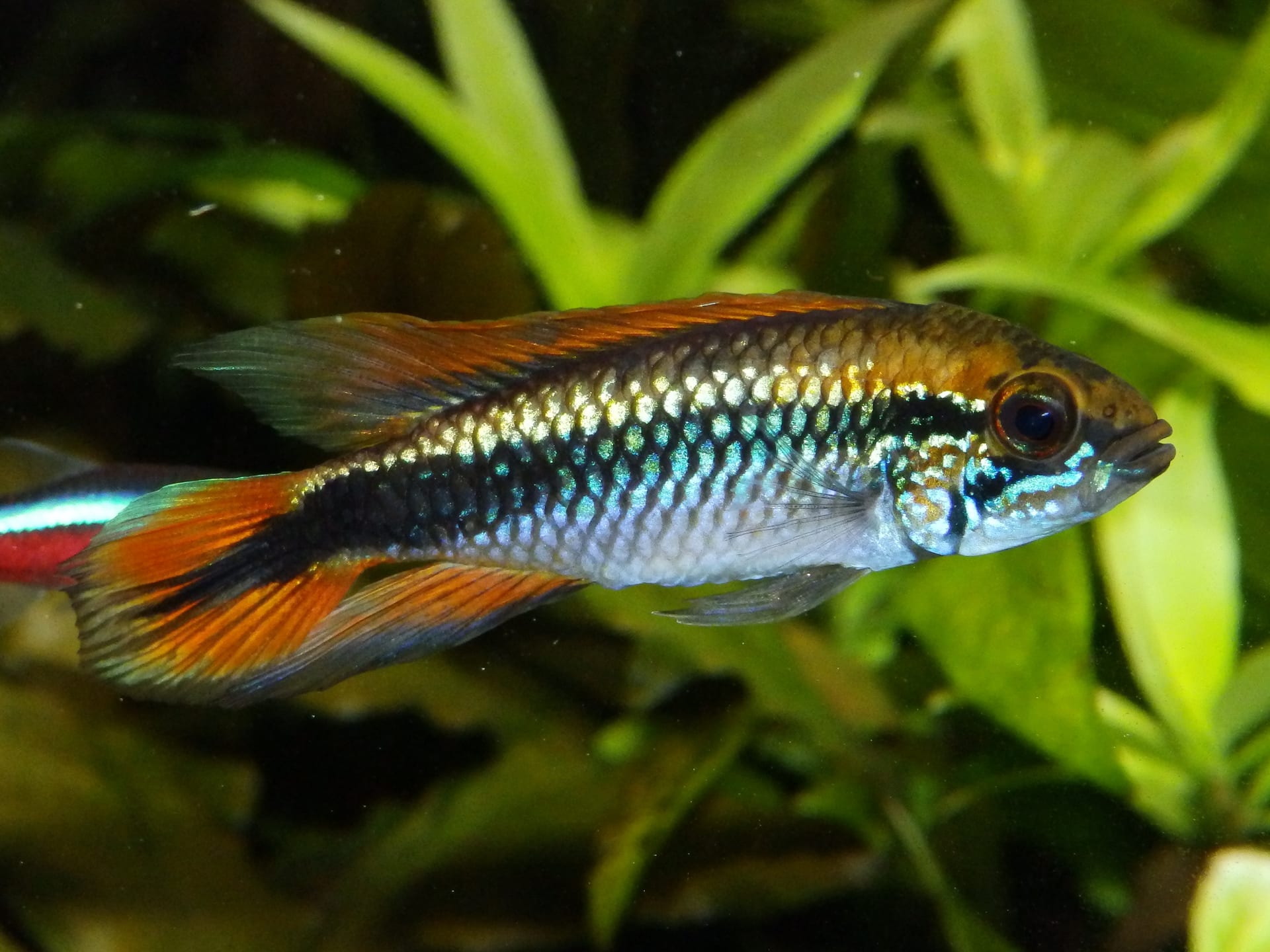
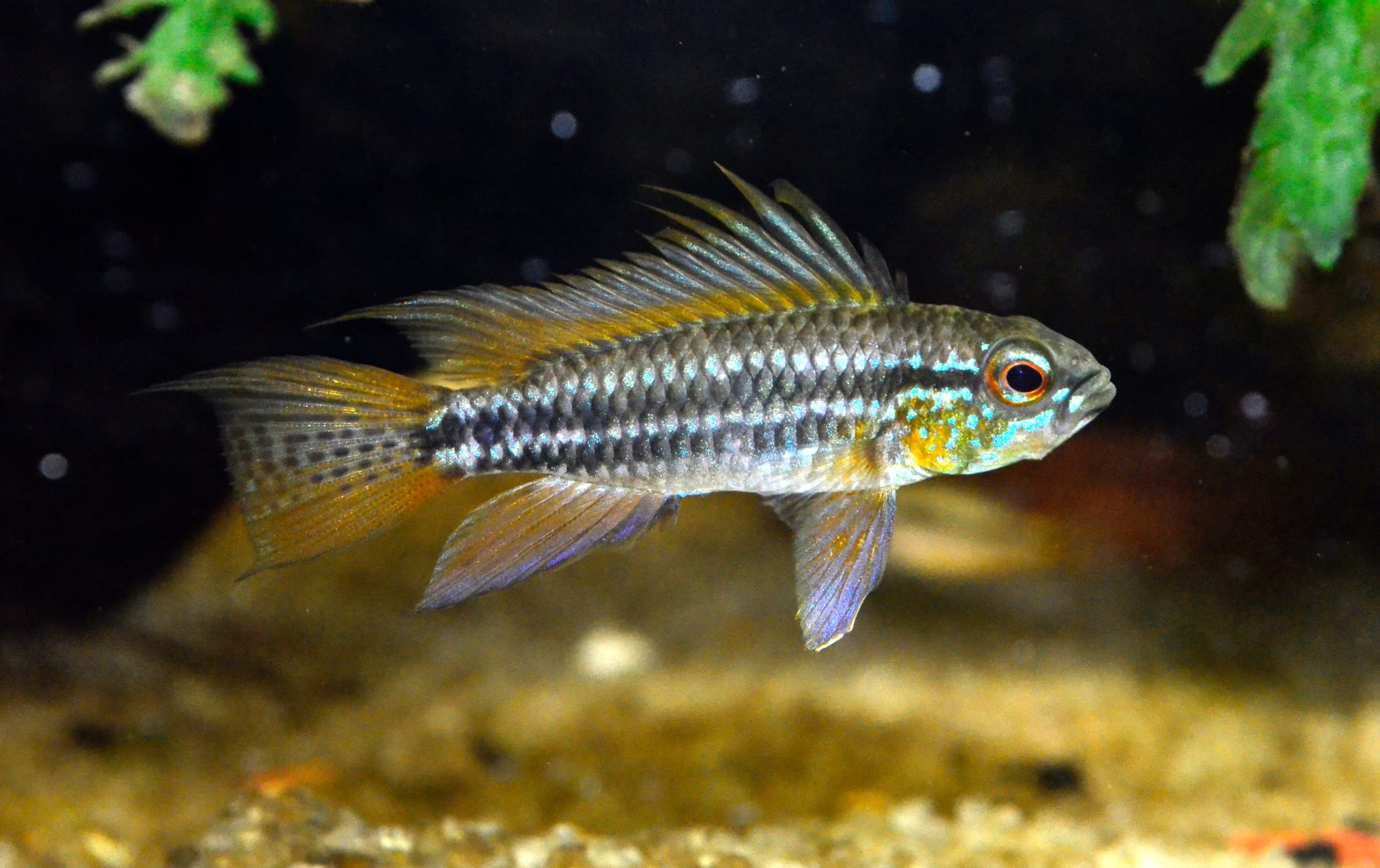
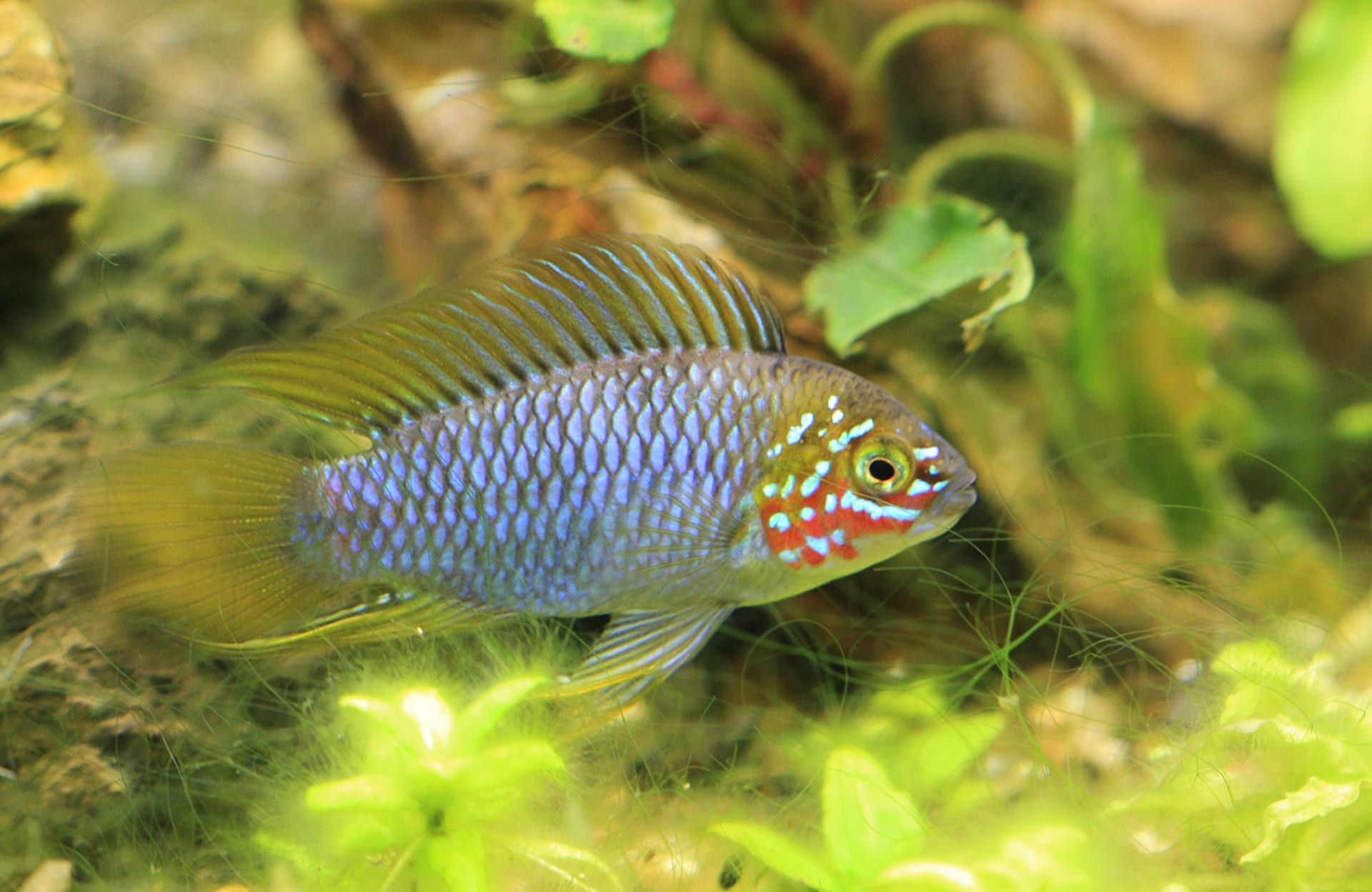
An Apistogramma from the Orinoco basin. Males have elongated front dorsal rays and red streaks on the face and body. Known for biparental care rather than harem spawning.
Difficulty
Intermediate
Temperature
23〜30℃
Size
Up to 7 cm TL
Diet
Mainly carnivorous (frozen/live foods; pellets once accustomed)
About
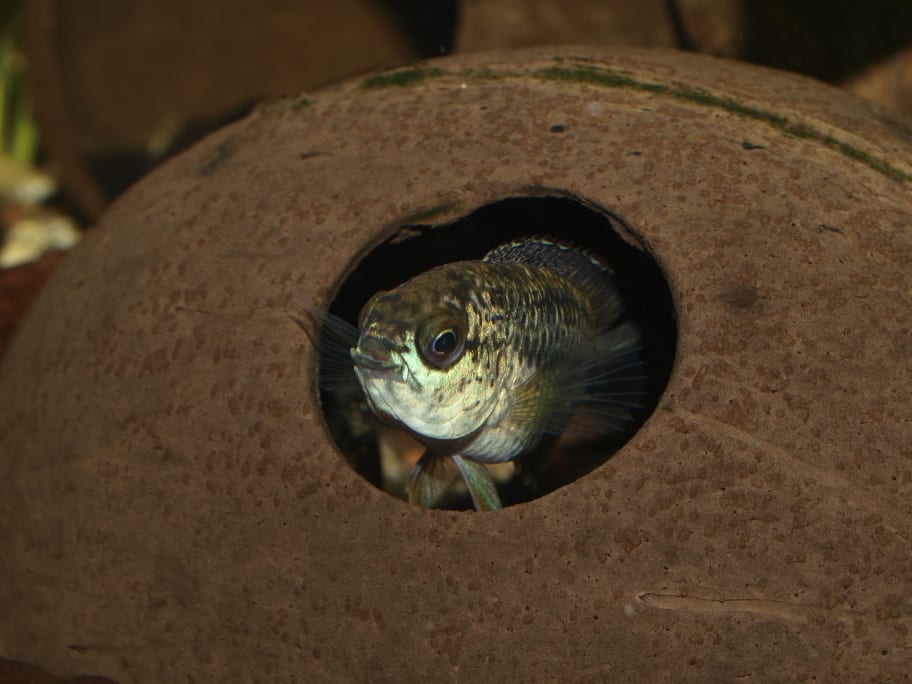
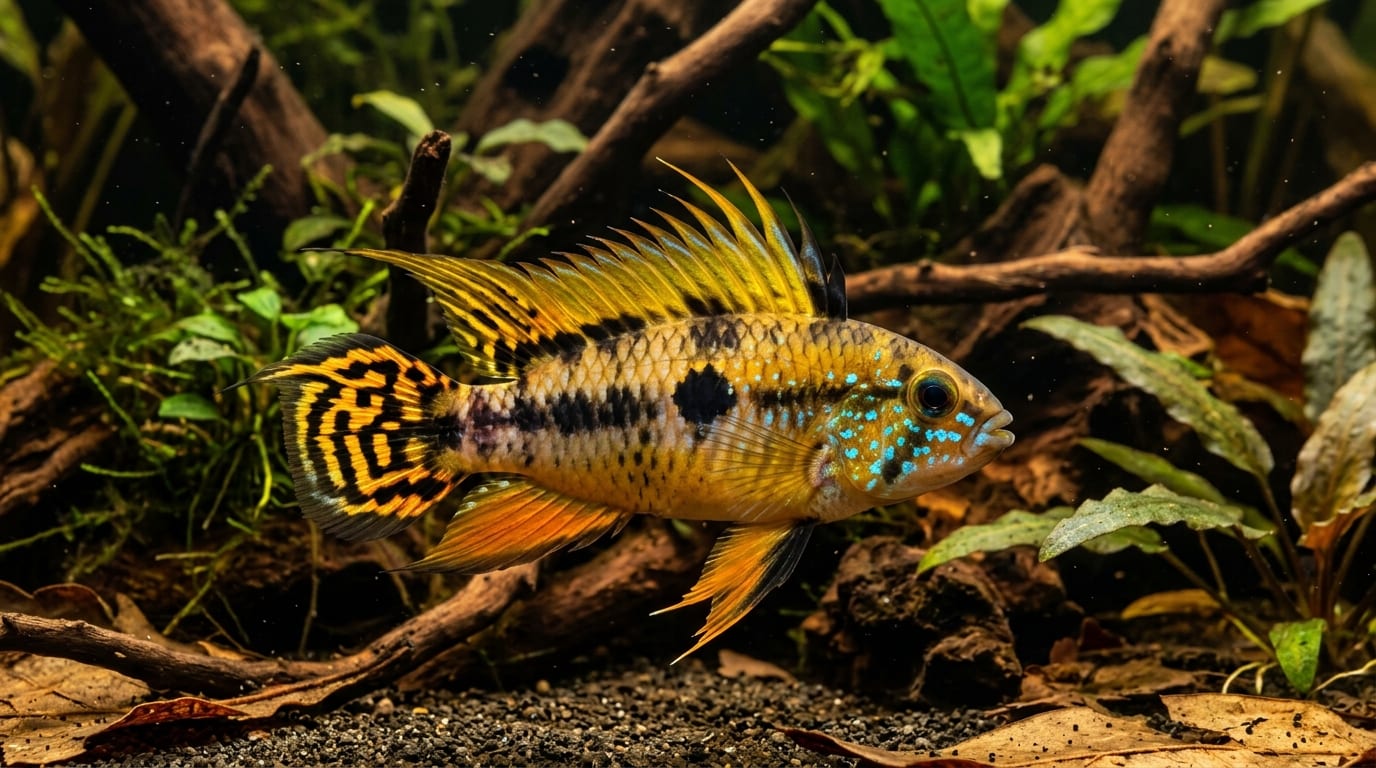
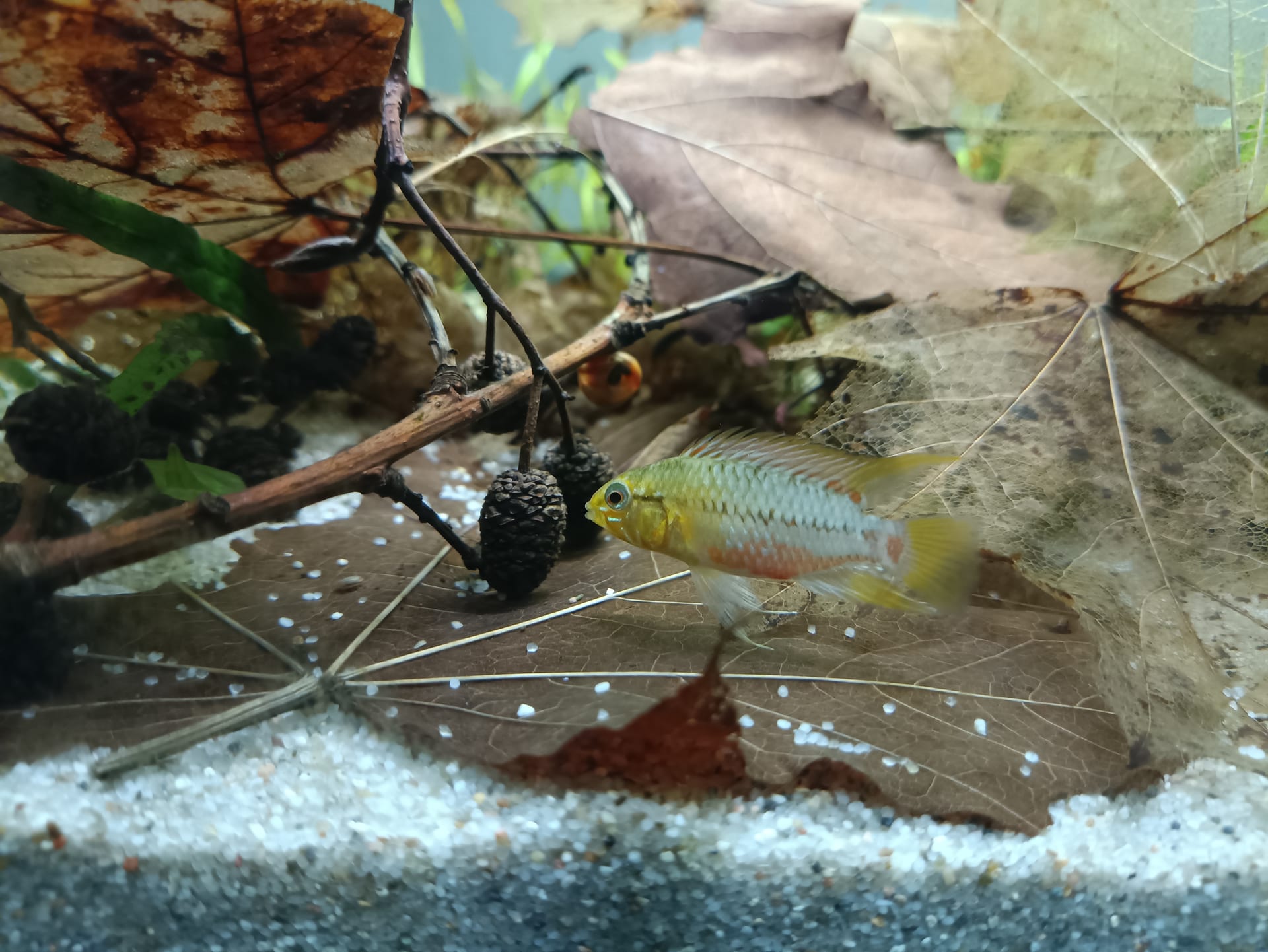
Apistogramma hongsloi is a small cichlid from the middle Río Vichada and Río Meta in Colombia and the middle Orinoco in Venezuela. FishBase gives a maximum of 7 cm TL. It is A110 in the DATZ 'A-number' system, with similar populations from other localities coded A111-A115, and belongs to the group around A. macmasteri. Males have elongated anterior dorsal rays and strong red markings on the cheeks and flanks, and selectively bred colour lines such as 'Red' are also traded. It lives in small, slow tributaries and still waters and lays about 60-90 eggs on the ceiling of a cave. The female leads egg care, but FishBase notes that it does not appear to practise harem spawning and that both parents may raise the young together. Wild fish prefer soft, acidic water, while captive-bred fish tolerate a broader range. Both wild and captive-bred fish are sold in Japanese specialist shops.
Source: Wikipedia (CC BY-SA 4.0)
Size of the Hongslo's dwarf cichlid
The Hongslo's dwarf cichlid grows to Up to 7 cm TL.
Temperature & humidity for the Hongslo's dwarf cichlid
The ideal temperature for the Hongslo's dwarf cichlid is 23〜30℃.
Basic Info
Origin
South America (Orinoco basin in Colombia and Venezuela)
Size
Up to 7 cm TL
Temperature
23〜30℃
Diet
References & Sources
Edited & verified by: BreederDirect editorial team
The taxonomic, regulatory, and husbandry data on this page are compiled and verified against the authoritative primary sources below.
Primary sources
Taxonomy & Authority
Regulations & Conservation Status
Not CITES-listedIUCN LC · Least Concern
Not listed in the CITES Appendices (checked on Species+). Not designated under Japan's Invasive Alien Species Act, nor on the Ministry of the Environment's list of invasive alien species. Never release aquarium fish into the wild.
Sources: Species+ (CITES) / FishBase
Regulations may change. Always verify the latest information with the relevant authorities.
Hongslo's dwarf cichlid Listings
Loading latest listingsFind listings for this species