 © SamaelGMO / CC BY 4.0
Hongslo's dwarf cichlid
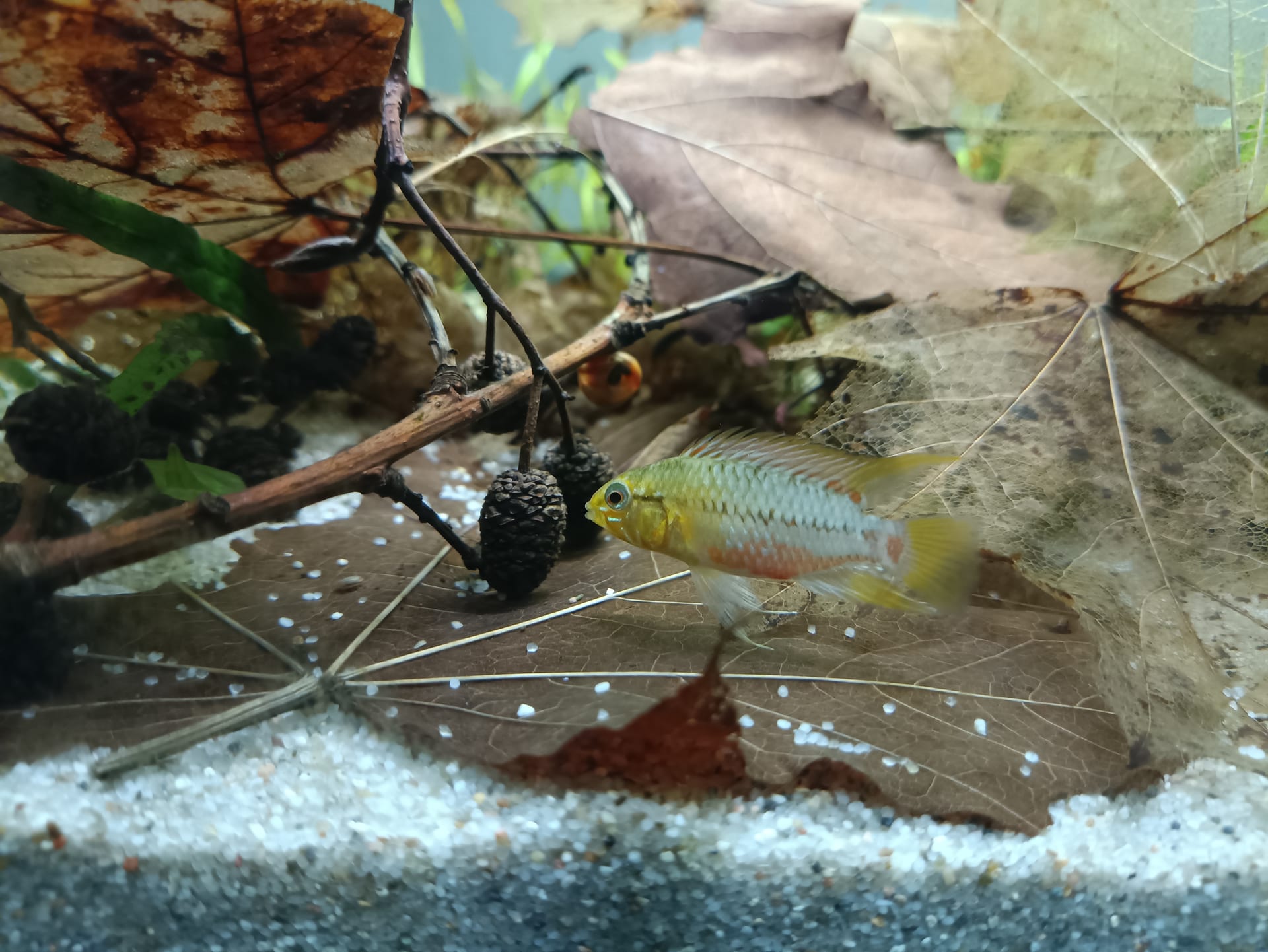
Apistogramma hongsloi, known as Hongslo's dwarf cichlid, is a small cichlid from the Orinoco River system. It reaches a maximum total length of 7 cm (FishBase). Males stand out with an elongated front of the dorsal fin and red lines and blotches running from the face across the body. Pairs are known to raise their fry together as parents, and the species is described as not forming harems. It is rated for intermediate keepers, so it suits hobbyists who enjoy watching breeding behavior and parental care in a carefully planned small aquarium. Data on its lifespan is scarce.
View Hongslo's dwarf cichlid encyclopedia →0% commission on your first sales!Register by September 30, 2026 and your first 2 sales are commission-free!
Breeder Wanted!
List on BreederDirect and sell directly to customers nationwide!
BreederDirect's 6 Transparency Commitments
All Tropical Fish listings include water quality, temperament, and tank size information from verified Breeder.
- Origin Disclosed
- Real Photos
- Water Quality Disclosed
- Recommended Tank Size
- Temperament Disclosed
- Breed Line Disclosed
Browse all 341 breeds
Water Type
Care Level
Verified breeders wanted for Tropical Fish
Breeders are signing up now ahead of launch. Subscribe to be notified when new listings go live.
Getting alerts is free with a member account. When new listings match your saved search, we'll notify you by email and in-app.
Browse other categories
Verified breeders (preview)
Are you raising tropical fish?
Register as a breeder and connect with buyers directly.
Apply as a breederHongslo's dwarf cichlid key facts
- Care level
- Intermediate
- Lifespan
- Few reliable data
- Size
- Up to 7 cm TL (FishBase)
- Temperature
- 23〜30℃
- Diet
- Mainly carnivorous (frozen/live foods; pellets once accustomed)
- Water Temperature & Quality
- 23-30°C, pH 5.5-6.0 (FishBase); Seriously Fish gives pH 5.5-7.0 and 1-15 dGH. Wild fish need softer, more acidic water; change 10-15% at a time to avoid sudden shifts.
- Aquarium
- Use sand with driftwood and clay pots to form caves and shade. Keep lighting subdued with some floating plants, and keep filter flow gentle.
- Tank Mates & Compatibility
- Captive-bred fish suit a community of small peaceful species. Wild fish are best kept alone or with small dither fish such as pencilfish, and not mixed with other Apistogramma.
- Diet & Feeding
- Feeds on bottom-living invertebrates in the wild. Offer frozen or live bloodworm, Artemia and Daphnia regularly; most learn to take pellets, which they prefer to flakes.
- Breeding & Egg-laying
- Lays about 60-90 eggs on a cave ceiling; the female tends eggs and fry. In small tanks she may become aggressive enough that the male must be removed.
- Health & Cautions
- Do not cross different populations (A110-A115) or colour lines. It is sensitive to water quality, so stock lightly and change small amounts of water regularly.
About Hongslo's dwarf cichlid
A guide to Apistogramma hongsloi (Hongslo's dwarf cichlid), an Orinoco River dwarf cichlid up to 7 cm long. Males show an elongated dorsal fin and red markings. Rated for intermediate keepers, with tips and FAQs for before you bring one home.
7 things to know before welcoming a Hongslo's dwarf cichlid
1For Intermediate Keepers
Its care difficulty is rated for intermediate keepers. It is easier to enjoy once you are comfortable with basic water management and aquarium setup.
2Keep Water Stable
Even though it stays small, at up to 7 cm in total length, smaller tanks tend to see water quality shift faster. Keep up regular water changes and avoid sudden swings. Steady filtration and temperature control help as well.
3Provide Hiding Places
Use driftwood, unglazed clay shelters, and plants to create spots that break the line of sight. Hiding places help the fish feel settled and are also useful if you hope to breed them.
4What Makes Males Special
Males have an elongated front section of the dorsal fin, with red lines and blotches from the face across the body. How strongly the colors show can change with condition and surroundings, so watch them in a calm setup.
5Thinking in Pairs
This species is described as not forming harems, and pairs are known to raise fry together as parents. Rather than assuming one male with several females, choose combinations while watching how the fish get along. A spare tank or a divider is handy if a pairing does not work out.
6Choose Calm Tankmates
Because it reaches only 7 cm at most, large or fast-moving tankmates can leave it stressed. If you keep it in a community tank, pick gentle small fish and add them gradually while watching behavior. Breeding fish can become tense, so keep an eye on how they treat their neighbors.
7Food and Lifespan
Offer small foods that fit its mouth, and remove leftovers before they foul the water. When you bring one home, ask the seller what it has been eating. Lifespan data is scarce, so no clear estimate can be given.
Frequently asked questions about Hongslo's dwarf cichlid
- Q.Can a beginner keep this fish?
- A.Its care difficulty is rated for intermediate keepers. It is easier to keep well once you are comfortable with basic water management and aquarium setup.
- Q.How large does it grow?
- A.Its total length is given as up to 7 cm (FishBase). It is small, but still needs a roomy setup that includes hiding places.
- Q.Does it breed and raise fry?
- A.Pairs are known to raise their fry together as parents. Success depends on the environment and how well the fish suit each other, so breeding is never guaranteed.
- Q.How long does it live?
- A.Lifespan data is scarce, so no clear number of years can be given. Daily observation and a stable environment are the best things you can offer.
- Q.What should I ask the seller beforehand?
- A.It helps to ask about the fish's sex or pairing, the food it eats, and the water conditions it has been kept in. When it arrives, acclimate it carefully and watch how it settles in.
Useful tools for Hongslo's dwarf cichlid care
Learn more about Hongslo's dwarf cichlid in the encyclopedia
View Hongslo's dwarf cichlid encyclopedia entry →
Care difficulty, lifespan, size and diet — all basics covered.
More in this category
Can't find the one you're looking for?
Post your wishes for free and breeders with matching animals will contact you with introductions.