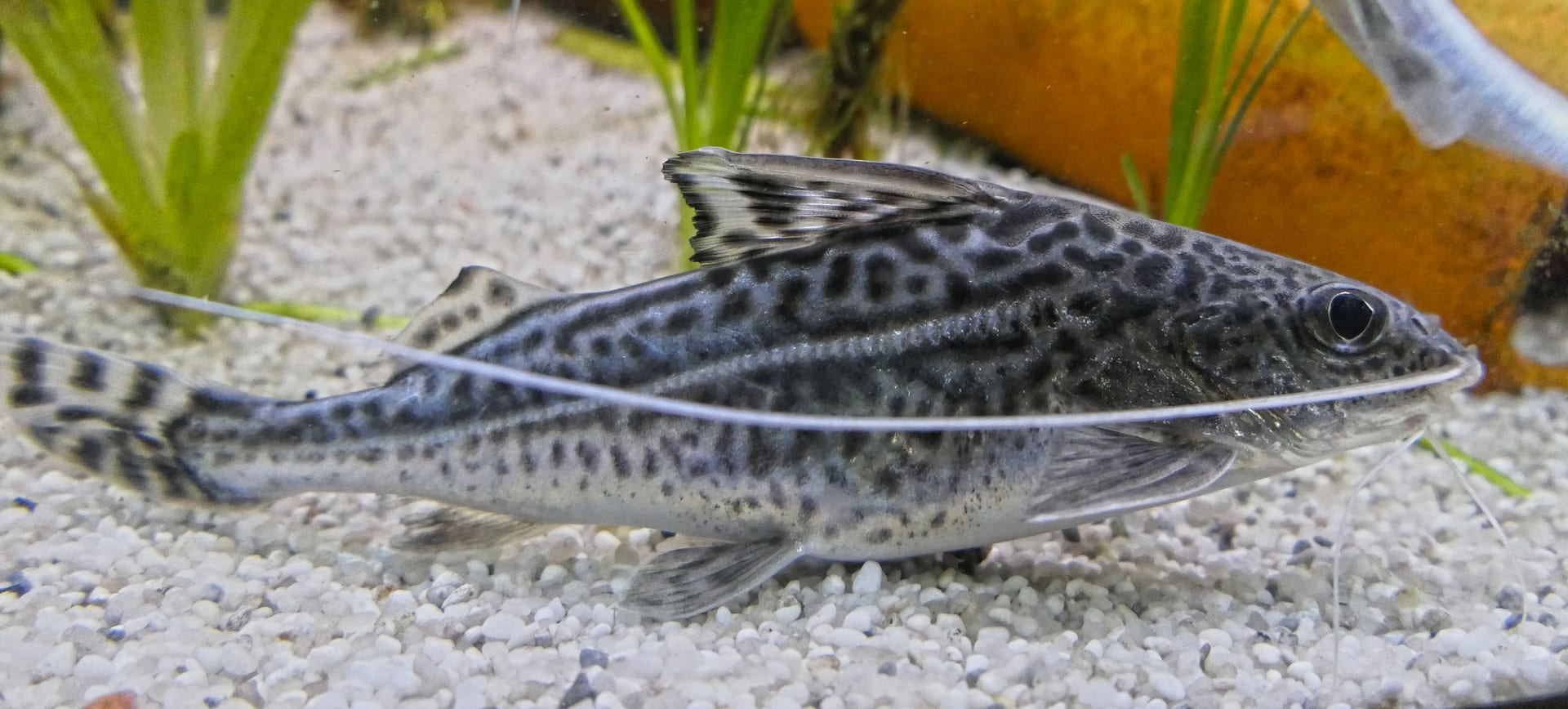
 © 5snake5 / CC0
Pictus Catfish
The Pictus Catfish is a small, silvery catfish native to the Amazon and Orinoco river basins, instantly recognizable by its scattered black spots and dramatically long whiskers that can exceed its own body length. Calm and peaceful by nature, it rarely shows aggression and gets along well with other fish sharing its tank. That said, it's also a very active swimmer, so it appreciates a tank with plenty of open space to cruise around in. Because it naturally forms groups with others of its kind, keeping six or more together lets you see its lively, natural schooling behavior at its best. As a species that calls for some foundational fishkeeping knowledge, it's generally considered a good match for intermediate keepers.
View Pictus Catfish encyclopedia →0% commission on your first sales!Register by September 30, 2026 and your first 2 sales are commission-free!
Breeder Wanted!
List on BreederDirect and sell directly to customers nationwide!
Our 6 Transparency Commitments
All Tropical Fish listings include water quality, temperament, and tank size information from verified Breeder.
- Origin Disclosed
- Real Photos
- Water Quality Disclosed
- Recommended Tank Size
- Temperament Disclosed
- Breed Line Disclosed
Browse all 301 breeds
Water Type
Care Level
Verified breeders wanted for Tropical Fish
Breeders are signing up now ahead of launch. Subscribe to be notified when new listings go live.
Getting alerts is free with a member account. When new listings match your saved search, we'll notify you by email and in-app.
Browse other categories
Verified breeders (preview)
Are you raising tropical fish?
Register as a breeder and connect with buyers directly.
Apply as a breederPictus Catfish key facts
- Care level
- Intermediate
- Lifespan
- 7-10 years
- Size
- About 11-12cm
- Temperature
- 22〜25℃
- Diet
- Frozen and live foods (bloodworm, Tubifex, earthworms), sinking dried foods
- Tank
- Aim for 120 x 45cm (about 243 litres) with open swimming space; FishBase also notes a 120cm minimum. Add wood and rock for daytime cover.
- Water Temperature & Quality
- 22-25C, pH 5.8-6.8, 1-15 degrees hardness. It is active and eats well, so allow headroom in filtration.
- Tank Mates
- Peaceful in temperament but predatory on small fish. Suits rainbowfish, medium to large characins and cyprinids, and tough catfish. Six or more keeps it active.
- Diet & Feeding
- Takes bloodworm, Tubifex and earthworms readily and accepts sinking dried foods. Adults need feeding only every few days; avoid overfeeding.
- Breeding & Spawning
- Breeding is not thought to have been achieved in the hobby.
- Health & Notes
- The sharp pectoral and dorsal spines tangle in nets. Move the fish in a container and take care not to be spined when handling it.
About Pictus Catfish
Pictus Catfish is a silvery South American catfish with black spots and whiskers longer than its own body. An active schooling species that favors spacious tanks, best suited to intermediate keepers.
7 things to know before welcoming a Pictus Catfish
1A Tank with Room to Swim
Pictus Catfish are constantly active swimmers that roam the tank. Choose a tank with plenty of floor space and arrange decor so it doesn't block open swimming areas.
2Keep in Groups of Six or More
This species naturally forms groups with others of its kind, so it settles in better when kept in a group of six or more rather than alone. A small group can lead to more hiding behavior.
3Whiskers Longer Than Its Body
One of the Pictus Catfish's signature features is its whiskers, which can grow longer than its own body. These barbels are delicate, so avoid sharp decorations or hardscape that could damage them.
4Peaceful and Community-Friendly
Pictus Catfish are relatively calm and rarely aggressive toward tankmates, making them a good fit for community tanks. That said, it's best to avoid pairing them with fish small enough to fit in their mouths.
5More Active at Night
They prefer dim lighting and often rest in hiding spots during the day, becoming more active when swimming and feeding at night. Providing shaded hiding places in the tank helps them feel secure.
6Best Suited to Intermediate Keepers
Keeping water quality and tank conditions stable requires some foundational knowledge, which is why this species is considered suited to intermediate keepers. Prior experience with tropical fish is helpful before bringing one home.
7Plan Ahead for Adult Size
Adults reach roughly 11 to 12 cm in length. Even though they're small when young, it's important to prepare a tank and filtration suited to their eventual adult size.
Frequently asked questions about Pictus Catfish
- Q.Can a Pictus Catfish be kept alone?
- A.Keeping just one isn't impossible, but this species naturally swims in groups. To see its calmer, more natural behavior, it's recommended to keep six or more together.
- Q.Can it live in a tank with other fish?
- A.Its peaceful temperament makes it easy to combine with many tropical fish. However, it may eat fish small enough to fit in its mouth, so choose tankmates of a similar size.
- Q.Is it a problem if its whiskers get damaged?
- A.The whiskers are delicate and can be damaged by contact with hardscape or decorations. If you notice ongoing changes, it's worth reviewing your tank conditions, including water quality.
- Q.How large a tank does it need?
- A.Adults reach roughly 11 to 12 cm and are very active swimmers. A reasonably sized tank that allows both open swimming space and room for a group is recommended.
- Q.Is this species suitable for beginners?
- A.The Pictus Catfish is considered best suited to intermediate keepers, requiring some knowledge of water quality management. It's a good idea to gain some tropical fish experience before taking one on.
Useful tools for Pictus Catfish care
Learn more about Pictus Catfish in the encyclopedia
View Pictus Catfish encyclopedia entry →
Care difficulty, lifespan, size and diet — all basics covered.
More in this category
Can't find the one you're looking for?
Post your wishes for free and breeders with matching animals will contact you with introductions.