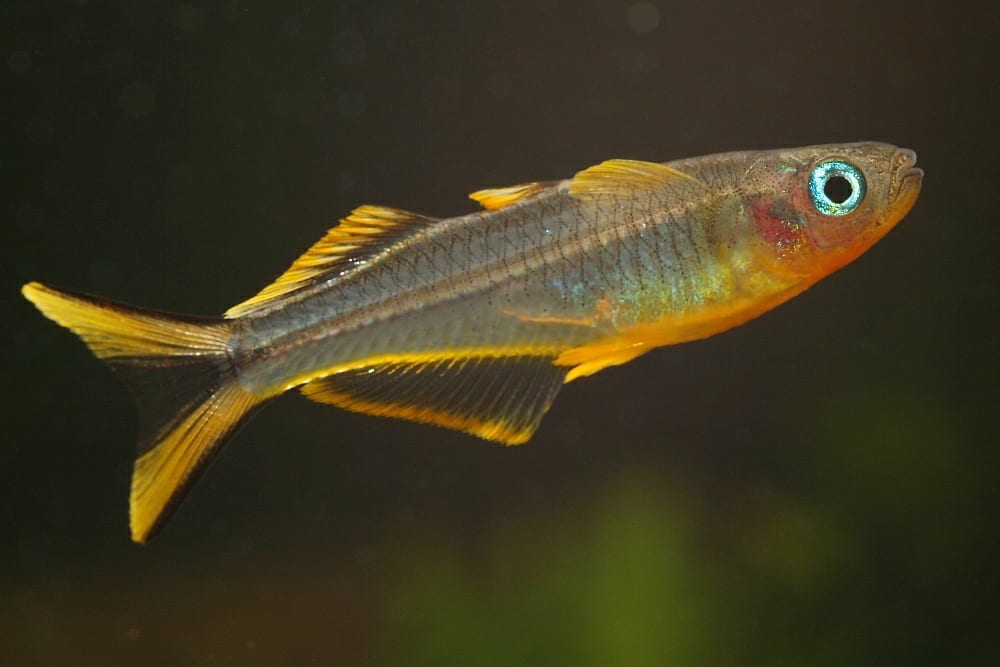
 © Dirk Godlinski / CC BY-SA 3.0
Forktail Blue-eye
The Forktail Blue-eye (Popondetta Furcata) is a small rainbowfish found only in a limited range of waters in eastern Papua New Guinea. It's easily recognized by the yellow-edged dorsal and anal fins and the deeply forked tail that gives the species its common name. Males grow to about 5cm at their largest, and during the breeding season they perform an eye-catching display, spreading their fins wide to compete with rival males — a behavior that makes the species especially popular among aquarists. Because this fish calls for intermediate-level fishkeeping experience, it's best to have a solid handle on water quality management and tankmate selection before bringing one home.
View Forktail Blue-eye encyclopedia →0% commission on your first sales!Register by September 30, 2026 and your first 2 sales are commission-free!
Breeder Wanted!
List on BreederDirect and sell directly to customers nationwide!
Our 6 Transparency Commitments
All Tropical Fish listings include water quality, temperament, and tank size information from verified Breeder.
- Origin Disclosed
- Real Photos
- Water Quality Disclosed
- Recommended Tank Size
- Temperament Disclosed
- Breed Line Disclosed
Browse all 301 breeds
Water Type
Care Level
Verified breeders wanted for Tropical Fish
Breeders are signing up now ahead of launch. Subscribe to be notified when new listings go live.
Getting alerts is free with a member account. When new listings match your saved search, we'll notify you by email and in-app.
Browse other categories
Verified breeders (preview)
Are you raising tropical fish?
Register as a breeder and connect with buyers directly.
Apply as a breederForktail Blue-eye key facts
- Care level
- Intermediate
- Lifespan
- 3-5 years
- Size
- Up to 5cm SL (male)
- Temperature
- 24〜28℃
- Diet
- Small dried foods and live or frozen brine shrimp and daphnia
- Tank
- Seriously Fish suggests a 60 x 30cm base. Plant densely to break up sightlines but leave open water where males can display, and fit a lid, since the fish jumps.
- Water Temperature & Quality
- Seriously Fish gives 24-28C, pH 7.0-8.0 and 15-30 dGH, while FishBase records pH 6.0-8.0, 5-12 dH and 24-26C in the wild. Neutral to slightly alkaline, moderately hard water suits it; avoid very soft water.
- Tank Mates
- Peaceful and compatible with fish of similar size and disposition. The eleotrid Tateurndina ocellicauda, with which it occurs in nature, is a particularly good match. Groups of eight to ten or more settle it and improve male colour.
- Diet & Feeding
- Its mouth is small, so use finely graded dried food. Live or frozen brine shrimp and daphnia improve colour and breeding condition. Feed small amounts several times rather than one large meal.
- Breeding & Spawning
- An egg scatterer with no parental care that will eat its own eggs and fry. Moving eggs from plants or spawning mops to a separate container is the reliable method. The fry are tiny and need infusoria-grade first foods.
- Health & Notes
- Aquarium stock is thought to derive from a single collection, and inbreeding effects such as reduced fertility and lifespan are reported; introducing unrelated stock can help. The IUCN lists it as Data Deficient.
About Forktail Blue-eye
A small blue-eye rainbowfish from eastern Papua New Guinea, the Forktail Blue-eye features yellow-edged fins and a forked tail. Males reach up to 5cm at most, and care level is intermediate.
7 things to know before welcoming a Forktail Blue-eye
1Intermediate-Level Care
This species is sensitive to sudden shifts in water quality, so keeping pH and temperature stable takes some basic fishkeeping skill. If you're new to tropical fish, it may help to gain experience with hardier species first.
2Fine for Small Tanks
Adults reach only about 5cm (males) at most, so a shoal can thrive even in limited space. Because smaller volumes of water fluctuate more easily, make sure your filtration has enough capacity to keep parameters stable.
3Males Display to Rivals
During the breeding season, males spread their fins wide to show off to rival males — a behavior that's part of the species' appeal. It rarely escalates into serious aggression, but adding hiding spots helps fish settle in comfortably.
4Yellow-Edged Fins
The yellow trim on the dorsal and anal fins, along with the forked tail, are the easiest features for telling this species apart. How the colors catch the light can vary, so thoughtful lighting can bring out their best appearance.
5Choose Calm Tankmates
Being small and peaceful, this fish can get stressed by boisterous or larger tankmates. Pair it with similarly sized, calm species and provide plants or decor for cover.
6Cycle the Tank First
Start your filter running and let water parameters stabilize before bringing fish home. Take your time acclimating new arrivals to avoid sudden changes in water conditions.
7A Range-Restricted Species
This fish is known to occur only in a limited range of waters in eastern Papua New Guinea. Keeping that natural habitat in mind can guide you toward a calmer, more settled tank environment.
Frequently asked questions about Forktail Blue-eye
- Q.How difficult is it to keep the Forktail Blue-eye?
- A.It's considered suited to intermediate keepers. Because it's sensitive to water quality changes, some prior experience with tropical fish helps things go smoothly.
- Q.How big do adults get?
- A.Males reach up to about 5cm at their largest. Males and females can show some difference in body size.
- Q.Can it be kept with other fish?
- A.Being small and peaceful, it does well with similarly sized, calm tankmates. Avoid pairing it with boisterous or much larger fish.
- Q.Why do males spread their fins at each other?
- A.It's a natural display seen during the breeding season, where males spread their fins wide to show themselves off to rivals. This behavior is actually part of what makes the species appealing to keep.
- Q.Is this species regulated under CITES?
- A.No, the Forktail Blue-eye is not subject to CITES.
Useful tools for Forktail Blue-eye care
Learn more about Forktail Blue-eye in the encyclopedia
View Forktail Blue-eye encyclopedia entry →
Care difficulty, lifespan, size and diet — all basics covered.
More in this category
Can't find the one you're looking for?
Post your wishes for free and breeders with matching animals will contact you with introductions.