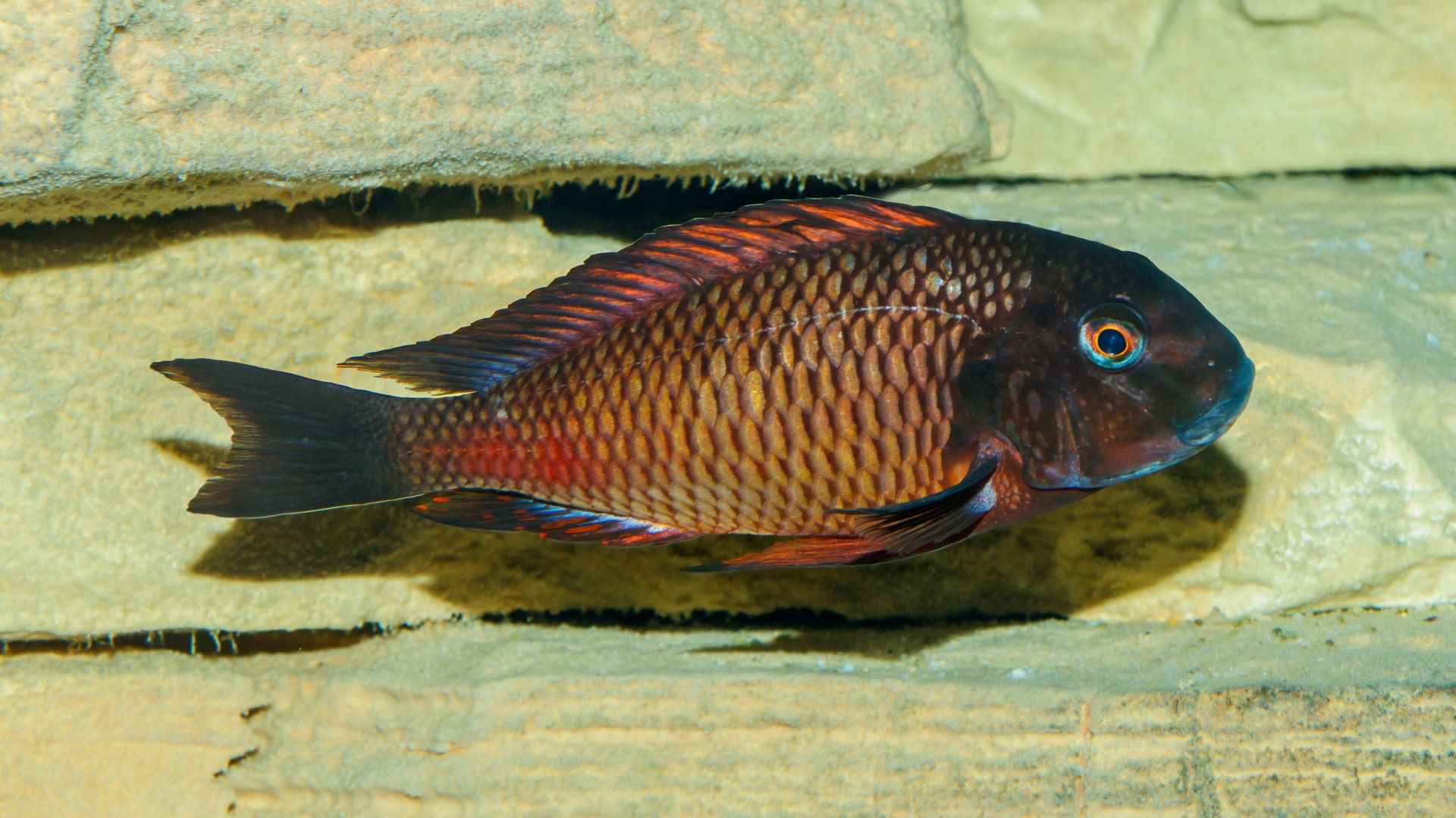
 © H. Zell / CC BY-SA 3.0
Blunthead Cichlid
Tropheus moorii, known as the Blunthead Cichlid, is a herbivorous cichlid found only in Lake Tanganyika in East Africa. Its coloration varies dramatically by collection point, with more than 40 recognized color variants ranging from deep green to vivid red and yellow. In the wild it grazes on algae growing over rocky surfaces, and keeping a group together, rather than a single fish, helps diffuse its strong territorial instincts and keep the group settled. A diet centered on plant matter is essential for long-term health. With its striking color range and the dynamic look of a moving group, it is widely regarded as a representative species among Lake Tanganyika cichlids.
View Blunthead Cichlid encyclopedia →0% commission on your first sales!Register by September 30, 2026 and your first 2 sales are commission-free!
Breeder Wanted!
List on BreederDirect and sell directly to customers nationwide!
Our 6 Transparency Commitments
All Tropical Fish listings include water quality, temperament, and tank size information from verified Breeder.
- Origin Disclosed
- Real Photos
- Water Quality Disclosed
- Recommended Tank Size
- Temperament Disclosed
- Breed Line Disclosed
Browse all 301 breeds
Water Type
Care Level
Verified breeders wanted for Tropical Fish
Breeders are signing up now ahead of launch. Subscribe to be notified when new listings go live.
Getting alerts is free with a member account. When new listings match your saved search, we'll notify you by email and in-app.
Browse other categories
Verified breeders (preview)
Are you raising tropical fish?
Register as a breeder and connect with buyers directly.
Apply as a breederAbout Blunthead Cichlid
Tropheus moorii, the Blunthead Cichlid, is a herbivorous cichlid endemic to Lake Tanganyika, known for its 40-plus color variants and its need for group housing and a plant-based diet.
7 things to know before welcoming a Blunthead Cichlid
1Keep Them in a Group
Tropheus moorii do best when kept as a group of their own species rather than singly, since this spreads out territorial aggression instead of concentrating it on one fish. Keeping only a few individuals tends to make one fish a repeated target, so plan for a group sized to your tank.
2A Plant-Based Diet Is Essential
In the wild these fish graze almost exclusively on algae growing over rocks, and feeding too much animal protein is often linked to digestive problems. Use foods formulated for herbivorous cichlids along with vegetable matter to keep the diet plant-centered.
3Stable Water Chemistry Matters
Lake Tanganyika is alkaline and hard, so maintaining consistent water parameters in the aquarium is fundamental to keeping this fish healthy. Avoid sudden swings in pH or temperature, and stick to a regular water-change routine.
4Grows to About 14.5 cm
Adults reach a maximum size of roughly 14.5 cm. Plan tank dimensions with both this adult size and the space needed for a full group in mind from the start.
5Strong Territorial Behavior
Individuals often compete for rank and territory within the group, which is worth factoring in when choosing tankmates. Adding multiple rock formations as hiding spots helps prevent the pecking order from becoming too lopsided.
6Color Varies by Locality
Coloration differs significantly depending on collection point, with more than 40 known variants. Checking the locality at the time of purchase makes it easier to anticipate how the adult coloring will look.
7Suited to Intermediate Keepers
Because it requires attentive water quality and feeding management, this species is generally considered suitable for intermediate-level keepers. Anyone with prior cichlid-keeping experience should be able to manage it without much difficulty.
Frequently asked questions about Blunthead Cichlid
- Q.Is the Blunthead Cichlid suitable for beginners?
- A.This species is generally considered suited to intermediate-level keepers, since it requires attentive water quality management and feeding. Anyone with prior experience keeping tropical fish or cichlids should find it manageable.
- Q.How many should be kept together?
- A.Keeping a group of the same species is recommended rather than housing just one or two. With too few individuals, aggression tends to concentrate on a single fish, so plan for a group sized to your tank.
- Q.What should they be fed?
- A.Since they graze on algae in the wild, the diet should center on plant-based foods formulated for herbivorous cichlids, supplemented with vegetables. Avoid feeding too much animal protein.
- Q.Can they be kept with other fish?
- A.Because individuals can show strong territorial behavior toward each other, tankmates should be chosen carefully. Providing plenty of rock formations as hiding spots helps keep the pecking order from becoming too one-sided.
- Q.How large do they get?
- A.Adults reach a maximum size of about 14.5 cm. Since they are kept in groups, it is best to choose a tank with enough room for the whole group at that size.
Useful tools for Blunthead Cichlid care
Learn more about Blunthead Cichlid in the encyclopedia
View Blunthead Cichlid encyclopedia entry →
Care difficulty, lifespan, size and diet — all basics covered.
More in this category
Can't find the one you're looking for?
Post your wishes for free and breeders with matching animals will contact you with introductions.