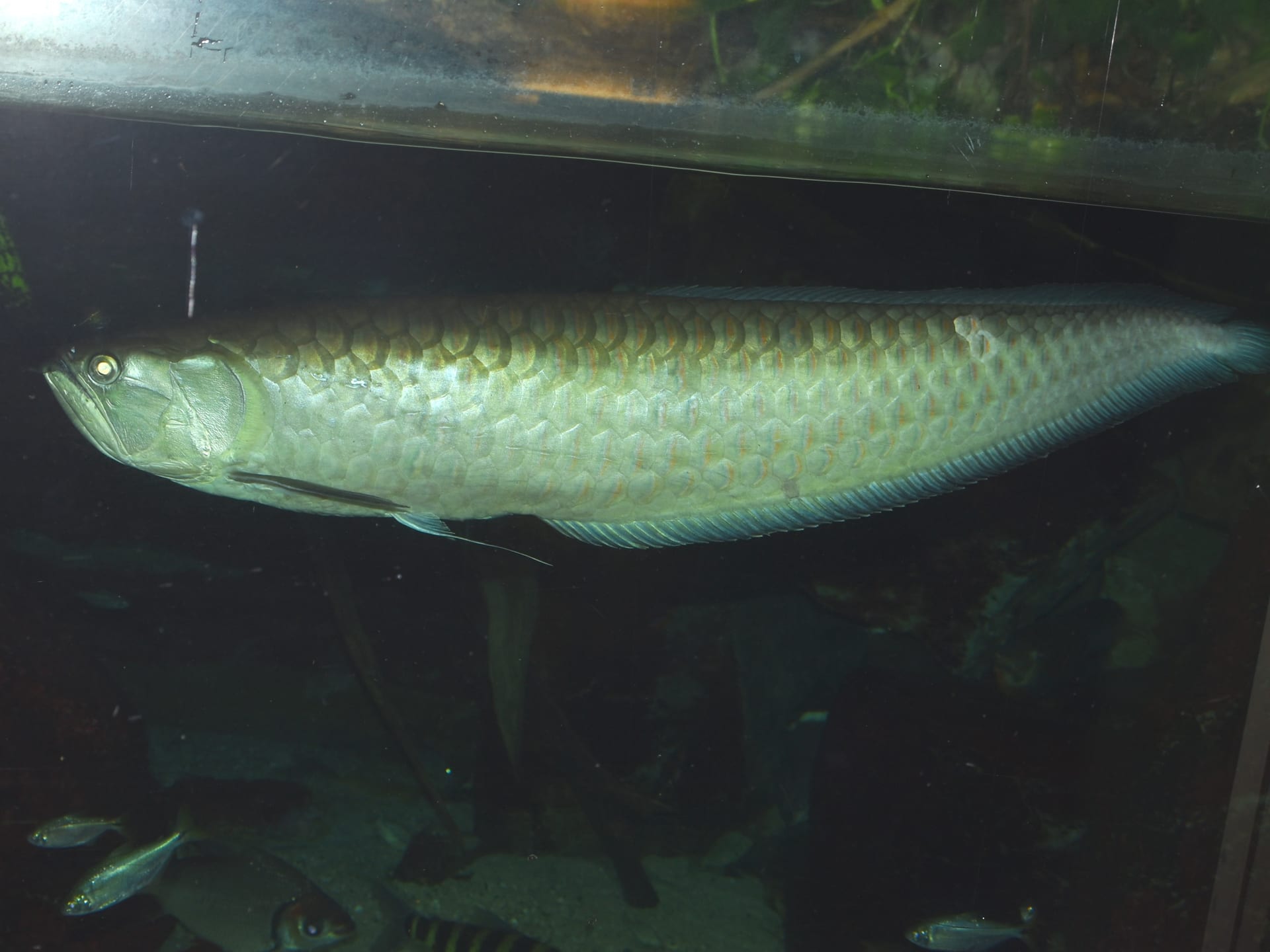
 © NasserHalaweh / CC BY-SA 4.0
Black Arowana
The Black Arowana is a striking primitive fish native to the Rio Negro river system, a tributary of the Amazon. Juveniles display a bold black body marked with yellow stripes, and as they mature their coloration gradually shifts into a shimmering blue-purple sheen — a transformation that keeps the fish visually rewarding to keep long-term. Growing to roughly 90 cm, this stately swimmer needs a spacious tank and a secure, jump-proof lid, and is generally recommended for experienced keepers who can manage its long-term care.
View Black Arowana encyclopedia →0% commission on your first sales!Register by September 30, 2026 and your first 2 sales are commission-free!
Breeder Wanted!
List on BreederDirect and sell directly to customers nationwide!
Our 6 Transparency Commitments
All Tropical Fish listings include water quality, temperament, and tank size information from verified Breeder.
- Origin Disclosed
- Real Photos
- Water Quality Disclosed
- Recommended Tank Size
- Temperament Disclosed
- Breed Line Disclosed
Browse all 301 breeds
Water Type
Care Level
Verified breeders wanted for Tropical Fish
Breeders are signing up now ahead of launch. Subscribe to be notified when new listings go live.
Getting alerts is free with a member account. When new listings match your saved search, we'll notify you by email and in-app.
Browse other categories
Verified breeders (preview)
Are you raising tropical fish?
Register as a breeder and connect with buyers directly.
Apply as a breederBlack Arowana key facts
- Care level
- Advanced
- Lifespan
- 15+ years
- Size
- Up to about 90cm
- Temperature
- 24〜30℃
- Diet
- Fish flesh, prawns, insects, frozen foods
- Tank
- Adults reach 90cm and need public-aquarium scale housing. The fish swims at the surface and jumps, so cover the whole tank with a heavy lid.
- Water Temperature & Quality
- 24-30C. Its native Rio Negro is acidic blackwater, so avoid alkaline or hard water. Heavy feeding requires strong filtration.
- Tank Mates
- Can share space with fish too large to swallow, but fights with conspecifics and congeners. Avoid other surface fish; keep singly.
- Diet & Feeding
- Juveniles: bloodworm and small prawns. Adults: fish flesh and prawns. Do not feed mammal or bird meat.
- Breeding & Spawning
- The male mouthbroods eggs and fry. Spawning needs a large water surface and several years to maturity, so it is rarely achieved in ordinary aquaria.
- Health & Notes
- Jumping is a common cause of loss, so a gap-free lid is essential. Growth is fast - size the system for the adult fish.
About Black Arowana
A large Amazonian primitive fish that matures from black-and-yellow juvenile stripes into a blue-purple sheen. Reaching about 90 cm, it's best suited to experienced keepers with large tanks.
7 things to know before welcoming a Black Arowana
1Needs a Large Tank
Black Arowana can grow to nearly 90 cm, so a spacious tank with generous length and width is essential in the long run. Plan your tank size with the adult fish in mind from the start.
2Watch for Jumping
Arowanas live near the water's surface and can leap suddenly when startled. A secure, tightly fitted lid with no gaps is a must.
3Color Changes With Age
Juveniles show a black body with yellow stripes, which gradually shifts into a shimmering blue-purple sheen as they mature. Watching this transformation is part of the appeal.
4Demanding Water Care
As a large fish, it produces a lot of waste, so a powerful filter and regular water changes are essential. It's also sensitive to sudden shifts in water quality.
5Best for Experienced Keepers
This species calls for handling experience due to its size and temperament. First-time large-fish keepers should build up knowledge and equipment before bringing one home.
6Choose Tankmates Carefully
Smaller fish that fit in its mouth may be preyed upon, so tankmates should be of similar or larger size. Some individuals can be territorial, so layout matters too.
7Plan Your Space in Advance
A large tank is heavy, so check the floor's load capacity and delivery access beforehand. Since this is a long-term companion, plan the placement and maintenance routine too.
Frequently asked questions about Black Arowana
- Q.Can beginners keep a Black Arowana?
- A.This species is generally considered suitable for experienced keepers rather than beginners. It's best to build up knowledge of large-tank setups and water quality management before bringing one home.
- Q.How large does it eventually grow?
- A.It can grow up to about 90 cm at full size. It's reassuring to prepare a sufficiently large tank early on, with future growth in mind.
- Q.Can it be kept together with other fish?
- A.Smaller fish that fit in its mouth may be eaten, so caution is needed. If keeping tankmates, choose fish of similar or larger size.
- Q.When does its coloration start to change?
- A.As juveniles they show a black body with yellow stripes, which gradually shifts to a blue-purple sheen as they grow. The pace of this change varies between individuals.
- Q.What should it be fed?
- A.It's strongly carnivorous and enjoys crustaceans and live food in addition to formulated feed. Choose a nutritionally balanced diet suited to the individual's condition and size.
Useful tools for Black Arowana care
Learn more about Black Arowana in the encyclopedia
View Black Arowana encyclopedia entry →
Care difficulty, lifespan, size and diet — all basics covered.
More in this category
Can't find the one you're looking for?
Post your wishes for free and breeders with matching animals will contact you with introductions.